Skip to content

News and Insights

Page 20 of 102 · 510 articles

Operation Motor Vehicle Texas DWI

Operating a Motor Vehicle in the DWI Context

By Jason H. Howard · DWI

What does it mean to "Operate" a vehicle under Texas' DWI laws?

Operation Motor Vehicle Texas DWI
The simple answer is that it means whatever the jury (not the judge) says it means.

Under Section 49.04(a) of the Texas Penal Code, a person commits the offense of DWI when the person “is intoxicated while operating a motor vehicle in a public place.” Emphasis added.  The Penal Code, however, does not define the term “operating.” When words are left undefined by statute, the Texas Government Code Section 311.011 tells us that those words are to be “construed according to the rules of grammar and common usage,” unless the word or phrase has some “technical or particular meaning,” in which case, the word or phrase “shall be construed accordingly.” What about the word “operating?” Is it common or technical?

In the trial of Kirsch v. State out in the Longview area, the defendant was charged with DWI after the police found him drunk while standing over his motorcycle trying to kick-start it on a public road.  As you might guess, there was a dispute over whether he was “operating” his vehicle while intoxicated.  Over defense objection, the trial court included the prosecutor’s requested definition of “operate” in the jury instructions:

to exert personal effort to cause the vehicle to function.

To the prosecutor’s credit, the definition was taken from an appellate case (although not one dealing with jury instructions).  Now, under this definition it is pretty clear that by trying to kick-start the motorcycle, the defendant was indeed operating a motor vehicle.  But if the term “operate” had been left undefined for the jury, then the defense could have certainly argued under the rules of grammar and common usage that the defendant was not “operating” his vehicle, because it was not running (or whatever other arguments an able defense counsel might make).  Armed with a black and white definition of “operate,” the jury convicted the defendant of DWI.

The 6th District Court of Appeals (Texarkana) affirmed the conviction.

The Texas Court of Criminal Appeals reversed. For a unanimous court, Judge Alcala wrote:

Our cases have consistently held that “operate” is a common term that has not acquired a technical meaning and may be interpreted according to its common usage… Although an appellate court may articulate a definition of a statutorily undefined, common term in assessing the sufficiency of the evidence on appellate review, a trial court’s inclusion of that definition in a jury charge may constitute an improper comment on the weight of the evidence.

The opinion goes on to note that by instructing the jurors on the definition of the term “operate,” the trial court “impermissibly guided their understanding of the term.” “The jury should have been free," the CCA held, "to assign that term ‘any meaning which is acceptable in common parlance.’” The CCA reversed the case and remanded it back to the COA for a harm analysis.

There you have it. The meaning of the term “operating” in the Texas DWI statute means…whatever the jury thinks it means.

Fort Worth DWI Defense Attorneys | Keller DWI | Grapevine DWI

Contact the top-rated Tarrant County DWI attorneys of Barnett Howard & Williams PLLC for a FREE consultation of your DWI case. We will help you determine whether the State could prove that you were operating a motor vehicle under Texas DWI law.  Call (817) 993-9249 or send us a contact email from our website. Our team of DWI attorneys will get to work defending your rights and protecting your future.

Read full article
Solicitation Prostitution Sting Texas

Solicitation of Prostitution in Texas

By Brandon Barnett · Prostitution

Prostitution is Illegal in Texas

Solicitation Prostitution Sting TexasIn Texas, under Chapter 43 of the Penal Code, all forms of prostitution are outlawed. Whether a person is involved in promoting prostitution, engaging in prostitution, or soliciting another to engage in an act of prostitution, it is all illegal and can result in arrest, conviction, and prison time in Texas.

What is Solicitation of Prostitution Under Texas Law?

As defined in Section 43.021(a) of the Texas Penal Code, “A person commits an offense if the person knowingly offers or agrees to pay a fee to another person for the purpose of engaging in sexual conduct with that person or another.” This law does not require a person to actually show up to the agreed location in person, since the offense is committed at the time the offer of money for sex is proffered. However, in most circumstances, the police will not make an arrest unless the “John” actually shows up to the scene.

Prostitution Stings in Texas

Many solicitation of prostitution arrests occur as part of undercover police sting operations. Due to the prevalence and increase of human trafficking in Texas, police agencies have ramped up prostitution sting operations in hopes of decreasing the demand for sex services. Most sting operations are widely publicized afterwards, causing embarrassment, job loss, and relationship stress for those caught in the sting, not to mention the follow-on criminal implications. Our firm has represented people across North Texas that have been arrested in prostitution stings with favorable results.


Call BHW Today (817) 993-9249


Solicitation of Prostitution is a State Jail Felony in Texas

On September 1, 2021, the offense of soliciting a prostitute in Texas was enhanced from being a Class B Misdemeanor to a State Jail Felony. This means that, even if it is your first offense, if you “knowingly offer or agree to pay a fee to another person for the purpose of engaging in sexual conduct with that person” you can be convicted of a felony offense and sentenced to a minimum of 6 months and a maximum of 2 years in a State Jail facility. If you have a previous solicitation conviction, then the next offense is a 3rd Degree Felony with a punishment range of 2-10 years in prison.

What to do if you are Arrested for Solicitation of a Prostitute?

If you are arrested for solicitation, once you have bonded out of jail, you should contact an experienced and trusted criminal defense attorney in the jurisdiction where the arrest occurred. Our team of criminal defense lawyers at Barnett Howard & Williams handle around a dozen solicitation cases every year, many of which are the product of Tarrant County Sheriff sting operations. Contact us today for a free consultation at (817) 993-9249. We have offices in Fort Worth and Keller.

Read full article
EPO Drop Protective Order Texas

Lifting an Emergency Protective Order Issued After a Domestic Violence Arrest

By Brandon Barnett · Domestic Violence

How To Lift an Emergency Protective Order (EPO) Associated with a Texas Domestic Violence Case?

EPO Drop Protective Order Texas

If you were arrested for Assault (Family Violence), chances are that you also received an Emergency Protective Order prohibiting you from going within 500 yards (or similar distance) from the “victim’s” home or workplace, along with other conditions for a period of 31, 61, or 91 days depending on the nature of the alleged assault. Protective Orders can cause big problems, especially when the two parties live together in the same house and share childcare and other family responsibilities.

Can I Lift The Emergency Protective Order So That I Can Go Home?

Yes, you can (in most cases). We are asked this question on a daily basis. A spouse that was arrested for Domestic Violence has been forced to leave the family home because of the EPO. EPOs, however, do not relieve people of their daily responsibilities to take care of children, go to work, or provide for their families. An EPO can certainly throw a wrench into a family dynamic.

We help families modify protective orders to allow a defendant to return home. We do not typically request that the entire EPO be lifted completely, only amended.

Amending an EPO is Not the Same Thing as Lifting an EPO.

So what’s the big difference in lifting an EPO versus amending an EPO. Most judges will not agree to completely lift an EPO, because, as they see it, there was likely a good reason for the imposition of the EPO in the first place. Additionally, in almost every scenario, the District Attorney's office will oppose lifting the EPO. However, many judges will agree to amend or modify an EPO and change some of the conditions. Usually, if the victim requests it, a judge will amend the protective order to allow the defendant to return home or resume contact with the complainant and the family. However, the remaining conditions, usually involving not committing family violence or threatening the victim, remain in place for the duration of the protective order.


Call BHW Today (817) 993-9249


What are the Steps to Amending a Protective Order in Fort Worth?

First, it is important to know that all jurisdictions handle protective orders differently. For instance, the Fort Worth Municipal Court handles protective orders differently from Tarrant County Criminal Court #5. Some courts prefer to hold a formal hearing and others do not. However, in all cases, we request the following:

  • An Affidavit from the Victim Requesting a Change of the Protective Order: This can be drafted and signed in our office, but the victim must be present and indicate that this is what he/she wants. In our experience, if the complaining witness does not want the EPO changed, then the judge is not going to change it.
  • A Motion to Modify the Protective Order: We draft and file the motion with the court having jurisdiction over the EPO. Texas law requires that we allege 3 things in our motion and that the judge find those 3 things to be true before he/she can modify the EPO:
    • (1) The current EPO is unworkable;
    • (2) Modification of the EPO will not place the victim in a greater risk of harm; and
    • (3) Modification of the EPO will not result in harm to any person protected under the order.

  • An Affidavit of Non-Prosecution: This is not a required document, but we allow victims to sign an ANP in our office if they request it. They may end up having to sign another ANP with the prosecutor, but we like to give them the opportunity.
  • Formal or Informal Hearing with the Presiding Judge: Some courts will require an actual hearing with witnesses before deciding whether to modify an EPO. Other courts simply prefer the verified documentation and an informal meeting with the state and the defense.
  • Filing the Amended Order with the Arresting Agency and Sheriff’s Office: If the judge agrees to amend the protective order, we send a copy of the signed order to the defendant, the complainant, the arresting police agency, and the local sheriff’s office. We also advise our clients to keep a copy of the order near the front door in case a nosy neighbor decides to call the police believing that the EPO is being violated.

I Have an Emergency Protective Order. How Do I Get Started in Amending the Order?

If you have an EPO that was issued against you in response to an allegation of Assault (Family Violence), give us a call today to see if we can assist you in getting the order amended so that you can return home to your family. Every case is different, so we want to speak with you and learn more about your situation. This article will not apply to every case, so call us today at (817) 993-9249. We offer Free Consultations in every case with no obligation.

Read full article
Scholarship Winners BHW

2022 HLAW Scholarship Winners

By Brandon Barnett · Scholarship

Barnett Howard & Williams PLLC Announces the Recipients of the 2022 Scholarship Awards

BHW Scholarship Winners

This was the 7th year for our law firm to offer scholarships. In honor of the sacrifices of our military veterans, BHW awards 2 scholarships that are connected to military service. The first scholarship is a $500 award for a Military Veteran Law Student and the second scholarship is a $500 award for a Military Dependent undergraduate student. Throughout the year, we received several applications from very deserving students. We appreciate all of the students that took the time to apply for the scholarships and wish them all the best in their studies. For those students that were not selected, we invite you to apply again next year as we plan to continue the scholarship offers as an annual award.


2022 Winner - Military Veteran Law Student Scholarship

The winner of the 2022 Military Veteran Law Student Scholarship is:

CHRISTOPHER KOLKOWSKI

Christopher Kolkowski is an Air Force veteran and C130J pilot. Mr. Kolkowski currently attends University of Arkansas - Little Rock Bowen School of Law. Congratulations CPT Kolkowski. Best wishes as you continue toward your law degree.


2022 Winner - Military Dependent Scholarship

The winner of the 2022 Military Dependent Undergraduate Scholarship is:

MAGGIE EVANS

Maggie Evans is a US Navy dependent whose father served in the US Navy. Ms. Evans currently attends the University of Texas - San Antonio and is pursuing a Masters degree in Clinical Mental Health Counseling, a field that is dear to her heart (and those of the military community). Congratulations Maggie Evans. Best wishes as you continue in your studies.


More Information About Our Scholarship Opportunities:

For more information about how to apply for these scholarships in future years, please visit the scholarship pages:

Military Veteran Law Student Scholarship

Military Dependent Scholarship

Read full article
Final Four DWI Texas

DWI Madness | “The Final Four” Reasons Texans are Stopped for DWI

By Jason H. Howard · DWI

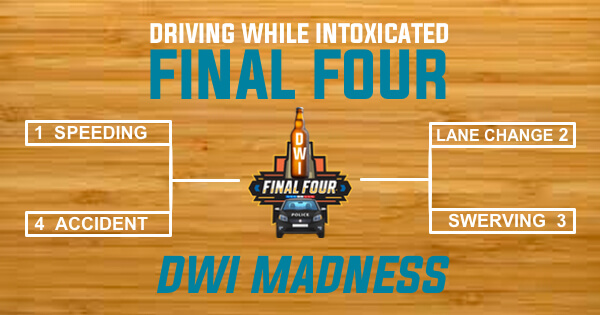
Final Four DWI TexasMarch Madness is here again. With the Final Four approaching, we built a bracket of our own. In this article, DWI attorney Jason Howard discusses the top four reasons people are stopped or detained for a DWI investigation in Texas. We’ve compiled and power-seeded our list based on the numerous Tarrant County DWI cases we handle every year. Before we get to the "Final Four," here are some honorable mentions that didn't quite make the tournament list:

  • Sleeping in a running vehicle
  • Driving the wrong way on a one-way street
  • Rolling through a stop sign
  • Expired registration as seen by police scanner
  • No license plate light

Of course, there are many more reasons that folks are stopped and investigated for DWI, but below are the top four reasons that we see the most.

The Top Four Reasons Drivers Are Stopped for a DWI Investigation in Texas

#4 - Auto Accident

By auto accident, we mean everything from a head-on collision to a run-in with a mailbox. More serious accidents will usually generate the presence of officers on scene within a matter of minutes. Officers are usually looking to rule out the possibility of someone being intoxicated as soon as they arrive on scene. Minor accidents where there are no injuries might elicit a call to 911 (when there would otherwise just be a swap of insurance) if the other party involved suspects a DWI. Easy to see that if you’ve consumed alcohol and are involved in an accident, there is a high probability of a DWI investigation.

#3 – Swerving or Weaving

Please note – there is a difference between the two. Swerving is the more blatant failure to maintain a single lane by driving the vehicle all across the road. Weaving, on the other hand, is usually more subtle and sometimes observed within the lane. Regardless, if it’s late at night and a police officer is behind you and observes either of these driving behaviors, the red and blues are probably going to come on and the driver asked to step out of the vehicle for field sobriety testing.

#2 - Lane Change Problems

The #3 and #4 seeds were probably the top guesses, right? Surprisingly, we see more of numbers 1 and 2 than any other. And they probably weren’t the ones you guessed. I’ve grouped lane change issues because they can vary from the failure to signal a lane change or turn to the failure to make a proper turn at intersection (aka the “wide right” or “wide left” turn.) If you monitor your daily driving (when you’ve consumed no alcohol,) you’ll probably see that you commit many of these types of traffic infractions constantly. You’ll certainly see other people commit them. So, how does that translate to a police officer’s suspicion of drinking and driving? If it’s late at night on a Friday or Saturday, most patrol officers are quick to pull people over for any traffic violation just to check them out and make sure they’re not DWI.

That brings us to our number one reason people are stopped prior to a DWI arrest…

#1 - Speeding

We’re not talking 100mph in a 30mph zone, although we have seen some crazy speeds. No, we’re talking general, everyday speeding; 5 or 10 miles an hour over the speed limit. Nighttime patrol officers love to use their speed detection devices to initiate stops to find DWIs. That’s right! Patrol officers aren’t just looking for obvious impaired driving clues. It’s clear from our experience in handling DWI cases in Tarrant County that most officers are suspicious of anyone out late at night (especially on the weekends.) They know they only need a legal reason to stop someone at any given time. And once they establish their legal reason (even if it’s just speeding,) they then get to proceed with the “where are you coming from, where are you going, have you had anything to drink?” line of questioning. Once they get an admission of “yeah, I had a couple” or smell even the faintest odor of alcohol from the vehicle, they then get the driver out of the vehicle and begin the field sobriety tests. And once they start with the field sobriety tests, the possibility of being arrested goes up astronomically – even if you’re not intoxicated!

If we were to play out the DWI Final Four tournament, Speeding would be your Texas State Champion.

What Should You Do If You Are Suspected of Driving While Intoxicated?

We’ve written on this topic several times, including:
- DWI Information Page
- May I Legally Refuse a Field Sobriety Test?

If you have been arrested for DWI in Tarrant County after being stopped for one of these four reasons (or any other reason), contact our Tarrant County DWI attorneys for a free case evaluation.

Read full article

Speak with a Fort Worth attorney

Call (817) 993-9249 or send us a message to discuss your case.