Skip to content

December 2015

Page 1 of 3 · 11 articles

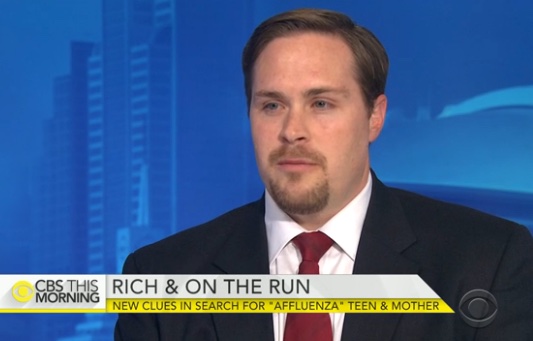
Luke Williams Speaks About Ethan Couch

Possible Punishment Scenarios for Ethan Couch Once He is Apprehended

By Brandon Barnett · Juvenile

What will happen to Ethan Couch?
Luke Williams Speaks About Ethan CouchWe’ve recently been asked about fugitive Ethan Couch, the Texas teenager that was adjudicated of intoxication manslaughter, and the potential consequences for the “affluenza” teen once he’s caught. Juvenile determinate sentencing in Texas is an area of law with which most people are unfamiliar.  In this post, attorney Luke Williams explains some of the possible punishment scenarios for Ethan Couch under the juvenile justice and adult criminal justice systems.

Has Ethan Couch violated his probation?

Once Ethan Couch is apprehended, the State will have to prove, by a preponderance of evidence, that the teen violated a term or condition of his probation. Because juvenile records are confidential under Texas law, the public or press has not been made known of the details of Couch’s probation up to this point. But typically – at the very least – a juvenile probation in Tarrant County requires a juvenile to abstain from the use of drugs and alcohol, avoid persons or places who are using drugs and alcohol, and report regularly to the juvenile probation department.

In light of the recent Twitter video showing what purports to be Ethan Couch at a party involving alcohol and drinking games, there could potentially be evidence that he violated his probation by being amongst persons and at a place where persons are using alcohol. This could be difficult to prove. But, the more pressing problem for the teen now is his disappearance. He would undoubtedly have been required to check in with the juvenile probation department on a regular basis or when requested. At this point, as evidenced by the arrest warrant that has been activated for him, we know that he not checked in with probation as required. So, the State will likely have a much easier case to prove that he’s violated his probation by absconding.

Juvenile Probation is Discharged When the Probationer Turns 19 Unless the State Acts to Transfer

Ethan Couch’s probation term is scheduled to extend beyond his 19th birthday. However, the juvenile court will have to discharge Couch on his 19th birthday unless the court has acted earlier to transfer the probation to the appropriate criminal adult County Community Supervision and Corrections Department. This can (and likely will) be done by motion of the state prosecutor in Couch's case. If transferred, Couch would be under the jurisdiction of the county’s adult probation department and would face adult prison time should the probation be revoked. This would be the normal course of events had Couch not absconded.

What happens once the Ethan Couch is found?

If Couch is caught before he turns 19, and if the court finds that he has violated his probation, the court can either:

  • Keep him on juvenile probation with changing anything (highly unlikely);
  • Modify his probation to add new terms and conditions and keep him on probation; or
  • Revoke his probation to commit him to the custody of Texas Juvenile Justice Department (TJJD) for a determinate sentence that “does not exceed the original sentence assessed by the court” (10 years). The court could commit the juvenile for a shorter sentence than originally assessed, but not for a longer one. See our earlier post to read more about determinate sentences.

If Couch is caught after he turns 19, we can presume that the State will have filed a motion to transfer the probation to adult supervision. If the probation is transferred to adult court, and Couch is found to have violated the probation, then the court could sentence him to serve his original sentence (up to 10 years) in the Texas Department of Corrections – Institutional Division (otherwise known as the adult penitentiary).

Again, because juvenile records are confidential under Texas law, details of Couch’s probation up to this point are unclear. So, there could be other details and/or Orders issued by the judge in Couch’s case that could change or negate the possible scenarios mentioned above.

Regardless, the fact that Couch remains missing is not a good thing for his future.
Read full article
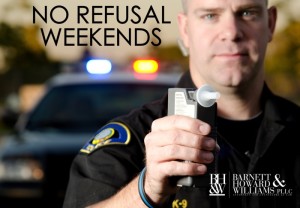
No Refusal Weekends for DWI in Fort Worth, Texas

No Refusal Weekends in Texas | DWI Blood Search Warrant

By Brandon Barnett · DWI

What you need to know about No Refusal Weekends in Texas | Fort Worth DWI Attorneys

No Refusal Weekends for DWI in Fort Worth, TexasThroughout the year, as various holidays approach (Christmas, New Year's, Super Bowl weekend, 4th of July, etc.), we receive questions about "No Refusal Weekends," in which police agencies crack down on driving while intoxicated or DWI. It is important that Texas motorists understand the rules of the road, so that every holiday season remains merry and bright. Many have seen the “No Refusal” notices on electronic road signs, heard the “No Refusal” advertisements on the radio, or watched stories on the news related to “No Refusal" for suspected drunk driving. What is “No Refusal” and how does the law impact your holiday travel? Understanding a few basic things about the law could help you in the event of a traffic stop or a detention by a law enforcement officer.
What is No Refusal Weekend?

No Refusal Weekend refers to a short period of time, typically a holiday weekend or the weekend of a special event, such as the Super Bowl, where law enforcement advertises the ability to conduct routine traffic stops, detaining motorists for suspected DWI. During the stop, law enforcement requests a blood or breath sample, and, if the motorist refuses to comply, law enforcement immediately contacts a judge or magistrate who is designated “on call” during the No Refusal time frame. If the law enforcement officer conveys to the judge that (1) there was reasonable suspicion to detain the motorist for a traffic or criminal offense, and, (2) there is probable cause to believe the motorist is driving under the influence of drugs or alcohol, then the judge quickly issues a search warrant for the sample. Tex. Transp. Code §§ 724.011(a), 724.012(b), 724. At that point, law enforcement may call for a phlebotomist to take the sample on site, or may transport a motorist to a facility to obtain the sample. If all goes according to plan, “no refusal” speeds up the process by which law enforcement obtain samples used for DWI/DUI arrests. Further, the sample becomes evidence for trial.

What is the purpose of No Refusal Weekend?

The entire No Refusal process from detention to arrest is faster in theory, the goal being to catch motorists who are driving under the influence quickly, and to capture the highest blood alcohol content (“BAC”) possible. In Texas, a BAC level of .08 is considered legally intoxicated. No Refusal Weekend differs from a DWI stop on regular days by it’s speed — the quick phone call to an “on call” judge who is waiting by the phone to issue warrants — and it’s deference to law enforcement in the moment. So what does this mean for you, the Texas motorist?

You have the right to refuse blood and breath tests initially.

The term No Refusal sometimes confuses motorists. Many believe they cannot refuse a law enforcement officer’s request for a sample during a No Refusal period. Not true. On No Refusal Weekend motorists still have the right to refuse to provide blood and breath during a traffic stop. However, if law enforcement obtains a search warrant for blood, the motorist must comply; failure to comply may result in additional charges. Once the officer has a warrant in hand, the rules change. But before the officer obtains a warrant, you can refuse to provide breath or blood and you may refuse to submit to field sobriety tests. For notifications about when No Refusal Weekends begin in the Dallas Fort Worth area, and to know your rights if you are stopped by an officer, download our free App from the App Store or Google Play — know your rights before you go out!

*Note: Refusal of a breath or blood test may result in temporary loss of driving privileges, even if the officer later obtains a warrant to conduct the search.  The courts will typically grant an occupational driver's license to work and household tasks.

Warrantless searches for blood alcohol content in DWI cases violate the Fourth Amendment.

The No Refusal law comes from an “implied consent” provision in the Texas Transportation Code. The 2007 law states, “if a person is arrested for...operating a motor vehicle in a public place…while intoxicated…the person is deemed to have consented…to submit to the taking of one or more specimens of the person's breath or blood for analysis to determine the alcohol concentration or the presence in the person's body of a controlled substance, drug, dangerous drug, or other substance.” Tex. Transp. Code §§ 724.011(a), 724.012(b), 724. However, in 2014, the Texas Court of Criminal Appeals held that “warrantless, nonconsensual testing of a DWI suspect's blood does not…fall within any recognized exception to the Fourth Amendment's warrant requirement, nor can it be justified under a…Fourth Amendment balancing test.” State v. Villareal, PD-0306-14 (Tex. Crim. App. 2014).  See also, the US Supreme Court's opinion in Missouri v. McNeely. In summary, a motorist may refuse a blood or breath test upon an initial request by law enforcement, but after a warrant is obtained from a judge, a motorist may not refuse at that point because it is mandatory—hence the name No Refusal.

Please take the time to know your responsibilities and rights before heading out on No Refusal Weekends in Texas. Download our App on the App Store or on Google Play for the latest information on No Refusal Weekends. Have a safe and happy holiday season! This article is for educational purposes only and does not take the place of legal advice. If you are in need of a DWI attorney, please contact our office for a free consultation at (817) 993-9249.

Read full article
Texas front license plate law

License Plate Law in Texas | Front License Plate | Two Plate Rule

By Brandon Barnett · Traffic Offenses

One License Plate or Two: Does Your Car Need a Front License Plate In Texas?

Texas front license plate lawHow many license plates does your vehicle need in order to comply with Texas law? Do you need one or is there a two plate rule? Should you drill holes into the front bumper of your car to install a front license plate, or will you be alright with a rear plate only? If you are reading this article, perhaps you have exhaustively Google-searched license plate laws out of frustration. Find out what the Texas Transportation code says about license plates and what the implications are for you, the Texas motorist.


Do I need a Front License Plate in Texas? Yes. Texas law requires that every vehicle maintain a license plate in the front and rear of the vehicle.  The current fine for failing to display a front license plate in Texas is $200.00.

Do I need a Front License Plate in Texas? | An Error In the Texas Transportation Code Created a License Plate Loophole

Since 1934, Texas law has required that Texas motorists display a front and a rear license plate. In 2011, House Bill 2357 modified the statutory language making driving a vehicle without displaying a front and a rear license place both illegal and punishable by a fine. In January of 2012, Texas lawmakers revised the transportation code, once again, to include several new provisions. However, in the process of making revisions, the provision mandating a penalty for vehicles not in compliance with the “two plate rule” was accidentally stricken from the Texas Transportation Code. From January 2012 to September of 2013, law enforcement could not lawfully issue citations for failure to display a front license plate. Unfortunately, this brief period of time also created a lot of confusion around the “two plate rule” that reverberates to the present day.

Texas Lawmakers Amend the Code to Close the Loophole | Front License Plate Now Required in Texas

The two plate rule was originally created for the purpose of making identification of vehicles and their owners more efficient for automatic plate readers and law enforcement agencies. In 2012, the Texas A&M Transportation Institute (“TTI”) issued a report, citing overall effectiveness of the two plate rule, unlike states that only required one rear license plate on a vehicle. TTI found that front license plates were (1) easier to read in the daylight; (2) helpful in toll billing; (3) aided law enforcement in tracking down violators of the transportation code by way of automatic plate readers; and (4) allowed Homeland Security and U.S. Customs and Border Protection to process and screen vehicles more effectively and quickly. Thus, the front license plate requirement in Texas.

Aware of the inadvertent loophole created by omission of the penalty provision, lawmakers amended the transportation code in September of 2013 to mandate punishment for Texas motorists who do not display both the front and the rear license plates. Motorists who do not have a front license plate risk incurring a Class C misdemeanor charge, punishable by fine not to exceed $500.

Implications For the Texas Motorist | Texas Front License Plate Law | Penalty for Front License Plate Violation

Currently, the penalty for operating a vehicle without a front license plate is $200.00 - subject to change with subsequent legislation. However, there may be more to this than meets the eye. Generally speaking, when a vehicle is out of compliance with mandatory safety and administrative regulations (such as only having a rear license plate), by statute, Texas law enforcement has “probable cause” to conduct a traffic stop. At minimum, such a traffic stop could include pulling the vehicle over, running a check of the license plate, researching the driver’s license and registration of the motorist, and issuing a citation for violating the two plate rule.

In sum, a Texas motorist who drives without both plates risks being pulled over for a lawful traffic stop and fined at least $200.00 for a misdemeanor traffic offense.

References:

Read full article
Online Comment US v. Pratt

Prosecutor's Online Comments Did Not Prejudice the Jury

By Brandon Barnett · Ethics

When should online comments made by prosecutors rise to the level of misconduct, so that a ‘presumption of prejudice’ would likely be granted on appeal?

Online Comment US v. PrattA district court convicted Renee Pratt, a prominent Louisiana politician, of conspiracy to violate the federal Racketeer Influenced and Corrupt Organizations Act (“RICO”). 18 U.S.C. § 1962(d). Pratt’s conviction resulted from a thorough investigation of her long-time friend, Mose Jefferson, a well-known Louisiana community organizer and politician, as well as his family. United States v. Pratt, 728 F.3d 463 (5th Cir. 2013), cert. denied, 134 S. Ct. 1328 (2014). The Jefferson family and Pratt were accused of obtaining community-service grants, and using the money for personal gain. Id. Pratt timely appealed, citing new evidence that several prosecutors from the U.S. Attorney’s Office (“USAO”), made negative and persuasive online comments in public forums, including a local newspaper’s website, regarding her case around the time of trial. Pratt claims that the jury rendered a guilty verdict because of the disparaging and prejudicial comments.
Read the 5th Circuit's Full Opinion in United States v. Pratt.

Around the time of Pratt’s filing a motion for a new trial, the United States Department of Justice (“DOJ”) conducted an investigation to determine whether attorneys working for the DOJ/USAO were making inappropriate statements online about pending cases. Office of Prof. Resp., Dep’t of Justice, Investigation of Allegations of Professional Misconduct Against Former Assistant Attorneys Salvador Perricone and Jan Mann. OPR Report at 2, (2013). The results of the investigation showed that attorneys from the Louisiana division of the USAO and DOJ “anonymously authored dozens of…online comments…posted on nola.com, the website of the widely-read New Orleans Times- Picayune.” Id. Using several pseudonyms, a senior-level prosecutor, “posted his views…of Louisiana politics…refer[ring] to Pratt’s case.” Id. While Pratt’s trial was pending, the prosecutor commented, “If Pratt walks, it’s the judge’s victory…a sad day for justice.” Id. Post-conviction, a second prosecutor, “proclaimed Pratt’s guilt, defended Pratt’s sentence, and characterized Pratt as driven by greed” on nola.com. OPR Report at 42 (reproducing comments posted in Nov. 2011).

A few months later, the district court that convicted Pratt held a limited evidentiary hearing to “develop a clearer record of any [outside] influence the anonymous comments may have had on Pratt’s trial.” Unlike a standard hearing, this ‘limited hearing’ consisted of a questionnaire submitted to two jurors who had previously identified nola.com as their source of news during jury selection. Both jurors reported no influence by the comments on nola.com. Accordingly, the district court denied Pratt’s motion for a new trial, concluding, “[there is] a lack of evidence that…the jury…was tainted by…the [online] comments.” Pratt appealed to the Fifth Circuit Court of Appeals for relief.

The Court of Appeals must determine whether the online comments made by the high-level attorneys rise to the level of prosecutorial misconduct, so that in Pratt’s case, a presumption of prejudice may be granted, relieving Pratt from the district court’s guilty verdict in her RICO case. The Court considered a Rule 33 Motion for New trial, where a court may “vacate a judgment and grant a new trial if the interest of justice so requires” and in the interest of “fairness of the trial.” Fed. R. Crim. P. 33(a); United States v. Turner, 674 F.3d 420, 429 (5th Cir. 2012) (quoting United States v. Severns, 559 F.3d 274, 280 (5th Cir. 2009); United States v. Williams, 613 F.2d 573, 575 (5th Cir. 1980).

A presumption of prejudice may be made in certain extreme cases or pre-trial publicity. Skilling v. United States, 561 U.S. 358, 381 (2010). There is no ground, however, to presume prejudice based on prosecutorial misconduct alone. In affirming a grant of a new trial, reasons for granting a new trial are “novel and extraordinary.” United States v. Bowen, 799 F.3d 336, 339 (5th Cir. 2015). For a new trial to be warranted, the court must normally find that the misconduct in question actually prejudiced the defense.” Id. at 356; United States v. Bowler, 252 F.3d 741, 747 (5th Cir. 2001).

Here, the Court concludeed that the prosecutorial misconduct—the online comments—is “too far removed from the proceedings to support a presumption of prejudice,” as the attorney who made the comment, “did not prosecute or deal with the Pratt trial,” and because, “no one from the trial team posted the comments…while the trial was underway.” Second, the Court states that rulings on Rule 33 Motions are “necessarily deferential to the trial court” in that the facts must be construed in the light most favorable to the lower court’s verdict. United States v. Wall, 389 F.3d 457, 465 (5th Cir. 2004). Lastly, the Court opined that in “certain extreme cases, pretrial publicity…can manifestly taint a criminal prosecution, [giving] rise to a presumption of prejudice.” Skilling v. United States, 561 U.S. 358, 379 (2010). The Court says that the comments made regarding Pratt’s trial were not extreme, “this is not such an extraordinary case…this…concerns a handful of anonymous, speculative postings…that lacked the kind of blatantly prejudicial information…that might poison public opinion and entitle the defendant to a presumption of prejudice.” United States v. McRae, 795 F.3d 471, 481-82 (5th Cir. 2015). Even though prosecutorial misconduct did in fact occur, the Court affirms the district court’s verdict and denies Pratt’s motion for new trial. According to the 5th Circuit, the online comments were far too attenuated to apply to Pratt’s trial and did not affect the guilty verdict.

All attorneys are bound by specific ethical protocols and procedures, promulgated and enforced by each state’s bar association. In Texas, lawyers must abide by the Texas Disciplinary Rules of Professional Conduct and the Texas Rules of Disciplinary Procedure. Texas Prosecutors are held to an even higher standard under the “Special Responsibilities of a Prosecutor” not to make extrajudicial statements that “in the course of representing a client…a reasonable person would [not] expect to be disseminated by means of public communication if the [prosecutor] knows or reasonably should know that it will have a substantial likelihood of materially prejudicing an adjudicatory proceeding.” Tex. Rules of Disciplinary Procedure §3.09; 3.07(a).

Read full article
Brian Cuban The Addicted Lawyer

Addiction Issues Are Not Just for Clients

By Brandon Barnett · Drug Crimes

Brian Cuban: The Addicted Lawyer

Brian Cuban The Addicted LawyerBe it alcohol, drugs, or something else, many of our clients struggle with addiction.  We work everyday to counsel them and help them get plugged into the right places that assist in recovery.  But we sometimes forget that addiction issues aren't limited to our clients.  Many of our friends and colleagues in the legal community struggle with addiction.  Overworked and overstressed, many lawyers turn to alcohol or drugs as an escape.

Recently, a friend of mine connected me with Brian Cuban. For those of you who don't know of Brian Cuban, he is a lawyer, speaker, and activist, and the brother of Mark Cuban (the owner of the Dallas Mavericks).  Brian has been fighting (and winning) his battle against addiction since 2007.  He is also a writer with a new book coming out soon - The Addicted Lawyer.  I asked Brian if he would write a guest blog post about addiction.  The story below is from Brian.  Our hope is that this story will help to remind us to remember to help our colleagues in times of need and be on the lookout for the warning signs of addiction.

Gary Was a Lawyer, A Friend, An Addict

I drove past the same bus-stop every day. To the average person on his/her way to their next “stop” of the day, in life, nothing to set it off from any other.

That morning, I saw one such story I was intimately familiar with. There was Gary waiting for the bus. A lawyer. Undergraduate of Boston College Summa Cum Laude. Near the top of his class at Antioch School of Law. On to a great job with NBC. On to the NYC nightlife and the genetic pull of a family line ripe with alcohol use. Gary was an alcoholic and drug addict long before that bus stop. An addict trying to keep the shreds of his life and legal career together.

I had met Gary years before when we both worked of-counsel to a local Dallas firm. I was trying to hold my life together between addiction and an eating disorder. High functioning was a blessing and a curse. I needed no help. I showed up to court sober. I only did cocaine in the bathroom of the firm when I had no appointments. The pick up I needed after all night cocaine and alcohol benders. It all made perfect sense to me. In my mind, I was not an addict.

I had actually tried my last case with Gary. A bench trial contract matter. He ran the show. He was sober and brilliant. I didn’t want that show. I hated the practice of law. I was not afraid of a courtroom but I was sickened by them. A reminder of how much I hated my life and the career I had chosen for all the wrong reasons. We had a good result. Then Gary disappeared as he had sporadically done over the years since I first met him. I knew what that meant. We all knew. Periods of sobriety and stellar representation of his clients, periods of complaints of neglect and even showing up to client meetings apparently high.

Gary does not see me drive by him at the bus stop. He is looking at the ground. Waiting. My calls to him were never heard as his voicemail was full. I knew what that meant. Most addicts and their families know what that means. I went further down the road and turned around so I could drive up along side him. He got in. He had been to a 12-step meeting and was headed down to the Dallas 24-Hour club where he was a resident. He asked if I knew he had been disbarred. I had seen it in the local legal periodical. As what often happens with lawyers and addiction, clients money never made it to the client. State Bars take a dim view of stealing from clients and addiction is not an excuse. A common story. A common explanation from Gary. It was all a mistake. He had lost everything and was still in denial. I thought back to what my shrink had said to me April 8th 2007, the day I began my sobriety journey. "Brian, you have a law degree but you’re not a lawyer, you’re an addict."

I drove Gary down to the 24 Hour Club. I bought him lunch. A familiar request for money until “he got back on his feet.” It became our routine. The bus stop. The drive. The excuses. The helplessness. Then he was gone again. The full voicemail. No longer at the transitional living home. He had tested dirty.

August 2013. My cell phone rings. A 516 area code. Long Island. Where some of Gary’s family lived. He had moved back home much as I had moved to Dallas to be with my brothers after finishing Pitt Law deep in alcohol use disorders. My family would save me. If recovery was only that simple. A quick conversation. He said he was sober and working as an attorney. He was also licensed in New York. I hid my annoyance at the fact that he had just been disbarred and yet was right back participating in another jurisdiction that may not know about his past. Was I ethically bound to say something? I struggled with the conflict between my view as a lawyer and as a recovering addict. It was not my recovery. It was his.

The day is finally here! My first book, “Shattered Image” is going to be released. Looking forward to the release party! A Facebook message from Gary. I had not heard from him in a while. The message was cheerful. A photo of a plane ticket to come to Dallas for my book signing. It would be the last time I would hear from Gary.

The message came from his ex-wife. The google explosion of his name told the story.

“Gary Abrams , 54 Fatally Struck By Truck Tractor Trailer” walking along a highway.

It is unknown whether he had been drinking but it does not matter. He is gone. He never “got it” in recovery. It’s not that he didn’t want it. He tried. I miss him and wish he had gotten it. Gary was a lawyer, a friend, a husband, a sibling, an alcoholic. an addict. In his passing, he also helped me. I know my recovery is only as good as today. Thank you Gary.

***************************

Brian Cuban: An authority on body dysmorphic disorder, male eating disorders and addiction(including steroids), Brian Cuban is the author of the best-selling book, Shattered Image: My Triumph Over Body Dysmorphic Disorder. It chronicles his first-hand experiences living with, and recovering from, twenty-seven years of eating disorders, alcoholism, drug addiction and Body Dysmorphic Disorder (BDD).

www.briancuban.com

Read full article

Speak with a Fort Worth attorney

Call (817) 993-9249 or send us a message to discuss your case.