Skip to content

Category

Personal Injury

Page 1 of 4 · 47 articles

If You’re Waiting for the Insurance Company to ‘Do the Right Thing,’ Read This

If You’re Waiting for the Insurance Company to ‘Do the Right Thing,’ Read This

By jlotspeich · Personal Injury

Waiting for the Insurance Company to ‘Do the Right Thing’? Your Rights and Legal Options in Texas

Insurance claims should settle problems — not create new ones. When claims drag or are denied, the stress and bills can pile up quickly. This guide explains why insurers delay claims, what “bad faith” means in Texas, and the practical legal steps you can take to protect your rights. We’ll also outline the types of recovery that may be available and how Howard Lotspeich Alexander and Williams, PLLC (HLAW) can stand with you through the process.

What Causes Insurance Claim Delays in Texas — and How They Hurt You

Delays happen for many reasons, and they often leave people with mounting expenses and uncertainty. Knowing the common causes helps you respond more effectively and avoid unnecessary setbacks.

Common Delay Tactics Used by Insurers — What to Watch For

Insurers sometimes slow claims by asking for excessive records, stretching out investigations, or losing paperwork. They might repeatedly request the same medical records or ask for additional proof of loss to buy time. Recognizing these tactics lets you push back and keep your claim moving.

Financial and Emotional Impact on Personal Injury Claimants

Slow claims can force you to cover medical bills, miss work, and dip into savings while you wait. The uncertainty also creates stress that affects recovery and daily life. Understanding the real costs of delay makes it easier to document damages and seek appropriate relief.

What Is Bad Faith Insurance in Texas — and How Do You Spot It?

“Bad faith” describes an insurer’s unfair or unreasonable behavior toward a policyholder. Spotting it early can be crucial to protecting your rights and pursuing a remedy.

How Texas Law Defines Bad Faith Insurance

Under Texas law, bad faith generally means an insurer failed to act in good faith or deal fairly with a policyholder. That can include unreasonable delays, denying valid claims without a reasonable basis, or failing to perform a proper investigation. Texas statutes and case law give policyholders tools to challenge these practices when they occur.

Real-World Examples of Bad Faith Conduct

Bad faith can look like denying a claim on a tenuous technicality, ignoring a claimant’s calls, or failing to explain why a claim was refused. If an insurer denies a car-accident claim without a thorough investigation, that conduct may cross the line into bad faith. Identifying these patterns helps build a stronger case.

What Legal Rights Do You Have When a Claim Is Delayed or Denied in Texas?

If your insurer delays or denies your claim, Texas law offers protections and potential remedies. Knowing these rights helps you decide the best next steps.

Key Texas Statutes That Protect Policyholders
Gavel and paperwork symbolizing insurance consumer protections in Texas

The Texas Insurance Code requires insurers to handle claims fairly and within set timeframes. When carriers ignore those duties, policyholders may have grounds for complaints or lawsuits. Understanding these statutes gives you a foundation for asserting your rights and seeking recovery.

These laws are the legal basis you can use to challenge unfair insurer conduct and pursue relief.

How the Texas Civil Practice and Remedies Code Helps in Insurance Disputes

The Texas Civil Practice and Remedies Code supplies additional tools for pursuing claims against insurers, including the ability to recover certain damages and attorneys’ fees in appropriate cases. Familiarity with this code helps you and your lawyer frame the correct legal theory when challenging insurer misconduct.

How Can You Take Action Against an Insurance Company for Delayed Payment in Texas?

If you’re facing an unwarranted delay, there are practical steps you can take to push your claim forward and protect your legal options.

How to File a Complaint with the Texas Department of Insurance

Filing a complaint with the Texas Department of Insurance (TDI) is a constructive first step. TDI oversees insurer conduct and can investigate consumer complaints. Before filing, collect your policy documents, claim numbers, and all correspondence with the carrier. A formal complaint can prompt TDI review and may speed a resolution.

Complaints to TDI often flag violations of the rules designed to stop improper delays.

When It May Be Time to Sue Your Insurance Company for Bad Faith

If an insurer continues to delay or denies a valid claim without justification, legal action may be necessary. A bad faith suit requires proof that the carrier acted unreasonably or breached its contractual duties. Consulting with an experienced attorney will help you evaluate the evidence and determine if litigation is appropriate.

What Compensation Can You Seek for Insurance Claim Delays in Texas?

Knowing the possible forms of recovery helps you and your lawyer set realistic expectations and document the losses you’ve suffered.

Damages Available in Bad Faith Insurance Cases

In a bad faith case, you may seek compensatory damages for out-of-pocket losses such as medical bills and lost wages caused by the delay. In certain cases, punitive damages are also available to punish particularly egregious conduct, though these require clear and convincing proof of malice or gross negligence. Emotional distress claims are limited under Texas law and are evaluated on a case-by-case basis.

Punitive damages can deter future wrongdoing by insurers when extreme misconduct is proven.

How a Fort Worth Personal Injury Lawyer Can Improve Your Settlement

A Fort Worth personal injury lawyer brings experience with both insurance practices and litigation strategy. An attorney can collect evidence, communicate with the insurer, and, when necessary, file suit to seek full compensation. That advocacy often results in stronger settlements and protects your rights throughout the claim process.

Why Choose Howard Lotspeich Alexander and Williams, PLLC (HLAW) for Your Insurance Dispute?

Insurance disputes are stressful and legally complex. Our firm focuses on helping Texans hold insurers accountable and recover what they are owed. We combine legal experience with practical advocacy to protect our clients’ interests at every step.

Our Experience in Texas Personal Injury and Insurance Law

We provide clear legal advice, strategic representation, and hands-on support for clients facing insurance disputes. With experience in bad faith and personal injury matters, we know how Texas law applies and how to press for fair outcomes. Our goal is straightforward: protect your rights and pursue the recovery you need.

Client Results and a Free Case Review

We’ve helped many clients obtain favorable results against insurers that improperly delayed or denied claims. We offer a free consultation to review your situation and explain your options. Choosing Howard Lotspeich Alexander and Williams, PLLC means partnering with a dedicated legal team focused on results.

Legal Right Description Relevant Statute
Right to Timely Payment Insurers must process claims promptly Texas Insurance Code § 542.051
Right to Fair Treatment Insurers must act in good faith Texas Insurance Code § 541.060
Right to Appeal Denials Policyholders can contest claim denials Texas Civil Practice and Remedies Code § 38.001

Frequently Asked Questions

What should I do if my insurance claim is denied?

Start by reading the denial letter carefully to learn the insurer’s reasons. Gather supporting documents — medical records, bills, photos, and communications — and ask the carrier for clarification in writing. If the denial still seems wrongful, contact an attorney who handles insurance disputes to review your options and decide whether to appeal, file a complaint with TDI, or pursue litigation.

How long does an insurance company have to respond to a claim in Texas?

Texas rules generally require insurers to acknowledge a claim within 15 days and to accept or reject it within 30 days, unless more information is requested. Missing these deadlines can trigger penalties under the Texas Prompt Payment of Claims Act. Exact timelines can vary by claim type and circumstances, so consult the statute or an attorney for specifics.

Can I file a lawsuit against my insurance company for delays?

Yes. If an insurer unreasonably delays or denies a valid claim, you may have a cause of action under Texas law. To succeed, you’ll need to show the carrier failed to meet its obligations without a reasonable basis. An attorney can help assess the strength of your case and guide you through the litigation process if needed.

What evidence do I need to prove bad faith insurance practices?

Useful evidence includes written communications with the insurer, records of repeated delay or denial, medical and financial documentation showing your losses, and any internal insurer documents you can obtain. Witness statements or expert opinions can also strengthen a bad faith claim. A lawyer can help gather and organize the evidence you need to build a compelling case.

What are the potential outcomes of a bad faith insurance lawsuit?

Outcomes vary by case. Successful claims can result in compensatory damages for actual losses, recovery of attorneys’ fees in certain situations, and, when misconduct is especially egregious, punitive damages. Each case depends on the evidence and legal theory, so outcomes are evaluated on an individual basis.

How can I expedite my insurance claim process?

Provide complete and accurate documentation quickly, follow up regularly with the adjuster, and keep detailed records of all communications. If the carrier stalls, file a complaint with the Texas Department of Insurance and consider consulting an attorney who can press the claim and, if necessary, take legal action to move things forward.

Conclusion

You don’t have to wait in silence while an insurer delays or denies a legitimate claim. Know your rights, document your losses, and use the legal tools Texas provides. If you need help, Howard Lotspeich Alexander and Williams, PLLC (HLAW) can review your case, explain your options, and take action to pursue the compensation you deserve. Contact us to start your free consultation and protect your interests.
Read full article
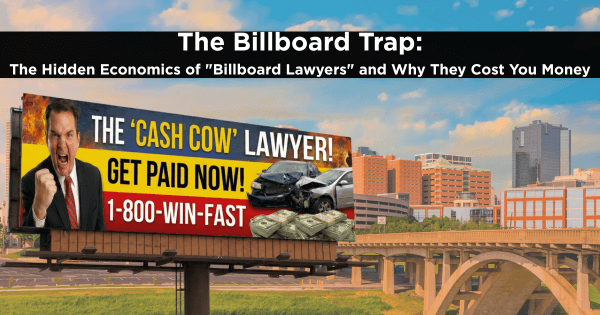
Satirical billboard of a 'Cash Cow' settlement mill lawyer against the Fort Worth skyline, illustrating the dangers of hiring high-volume injury firms.

The Billboard Trap: The Hidden Economics of "Billboard Lawyers" and Why They Cost You Money

By jlotspeich · Personal Injury

Satirical billboard of a 'Cash Cow' settlement mill lawyer against the Fort Worth skyline, illustrating the dangers of hiring high-volume injury firms. Don't let a catchy slogan cost you thousands. While 'Settlement Mill' firms spend millions on billboards to process volume, true trial lawyers focus on maximizing value in the courtroom.

They promise "Easy Money" and shout from every billboard on I-35. But behind the marketing budget lies a high-volume factory model that insurance companies have learned to exploit. Here is the in-depth reality of why the lawyer you see the most is often the one the insurance company fears the least.

If you live in Dallas-Fort Worth, you cannot escape them. The "Strong Arms." The "Hammers." The catchy jingles promising instant checks and aggressive representation.

When you are injured, in pain, and watching medical bills pile up, these advertisements are designed to trigger a psychological response: relief. They promise a fast, easy solution to a complex problem.

But before you dial that 1-800 number, you need to understand the business mechanics behind those ads. You are not just hiring a lawyer; you are entering a business ecosystem known in the legal industry as a "Settlement Mill."

Hiring a firm based on a billboard is often the single most profitable thing you can do— for the insurance company.

The Economics of the "Settlement Mill"

To understand why these firms often deliver lower results, you have to look at their balance sheet.

Marketing on television and billboards in a major metroplex like DFW costs millions of dollars per month. To cover that massive overhead, these firms require one thing above all else: Volume.

They cannot survive by handling 50 cases a year with extreme care and precision. They need to sign up 500, 1,000, or 2,000 cases a year to pay their advertising bills.

This creates a factory mentality:

  • The Intake Floor: When you call, you are rarely speaking to a lawyer. You are speaking to a call center trained to sign you up immediately.
  • The Conveyor Belt: Once signed, your case enters a queue. To keep the lights on, the firm needs to move your case from "Open" to "Settled" as fast as possible.
  • The Conflict: Taking a case to trial takes time (often 12-18 months or more) and costs money. Settling a case takes 90 days. For a volume firm, a quick settlement of $15,000 is often more profitable for them than fighting for two years to get you $100,000.

The "Case Manager" Reality

The most common complaint we hear from clients who fire billboard or television commercial firms to hire HLAW is simple: "I never met my attorney."

In the Settlement Mill model, attorneys are expensive. To maximize profit, these firms assign your case to a "Case Manager" or "Pre-Litigation Specialist." These are often non-lawyers with no legal degree. Their job is to gather your medical records and process your claim like data entry.

At Howard Lotspeich Alexander & Williams (HLAW), we reject this model. Our partners are former prosecutors and local attorneys with well over a decade of courtroom and trial experience. When you hire us, you get us. We believe that strategic legal decisions should be made by trial lawyers, not administrative staff.

The "Colossus" Factor: How Insurance Companies Profile Your Lawyer

This is the secret the industry tries to keep quiet: Insurance companies use AI and data profiling to value your case.

Major carriers like Allstate, State Farm, and Geico use evaluation software (such as Colossus) to determine how much to offer you. One of the most heavily weighted inputs in that algorithm is the identity of your lawyer.

The insurance industry maintains vast historical data on law firms. They know exactly which firms:

  1. File lawsuits: (The firms that fight).
  2. Settle pre-litigation: (The firms that fold).

If you hire a billboard lawyer who settles 99% of their cases without ever filing a lawsuit, the software flags your claim as "Low Risk." The computer knows there is no threat of a jury verdict, so it spits out a "Lowball" offer range.

Conversely, when an adjuster sees HLAW on the letterhead, the risk profile changes. They see a firm led by serious litigators who are comfortable in a courtroom. To avoid the cost and risk of a trial, the software—and the adjuster—are forced to increase the offer.

The Missing Weapon: The Stowers Doctrine

Texas law provides a powerful weapon for injury victims called the Stowers Doctrine.

In simple terms, a Stowers demand forces an insurance company to pay their policy limits now, or risk being on the hook for the entire jury verdict later (even if it exceeds the policy). It is the ultimate pressure tactic.

But a Stowers demand is a bluff unless you can back it up.

If a Settlement Mill sends a Stowers demand, the insurance company often laughs it off. They know that firm has no intention of going to trial. They know that if they say "no," the billboard lawyer will likely just convince the client to take the lower amount.

At HLAW, our Stowers demands have teeth. We prepare every case as if it is going to trial. We take depositions. We hire experts. We build the pressure until the insurance company realizes that paying you fairly is their only safe option.

The "Litigation Gap"

Here is a scenario that happens every day in Fort Worth: A client hires a TV lawyer. The insurance company denies liability or makes a tiny offer. Because the TV lawyer relies on "easy" settlements, they don't want to do the hard work of filing a lawsuit.

So, they drop the client. They send a letter saying, "We can no longer represent you."

Now, the client has lost months of time and has to start over. At HLAW, we are Battle-Tested Trial Lawyers. We don't cherry-pick only the easy cases. If the insurance company refuses to be fair, we don't drop you—we sue them.

Don't Be a Statistic. Be a Priority.

Marketing is not the same as legal ability. A catchy jingle doesn't scare a billion-dollar insurance corporation. A billboard doesn't win a cross-examination.

Your injury settlement is likely the only compensation you will ever receive for your pain, your surgery, and your lost future wages. Do not entrust that financial lifeline to a firm that views you as a unit of inventory.

Choose the firm that insurance companies respect—and take seriously.

Contact HLAW today for a free consultation and case evaluation. We don’t need billboards to tell you who we are. We let our results in the courtroom do the talking.

Read full article
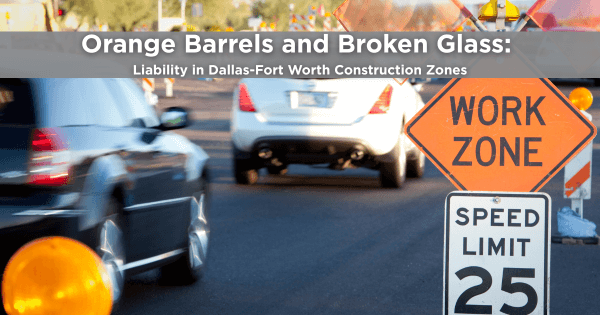
Cars driving through a construction work zone in Dallas-Fort Worth with orange barrels and speed limit signs, illustrating accident liability risks.

Orange Barrels and Broken Glass: Liability in Dallas-Fort Worth Construction Zones

By jlotspeich · Personal Injury

Cars driving through a construction work zone in Dallas-Fort Worth with orange barrels and speed limit signs, illustrating accident liability risks. Navigating the maze of orange barrels in Dallas-Fort Worth: When confusion leads to a crash, proving liability often requires looking beyond the driver to the construction company itself.


If you live in Keller or commute through Fort Worth, you know the reality: the orange barrels seem permanent. Whether it is the massive widening projects along I-30 from Linkcrest Drive to I-820, or the perpetual "North Tarrant Express" updates on I-35W, Tarrant County drivers are constantly navigating a shifting maze of concrete barriers.

But here is the hard truth that many drivers overlook: Construction zones do not just cause traffic; they actively create hazards.

When a crash happens in these confused, narrow chutes of highway, the default assumption is "driver error." The police report might simply say "Failure to Control Speed." However, as experienced attorneys, we know that in many cases, the road design was the true culprit.

If you were injured because a construction company created a "trap" on the roadway, who is responsible? The answer lies in a complex intersection of engineering standards and Texas law.

The Anatomy of a "Construction Negligence" Case

It is not enough to say the road was confusing. To win a personal injury claim involving road construction, we must prove that the setup violated the Standard of Care.

In Texas, construction companies are bound by specific safety protocols, usually outlined in the Texas Manual on Uniform Traffic Control Devices (TMUTCD).

Common violations we see in Fort Worth include:

The "Ghost Lane" Phenomenon

When traffic is shifted to a new pavement section, the old white lines must be completely obliterated. Often, contractors do a poor job of grinding them off. When it rains or the sun hits at a certain angle (glare), the old lines reappear. If you drifted into a car because you were following what looked like a valid lane, that is a failure of the contractor's duty to warn.

The "Edge Drop-Off" Hazard

During widening projects (like on I-30), contractors often leave a significant drop-off between the paved lane and the shoulder. If a wheel slips off the edge, a driver’s natural reaction is to jerk the steering wheel back, often causing a rollover or a crossover head-on collision. If that drop-off was not properly marked or shielded with barriers, the contractor may be liable.

Inadequate Signage Spacing

The TMUTCD mandates exactly how far in advance a "Right Lane Closed" sign must be placed based on the speed limit. If the speed limit is 65 MPH but they placed the warning sign only 100 feet before the taper, they effectively deprived you of the reaction time needed to merge safely.

The Legal Hurdle: Sovereign Immunity vs. Private Liability

This is the most critical legal concept for victims to understand.

The Government (TxDOT): Under the doctrine of Sovereign Immunity, the government is generally immune from lawsuits. You generally cannot sue TxDOT for a design decision they made years ago.

The Private Contractor: TxDOT hires private consortiums and construction firms to execute the work. These private companies do not enjoy the same immunity. If a private contractor deviates from the approved Traffic Control Plan (TCP)—for example, if the plan said "place barrels every 20 feet" and they placed them every 50 feet—they can be sued for negligence.

  • The "Derivative Immunity" Defense: Contractors often try to argue, "We were just doing what TxDOT told us to do."
  • How We Defeat It: We subpoena the daily logs and inspection reports. If we can prove the contractor cut corners, ignored the blueprints, or failed to fix a known hazard (like a pothole or missing sign) within a reasonable time, they lose that protection.

The "Proportionate Responsibility" Trap

Insurance adjusters love construction zone accidents because they are chaotic. Their favorite tactic in Texas is to use the Modified Comparative Negligence rule (the "51% Bar").

They will argue: "Sure, the lane lines were confusing, but you were driving 5 MPH over the work-zone speed limit. Therefore, you are more than 50% at fault, and we owe you nothing."

In a construction zone case, fighting this percentage is everything. We counter this by hiring accident reconstruction experts who can prove that no reasonable driver could have navigated that hazard safely, regardless of a minor speed variance. We shift the focus from your driving to the inevitability of the crash caused by the trap they set.

The Investigation: What We Look For

If you hire a generalist lawyer, they might just pull the police report. At Howard Lotspeich Alexander & Williams (HLAW), we dig much deeper for construction-specific evidence:

  1. The Traffic Control Plan (TCP): The literal blueprint of where every cone and sign should have been. We compare this to photos of where they actually were.
  2. The Contractor’s Daily Logs: Site superintendents must keep logs of work performed and inspections made. Did they check the signs that morning? Did they note that a barrier had been knocked over but fail to fix it?
  3. 311 and TxDOT Complaint Logs: Often, other drivers have reported the exact same hazard days before your crash. If the contractor knew about the danger and ignored it, that moves the case from simple negligence to potentially gross negligence.
  4. Body Cam & Dash Cam Footage: Police body cams often capture the officer complaining about the confusing road setup. This is powerful jury evidence.

Steps to Protect Your Claim Immediately

Construction zones change daily. The evidence that exists today will be paved over tomorrow.

  • Take Wide-Angle Photos: Don't just photograph the damage to your car. Photograph the approach to the crash site. We need to see what the signs looked like before you hit the hazard.
  • Check for Witnesses: Did other drivers stop? Ask them if they found the lane configuration confusing.
  • Preserve Your Vehicle: If the crash was caused by a mechanical failure due to road debris or a drop-off, the physical damage to your tires and suspension is evidence. Do not let the insurance company salvage the car until we have inspected it.

Why Local Representation Matters

Navigating a claim against a major construction consortium is not a DIY project. These companies have teams of lawyers whose sole job is to blame the driver.

You need a firm that understands both the Criminal (traffic citations) and Civil (injury) sides of the law to protect your rights fully. If you or a loved one has been injured in a confusing construction zone in Keller or Fort Worth, don't assume it was just "bad luck."

[Contact HLAW Today for a Case Evaluation]

Let our team investigate if a failure in the road design turned your commute into a crisis.

Read full article
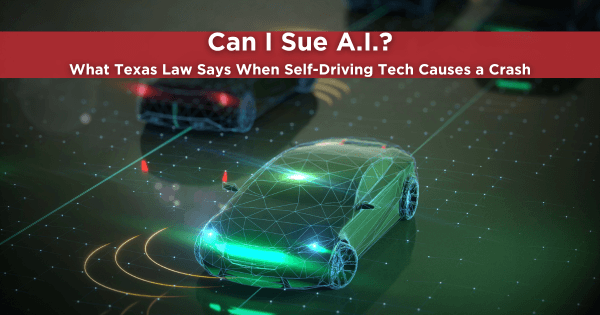
Autonomous vehicle with digital AI overlay representing self-driving technology and legal liability in Texas car accidents

Can I Sue AI? What Texas Law Says When Self-Driving Tech Causes a Crash

By jlotspeich · Personal Injury

Autonomous vehicle with digital AI overlay representing self-driving technology and legal liability in Texas car accidents AI-driven vehicles raise serious legal questions — Texas law allows injury victims to pursue claims against manufacturers, developers, and operators when technology causes harm.

As autonomous vehicles and AI-driven safety systems become more common, many Texans are asking:

If the car’s computer makes the mistake — can I still sue?

In Texas, the answer is yes — but you don’t sue “the AI.” Instead, you sue the real people or companies behind it: the vehicle maker, AI/software developer, distributor, or others in the supply chain. Under state law, AI-related crashes can be treated as traditional product-liability or negligence claims.


✅ Why Texas Law Makes It Possible

The Legal Framework: Texas Civil Practice and Remedies Code — Chapter 82

Texas governs product-liability lawsuits under Chapter 82 of the Code. A “products liability action” can be based on strict tort liability, negligence, breach of warranty, misrepresentation, or any combination. 

That means even if the manufacturer or developer wasn’t negligent in a traditional sense, they can still be held liable if the product (e.g., a self-driving system) was defective and caused injury. 

What “Defective” Means — Design, Manufacturing, or Warning Defects

Under Texas product-liability law, a product may be defective because of:

  • Design defects — when the design itself is unreasonably dangerous (even if built as intended). 
  • Manufacturing defects — when something went wrong during production or assembly. 
  • Marketing / Warning defects (“Failure to Warn”) — when the product lacks adequate instructions or warnings about hazards or limitations (for example, if a self-driving feature requires constant human monitoring, but the user manual underplays that). 

That means a defective AI-based driving system — whether flawed design, poor manufacture, or inadequate warnings — could trigger liability under Texas law.

Strict Liability — Lower Burden of Proof

Because Texas recognizes strict liability in many defective-product cases, you may not need to show negligence. Instead, you must show the product was defective, it was defective when it left the manufacturer, and the defect caused your injury.   That can make it easier to pursue a claim, which is crucial when dealing with complex technology like AI.

Statute of Limitations & Statute of Repose

In Texas, you generally must file a product-liability lawsuit within two years of the date you were injured (or discovered the injury).  But there’s also a statute of repose: a claimant must bring a products liability action no later than 15 years after the product’s sale (with exceptions). 

If you delay too long — even if the defect only just manifested — you may lose your right to sue.


🚗 What This Means for AI-Related Car Crashes

When you’re dealing with a car crash involving AI or autonomous driving systems, it’s not simply another auto-accident claim. These cases intersect with product liability — and may even raise novel questions about software, design, data, and system updates.

Potential claims might include:

  • A design-defect claim if the AI’s logic or control system is inherently unsafe.
  • A manufacturing-defect claim if a flaw occurred during construction or assembly (hardware or software).
  • A failure-to-warn claim if the manufacturer, developer, or automaker failed to clearly explain the limits of autonomy or the need for human supervision.
  • A negligence claim if the company ignored known defects or failed to test properly.
  • Even a cybersecurity/loss-of-control claim, if misuse, hacking, or software corruption caused the crash.

Because these are often “black-box” technologies, with many potential responsible parties (manufacturer, software developer, installer, potentially updater or fleet operator), liability can be complex — but it exists under Texas law.


🔎 Why Hiring a Skilled Texas Personal Injury Lawyer Matters

  • Identifying the correct defendant(s): Lawsuits may involve multiple parties — automaker, hardware supplier, software developer, installer.
  • Preserving evidence quickly: Software logs, event-data recorder outputs, AI-system telemetry and error reports can vanish or be overwritten in hours or days.
  • Proving defect and causation: You’ll likely need engineering, automotive, and AI experts to show how the system malfunctioned, why it was defective, and how that caused your crash/injury.
  • Accounting for deadlines: With the two-year limitation and 15-year repose on product liability claims, timing is critical.

These aren’t average crash cases — treat them like complex product-liability and corporate-defect cases from the start.


✳️ What To Do If You’ve Been Injured by an AI-Equipped Vehicle in Texas

  1. Seek medical treatment immediately. Your health and safety come first — but also, prompt treatment helps create a record of injury.
  2. Preserve as much evidence as possible. Don’t delete or reset vehicle or device data. Photograph damage, take statements, and record everything.
  3. Report the crash and request all data — including software/black-box logs, event history, maintenance records, update logs, AI-system version info.
  4. Contact an experienced Texas personal injury / product liability attorney — ideally with knowledge of automotive technology and AI-based litigation.
  5. Act fast. Don’t wait until the statute of limitations is about to expire before contacting counsel.


🔹 Why This Matters for Fort Worth and All of Texas

As more automakers — and even rideshare, delivery, and trucking companies — deploy self-driving or semi-autonomous vehicles on Texas roads, crashes involving AI are likely to rise. That makes it more important than ever for Texans injured by these systems to know their rights under the law.

With the legal tools provided by Chapter 82 of the Texas Civil Practice & Remedies Code — including strict liability for defective products — victims of AI-related crashes can still demand accountability and fair compensation.

Speak With a Texas AI Injury Lawyer Today — Free Case Evaluation

When powerful technology causes harm, you deserve powerful legal representation.

If you or someone you love was injured in a crash involving autonomous technology, driver-assistance systems, or AI-controlled vehicles, do not assume the case is too complex or unwinnable. These matters demand immediate legal attention, strategic investigation, and preservation of critical digital evidence before it disappears.

At Howard Lotspeich Alexander & Williams, PLLC (HLAW), we understand how to confront deep-pocketed manufacturers, software developers, and corporate insurers. We don’t let technology shield negligence. We demand accountability.

Our team will help you determine:

  • Whether AI failure contributed to your crash
  • Which parties may be legally responsible
  • What compensation you may be entitled to pursue
  • How to preserve the evidence necessary to protect your case

There is no cost to speak with us, and no obligation to move forward.

📞 Call today to schedule your free case evaluation (817-993-9249)

💻 Or submit your case online for confidential review

Deadlines apply. Evidence fades. Corporations move fast.

You should too.

Read full article
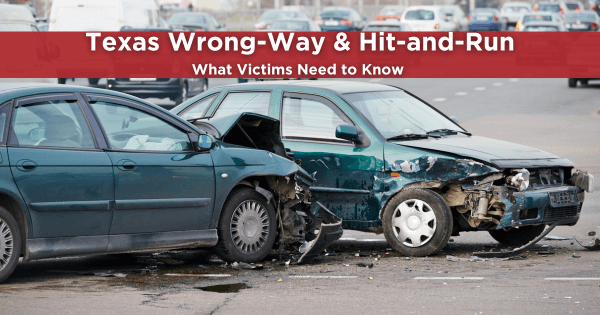
Texas wrong-way and hit-and-run crash aftermath—damaged vehicles at accident scene, highlighting legal challenges and victim rights

Texas Wrong-Way & Hit-and-Run: What Victims Need to Know

By jlotspeich · Personal Injury

Texas wrong-way and hit-and-run crash aftermath—damaged vehicles at accident scene, highlighting legal challenges and victim rights Wrong-way and hit-and-run crashes on Texas highways cause serious injuries and complex legal cases for victims and families.

Wrong-way and hit-and-run crashes remain one of the most devastating and legally complex forms of motor vehicle accidents in Texas. According to the Texas Department of Transportation (TxDOT), wrong-way crashes, though less frequent, are disproportionately fatal, often involving impaired drivers and occurring at night. Hit-and-run incidents, conversely, are far more common, with thousands reported annually across the state, leaving victims without immediate recourse. Recent high-profile cases on major interstates continue to spotlight the lasting impacts on victims—making legal knowledge and strategic recourse essential for individuals and families seeking justice.

What Are Wrong-Way and Hit-and-Run Crashes?

Wrong-way collisions frequently occur at night or on busy highways, often due to impaired driving, driver fatigue, or confusion at exit/entrance ramps. These incidents carry a significantly higher fatality rate compared to other types of crashes. For instance, the Katy Freeway incident where a BMW driving against traffic struck a Cybertruck and caused a multi-vehicle pileup, resulting in fatalities and severe injuries, exemplifies the tragic results. Such events ignite media attention not just for their immediate harm, but also because they often raise questions of criminal intent, intoxication, and liability—none of which may be clear from the outset, as seen in ongoing investigations into why drivers were heading the wrong direction on Texas highways.

Hit-and-run accidents, meanwhile, occur when drivers flee the crash scene, leaving injured victims stranded and complicating both civil and criminal cases. According to the National Highway Traffic Safety Administration (NHTSA), hit-and-run fatalities have been on the rise nationally. In Texas, thousands of hit-and-run incidents are reported annually, ranging from minor property damage to severe injury or death. Recent local news reports underscore how often these cases happen on interstates in the Dallas-Fort Worth region, with ongoing police investigations and a community working to identify and hold offenders accountable for their actions.

Texas Statutes and Legal Duties

Under the Texas Transportation Code § 550.021, drivers involved in an accident resulting in injury or death are legally obligated to stop, render reasonable assistance, and provide identifying information. Failure to do so constitutes a serious felony. Specifically:


  • Leaving the Scene of an Accident Involving Injury: A third-degree felony, punishable by 2 to 10 years in prison and/or a fine up to $10,000.
  • Leaving the Scene of an Accident Involving Serious Bodily Injury: A second-degree felony, punishable by 2 to 20 years in prison and/or a fine up to $10,000.
  • Leaving the Scene of an Accident Involving Death: A second-degree felony, punishable by 2 to 20 years in prison and/or a fine up to $10,000.

These laws form the backbone for prosecuting hit-and-run drivers and provide the foundation for civil claims seeking compensation. Texas law also requires an official report for any crash resulting in injury, fatality, or more than $1,000 in damage (Texas Transportation Code § 550.061), providing crucial evidence for later insurance disputes and lawsuits.
 

Texas Transportation Code outlines strict duties for drivers involved in accidents.
 
If law enforcement cannot respond to the scene, drivers must fill out and submit a CR-2 Blue Form (Driver's Crash Report) to the Texas Department of Transportation within 10 days of the accident. This critical step preserves victim claims and assists in establishing facts for the eventual insurance or litigation process, ensuring that the incident is officially documented even without a police report.

Fault, Comparative Negligence, and Insurance

Texas remains an “at-fault” state for car accidents, meaning the driver responsible for the crash is legally and financially liable for the victim’s damages. Texas applies the “modified comparative negligence rule,” also known as the 51% bar rule (Texas Civil Practice & Remedies Code § 33.001). This means:


If you are found 51% or more at fault for the accident, you cannot collect any compensation from the other party.


In many jurisdictions, the concept of comparative fault plays a crucial role in determining liability in accident cases. If you find yourself being 51% or more at fault for an accident, it significantly impacts your ability to seek compensation. This principle, often termed as "modified comparative negligence," establishes that if a party is deemed to be primarily responsible for an accident, their eligibility to recover damages from the other party is virtually eliminated. Essentially, if you bear the bulk of the blame, the legal system views you as having contributed significantly to the incident, and thus you forfeit any right to compensation from others involved.


This rule is particularly important to understand for anyone involved in vehicular accidents or personal injury claims. It highlights the necessity of evaluating the circumstances surrounding the incident objectively. In the event of disputes over fault, insurance companies and courts will thoroughly investigate evidence, witness testimonies, and accident reports to determine the degree of liability. If you're found to be more than 50% responsible, not only do you lose the chance to claim damages, but it also underscores the importance of driving responsibly and understanding your rights and obligations following an accident. Knowing where you stand in terms of fault can greatly influence your decisions in navigating insurance claims and potential legal action.


If you are found 50% or less responsible, any recovery you receive will be reduced proportionally by your percentage of fault. For example, if you sustained $100,000 in damages but were found 20% at fault, you would only be eligible to recover $80,000.

 
Understanding comparative negligence is key to maximizing compensation in Texas.
 

For example, in multi-vehicle wrong-way cases, legal teams gather extensive evidence, including police reports, accident reconstruction analyses, and eyewitness accounts, to prove minimal victim fault and maximize compensation. This process is essential, given the aggressive tactics often used by insurance companies and defense attorneys to shift responsibility and lower payouts. More information about these policies—and what uninsured and underinsured motorist (UM/UIM) coverage mean for hit-and-run victims—is detailed in leading Texas car accident guides. UM/UIM coverage is particularly vital in hit-and-run scenarios, as it can provide a source of recovery when the at-fault driver cannot be identified or lacks sufficient insurance.

Victim Compensation and Wrongful Death

Wrong-way and hit-and-run crashes regularly lead to significant personal injury claims and, tragically, wrongful death lawsuits, especially when families lose breadwinners or face life-altering injuries. Under Texas Civil Practice & Remedies Code § 16.003, most personal injury and wrongful death claims must be filed within two years from the crash date, known as the statute of limitations. Wrongful death claims may recover various types of damages, including:


  • Economic Damages: Lost earning capacity, lost inheritance, medical expenses incurred before death, and funeral and burial expenses.
  • Non-Economic Damages: Loss of companionship and society, mental anguish, and loss of consortium.
  • Exemplary Damages (Punitive): In cases of gross negligence or intoxication, additional damages may be awarded to punish the wrongdoer and deter similar conduct. Gross negligence requires a showing of an extreme degree of risk and the defendant's actual, subjective awareness of the risk, but conscious indifference to the rights, safety, or welfare of others.

If offenders cannot be located, victims may rely on their uninsured/underinsured motorist (UM/UIM) coverage. This vital but often underappreciated part of modern personal injury recovery can cover medical bills, lost wages, and pain and suffering when the at-fault driver is unknown or uninsured. In hit-and-run cases, where mapping, surveillance footage, or witness testimony may be the only paths to identifying a perpetrator, UM/UIM coverage provides a crucial safety net.

Newsworthy Case Links and Narrative Integration

Recent high-profile cases highlight the ongoing challenges and legal complexities.

Texas Law in Practice: Maximizing Victim Recourse

Proactive steps are crucial for victims seeking justice and compensation. Victims of wrong-way and hit-and-run accidents should:

  • Alert Law Enforcement Immediately: Call 911 to report the accident, especially if there are injuries or significant property damage. Request a thorough police report, which provides a factual foundation for claims and is often required evidence for legal recovery.
  • Document the Scene: If safe to do so, take photos and videos of the accident scene, vehicle damage, road conditions, and any visible injuries. Collect contact information from witnesses.
  • Seek Medical Attention: Even if injuries seem minor, get a medical evaluation promptly. This creates an official record of your injuries and can prevent complications. Follow all recommended treatments.
  • Initiate Insurance Notification: Promptly file a claim with your own insurance provider and document every aspect of the incident, injuries, and financial losses. Be cautious when speaking with the at-fault driver's insurance company.
  • Consult a Skilled Texas Personal Injury Attorney: An attorney can ensure evidence is preserved, legal deadlines are met, and all sources of compensation (including UM/UIM benefits) are aggressively pursued. They can also navigate complex comparative negligence arguments.
  • Leverage the Two-Year Statute of Limitations: Do not delay in seeking legal review. The two-year deadline for filing a lawsuit is strict, and delays risk lost evidence and missed recovery opportunities.

Supporting Citations and In-Depth Resources

Legal and practical responses to wrong-way and hit-and-run crashes require a layered approach—criminal accountability for reckless offenders, assertive civil claims for victim recovery, and strong insurance planning for cases where perpetrators cannot be identified. By weaving current cases, statutory duties, and best legal practices into the discussion, victims and their families can find a path to justice and recovery in Texas courts.
 

Don't Wait—Protect Your Rights After an Accident

If you or a loved one has been involved in a wrong-way or hit-and-run accident in Texas, don’t face the aftermath alone. Our experienced team at HLAW is dedicated to protecting your rights and guiding you through every step of the process. We offer free, no-obligation case evaluations and consultations—so you can understand your options without any upfront cost. And you never pay us unless we win compensation for you. Take control of your recovery today and contact Howard Lotspeich Alexander & Williams, PLLC to get the justice you deserve.

About the Author

Jesse J. Lotspeich is a seasoned trial attorney and partner at Howard Lotspeich Alexander & Williams, PLLC, where he leads the firm’s Personal Injury practice.


Raised in the small West Texas town of Crane, Jesse was instilled early with a strong work ethic and a sense of duty to others. After earning his B.A. cum laude from Howard Payne University and his J.D. from Texas Tech University School of Law, Jesse went to work in Fort Worth advocating for victims with serious injuries caused by the neglect of others.


Jesse specializes exclusively in personal injury litigation, and he carries that focus into every case—whether it’s catastrophic auto or trucking accidents, wrongful death, workplace injuries, or defective products. Known for being a staunch advocate in the courtroom, he personally handles depositions, case investigations, and all trial-level work, never shying from a fight on behalf of his clients.

Read full article
Stressed woman holding her head in front of a damaged car after an accident, illustrating emotional distress and PTSD claims in Texas car accidents.

Understanding Emotional Distress and PTSD Claims in Texas Car Accidents (2025 Edition)

By jlotspeich · Personal Injury

The unseen impact: Psychological injuries often follow physical trauma.

Stressed woman holding her head in front of a damaged car after an accident, illustrating emotional distress and PTSD claims in Texas car accidents. Emotional distress and PTSD are real injuries after Texas car accidents—know your rights under 2025 law.

Car accidents don’t just leave visible wounds. For thousands of Texans each year, the problems begin long after bones have mended and bruises faded. Psychological injuries—like post-traumatic stress disorder (PTSD), anxiety, depression, insomnia, and crippling fear—are among the most overlooked and hardest-fought elements of any personal injury claim. Yet Texas law allows victims to be compensated for these “invisible injuries,” so long as they’re properly documented and presented.

Defining Emotional Distress and PTSD Under Texas Law

What Is Emotional Distress?

In Texas, emotional distress is legally described as “mental anguish,” which the Texas Civil Practice & Remedies Code § 41.001(12) defines as “a high degree of mental pain and distress” accompanying or following a traumatic event. Unlike casual or passing sadness, real mental anguish creates a substantial disruption in a person’s routine, affecting work, relationships, and enjoyment of life.

Common symptoms include:

  • PTSD
  • Anxiety, panic attacks
  • Major depressive disorder
  • Extreme fear of riding or driving
  • Nightmares and sleep disorders
  • Withdrawal from social and family activities
  • Physical manifestations (headaches, nausea, heart palpitations)

The Distinction Between Emotional Distress and Mental Anguish

Though the terms are often used interchangeably, Texas law differentiates them. “Emotional distress” can include everyday psychological effects like fear and stress, while “mental anguish” is more severe, involving symptoms that result in major life changes or chronic suffering.

To succeed in a mental anguish claim, it’s not enough to prove you were worried or sad. Plaintiffs must show a profound and lasting disruption to their way of life, backed by evidence.

Relevant Texas Statutes and Case Law

Statutory Authority

Foundational Texas Case Law

Texas courts have consistently required proof that emotional distress is genuine, severe, and sustained. Some landmark precedents include:

Who Can Recover for Emotional Distress?

The General Rule: Physical Injury Requirement

As a matter of policy, Texas law typically requires a physical injury before non-economic damages (like emotional distress) are available. However, two critical exceptions exist:

In most routine car accident claims, some evidence of physical injury—no matter how minor—is necessary to prevail on an emotional distress claim.

Pure Emotional Harm: When the Rule is Relaxed

Where a defendant’s conduct is willfully malicious, or where a plaintiff is a close witness to a traumatic event (such as a parent seeing a child’s injury), Texas courts allow recovery even in the absence of physical harm. However, these cases are rare and face a high evidentiary threshold.

Symptoms and Diagnosis: What to Watch For

A therapist speaking with a patient, symbolizing mental health diagnosis and support.

Common Psychological Injuries After Texas Car Accidents

  • Post-Traumatic Stress Disorder (PTSD): Marked by flashbacks, nightmares, hyper-vigilance, emotional numbness, as diagnosed by the DSM-5 criteria.
  • Anxiety and Panic Disorders: Including racing thoughts, sudden fear, avoidance behaviors, uncontrollable worry.
  • Depression: Ranging from persistent sadness to loss of motivation, feelings of hopelessness, suicidal thoughts.
  • Sleep Disorders: Insomnia, nightmares, frequent waking, sleep avoidance due to fear of reliving the crash.
  • Phobias: Especially vehophobia (fear of driving or riding in vehicles).
  • Chronic Mood Swings: Irritability, angry outbursts, withdrawal from social connections.

Why Early Detection Is Critical

Unaddressed psychological injuries rarely resolve on their own. In fact, early symptoms can easily be missed, downplayed, or misinterpreted by loved ones or medical providers. Prompt assessment by mental health professionals—psychologists, psychiatrists, licensed counselors—is crucial. Not only does this accelerate healing, it also generates documentation essential for a successful legal claim.

Proving Emotional Distress: The Texas Standard

Legal documents, a pen, and glasses on a desk, symbolizing the importance of evidence.

Evidence Required

Insurance companies—and Texas courts—demand robust proof when it comes to claims for PTSD and emotional harm. Evidence includes:

  • Medical records: Therapy notes, diagnoses, treatment plans
  • Letters or testimony from licensed therapists or psychiatrists: Establishing a direct connection to the crash
  • Prescription records: For anti-anxiety, antidepressant, or sleep medications
  • Workplace records: Documenting lost time and diminished performance
  • Witness statements: Observations from friends, family, coworkers
  • Personal journals: Daily tracking of symptoms, emotional struggles, changes over time
  • Objective proof: Missed milestones, changed routines, breakdown in relationships
  • Expert testimony: Qualified mental health experts can critically support causation and prognosis.

The “Substantial Disruption” Test

Texas courts are clear: you must prove that emotional distress caused a significant, not trivial, impact on your ability to function. Passing anxiety or occasional fear is not enough. Evidence should relate to:

  • Breakdown in family relationships
  • Termination or suspension from work
  • Inability to perform everyday responsibilities
  • Need for extensive and ongoing psychological care
  • Documented loss of enjoyment of life.

Specific Texas Statutory Provisions

Civil Practice & Remedies Code

Tex. Civ. Prac. & Rem. Code § 41.001(12) — “Mental Anguish” Defined

“Mental anguish means a relatively high degree of mental pain and distress that is more than mere disappointment, anger, resentment, or embarrassment, although it may include all of these, and is such that it produces a substantial disruption in the daily routine of the plaintiff.”

Tex. Civ. Prac. & Rem. Code § 41.003 — Punitive Damages

Allows for exemplary damages where gross negligence or willful conduct caused psychological or emotional suffering.

Tex. Civ. Prac. & Rem. Code § 16.003 — Statute of Limitations

Sets a two-year limitations period for filing a personal injury claim—including those for emotional and psychological harm.

Types of Damages Recoverable

Economic Damages

  • Costs for therapy, counseling, psychiatric evaluation
  • Prescription medication (antidepressants, anxiety meds, sleep aids)
  • Lost wages due to missed work
  • Reduced earning capacity (where psychological injuries are disabling)
  • Anticipated future medical/mental health costs.

Non-Economic Damages

  • Pain and suffering (including both physical and psychological trauma)
  • Loss of enjoyment of life, hobbies, and family interaction
  • Loss of consortium (impact on marriage or close relationships)
  • Diminished quality of life due to chronic mental health problems
  • Damages for disfigurement and the resulting psychological trauma

Punitive Damages

Awarded in claims of extreme recklessness, gross negligence, or intentional infliction of harm. These are rare but important in precedent-setting cases or when the defendant’s conduct shocks the conscience.

Common Hurdles in Psychological Injury Claims

Navigating the common obstacles in psychological injury claims.

1. Delayed Onset of Symptoms

PTSD and related psychological problems may not arise until weeks or months post-accident. This delay allows insurers to argue alternative causes or deny connection to the crash. Consistent, early documentation is crucial to linking the symptoms to the original trauma.

2. Pre-existing Conditions

If you had a history of mental health problems prior to the crash, insurers often try to “blame” your symptoms on those. Under the “eggshell plaintiff” doctrine, Texas still allows compensation for mental anguish if the accident exacerbated a pre-existing condition, but medical and legal evidence becomes even more important.

3. Lack of Objective Evidence

Unlike broken bones, psychological injuries are not easily photographed or scanned on x-rays. That’s why Texas law places a high value on reports from professionals, contemporaneous counseling records, and outside testimonials.

Steps for Building a Strong Claim

A legal team collaborating, symbolizing the steps to build a strong claim.

1. Early Diagnosis and Documentation

Seek prompt mental health treatment, whether via emergency counseling, therapy, or psychiatric evaluation. Ask your provider to keep detailed notes about the cause and duration of your symptoms, changes in behavior, and prognosis.

2. Maintain Comprehensive Written Records

Personal journals, symptom trackers, and appointment logs can all be admitted as evidence and help substantiate your experience. Encourage family and close friends to provide statements regarding changes noticed since the accident.

3. Engage Qualified Experts

Select a personal injury attorney well-versed in psychological and PTSD claims in Texas. Your legal team should secure testimony from medical experts who can directly link the trauma, even when symptoms are subtle or delayed.

4. Communicate All Symptoms

Be candid and thorough about nightmares, panic attacks, mood swings, and functional impacts, even if they seem minor. “Hidden” injuries form a critical part of your claim.

5. Don’t Let Insurers Minimize Real Suffering

Never accept a settlement without reviewing the true long-term costs—therapy may last years, and trauma may resurface after stressful triggers or events.

Practical Examples and Settlements

Texas verdicts and settlements for PTSD and emotional distress vary widely depending on the severity, documentation, and facts. Substantial recoveries typically occur where:

  • A crash leads to lifelong disability and severe PTSD
  • The victim is unable to return to work due to panic attacks or depression
  • Severe psychological harm disrupts marriage, parenting, or close relationships

Vetted cases and public settlements demonstrate that sustained, well-documented emotional injuries can result in six- and even seven-figure damage awards, especially when supported by expert psychiatric testimony.

Frequently Asked Questions About Emotional Distress Claims

Can I bring a claim if I didn’t see a therapist?

You can file, but without professional documentation or evaluation, success is unlikely. Insurers and courts require medical evidence to establish both severity and causation.

What’s the difference between pain and suffering versus emotional distress?

“Pain and suffering” is a broad term covering all non-economic damages (physical and mental). “Emotional distress” focuses only on the psychological effects.

Does the type of accident matter?

Serious, multi-car, or catastrophic crashes are more likely to result in recognized mental anguish. Proof is still necessary in all cases—minor accidents with severe psychological sequelae must be well-documented.

How long do I have to file?

Under Texas Civil Practice & Remedies Code § 16.003, you have two years from the date of the accident to file suit for emotional and physical injuries.

Statutory and Legal References

Conclusion: Why Experienced Legal Guidance Matters

Partnering with an experienced attorney ensures your rights are protected. Emotional trauma is real, lasting, and compensable under Texas law for car accident victims. Successful claims require early intervention, expert diagnosis, thorough documentation, and an experienced personal injury law firm ready to fight for holistic recovery.

Victims shouldn’t let skepticism about “invisible injuries” keep them from pursuing justice. By partnering with a knowledgeable Texas personal injury attorney, you ensure your story is told—and your rights protected—both in settlement talks and, if needed, before a Texas jury.

At HLAW, our attorneys have the experience and knowledge to help you through one of life's toughest challenges - recovering from an accident and injury that was never your fault. Victims of car wrecks don't choose to be put in that position, but having compassionate but aggresive representation can help. Contact our office today for a free case evaluation and consultation. We're here to help you move forward and get the justice you deserve.

Read full article
Tarrant County wrongful death lawyers guide – grieving family in cemetery seeking legal support after loss

Tarrant County Wrongful Death Lawyers Guide

By jlotspeich · Personal Injury

Tarrant County wrongful death lawyers guide – grieving family in cemetery seeking legal support after loss Grieving family receives guidance from experienced wrongful death attorneys in Tarrant County.

Securing experienced legal support after a loved one’s wrongful death in Tarrant County demands both compassion and expertise.

In this guide, you will learn who is eligible to file a claim, the critical two‐year deadline under Texas law, the full range of economic and non-economic compensation, how to prove negligence, the distinction between wrongful death and survival actions, a step-by-step overview of the claims process, and why Howard Lotspeich Alexander & Williams, PLLC's approach in Fort Worth delivers trusted advocacy. By the end, you will understand both your legal rights under Chapter 71 of the Texas Civil Practice and Remedies Code and how compassionate representation on a contingency-fee basis can help grieving families move forward.

Who Can File a Wrongful Death Claim in Texas?

Image representing a family, symbolizing eligible parties for a wrongful death claim

Only specific close relatives and estate representatives may pursue compensation when negligence or wrongful acts cause a fatality. Eligible parties include the surviving spouse, all children (biological or legally adopted), and parents of the deceased. If none of these immediate family members files within three months of appointment, an appointed executor or administrator of the deceased’s estate may step in, provided no eligible family member objects.

Eligible parties share a direct relationship to the decedent and a legal interest in pursuing damages. Establishing this relationship often requires certified birth, marriage, or adoption records. In rare situations, such as when no spouse, child, or parent survives, the estate representative’s authority becomes paramount, ensuring that the claim proceeds on behalf of all potential beneficiaries.

  • Surviving spouse of the deceased
  • All children, including legally adopted offspring
  • Biological or adoptive parents

These defined roles guarantee that those most affected can seek justice and financial recovery, laying the groundwork for pursuing compensation in subsequent stages.

What Is the Statute of Limitations for Wrongful Death Claims in Texas?

Image of a clock or calendar highlighting a two-year deadline, representing the statute of limitations

In Texas, wrongful death lawsuits must generally be filed within two years of the date of death. This deadline arises directly from Chapter 16 of the Texas Civil Practice and Remedies Code and applies to all wrongful death claims unless a specific exception intervenes. Missing this two-year cutoff typically bars any legal action, making early consultation with an attorney essential.

Three principal exceptions extend or modify the filing period. First, a minor beneficiary under age 18 may file within two years of turning 18. Second, if the claimant is incapacitated by unsound mind, the two‐year clock does not start until the disability is removed. Third, in “delayed discovery” cases—where the negligent act was not immediately known—the statute may begin on the date the injury was discovered or reasonably should have been discovered.

Exception Type Trigger Event Filing Extension
Minor Beneficiary 18th birthday of minor 2 years from that birthday
Mental Incapacity Restoration of sound mind 2 years from restoration
Delayed Discovery Date negligence becomes known 2 years from discovery date

These extensions guard against unfair dismissal of claims when strict deadlines clash with real-world impediments, ensuring wrongful death actions remain viable under equitable circumstances.

Texas Civil Practice & Remedies Code Chapter 71 for Wrongful Death
Claims brought under Chapter 71 of the Texas Civil Practice and Remedies Code are often complex and require careful consideration of the specific facts and circumstances of each case. 

What Types of Damages Can You Recover in a Texas Wrongful Death Lawsuit?

Image of a hand holding money or scales of justice, representing different types of damages

A Texas wrongful death claim can recover three primary categories of damages: economic, non-economic, and exemplary (punitive). Economic damages compensate measurable financial losses, non-economic damages address emotional harm, and exemplary damages punish particularly reckless or malicious conduct.

Economic damages encompass tangible losses resulting directly from the death. Non-economic damages recognize intangible suffering. Exemplary damages may be awarded when evidence shows gross negligence or willful misconduct. Recovering the full spectrum of compensatory relief requires careful documentation of expenses and emotional impacts, with exemplary awards reserved for truly egregious cases.

Damage Category Description Examples
Economic Financial losses with objective proof Lost income, medical bills, funeral expenses
Non-Economic Subjective harm affecting quality of life Mental anguish, loss of companionship, comfort
Exemplary (Punitive) Punishment for gross negligence or malice Jury-awarded fines beyond compensatory losses

Although Texas imposes no general cap on compensatory damages, special limits apply when suing government entities or in certain medical-malpractice scenarios. Understanding each damage type helps grieving families obtain full and fair compensation.

How Do You Prove Negligence in a Tarrant County Wrongful Death Case?

Image of a magnifying glass over documents or an accident scene, symbolizing proving negligence

Proving negligence in a wrongful death action requires establishing four elements: duty, breach, causation, and damages. Duty refers to a legal obligation the wrongdoer owed the deceased. Breach demonstrates how the duty was violated. Causation connects the breach directly to the death, and damages quantify the resulting losses.

Compelling evidence often includes official accident or death reports, eyewitness statements, medical records, and expert testimony—such as reconstruction specialists or medical examiners. Documentation of the decedent’s lost earning capacity and family testimony regarding emotional suffering further solidifies the claim. Clear demonstration of each element under Texas law increases the likelihood of a favorable settlement or verdict.

  • Official incident or police reports establishing fault.
  • Witness affidavits detailing reckless or negligent acts.
  • Expert opinions quantifying causation and damages.
  • Financial records proving income loss and expenses.

Meticulous preparation of legal filings and evidence collection ensures each negligence element is fully supported, creating a persuasive narrative for compensation.

What Is the Difference Between Wrongful Death and Survival Action in Texas?

Wrongful death and survival actions serve related but distinct purposes under Texas law. A wrongful death claim compensates surviving family members for losses caused by the decedent’s passing. By contrast, a survival action allows the decedent’s estate to recover damages the deceased endured from injury until death.

Wrongful death awards flow to the spouse, children, or parents and address economic and emotional harms to survivors. Survival action proceeds become part of the estate and can include medical expenses and lost wages the decedent incurred before dying. Filing both claims concurrently often maximizes overall recovery by addressing separate harms accruing before and after death.

Claim Type Beneficiary Scope of Recovery Purpose
Wrongful Death Spouse, children, parents Economic & non-economic losses of survivors Compensate survivors for their loss
Survival Action Decedent’s estate Pre-death expenses and suffering Restore estate for losses up to time of death

Understanding these complementary actions allows families and estate representatives to pursue every available remedy under Chapter 71 and Chapter 71A of the Texas Civil Practice and Remedies Code.

What Is the Wrongful Death Claim Process in Tarrant County?

The wrongful death process in Tarrant County begins with preserving key evidence and securing legal counsel. First, families should immediately document accident scenes, collect witness information, and obtain medical and police records. Next, an attorney conducts a thorough investigation to assess liability and damages.

Once the evidence is assembled, the attorney prepares and files a petition in the appropriate Tarrant County district court before the two-year deadline. Discovery follows, during which both sides exchange information. Settlement negotiations or mediation typically occur next, aiming to resolve the claim without trial. If no fair agreement emerges, the case proceeds to a jury trial for final resolution.

  • Preserve evidence and contact experienced counsel.
  • File petition in Tarrant County district court.
  • Engage in discovery and document exchanges.
  • Conduct settlement negotiations or mediation.
  • Proceed to trial if necessary.

Families can expect periodic status updates, assistance with administrative tasks, and compassionate guidance throughout each phase, ensuring clarity during a challenging time.

Why Choose the HLAW Law Firm for Wrongful Death Cases in Fort Worth?

Image of a legal team or a handshake, symbolizing trust and advocacy from BHW Law Firm

HLAW Law Firm combines decades of wrongful death expertise with a faith-guided, compassionate approach that honors grieving families. Our attorneys have secured substantial recoveries for Tarrant County clients in vehicle collisions, workplace tragedies, and medical negligence cases. By focusing on personalized service and attentive communication, we guide clients through each legal milestone with empathy and professionalism.

Operating on a contingency-fee basis, HLAW Law Firm ensures that families never face upfront legal costs while pursuing justice. Our local knowledge of Fort Worth courts, relationships with experts, and commitment to ethical advocacy differentiate our firm. Community testimonials consistently highlight our responsiveness, trial-tested skill, and unwavering support during the most difficult periods.

  • Experienced trial attorneys with deep Tarrant County roots
  • Faith-guided counsel that respects your family’s values
  • No-fee-unless-we-win contingency structure

With HLAW Law Firm by your side, you gain both seasoned legal strategy and compassionate guidance tailored to Fort Worth families.

Grieving families deserve both legal skill and heartfelt support when seeking compensation for a wrongful death. By understanding eligibility, deadlines, damages, proof requirements, claim types, and procedural steps, you can confidently pursue justice. When you partner with BHW Law Firm, you secure dedicated advocacy on a contingency-fee basis—so you can focus on healing while we focus on your case.

Contact our firm today for a free case evaluation and consultation.

Read full article
Front of an 18-wheeler semi-truck at night symbolizing the power and danger of large commercial vehicles in Texas truck accident cases.

18-Wheeler vs. Passenger Car Accidents: Why These Cases Are Different

By Jason H. Howard · Personal Injury

Front of an 18-wheeler semi-truck at night symbolizing the power and danger of large commercial vehicles in Texas truck accident cases. When an 18-wheeler collides with a passenger car, the results can be devastating. Learn why truck accident cases require specialized legal experience.

When a crash involves an 18-wheeler and a passenger car, the consequences are often life-changing. These cases are not simply larger versions of car accidents. They involve different physics, specialized federal trucking regulations, and complex legal claims.

At Howard Lotspeich Alexander & Williams, PLLC (HLAW), our team of experienced Texas truck accident lawyers understands what makes these cases unique. Below, we explain the key factors that set truck-car collisions apart—focusing on the physics of big rigs, the urgency of preserving evidence, and the often catastrophic injuries suffered by passenger-vehicle occupants.

The Physics of 18-Wheeler Accidents

A fully loaded commercial truck can weigh up to 80,000 pounds, compared to 3,000–4,000 pounds for an average car. That massive size and weight dramatically change how these crashes occur.

Momentum and Force

  • At highway speeds, an 18-wheeler generates 20–30 times more momentum than a passenger car.

  • The energy transferred in a collision is exponentially higher, often causing devastating crush injuries to those in the smaller vehicle.

Stopping Distances

  • A loaded tractor-trailer traveling at 65 mph may require 500–525 feet to stop—nearly two football fields.

  • Any speeding, downhill travel, or poorly maintained brakes can lengthen that distance, reducing the driver’s ability to avoid a collision.

Blind Spots and Turning Radius

  • Big rigs have large “no-zones”—blind spots on all four sides where cars can disappear from the truck driver’s view.

  • Their wide turning radius and long stopping distance make them less maneuverable, especially in city traffic.

These physical realities explain why 18-wheeler crashes often cause more severe property damage and injuries than typical car accidents.

Preserving Evidence in Commercial Truck Accident Claims

One of the biggest differences between a car-on-car accident and a trucking crash is the evidence involved—and how quickly it can disappear. A skilled 18-wheeler accident attorney acts fast to preserve critical proof.

Time-Sensitive Evidence

  • Electronic Logging Devices (ELDs): Show hours-of-service compliance and potential driver fatigue. Many carriers are only required to keep these for six months.

  • Event Data Recorders (Black Boxes): Record speed, braking, steering, and throttle use seconds before the crash—often overwritten if not retrieved promptly.

  • Maintenance and Inspection Records: Reveal whether the truck was safe to operate.

  • Driver Qualification Files: Can show patterns of negligent hiring or supervision.

  • Dispatch Notes and Bills of Lading: May expose unsafe schedules or pressure to meet deadlines.

  • Dashcams and Third-Party Surveillance Footage: Often deleted or recorded over within days.

Spoliation Letters

An experienced Texas truck accident lawyer will immediately send spoliation (evidence-preservation) letters to the trucking company and other parties. This legal step forces them to retain logs, electronic data, and other records that could prove negligence.


Failing to secure this evidence early can weaken a victim’s claim.

Why Injuries Are Typically More Severe

The immense force of a truck vs. car accident often leaves the smaller-vehicle occupants with catastrophic injuries. Common examples include:

  • Spinal cord injuries and paralysis

  • Crush injuries, amputations, and severe orthopedic fractures

  • Internal organ damage and internal bleeding

  • Severe burns from fuel-related fires or explosions

Recovery can require:

  • Extensive surgeries and hospital stays

  • Long-term rehabilitation and assistive devices

  • Home modifications for disability access

  • Significant lost income and diminished future earning potential

These injuries often result in commercial truck accident claims that are far more substantial than those arising from car-on-car collisions—reflecting both the financial and human toll.

Legal Complexities Unique to Truck Accidents

Unlike most car accidents, truck crashes often involve multiple liable parties, including:

  • The truck driver

  • The trucking company or motor carrier

  • Freight brokers or shippers that set unrealistic deadlines

  • Maintenance or repair contractors

  • Manufacturers of defective truck components

Trucking companies and their insurers are also subject to federal regulations enforced by the FMCSA (Federal Motor Carrier Safety Administration), covering hours of service, vehicle maintenance, and safety compliance.


These layers of liability and regulation make it essential to have a skilled 18-wheeler accident attorney who can identify all responsible parties and pursue every avenue of compensation.

Why You Need an Experienced Texas Truck Accident Lawyer

A serious truck crash is not just another motor-vehicle accident claim. It requires:

  • Immediate investigation and evidence preservation

  • Accident reconstruction experts to analyze skid marks, impact angles, and black-box data

  • Deep knowledge of federal trucking laws and safety standards

  • Experienced negotiation and trial skills to counter large insurance companies

At Howard Lotspeich Alexander & Williams, PLLC (HLAW), our attorneys understand how to build strong commercial truck accident claims by acting quickly, leveraging experts, and fighting for the full value of our clients’ damages.

Compassionate Support for Truck Accident Victims

After a severe truck accident, victims and their families often face a long recovery and enormous expenses. Our team is committed to handling the legal battle so you can focus on healing.

If you or a loved one has been hurt in a collision with a commercial truck or 18-wheeler, contact HLAW today for a free consultation. We’ll explain your rights and help you pursue the compensation you deserve.

About the Author

Jason Howard is a founding partner at Howard Lotspeich Alexander & Williams, PLLC (HLAW) in Fort Worth, Texas. A seasoned Texas truck accident lawyer and trial attorney, Jason has more than two decades of experience representing victims of catastrophic injuries and wrongful deaths caused by negligent drivers and trucking companies.


Recognized for his skill in the courtroom and his commitment to compassionate, client-focused advocacy, Jason has been named to Texas Super Lawyers every year since 2015. He draws on a deep understanding of both state and federal trucking regulations to build strong cases that hold commercial carriers accountable.


Beyond his legal achievements, Jason is committed to guiding injured clients and their families through every step of the recovery process—ensuring they feel supported, informed, and empowered.

Read full article
Stressed grocery delivery driver unloading bags from car on residential street as traffic passes by

Who Pays When Injured by an Instacart or DoorDash Driver?

By jlotspeich · Personal Injury

Stressed grocery delivery driver unloading bags from car on residential street as traffic passes by When grocery delivery drivers like those for Instacart or DoorDash cause a crash, knowing whose insurance applies can make all the difference

Grocery and meal delivery services like Instacart and DoorDash have made life more convenient. But when one of their drivers causes an accident, victims are often left wondering: who pays for the damages?

The answer depends on how the accident happened, the driver’s insurance coverage, and whether the driver was “on the clock” at the time of the crash.

In this post, the team at Howard Lotspeich Alexander & Williams, PLLC (HLAW) explains how Texas law handles these claims, what insurance policies may apply, and the steps you should take after such an accident.

The Basics: Delivery Drivers Are Often Independent Contractors

Instacart delivery driver unloading groceries out of car. Vantage is a moderate distance away from vehicle from the side. Vehicle is in a neighborhood parked on street outside of a house with other cars passing by.

Most drivers for Instacart and DoorDash are independent contractors, not employees. This classification has been a subject of ongoing legal debate, but for now, it significantly impacts liability in accident cases.

This distinction matters because:

  • Employers are usually liable for their employees’ negligence while on the job.
  • Companies that rely on independent contractors often try to avoid direct liability.

Instead, victims often need to pursue the driver’s personal auto insurance, the company’s commercial coverage (if available), or sometimes both.

Whose Insurance Applies?

Here’s how insurance responsibility typically breaks down:

1. Driver’s Personal Auto Policy

Texas law requires drivers to carry minimum liability insurance:

  • $30,000 for bodily injury per person
  • $60,000 per accident
  • $25,000 for property damage

However, many personal auto policies exclude coverage for accidents that happen while the driver is using their car for commercial purposes, like food or grocery delivery. This is known as a "commercial use exclusion" or "business use exclusion." If a driver's personal policy denies a claim due to this exclusion, it can leave victims without immediate recourse from the driver's primary insurer.

Some drivers purchase a "rideshare endorsement" or "hybrid policy" from their personal insurer to cover this gap. This add-on extends coverage to periods when they are logged into a delivery app but haven't yet accepted an order, or are waiting for one. However, many drivers do not carry this additional coverage, making the company's commercial policy crucial.

2. Instacart and DoorDash Commercial Policies

Both Instacart and DoorDash provide contingent liability coverage, but the details differ significantly based on the "period" of the driver's activity. This coverage typically acts as a secondary layer, kicking in only after the driver's personal insurance is exhausted or denied due to a commercial exclusion.

Delivery Service Insurance Coverage Comparison

Coverage Period Driver's Personal Policy Instacart Commercial Policy DoorDash Commercial Policy
**Period 0: App Off** (Not logged in) Applies (standard personal coverage) Does NOT apply Does NOT apply
**Period 1: App On/Waiting for Order** (Logged in, no accepted order) May be excluded (commercial use); Rideshare endorsement needed **No coverage** provided by Instacart **No coverage** provided by DoorDash
**Period 2: En Route to Pickup** (Accepted order, driving to store/restaurant) May be excluded (commercial use); Rideshare endorsement needed Up to $1 million in excess liability coverage Up to $1 million in excess liability coverage (driver's personal policy must be exhausted first)
**Period 3: During Delivery** (Picked up order, driving to customer) May be excluded (commercial use); Rideshare endorsement needed Up to $1 million in excess liability coverage Up to $1 million in excess liability coverage (driver's personal policy must be exhausted first)

3. Your Own Auto Policy

If you carry uninsured/underinsured motorist (UM/UIM) coverage or personal injury protection (PIP), these benefits may also help cover your medical bills, lost wages, or other expenses—especially if the delivery driver’s coverage is inadequate or if their policy denies the claim. UM/UIM coverage is particularly valuable when dealing with drivers whose personal policies exclude commercial use or whose company coverage has limitations.

Understanding the 'Periods' of Delivery Driving

As highlighted in the table above, insurance coverage for delivery drivers is highly dependent on their activity at the exact moment of the accident. These "periods" are critical:

  • App Off (Period 0): The driver is not logged into the delivery app. Only their personal auto insurance applies.
  • App On/Waiting for Order (Period 1): The driver is logged into the app and available to accept orders but has not yet accepted one. During this period, neither Instacart nor DoorDash typically provides commercial coverage. The driver's personal policy may deny coverage due to commercial use, creating a significant "gap" unless they have a specific rideshare endorsement.
  • En Route to Pickup (Period 2): The driver has accepted an order and is on their way to the store or restaurant to pick it up. Both companies' commercial policies generally offer contingent liability coverage during this phase.
  • During Delivery (Period 3): The driver has picked up the order and is en route to the customer's delivery address. This is also covered by the companies' commercial policies.

Determining which period the driver was in at the time of the crash is often a key point of contention in these cases, requiring careful investigation of app logs and other evidence.

Proving Liability

To recover damages, you’ll need to establish that:

  • The delivery driver’s negligence caused the accident. This could include actions like distracted driving (e.g., looking at the delivery app, texting), speeding, failing to yield, running a red light, or driving under the influence.
  • The driver was “on the clock” for Instacart or DoorDash at the time of the crash, specifically in Period 2 or 3, to trigger the company's commercial policy.

Police reports, delivery app logs (which can be subpoenaed), dashcam footage, traffic camera recordings, and witness statements can be critical evidence in proving both negligence and the driver's active status.


realistic car wreck between two cars, one car is a food delivery driver (like doordash or instacart)


Steps to Take After an Accident

If you’ve been injured in a crash involving a delivery driver:

  • Call 911 and get a police report.
  • Seek medical attention right away—even for seemingly minor injuries.
  • Gather information at the scene: driver’s license, insurance details, delivery app status, and witness contact info.
  • Take photos and videos of the vehicles, the scene, and your injuries.
  • Avoid giving recorded statements to insurance companies without legal guidance.
  • Contact an experienced (and proven) personal injury attorney who understands the nuances of delivery driver accidents.

Why These Cases Are Complex

Delivery-related accidents often involve multiple insurance policies, overlapping coverage periods, and disputes over who was responsible at the time of the accident.

At HLAW, we’ve seen firsthand how insurance companies may delay, deny, or minimize valid claims—especially when a large delivery platform is involved.

How HLAW Can Help

Our Fort Worth-based personal injury attorneys focus on:

  • Investigating all available insurance policies
  • Gathering evidence of the driver’s active status at the time of the accident
  • Negotiating aggressively with insurers for full compensation
  • Taking cases to court if needed to protect your rights

We’re committed to compassionate, client-focused representation so you can focus on healing while we pursue the recovery you deserve.

Final Thoughts

Being injured in an accident with an Instacart or DoorDash driver can be overwhelming, especially when you’re unsure whose insurance will cover your losses. The good news is, you don’t have to face the process alone.

If you or a loved one has been hurt in a delivery driver accident in Fort Worth or anywhere in Texas, reach out to HLAW for a free consultation.

We’ll guide you through your options and fight to secure the compensation you need for medical bills, lost wages, and other damages.

About the Author

Jesse J. Lotspeich is a seasoned trial attorney and partner at Howard Lotspeich Alexander & Williams, PLLC, where he leads the firm’s Personal Injury practice. 

Raised in the small West Texas town of Crane, Jesse was instilled early with a strong work ethic and a sense of duty to others.  After earning his B.A. cum laude from Howard Payne University and his J.D. from Texas Tech University School of Law, Jesse went to work in Fort Worth.  For over 12 years, he worked at the Law Office of James Stanley handling complex accident and injury cases before joining HLAW as a partner. 

Jesse specializes exclusively in personal injury litigation, and he carries that focus into every case—whether it’s catastrophic auto or trucking accidents, wrongful death, workplace injuries, or defective products.  Known for being a staunch advocate in the courtroom, he personally handles depositions, case investigations, and all trial-level work, never shying from a fight on behalf of his clients. 

Read full article
Longhorn cattle being driven along a cobblestone street at the Fort Worth Stockyards, with pedestrians nearby, highlighting the unique hazards for pedestrians in busy tourist areas.

Pedestrian Injuries at Fort Worth Stockyards or Downtown Fort Worth, Texas

By Luke A. Williams · Personal Injury

Longhorn cattle being driven along a cobblestone street at the Fort Worth Stockyards, with pedestrians nearby, highlighting the unique hazards for pedestrians in busy tourist areas. The Fort Worth Stockyards and downtown areas pose unique risks for pedestrians due to heavy crowds, tourist activity, and mixed vehicle traffic.

Fort Worth Pedestrian Accidents: Asserting Your Rights and Securing Comprehensive Recovery

Fort Worth has seen a concerning rise in pedestrian injuries, escalating over 27 percent in five years. This trend highlights the critical need for victims to understand their rights and pursue fair compensation. If you've been injured, you're likely facing overwhelming medical bills, lost income, and emotional distress. Texas law offers different recovery avenues, and our firm is ready to guide you. This guide details common causes of pedestrian accidents, legal principles of right-of-way and negligence, types of damages, steps after an accident, and the role of an experienced Fort Worth pedestrian accident lawyer. We also cover dangers in the Fort Worth Stockyards and downtown areas, the impact of drunk driving, and filing deadlines to protect your rights.

Understanding Fort Worth Pedestrian Accidents: Causes and Risks

Pedestrian crossing a downtown Fort Worth crosswalk as a car approaches, illustrating risks for pedestrians at busy urban intersections.What Fuels Pedestrian Accidents in Fort Worth?

Our experience shows that distracted drivers create significant risks for pedestrians, drastically reducing reaction time. A quick glance at a phone can mean the difference between spotting a pedestrian and causing an accident. Driving under the influence of alcohol profoundly impairs judgment, leading to catastrophic decisions. Excessive speed further shrinks reaction time. Recognizing these behaviors is paramount to understanding driver negligence and establishing liability.

Fort Worth's High-Risk Zones for Pedestrians – Targeted Insights

The Fort Worth Stockyards and downtown intersections are high-risk zones due to heavy foot traffic and complex vehicle movements. In the Stockyards, narrow streets, dense tourist crowds, and events and festivals create unpredictable encounters. Downtown's bustling streets, rush-hour commuters, and frequent ride-share drop-offs also contribute to higher collision risks. Identifying these areas helps victims pinpoint incident circumstances for compensation.

How Local Safety Efforts Influence Accident Rates – Advocacy Perspective

Vision Zero Fort Worth aims to eliminate traffic fatalities through street redesign and infrastructure improvements. Walk Fort Worth enhances pedestrian safety by addressing sidewalk gaps and improving crosswalk visibility. High-visibility signals and curb extensions have reduced collisions by an estimated 15 percent since 2023. These programs show how planning and enforcement reshape risk and highlight the municipality's duty of care, which our firm investigates.

Your Legal Rights as a Pedestrian Accident Victim in Fort Worth and Texas 

Attorney standing at a courtroom podium arguing on behalf of a seated female client before the judge, illustrating strong legal representation.

Texas Pedestrian Laws and Right-of-Way Essentials – Our Definitive Interpretation

Texas Transportation Code § 552.003 states pedestrians in marked or unmarked crosswalks at intersections have absolute right-of-way. Drivers must yield and proceed cautiously. Failing to yield to a pedestrian in a downtown crosswalk, for example, violates state law and incurs significant liability. Asserting these rules is fundamental to proving your entitlement to compensation.

Establishing Negligence in Fort Worth Pedestrian Collisions – Legal Approach

Negligence occurs when a driver fails their duty of care to pedestrians. Our firm proves negligence by demonstrating four elements: (1) the driver had a legal duty, (2) they breached it, (3) the breach caused the accident, and (4) the collision resulted in your injuries. For instance, if a speeding or distracted driver hits a pedestrian in a marked Stockyards crosswalk, it clearly shows a breach of duty and causation, forming the basis for a successful personal injury claim.

Understanding Modified Comparative Negligence and Its Impact on Claims 

Modified comparative negligence allows injured parties to recover damages even if partially at fault (50% or less). Your compensation is reduced by your fault percentage; over 50% fault bars recovery. Our attorneys strategically minimize assigned fault to maximize your recovery. For example, a pedestrian 30 percent at fault for stepping into the street mid-block can still recover 70 percent of damages. This principle could significantly influences claim outcomes.

Injury Threshold Compensation Adjustment Eligibility
25% or Less Pedestrian Fault Full potential award minus pedestrian's share of fault Eligible for full damages, reduced by fault percentage
26%–50% Pedestrian Fault Award reduced proportionally by fault percentage Eligible, but compensation is reduced
Over 50% Pedestrian Fault No recovery available Claim is barred

Types of Injuries and Compensation for Fort Worth Pedestrian Victims – A Comprehensive Valuation

Common Injuries Sustained in Pedestrian Accidents – Medical-Legal Insight

Pedestrian collisions often cause severe injuries like traumatic brain injuries (TBIs), spinal cord damage, broken bones, and extensive soft tissue trauma. TBIs can lead to long-term cognitive issues, spinal cord injuries may require lifelong care, and fractures demand intensive treatment. Understanding these patterns is crucial for accurately valuing damages and pursuing all eligible compensation.

Economic Damages Available for Recovery – Meticulous Calculation

Economic damages reimburse direct, quantifiable financial losses, including medical expenses, lost wages, and rehabilitation costs. Our firm meticulously accounts for every expense to restore victims' financial stability.

Expense Type Coverage Detail Example Value
Medical Bills Hospital stays, surgical procedures, ongoing therapies $150,000+
Lost Income Wages missed due to injury, potential future loss of earning capacity Varies by profession
Rehabilitation Physical therapy, necessary assistive devices, long-term care $20,000–$50,000

Non-Economic Damages for Pedestrian Injuries – Our Advocacy for Intangible Losses

Non-economic damages address profound, intangible harms like physical pain and suffering, severe emotional distress, and loss of consortium. Pain and suffering covers physical agony, emotional distress covers psychological impacts, and loss of consortium acknowledges diminished companionship. Expertly valuing these elements ensures comprehensive compensation reflecting both physical and emotional tolls.

When Wrongful Death Claims Apply in Pedestrian Accidents – HLAW's Compassionate Yet Rigorous Pursuit of Justice

A wrongful death claim can be filed when a pedestrian fatality results from another party's negligence. Eligible surviving family members can seek compensation for funeral expenses, loss of financial support, and loss of companionship. Texas law mandates filing within two years of death, making prompt legal action crucial. Proving the driver's breach of duty directly caused the fatality provides essential support to grieving families.

Immediate Steps After a Fort Worth Pedestrian Accident

Prioritizing Your Health and Legal Rights Post-Accident – Our Essential Directives

After a collision, immediately seek medical attention for injury evaluation and documented treatment. Call 911 for an official police report and remain at the scene, but never admit fault. These actions secure health records and build evidence for your compensation claim.

Key Actions at the Accident Scene:

  • Ensure your safety and move out of traffic if possible.
  • Check for injuries and call 911 immediately.
  • Do not admit fault or apologize to anyone.
  • Exchange information with the driver (name, insurance, license plate).
  • Get contact details from any witnesses.
  • Take photos of the scene, vehicle damage, and your injuries.
  • Cooperate with police and ensure an official report is filed.

Gathering and Preserving Crucial Evidence

Document the accident scene with photos of the location, vehicle damage, skid marks, and signals. Collect witness contact information and preserve clothing or personal items. This evidence is critical for linking driver negligence to your injuries, enabling your Fort Worth pedestrian accident lawyer to build a compelling case.

When and Why to Contact an experienced Fort Worth Pedestrian Accident Lawyer – Our Urgent Recommendation

Engaging experienced legal counsel (who handle these types of claims on a regular basis) early is essential to preserve evidence and protect against aggressive insurance company tactics. Our attorneys evaluate your case, negotiate with insurers (often on a contingency fee basis), and handle legal filings, allowing you to focus on recovery. Early involvement often leads to more favorable settlement offers and a clearer path to resolution, whether through negotiation or litigation.

How a Fort Worth Pedestrian Accident Lawyer Can Help You Get Compensation – Our Unmatched Advocacy

Investigating and Proving Liability in Pedestrian Cases

Our attorneys meticulously reconstruct accident dynamics by analyzing the scene, consulting expert witnesses, and reviewing surveillance footage to link driver negligence to your injuries. We gather medical records and economic losses to precisely quantify damages.

Negotiating with Insurance Companies: Effective Strategies and our Aggressive Representation

Our skilled negotiators present comprehensive demand packages, strategically use comparative negligence laws, and counter lowball settlement offers with expert assessments of long-term care and future losses. This approach enhances leverage and expedites the claims process for the best outcome.

The Advantages of Legal Representation and Litigation – Our Courtroom Readiness

Legal representation from our firm provides an unwavering advocate if insurers refuse a reasonable settlement. Our contingency fee arrangements align our interests with your recovery. Litigation compels evidence disclosure and applies pressure through the potential of a trial verdict. Professional legal counsel simplifies complex procedures and shields you from missteps, ensuring a robust defense of your claim.

Unique Challenges and Rights in Fort Worth Stockyards Pedestrian Accidents – Specialized Local Knowledge

A busy daytime crowd walking along the cobblestone street at the historic Fort Worth Stockyards under the iconic sign, illustrating heavy pedestrian traffic in a high-risk accident area.Common Hazards in the Fort Worth Stockyards Area

Common Hazard Characteristic Impact
Cattle Drives and Special Events Unscheduled street crossings Sudden conflicts between pedestrians and riders
Trolley/Bus Operations Fixed-track/route vehicles Limited escape routes for drivers
Tourist Crowds High foot traffic near shops Increased instances of jaywalking

The Fort Worth Stockyards presents unique hazards. Cattle drives and special events create sudden conflicts, trolley and bus operations limit escape routes, and dense tourist crowds increase jaywalking. These conditions elevate the duty of care for drivers and the municipality in historic districts.

Pedestrian Rights in Tourist and Historic Districts: Key Differences – A Nuanced Legal Perspective

Historic preservation regulations can limit infrastructure modernization, requiring pedestrians to rely on existing crosswalks. Municipal negligence may arise if narrow sidewalks or faded markings fail safety standards in high-volume tourist areas. A pedestrian adhering to signs retains full right-of-way protection, and any failure by authorities to uphold their duty of care can support a strong legal claim. Collisions frequently occur when distracted drivers fail to yield at cattle-drive detours, ride-share vehicles obstruct walkways, or impaired drivers misjudge pedestrian density during evening events. These patterns guide our tailored legal strategies.

Distinguishing Downtown Fort Worth Pedestrian Accident Claims

Common Causes of Pedestrian Accidents Downtown

Downtown accidents often stem from pervasive distracted driving, failure to yield at unmarked crossings, and speeding. Heavy traffic and ride-hail services complicate pedestrian movement, increasing collision likelihood near transit hubs. Downtown crosswalks are rigorously governed by Texas Transportation Code right-of-way rules, mandating drivers stop for pedestrians. Intersection designs like countdown signals enhance pedestrian visibility. Drivers disregarding signals violate their statutory duty and are liable for injuries.

Downtown Fort Worth's Most Dangerous Intersections for Pedestrians

  • Houston and Fifth Streets: A convergence of limited sightlines and heavy traffic, demanding extreme caution.
  • Main and Weatherford Streets: Characterized by complex turn lanes and high ride-share activity, posing elevated risks.
  • Commerce and Taylor Streets: Located near nightlife areas with frequent instances of impaired driving, making them particularly hazardous.

Awareness of high-risk intersections helps establish location-specific negligence and strengthens claims.

The Impact of Drunk Driving on Fort Worth Pedestrian Accident Claims

Legal Repercussions of Drunk Driving in Pedestrian Accidents – Our Firm's Stance

Operating a vehicle with a Blood Alcohol Content (BAC) of 0.08 percent or higher is a severe criminal offense in Texas. If a pedestrian is injured or even killed, the driver may face intoxication assault or manslaughter charges. Criminal convictions bolster civil claims by providing clear evidence of a willful breach of duty, potentially entitling victims to substantial punitive damages under Texas law.

Pursuing Enhanced or Punitive Damages in Drunk Driving Cases – Our Strategy for Maximum Recovery

Victims can pursue significant punitive damages by proving the driver's intoxication constituted gross negligence or reckless disregard for safety. This punishes wrongdoers and deters future egregious conduct. Our firm is highly experienced in securing these enhanced awards.

Punitive Criteria Requirement Outcome
Reckless Conduct BAC above the legal limit, or evidence of impairment Potential for an enhanced damage award
Knowingly Intoxicated Admission of intoxication or confirmed test results Possibility of tripling compensatory damages

The Role of Drunk Driving in Fort Worth Pedestrian Fatalities

Drunk driving contributes to nearly one in four pedestrian fatalities in Tarrant County. Impaired drivers often fail to yield and misjudge pedestrian speeds, leading to catastrophic outcomes. This correlation is vital for both criminal prosecutions and civil claims, allowing families to seek aggravated damages when intoxication causes fatal incidents.

Statute of Limitations and Filing Deadlines for Texas Pedestrian Injury Claims

Your Deadline to File a Pedestrian Accident Lawsuit in Fort Worth – A Critical Reminder

Texas law imposes a strict two-year statute of limitations for filing personal injury lawsuits, and also for wrongful death claims from the date of death. Missing these deadlines will almost certainly bar you from seeking compensation, making prompt consultation with our firm essential. While narrow exceptions exist, they are rarely granted, underscoring the paramount importance of adhering to these critical deadlines.

If you've been injured as a pedestrian in the Fort Worth Stockyards or downtown, Texas law provides strong protections and avenues for compensation when driver negligence causes harm. Partnering with a dedicated Fort Worth pedestrian accident lawyer from our firm is crucial for navigating complex right-of-way statutes, negligence principles, and comparative fault rules. By taking timely legal action and preserving evidence, you can maximize your recoverable damages and secure comprehensive support for your recovery. Act promptly to protect your rights and pursue the full compensation you are entitled to.

About the Author

Luke Williams is a distinguished Partner at Howard Lotspeich Alexander & Williams, PLLC (HLAW), advocating for victims of personal injury, including those involved in pedestrian accidents. With unparalleled expertise and extensive experience in Texas law and courtroom litigation, Luke is committed to ensuring his clients understand their rights and receive the full, just compensation they deserve. His deep understanding of negligence principles, comparative fault rules, and local Fort Worth legal nuances makes him a formidable and highly respected advocate for injured pedestrians seeking justice.

Get a Free Case Evaluation Today – Assert Your Rights Now

If you or a loved one has been injured in a pedestrian accident in Fort Worth, do not navigate the complex legal process alone. Contact Howard Lotspeich Alexander & Williams, PLLC (HLAW) for a free, no-obligation consultation. Our experienced and authoritative team is ready to rigorously review your case, clearly explain your options, and aggressively fight for the maximum compensation you deserve.

Your rights come first. We’re here to fight for the full compensation you deserve and help you move forward with confidence.

Read full article
Past-due medical bill with text asking if a personal injury settlement will affect government benefits.

Will my Texas personal Injury Settlement Effect My Government Benefits?

By jlotspeich · Personal Injury

Past-due medical bill with text asking if a personal injury settlement will affect government benefits. A personal injury settlement can impact eligibility for SSI, Medicaid, and other essential government benefits.

A personal injury settlement can unexpectedly push your financial resources above eligibility thresholds, potentially terminating critical government benefits. In this article, you’ll discover how a settlement interacts with means-tested programs—SSI and Medicaid—alongside entitlement benefits like SSDI and Medicare. You’ll learn about Medicare Set-Asides (MSAs), special needs trusts, structured settlements, spend-down tactics, ABLE accounts, and state-specific rules in Texas. Finally, we map out a proactive timeline and how an expert team can help safeguard your benefits after an accident payout.

How Does a Personal Injury Settlement Impact SSI Benefits?

Supplemental Security Income (SSI) is a federal needs-based benefit for disabled, blind, or elderly individuals with limited income and resources. A personal injury settlement often counts as income in the month received and as a resource thereafter, which means a large lump sum can immediately disqualify you from SSI. Structured planning or trust arrangements can keep settlement funds off your balance sheet and preserve your monthly SSI payments.

What Are SSI Income and Resource Limits?

Below is a summary of the core limits that determine SSI eligibility and how settlement funds may exceed these thresholds.

Monthly Benefit Income Exclusion Resource Cap
Up to $967 (2025) First $20 of unearned income per month $2,000 per individual
Earned-income exclusion reduces countable wages $3,000 per couple

Meeting these limits is essential because any amount above $2,000 in countable resources or unexcluded income can trigger SSI suspension or termination.

How Can a Lump Sum Settlement Affect SSI Eligibility?

A lump sum settlement is counted as unearned income in the first month, reducing benefits dollar for dollar, then becomes a countable resource in subsequent months. This mechanism means:

  1. Benefit Reduction – SSI checks stop until your countable resources fall below $2,000.
  2. Retroactive Reporting – Failure to report within 10 days can incur overpayment obligations.
  3. Resource Depletion Risk – Unplanned spending can exhaust your settlement and permanently forfeit SSI eligibility.

Understanding these rules highlights the importance of careful financial structuring immediately after receiving funds.

Can Structured Settlements Help Preserve SSI Benefits?

Structured settlements divide your award into periodic payments rather than one lump sum. They:

  • Guarantee a steady income stream below SSI’s monthly income cap.
  • Prevent large balances from appearing on your resource report.
  • Offer tax-free medical and disability payments when properly structured.

Opting for a structured settlement aligns payment amounts with SSI thresholds, maintaining your eligibility for ongoing benefits.

Structured Settlements Just Doubled – Increasing Benefits And Uses

Structured settlements, which provide scheduled payouts over many years rather than a single lump sum, saw a significant increase in use in 2023, with premiums jumping to $8.6 billion. These arrangements offer plaintiffs long-term financial security, tax-free payments, and the ability to design customized payment schedules, making them a valuable tool for managing personal injury awards.

What Strategies Protect SSI Benefits After a Settlement?

Several legal and financial tools can shield settlement funds from SSI resource tests:

  1. Special Needs Trusts – First-party trusts hold funds for disability-related expenses without counting toward resource limits.
  2. ABLE Accounts – Tax-advantaged savings for qualified disability expenses, up to $17,000 annual contributions.
  3. Spend-Down Plans – Timely investment in exempt goods or services (home modifications, medical care) to reduce countable resources.

Implementing one or more of these tactics ensures settlement proceeds support your needs without jeopardizing SSI.

Special Needs Trusts and Personal Injury Settlements

A Special Needs Trust (SNT) is a legal tool that allows individuals with disabilities to hold assets, such as personal injury settlement proceeds, without jeopardizing their eligibility for means-tested government benefits like Medicaid and Supplemental Security Income (SSI). These trusts are crucial for long-term financial security, especially given the high costs of care, and must adhere to strict regulations regarding disbursements to supplement, not supplant, government programs.

How Do Personal Injury Settlements Affect Medicaid Eligibility?

Medicaid provides health coverage for low-income individuals and families. Like SSI, Medicaid is subject to strict income and asset tests. A settlement may trigger a state lien or push your countable resources above permissible limits, resulting in benefit loss or repayment obligations.

What Are Medicaid Income and Asset Limits?

Different Medicaid categories have varying thresholds. The table below outlines typical limits for an adult beneficiary.

Coverage Type Monthly Income Limit Asset Limit
Aged/Disabled $1,677 (2024) $2,000
Blind/Working $2,523 (2024) $4,000 (couple)
Children/Families Higher state cap Varies by state

Any settlement amount above these limits must be managed or sheltered to maintain Medicaid eligibility.

How Do Medicaid Liens Work on Personal Injury Settlements?

State Medicaid agencies have subrogation rights to recover medical costs paid on your behalf. This process involves:

  • Lien Filing – Medicaid places a claim against your settlement proceeds.
  • Recovery Negotiation – You or your counsel can negotiate lien reductions based on hardship or reasonableness.
  • Mandatory Repayment – Unresolved liens must be satisfied before you access settlement funds.

Proactive negotiation can minimize the repayment amount and preserve more of your settlement.

How Can Special Needs Trusts Protect Medicaid Benefits?

A first-party Special Needs Trust (SNT) holds settlement proceeds for disability-related expenses without counting as a Medicaid asset. Types include:

  • Self-Settled (First-Party) SNT – Funded with your own settlement, must name Medicaid as remainder beneficiary.
  • Third-Party SNT – Funded by family or others, no Medicaid remainder requirement.
  • Pooled SNT – Held by nonprofit organizations, pooled investments but individual accounts.

By funneling settlement funds into an SNT, you maintain Medicaid eligibility and ensure beneficiary-specific care.

What Are State-Specific Medicaid Rules?

Medicaid regulations vary by state.

In Texas:

  • Lien Authority – Texas Health and Human Services can recover costs under Texas Human Resources Code §32.033.
  • Coverage Thresholds – Texas follows federal income limits but imposes additional asset verifications.
  • Hardship Waivers – Limited waivers may reduce lien amounts if recovery would cause undue hardship.

Local expertise is essential to navigate these nuances and negotiate favorable outcomes.

What Is a Medicare Set-Aside (MSA) and How Does It Relate to Personal Injury Settlements?

A Medicare Set-Aside (MSA) is a portion of your settlement reserved for future Medicare-covered medical expenses related to your injury. MSAs ensure Medicare’s interests are protected, complying with the Medicare Secondary Payer Act.

When Is a Medicare Set-Aside Required?

An MSA is required when:

  • You are a Medicare beneficiary at settlement.
  • Future medical treatment related to your injury is anticipated.
  • Medicare has conditional payments or expects future liability.

Meeting these conditions avoids Medicare recovery actions after your settlement.

An Update on Medicare Set-Asides (MSAs) in Liability Cases

Medicare Set-Asides (MSAs) remain a critical consideration in liability settlements, ensuring Medicare's future interests are protected in cases where future medical treatment related to an injury is anticipated. While there is no statutory or regulatory mandate for MSAs in liability settlements, plaintiffs' attorneys must assess the need for an MSA to protect future Medicare coverage for claim-related expenses and educate clients on proper administration.

How Does an MSA Protect Medicare Benefits?

An MSA funds anticipated injury-related care, preventing you from depleting Medicare while still preserving benefits. By allocating settlement dollars to an MSA:

  • Medicare remains secondary payer until MSA exhaustion.
  • Injured parties avoid out-of-pocket expenses for approved care.
  • Medicare liens post-settlement are minimized or eliminated.

This arrangement secures your long-term medical coverage.

What Are the Funding and Administration Options for MSAs?

You can fund and manage an MSA in two primary ways:

Funding Method Administration Benefit
Lump-Sum Funding Self-Administered Immediate control of entire allocation
Structured Funding Professional Third-Party Ongoing oversight and compliance

How Do Medicare Liens Affect Settlement Amounts?

Medicare’s recovery rights include liens on your settlement to reimburse conditional payments. Lien implications:

  1. Lien Demand – CMS issues a demand letter specifying the repayment amount.
  2. Lien Reduction – Negotiation based on actual future care needs can lower the demand.
  3. Set-Aside Calculation – Formal MSA proposals to CMS lock in the required allocation.

Understanding lien mechanics ensures you retain as much of your award as possible.

How Are SSDI Benefits Affected by Personal Injury Settlements?

Social Security Disability Insurance (SSDI) is an earned benefit based on work history, not need. As such, SSDI remains intact regardless of your personal injury settlement. SSDI eligibility and payment amounts are governed by the Social Security Administration’s wage credits and not by income or assets.

Why Is SSDI Generally Unaffected by Settlements?

SSDI is funded through payroll taxes and tied to your insured status. Since SSDI does not consider resource or income limits, a settlement does not alter your entitlement. This distinction underscores why SSDI beneficiaries can receive awards without losing monthly benefits.

What Considerations Should SSDI Recipients Keep in Mind?

Even though SSDI checks continue:

  • Report Other Benefits – You must report any worker’s compensation or public disability income to avoid overpayment.
  • Subrogation Offsets – Some settlements allocate for lost wages, which could offset SSDI under coordination-of-benefits rules.
  • Timely Notifications – Notify SSA of any change in address or benefit status to prevent interruptions.

These steps preserve SSDI payments and avoid inadvertent overpayments.

What Legal and Financial Strategies Protect Government Benefits After a Settlement?

Implementing the right combination of tools can safeguard settlement funds and maintain benefit eligibility across programs.

How Do Special Needs Trusts (SNTs) Safeguard Benefits?

Special Needs Trusts isolate settlement funds for disability-related expenses without counting them as income or assets. Key features include:

  • Trustee Control – A designated trustee manages disbursements for allowable expenses.
  • Benefit Preservation – SSI and Medicaid eligibility remain unaffected while trust funds cover supplemental needs.
  • Remainder Requirements – First-party SNTs must reimburse Medicaid upon the beneficiary’s death.

Leveraging SNTs is widely recognized as the primary protection strategy for means-tested benefits.

What Are Spend-Down Strategies and How Do They Work?

Spend-down involves converting countable resources into exempt assets before reaching resource caps. Common tactics:

  1. Medical Purchases – Prepay anticipated care, home health services, or medical equipment.
  2. Home Improvements – Modify living spaces for accessibility under Medicaid-approved guidelines.
  3. Prepaid Funeral Plans – Irrevocable burial trusts reduce countable assets.

Timely execution of spend-down strategies aligns your resource profile with eligibility rules.

Can ABLE Accounts Help Protect Benefits?

ABLE accounts permit tax-advantaged savings for qualified disability expenses, offering:

  • Exclusion from Resource Tests – Up to $100,000 in ABLE funds does not count toward SSI asset limits.
  • Qualified Expense Coverage – Housing, education, transportation, and health costs are permitted.
  • Annual Contribution Cap – $17,000 per year (2024) from family, friends, or self.

ABLE accounts complement SNTs and structured settlements for holistic protection.

How Do Structured Settlements Compare to Lump Sums for Benefit Protection?

Structured settlements and lump sums differ across five critical dimensions:

Feature Lump Sum Structured Settlement
Timing of Payments All at once Periodic disbursements
SSI/Medicaid Impact Immediate resource count Payments paced under eligibility thresholds
Tax Treatment Tax-free (personal injury portion) Tax-free with guaranteed schedule
Flexibility Full control Restricted to pre-agreed schedules
Longevity Risk of rapid depletion Secured long-term income

What Are the State-Specific Considerations for Personal Injury Settlements Affecting Benefits?

Rules for liens, eligibility, and recovery vary by jurisdiction. In Texas, specific statutes and agency practices influence outcomes.

How Does Texas Medicaid Handle Liens and Recovery?

Under Texas Human Resources Code §32.033, the state can claim against your settlement for medical costs paid. Key points:

  • Mandatory Notice – Texas Medicaid must be notified of pending settlements.
  • Lien Calculation – Based on actual Medicaid expenditures, not estimates.
  • Hardship Exceptions – Qualifying circumstances may reduce the recovery amount.

Navigating these statutes is critical to minimize Texas Medicaid’s reimbursement demands.

What Are Texas SSI and Medicaid Resource Limits?

Texas follows federal SSI limits and applies the same asset tests for Medicaid:

  • SSI Resource Cap – $2,000 per individual or $3,000 per couple.
  • Medicaid Asset Limit – $2,000 for aged or disabled adults.
  • Income Thresholds – Matches federal income limits with occasional state supplements.

Staying within these parameters preserves both SSI and Medicaid benefits in Texas.

Why Is Local Legal Expertise Important for Benefit Protection?

State-specific rules and administrative procedures differ substantially. An attorney with Texas practice experience can:

  • Interpret recovery statutes and negotiate liens under §32.033.
  • Structure trusts and settlements in compliance with Texas Health and Human Services rules.
  • Coordinate with local agencies to secure waivers or hardship exceptions.

Local counsel ensures your plan aligns with Texas requirements and maximizes benefit preservation.

When Should You Start Planning to Protect Your Government Benefits After a Personal Injury Settlement?

Early planning is the cornerstone of benefit protection. Addressing eligibility rules before settlement disbursement avoids costly mistakes and ensures a seamless transition.

Why Is Early Planning Crucial for Benefit Preservation?

Planning before settlement receipt prevents unintended disqualification:

  • Avoids Overpayments – Timely structuring reduces repayment obligations to SSA and CMS.
  • Optimizes Trust Setup – Establishing an SNT or ABLE account in advance avoids late-filing penalties.
  • Secures Funding Vehicles – Designing a structured settlement or MSA early locks in favorable terms.

Proactive measures eliminate last-minute scrambling and protect your ongoing benefits.

Who Should Be on Your Expert Team?

A multidisciplinary team ensures comprehensive planning:

  1. Personal Injury Attorney – Negotiates award elements and advocates for structured payouts.
  2. Special Needs Trust Attorney – Drafts and administers trusts to shelter funds correctly.
  3. Financial Planner – Designs spend-down schedules and ABLE account contributions.

Coordinated expertise aligns all strategies for maximal benefit preservation.

What Are the Key Steps in a Proactive Planning Timeline?

Implement this timeline for seamless benefit protection:

  1. Pre-Settlement Consultation – Review benefit rules, asset tests, and lien exposures.
  2. Settlement Structuring – Choose lump sum allocation, structured payments, and trust vehicles.
  3. Post-Settlement Execution – Fund SNTs, open ABLE accounts, complete spend-down transactions.
  4. Ongoing Compliance – Monitor resource balances, report to agencies, adjust distributions as needed.

Following this roadmap secures your benefits and optimizes settlement utilization.

Injured individuals facing the complexities of government benefits need clear, actionable planning from day one. By understanding SSI, Medicaid, Medicare, and SSDI rules—and leveraging trusts, structured settlements, and ABLE accounts—you preserve essential support while maximizing your settlement’s value. Engage experienced legal and financial professionals early to craft a tailored strategy that aligns with federal and Texas-specific regulations. With proactive guidance and precise execution, you can protect your government benefits and focus on recovery without financial fear.

Protect Your Benefits While Pursuing the Compensation You Deserve

A personal injury settlement should help you move forward — not put your Medicaid, SSI, or Medicare coverage at risk. At Howard, Lotspeich, Alexander & Williams, PLLC (HLAW), we understand the need to structure settlements and coordinate with benefit programs to protect your long-term care and financial security.

Schedule a free, no-obligation case evaluation today. Call us at 817-993-9249 or fill out our online contact form to speak directly with an experienced Texas personal injury attorney. Let us help you maximize your recovery while safeguarding the government benefits you rely on.

About the Author: Jesse Lotspeich, Partner - Howard Lotspeich Alexander & Williams, PLLC

Jesse Lotspeich is a founding partner of Howard, Lotspeich, Alexander & Williams, PLLC, serving clients across North Texas in personal injury litigation. A lifelong Texan with more than 15 years of trial experience, Jesse has recovered millions of dollars for accident victims and their families. His practice focuses on helping clients navigate complex injury claims while protecting their eligibility for vital government benefits such as Medicaid, SSI, and Medicare. A graduate of Texas Tech University School of Law, Jesse is recognized for his compassionate, client-focused approach and his commitment to ensuring injured Texans receive both the compensation and the care they deserve.


Read full article
Damaged car after highway accident with ambulance on scene — highlighting common mistakes to avoid after a car crash.

The Most Common Mistakes After a Car Accident — And How to Avoid Them

By jlotspeich · Personal Injury

Every year, thousands of accident victims in Texas compromise their personal injury claims and recovery by overlooking critical steps the moment a collision occurs. Missing essential actions—from calling the police to documenting your injuries—can weaken evidence, reduce compensation, and expose you to legal pitfalls unique to Texas law. In this guide, you will learn how to avoid six categories of post-accident errors:

  • Immediate on-scene mistakes
  • Delayed or inadequate medical care
  • Insurance claim missteps
  • Legal and documentation oversights
  • Harmful social media and public statements
  • Texas-specific reporting pitfalls

By understanding these common missteps and following clear, actionable advice, you can protect your rights, maximize your settlement, and accelerate your physical and financial recovery in Texas.

Why Choose Our Experienced Texas Legal Team?

Navigating the aftermath of a car accident in Texas can be overwhelming. Howard Lotspeich Alexander & Williams, PLLC (HLAW) stands apart with a proven track record of success, deep understanding of Texas personal injury law, and a commitment to our clients' well-being. We offer:

  • Decades of Combined Experience: Our attorneys bring extensive knowledge to every case.
  • Client-Centered Approach: We prioritize your recovery and fight tirelessly for your rights.
  • No Upfront Fees: We work on a contingency basis, meaning you pay nothing unless we win.
  • Local Texas Expertise: We understand the nuances of state-specific laws and court systems.

Schedule Your Free Consultation

What Are the Immediate Mistakes to Avoid Right After a Car Accident in Texas?

Failing to take the correct first actions after a crash in Texas undermines your personal injury claim and can expose you to legal consequences. Immediate missteps often involve law enforcement, witness information, and communication errors that insurers and attorneys scrutinize. Learning what not to do sets the stage for stronger evidence and a smoother claims process.

Why Should You Always Call the Police After a Car Accident in Texas?

In Texas, calling law enforcement is crucial, especially if the accident involves injury, death, or property damage exceeding $1,000. An official Texas Peace Officer's Crash Report (CR-3) documents location, damage, and statements from all parties. This report serves as independent evidence that verifies your account and supports your insurance claim and potential lawsuit. Without this official report, insurers may question liability or argue conflicting versions of events, making your claim much harder to prove in Texas.

Importance of Police Reports in Auto Accidents

Police reports are a foundational tool in any car accident case, offering an unbiased snapshot of the crash by a trained observer. They help confirm the accident, prove liability, corroborate medical records, and demonstrate negligence, thereby lending credibility and weight to the claimant's version of events.
This research highlights how an official police report serves as independent evidence, verifying the account of the accident and supporting insurance claims and potential lawsuits, which directly aligns with the article's advice to always call the police.

Attorney Tip: "A police report isn't just a formality; it's often the first piece of objective evidence in your case. Without it, you're relying solely on conflicting testimonies, which can significantly complicate proving liability," advises HLAW partner, Jesse Lotspeich.

What Are the Risks of Leaving the Accident Scene in Texas?

In Texas, leaving the scene of an accident before officials arrive, especially if there's injury, death, or significant property damage, constitutes a 'hit and run' offense. This can lead to severe criminal charges, including fines, jail time, and license suspension, as well as the loss of uninsured motorist benefits. Fleeing the scene can also invalidate your own insurance claim. Staying until Texas law enforcement completes their report is essential to safeguard your legal and financial interests.

Case Example: In a recent Texas case, a driver who left the scene of a minor fender-bender later faced felony charges when the other party reported a delayed injury. The initial property damage was under $1,000, but the act of fleeing escalated the legal consequences dramatically, illustrating the severe risks of not waiting for law enforcement.

How Does Failing to Exchange Information Harm Your Claim?

Neglecting to collect the other driver’s name, contact, insurance policy, and vehicle details hampers claim processing and reconstruction of events. Without complete information, your insurer may deny coverage or delay benefits while chasing down elusive data. Always record full driver, witness, and plate details on the police report and your own notes.

Expert Insight: "Thorough documentation at the scene, including contact information for all parties and witnesses, is non-negotiable. It's the bedrock of your claim and prevents insurers from claiming a lack of verifiable data," emphasizes HLAW Partner Jason Howard.

Why Is Admitting Fault at the Scene a Critical Mistake?

Admitting guilt—even saying “I’m sorry”—can be construed as an admission of liability and used against you in settlement negotiations or court. Insurance adjusters leverage any self-incriminating statements to minimize payouts. Instead, stick to factual descriptions of what happened: “My car and the other vehicle collided at the intersection.”

Expert Insight: "Even a seemingly innocent 'I'm sorry' can be twisted by insurance adjusters into an admission of fault. Your primary concern should be safety and information exchange, not assigning blame," states HLAW Partner Luke Williams.

What Should You Avoid Saying to Other Parties Immediately After a Crash?

Avoid discussing fault, assuming blame, or speculating on injuries in conversations with other drivers or passengers. Simple remarks like “I shouldn’t have turned” or “I think you hit me” create recordable admissions. Instead, exchange essential information and politely defer fault discussions to your insurance companies and legal counsel.

How Can Delayed or Inadequate Medical Attention Affect Your Car Accident Claim?

Doctor examining a patient after a car accident, emphasizing the importance of timely medical care

Ignoring or postponing medical care after a collision undermines the link between the crash and your injuries, reducing compensation for pain, suffering, and lost wages. Prompt treatment and thorough documentation verify injuries and strengthen your personal injury claim.

What Are the Dangers of Delaying Medical Treatment After a Car Accident?

Delaying care allows hidden injuries—such as whiplash, concussions, or internal bleeding—to worsen without clinical documentation. Insurers often argue that untreated conditions stem from pre-existing issues rather than the collision. Seeking immediate evaluation preserves objective evidence of causation and severity.

Attorney Tip: "One of the biggest hurdles we face is when clients delay medical treatment. Insurance companies will seize on this, claiming your injuries aren't serious or weren't caused by the accident. Get checked out immediately, even if you feel fine," advises the HLAW legal team.

The Impact of Delayed Medical Treatment on Your Personal Injury Claim

Delaying medical care after an accident can have serious consequences for both health and personal injury claims. Insurance companies frequently exploit delayed treatment to undermine the severity of injuries or reduce compensation, often arguing that the injury occurred after the incident or was not directly caused by the accident.
This research underscores the article's point that ignoring or postponing medical care weakens the crucial link between the crash and injuries, providing insurers with grounds to dispute causation and severity, thereby reducing potential compensation.

Why Is Following Your Doctor’s Orders Essential for Your Injury Claim?

Adherence to prescribed therapies, medications, and follow-up visits creates a medical record trail demonstrating your commitment to recovery. Failure to comply can be cited as negligence, prompting insurers to reduce benefits or deny long-term disability claims. Completing all treatment recommendations substantiates your damages.

How Does Poor Documentation of Injuries Weaken Your Case?

Incomplete medical records, missing physician notes, or gaps between treatments leave attorneys and adjusters skeptical about injury authenticity. Every doctor’s diagnosis, imaging report, and therapy session note serves as proof of injury and prognosis. Consistent documentation ensures a cohesive narrative linking the accident to your losses.

What Common Injury Symptoms Are Often Missed After a Crash?

  • Whiplash pain and stiffness
  • Cognitive issues like concentration problems from concussion
  • Nausea, headaches, or dizziness indicating internal trauma

What Are the Most Common Mistakes When Dealing with Insurance Companies?

Frustrated individual reviewing insurance documents, highlighting common mistakes in claims

Insurance carriers use tactics to minimize payouts. Missteps such as providing recorded statements or accepting lowball offers can lock you into inadequate compensation. Recognizing these errors protects your rights and maximizes your settlement.

Why Should You Avoid Giving Recorded Statements to Insurance Adjusters?

Recorded statements can be edited or taken out of context to challenge your credibility or shift liability. Adjusters ask leading questions designed to elicit responses that downplay damage. Politely decline to record details without legal representation and provide only high-level facts in writing.

What Are the Consequences of Accepting the First Settlement Offer?

Initial offers are often significantly below actual repair and medical costs. Accepting too soon waives your right to pursue additional damages for ongoing pain or unexpected expenses. Reviewing offers with a personal injury attorney ensures you receive fair market value for property damage, medical bills, and non-economic losses.

Attorney's Perspective: "Insurance companies are businesses, and their first offer is almost always designed to settle your claim for the least amount possible. It rarely accounts for future medical needs, lost earning capacity, or the full extent of your pain and suffering. Always have an experienced attorney review any settlement offer," emphasizes Jess Lotspeich.

When and How Should You Notify Your Own Insurance Company?

Promptly report the crash to your insurer—ideally within 24 hours—using only factual information: date, time, location, and parties involved. Delayed notification can trigger policy breaches and claim denials. Provide documented proof such as police reports and photos rather than verbal embellishments.

What Are the Risks of Talking to the Other Driver’s Insurer Without Legal Advice?

The other party’s insurer represents the at-fault driver, not your interests. Casual remarks or medical updates can be used to reduce liability or link injuries to other events. Always refer adjusters to your attorney and communicate only through formal channels to safeguard your claim.

How Can You Recognize and Handle Insurance Adjuster Tactics?

  • Minimization: Downplaying damage severity
  • Delay: Requesting excessive documentation to stall payments
  • Lowballing: Offering immediate but insufficient amounts
  • Blame Shifting: Suggesting comparative negligence

Counter these by maintaining organized records, consulting a qualified personal injury lawyer, and refusing to sign releases until fully compensated.

How Do Legal and Documentation Errors Impact Your Car Accident Claim?

Failure to meet filing deadlines, gather essential evidence, or engage legal counsel can bar your ability to seek compensation. Clear documentation and timely action preserve your right to recover damages.

What Is the Statute of Limitations for Filing a Car Accident Claim in Texas?

In Texas, the statute of limitations for most personal injury claims arising from a car accident is two years from the date of the incident. This means you generally have two years to file a lawsuit. However, there are exceptions, such as claims against governmental entities, which often have much shorter notice requirements (sometimes as little as six months). Missing this critical deadline in Texas permanently forfeits your right to seek compensation through the courts.

State Filing Deadline Applies To
Texas 2 years Personal injury (most cases)
Texas Varies (often shorter) Claims against governmental entities

Why Is Gathering and Preserving Evidence Crucial After a Crash?

Photographs of vehicle damage, skid marks, road conditions, and witness statements create a factual record of the incident. Preserved evidence prevents loss or tampering, enabling accident reconstruction experts to verify fault and support your personal injury claim.

When Should You Hire a Personal Injury Lawyer?

  • You face serious injuries or significant medical bills
  • Liability is disputed or multiple parties are involved
  • The insurance company denies or undervalues your claim

Early representation ensures all deadlines are met, documentation is collected properly, and negotiations leverage expert guidance.

How Does Failing to Track Accident-Related Expenses Affect Your Settlement?

Unrecorded expenses—towing fees, rental cars, prescription costs—are often excluded from final settlements. Maintaining an itemized ledger with receipts substantiates your out-of-pocket losses, ensuring you recover every legitimate cost tied to the collision.

What Are the Legal Risks of Admitting Fault or Apologizing?

Statements of apology can constitute an admission of liability under certain laws, exposing you to comparative negligence claims that reduce your payout proportionally. Always express regret for distress, not fault, and let police reports or your attorney address liability.

How Can Social Media and Public Statements Harm Your Car Accident Claim?

Online posts and public comments offer insurers real-time access to your behavior, enabling them to challenge injury claims or suggest exaggeration. Controlling your digital footprint is as critical as gathering on-scene evidence.

Why Should You Avoid Posting About Your Accident on Social Media?

Photos or comments suggesting you’re healthy or active—ostensibly innocent—can be used to dispute injury severity. Insurance adjusters routinely monitor public profiles for contradictions. Refrain from sharing any details or images related to your crash, treatment, or legal process.

Social Media Impact on Car Accident Compensation

Insurance adjusters routinely scrutinize social media accounts for evidence that can undermine injury claims. Even seemingly harmless posts, photos, or check-ins can be taken out of context and used to argue that injuries are not as severe as claimed or to challenge the claimant's credibility in court.
This research directly supports the article's warning that online posts and public comments can be accessed and used by insurers to challenge injury claims or suggest exaggeration, emphasizing the critical importance of controlling one's digital footprint during a claim.

What Are the Dangers of Discussing Your Accident Publicly?

Casual conversations about fault or injuries with friends, family, or online forums create multiple informal records that insurers can access. Even deleted messages or private chats may be subpoenaed. Keep all discussions about your claim confined to your attorney and medical professionals.

How Can Privacy Settings and Online Behavior Affect Your Case?

Failing to secure profiles or inadvertently approving friend requests from adjusters compromises confidentiality. Enable strict privacy controls, deactivate location tagging, and avoid posting physical activities that could contradict your medical records.

What Texas-Specific Mistakes Should You Avoid After a Car Accident?

Texas imposes unique reporting rules, deadlines, and damage caps. Ignoring these variations can derail your claim or leave you undercompensated.

What Are the Reporting Requirements for Car Accidents in Texas?

In Texas, you are legally required to report a car accident to the Texas Department of Transportation (TxDOT) if it results in injury, death, or property damage to an apparent extent of at least $1,000. This report, known as the Texas Peace Officer's Crash Report (CR-3), must typically be filed by law enforcement within 10 days of the incident. If law enforcement does not investigate, you may need to file a Driver's Crash Report (Form CR-2) yourself. Failing to meet these reporting requirements can lead to fines and negatively impact your insurance claim.

How Can Texas Laws Affect Your Personal Injury Claim Process?

Texas operates under a modified comparative negligence rule, often referred to as 'proportionate responsibility.' This means that if you are found to be 51% or more at fault for the accident, you are barred from recovering any damages. If you are found to be 50% or less at fault, your compensation will be reduced by your percentage of fault. For example, if you are 20% at fault for an accident with $10,000 in damages, you can only recover $8,000. Understanding Texas's proportionate responsibility laws is crucial for accurate expectations and legal strategy.

What HLAW Clients Say

"They are very impressive, bright, organized, faithful and compassionate people. It will be worth your time to give them a call. If they can help, you will be in strong hands. And even if they can't help, they'll steer you correctly. Give them a call when the legal walls are closing in. I have no hesitation referring good people in a bad spot to the attorneys here."

— HLAW Client, Fort Worth, TX

Read More Testimonials

About Our Firm: Texas Car Accident Lawyers

This guide was compiled by our team of dedicated and experienced legal professionals specializing in Texas personal injury law. With decades of combined experience, our attorneys have successfully represented countless accident victims across the state, securing fair compensation and justice. Our commitment extends beyond the courtroom; we are passionate about empowering individuals with accurate, actionable information to protect their rights and secure fair compensation. We pride ourselves on our deep understanding of Texas statutes, our aggressive advocacy for our clients, and our compassionate approach to every case.

Legal Disclaimer

The information provided in this guide is for general informational purposes only and does not constitute legal advice. It is not a substitute for professional legal counsel. Laws are complex and subject to change, and individual circumstances vary significantly. While we strive for accuracy, this content may not reflect the most current legal developments. Always consult with a qualified Texas personal injury attorney for advice tailored to your specific situation and to ensure compliance with all applicable laws and deadlines. Relying solely on this information without professional legal guidance could have adverse consequences for your claim.

What Are the Best Practices to Avoid Common Car Accident Mistakes?

Following a consistent, step-by-step approach after every collision prevents oversights and enhances your claim’s strength. Integrate these strategies to protect your rights, evidence, and recovery trajectory.

What Step-by-Step Actions Should You Take Immediately After a Crash?

  • Ensure safety by moving vehicles to a secure location if possible.
  • Call 911 for police and emergency medical support.
  • Exchange information with all drivers and witnesses.
  • Document the scene through photographs and notes.
  • Seek medical attention even for minor pain or shock.
  • Notify insurers within 24 hours with factual details.
  • Consult legal counsel before signing any releases.

How Can You Effectively Document the Accident Scene and Injuries?

Taking systematic photos of vehicle damage, road signage, skid marks, and your visible injuries establishes credible evidence. Numbered logs and time-stamped images prevent gaps. Back up all digital files and share them with your attorney for secure preservation.

When Is It Crucial to Consult a Personal Injury Lawyer?

Engage an attorney when liability is contested, injuries are severe, or you encounter unfair settlement tactics. A seasoned lawyer coordinates evidence gathering, medical evaluations, and pressure-tested negotiations to secure optimal compensation.

How Can You Protect Your Rights During Insurance Claims and Settlements?

  • Communicate in writing only and keep copies of every letter or email.
  • Refuse recorded statements without counsel present.
  • Review settlement offers carefully with your attorney to identify hidden exclusions or waivers.

Structured, professional interactions maintain your leverage and prevent inadvertent concessions.

What Are the Key Takeaways to Maximize Your Compensation and Recovery?

Avoid immediate mistakes by involving police, exchanging data, and steering clear of self-incriminating remarks. Treat injuries promptly and follow medical advice meticulously. Recognize insurance tactics and engage a lawyer before negotiating. Comply with all Texas-specific rules and document every expense. Proactive, organized action transforms a stressful crash into a defensible, well-substantiated claim that can yield fair compensation and peace of mind.

Get Your Free Case Review Today

Don't Navigate Your Texas Car Accident Claim Alone.

If you've been involved in a car accident in Texas, protect your rights and maximize your recovery. Our experienced personal injury attorneys are here to provide a free, no-obligation consultation to discuss your case and guide you through the complexities of Texas law.

Read full article

Speak with a Fort Worth attorney

Call (817) 993-9249 or send us a message to discuss your case.