Skip to content

Category

Truck Accidents

4 articles

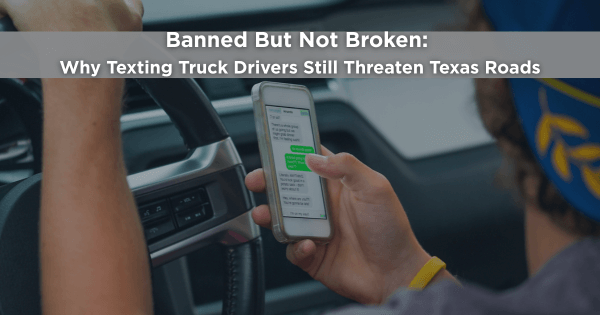
Truck driver holding a smartphone and texting while driving, illustrating the dangers of distracted commercial driving on Texas roads.

Banned But Not Broken: Why Texting Truck Drivers Still Threaten Texas Roads

By jlotspeich · Truck Accidents

Truck driver holding a smartphone and texting while driving, illustrating the dangers of distracted commercial driving on Texas roads. Banned but Not Broken: Truck drivers texting behind the wheel are still a leading cause of serious accidents on Texas highways.

Distracted truck driving, particularly involving phones and electronic devices, is continuing to be a major and ever-growing problem on Texas highways. Annually, thousands of accidents across the U.S. involve large trucks, with a significant portion attributed to driver inattention. Here is an in-depth look at the issue, the legal rules that apply, and how injury victims can enforce their rights under Texas and federal law.

Distracted Driving: A National Crisis on Our Highways

The statistics paint a grim picture of the dangers posed by distracted driving, especially when it involves large commercial trucks. According to the National Highway Traffic Safety Administration (NHTSA) and the Federal Motor Carrier Safety Administration (FMCSA):

  • In a recent year, distracted driving was a factor in over 3,100 traffic fatalities across the U.S.
  • While specific truck-only distracted driving statistics can vary, studies indicate that truck drivers are often involved in crashes where distraction is a contributing factor, with cell phone use being a leading cause.
  • The economic cost of crashes involving large trucks is substantial, running into billions of dollars annually, encompassing medical costs, lost productivity, property damage, and legal expenses.

Image of a truck driver looking at a phone while driving, illustrating distracted driving.

These numbers highlight the urgent need for stricter enforcement, better driver education, and advanced preventative measures to combat this pervasive issue.

The Dangers of Distracted Truck Driving in Texas

Texas has witnessed an alarming rise in commercial truck crashes due to driver distraction. Truck drivers are increasingly involved in serious and fatal accidents caused by texting, app use, and other phone-related distractions. The sheer size and weight of commercial trucks mean that even minor distractions can lead to catastrophic outcomes. Just a four-second glance at a phone while driving 55 mph is enough for a truck to travel the length of a football field without looking at the road, dramatically increasing the risk of a catastrophic collision. The consequences can be devastating, leading to severe injuries, fatalities, and extensive property damage.

Image of a severe truck accident on a highway, emphasizing the dangers of distracted driving.

Understanding the Types of Distraction

Distracted driving is generally categorized into three main types, all of which pose significant risks for truck drivers:

  • Manual Distraction: This occurs when a driver takes one or both hands off the steering wheel to perform another task, such as reaching for a phone, adjusting a GPS, or eating. For truck drivers, this could include manipulating a CB radio, adjusting cargo, or reaching for paperwork.
  • Visual Distraction: This involves taking eyes off the road, even for a split second. Examples include looking at a phone screen, observing an accident on the roadside, or reading a map. For truck drivers, this might involve observing roadside billboards, checking mirrors excessively, or looking at a dispatch screen.
  • Cognitive Distraction: This is perhaps the most insidious, as it involves the driver's mind wandering from the task of driving. Thinking about personal problems, engaging in intense conversations, or being preoccupied with a phone call (even hands-free) can significantly impair reaction time and decision-making. For truck drivers, this could involve intense route planning, worrying about delivery schedules, or engaging in complex mental calculations.

For truck drivers, who operate vehicles requiring constant attention and quick reflexes, any combination of these distractions can have dire consequences, especially given the longer stopping distances and larger blind spots of commercial vehicles.

Texas Law: Statutes Banning Distracted Driving

Texas Transportation Code § 545.4251 prohibits all drivers, including truckers, from using a portable wireless communication device to read, write, or send electronic messages while operating a motor vehicle, unless the vehicle is stopped. The law specifically bans texting, emailing, and using apps, even at red lights if the vehicle is in operation. This legislation was enacted to enhance road safety by directly addressing a leading cause of accidents. This legislation underscores Texas's commitment to reducing preventable accidents and ensuring safer roads for all motorists.

The law provides a few exceptions, such as using a device for emergencies, navigation, or to report a crime or hazard. Novice drivers with a learner’s permit may not use a cell phone at all during the first six months of driving. Drivers under 18 are not permitted to use any wireless device, even hands-free, except in an emergency. All drivers are banned from using handheld devices in marked school zones, and school bus drivers carrying minors cannot use a device unless the bus is stopped or there’s an emergency.

Texting while driving is a primary offense, so police may stop and cite drivers solely for this violation. First-time offenders face fines between $25 and $99, with subsequent violations subject to fines of $100 to $200. Where a distracted driver causes a serious crash resulting in injury or death, the offense is elevated to a Class A misdemeanor with potential penalties of up to one year in jail and a $4,000 fine. Texas Transportation Code § 545.4251

Texas law strictly prohibits the use of portable wireless communication devices while driving.

Federal Rules: Truckers and Phone Use

Federal law establishes even stricter requirements for commercial vehicle operators. Under 49 CFR § 392.80, truck drivers are expressly prohibited from texting while driving. Under 49 CFR § 392.82, commercial vehicle drivers may not use hand-held cell phones to make a call, dial by pressing more than one button, or reach for a device in a way that requires moving from a seated driving position. These stringent federal regulations are in place due to the increased potential for severe harm when large commercial motor vehicles are involved in accidents, and to ensure uniformity across state lines for interstate commerce.

Truck drivers must use hands-free technology if they need to communicate. FMCSA violations carry steep penalties: drivers can be fined up to $2,750, while motor carriers can be fined up to $11,000 per violation if they permit or require drivers to break these rules. 49 CFR § 392.80, 49 CFR § 392.82

Image of a truck driver using a hands-free device, illustrating compliance with FMCSA regulations.

Preventative Measures and Industry Responsibility

While individual driver responsibility is paramount, trucking companies also bear a significant role in preventing distracted driving. Effective preventative measures include:

  • Robust Company Policies: Implementing clear, strict policies against cell phone use and other distractions while driving, with consistent enforcement to ensure compliance and accountability.
  • Driver Training and Education: Regular training programs that emphasize the dangers of distracted driving, the specific legal requirements, and safe driving practices, often incorporating real-world case studies.
  • In-Cab Monitoring Systems: Utilizing technologies like dashcams and driver-facing cameras that can detect and alert drivers to distracted behavior, providing real-time feedback and data for coaching and performance improvement.
  • Telematics and ELDs: Leveraging Electronic Logging Devices (ELDs) and telematics systems to monitor driving behavior, identify patterns of distraction, and ensure compliance with hours-of-service regulations, which can indirectly reduce fatigue-related distractions.
  • Hands-Free Technology: Providing and mandating the use of hands-free communication devices to ensure drivers can communicate safely when necessary, minimizing manual and visual distractions.

By adopting these measures, trucking companies can foster a culture of safety and significantly reduce the incidence of distracted driving among their fleet.

Civil Liability for Distracted Driving Truck Accidents

These statutes do more than penalize drivers—they serve as the legal standard of care in civil lawsuits for personal injury or wrongful death. When a truck driver violates Texas Transportation Code § 545.4251 or the FMCSA rules and an accident results, that violation is strong evidence of negligence under Texas law.

This legal principle, known as negligence per se, means a court can find a truck driver and their employer responsible purely based on proof of the law violation, simplifying the burden of proof for victims. This significantly streamlines the legal process for victims, as they primarily need to prove the violation occurred and directly caused their injuries, rather than having to establish the general standard of care. Attorneys for victims will subpoena crucial evidence such as cell phone records, app data, dashcam video, truck telematics (including Electronic Control Module/black box data), and eyewitness testimony to establish the violation and resulting harm.

Texas uses a comparative fault rule: injured victims may recover damages as long as they are not more than 50 percent responsible for the crash. Damages typically include medical bills, rehabilitation, lost wages and future income, pain and suffering, punitive damages for gross negligence, and, in fatal cases, wrongful death compensation. Texas Civil Practice & Remedies Code § 33.001

Case Law: How Texas Courts Handle Distracted Driving Claims

Texas appellate courts consistently uphold verdicts where injury victims prove a truck driver was distracted by a phone or other device. Courts rely heavily on a comprehensive array of evidence, including phone logs, GPS records, electronic data from the truck's systems, and eyewitness testimony. The legal framework in Texas allows for both the distracted driver and the trucking company (under theories of vicarious liability or negligent entrustment/supervision) to be held accountable, exposing them to substantial civil liability when a clear link between distraction and causation is established.

Steps to Take After a Distracted Truck Crash

Crucial steps to take immediately following a distracted truck crash:

  • Call 911 and make sure law enforcement responds and fully documents the scene, including any observations of driver distraction.
  • Take photos and videos of the accident scene, vehicle damage, road conditions, and any visible evidence of phone or device use. Preserve physical and digital evidence, and get witness contact information.
  • Ask the investigating officer to look for signs and evidence of phone or device use by the truck driver and to include this in their report.
  • Contact a knowledgeable truck accident attorney immediately to secure cell phone records, electronic data (such as black box data), and company logs before evidence is lost or destroyed.
  • Cooperate with your medical providers and follow all treatment recommendations, which will help document your injuries for your legal case.

HLAW Holds Distracted Truck Driver's Accountable

Distracted driving by truckers is preventable, is strictly prohibited by both Texas and federal law, and causes needless tragedy for countless families every year. The legal standards make it much easier for victims to prove liability when a commercial driver violates these straightforward cell phone and texting bans. If you or a loved one have suffered from a truck accident caused by distracted driving, taking immediate legal action is essential to protect your rights and secure the compensation you deserve.

At Howard Lotspiech Alexander & Williams, PLLC (HLAW) we have significant experience representing individuals who have been injured by distracted truck drivers. We know and understand the relevant statutes and regulations that form the foundation for holding distracted truck drivers accountable and we have a proven track record with complex evidence (such as cell phone data and black box records). HLAW will fight aggressively against big trucking companies and insurers. Let HLAW guide you through every step of your claim, stand up to the trucking industry, and help restore justice for you and your family.

Contact HLAW today for a Free Consultation

Ready to Fight for Your Rights?

Don't let a distracted truck driver's negligence ruin your future. Our experienced legal team is ready to provide the aggressive representation you need and get the justice you deserve. Because, skilled and experienced legal help can make all the difference when your future is on the line.

About the Author

Jesse J. Lotspeich is a seasoned trial attorney and partner at Howard Lotspeich Alexander & Williams, PLLC, where he leads the firm’s Personal Injury practice. 

Raised in the small West Texas town of Crane, Jesse was instilled early with a strong work ethic and a sense of duty to others.  After earning his B.A. cum laude from Howard Payne University and his J.D. from Texas Tech University School of Law, Jesse went to work in Fort Worth advocating for victims with serious injuries caused by the neglect of others.

Jesse specializes exclusively in personal injury litigation, and he carries that focus into every case—whether it’s catastrophic auto or trucking accidents, wrongful death, workplace injuries, or defective products.  Known for being a staunch advocate in the courtroom, he personally handles depositions, case investigations, and all trial-level work, never shying from a fight on behalf of his clients. 
Read full article
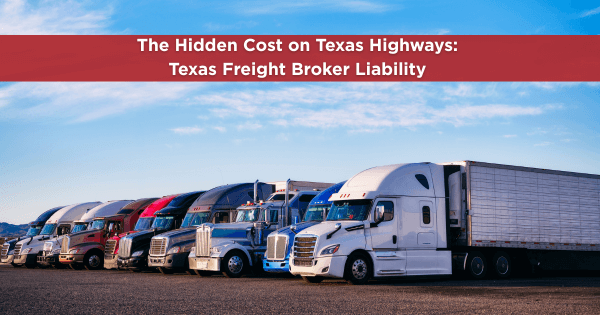
A row of colorful semi-trucks parked along a Texas highway under a blue sky, illustrating freight broker liability in Texas.

The Hidden Cost on Texas Highways (Texas Freight Broker Liability)

By jlotspeich · Truck Accidents

A row of colorful semi-trucks parked along a Texas highway under a blue sky, illustrating freight broker liability in Texas. Texas highways see thousands of freight trucks daily—know how freight broker liability impacts road safety and legal responsibility.

It’s just after sunrise on I-35 near Fort Worth when a family’s car is struck head-on by a tractor-trailer that drifts across the median. The 18-wheeler is hauling freight for a large national logistics company. But, the name on the truck’s door belongs to a tiny independent carrier out of the Rio Grande Valley.

Within weeks, the carrier dissolves. The driver, an undocumented immigrant using a borrowed CDL, disappears. When the family’s attorney seeks damages from the freight broker and trailer owner, both are denied liability — claiming they had merely “arranged transportation” through a third-party hauler.

This scenario isn’t unique. It’s the new face of the trucking industry in Texas, where major freight companies increasingly insulate themselves from responsibility through independent contractors, shell carriers, and legal loopholes. And now, a case before the United States Supreme Court may determine whether that system remains untouchable. Or, whether victims finally get a path to justice.

The Case: Montgomery v. Caribe Transport II, LLC

The majestic facade of the United States Supreme Court building under a clear sky.

The Supreme Court will soon hear Montgomery v. Caribe Transport II, LLC (Docket No. 24-1238) — a case that could redefine accountability in the U.S. trucking industry. At its core, the case asks:

Can a freight broker or logistics company be held liable under state law for negligently hiring an unsafe or illegal motor carrier? Or, does federal law shield them from all responsibility? This question sits at the intersection of federal deregulation, public safety, and corporate accountability. 

The answer could reshape how every trucking-related personal injury case in Texas is litigated.

The Legal Framework: The FAAAA and the “Safety Exception”

The battle revolves around the Federal Aviation Administration Authorization Act (FAAAA), enacted in 1994 to deregulate the trucking and freight industry. The Act prohibits states from enforcing laws “related to a price, route, or service of any motor carrier or broker.” In practice, brokers and large logistics companies have invoked this statute as a liability shield, arguing that state-law tort claims (such as negligent hiring or negligent entrustment) interfere with federal uniformity. But the FAAAA includes an important carve-out: States may still regulate “the safety of motor vehicles.” This is known as the “safety exception.” The question before the Supreme Court is whether that exception allows victims to bring state-law negligence claims against brokers who recklessly choose unsafe or unqualified carriers.

A Split in the Courts

Federal appellate courts have been divided for years:

  • The Seventh and Ninth Circuits (covering parts of the Midwest and West Coast) have allowed victims to pursue negligent-hiring claims under the safety exception, recognizing that public safety outweighs deregulation in these cases.
  • The Eleventh Circuit (covering the Southeast) — and several Texas federal courts — have held that the FAAAA preempts such claims entirely, leaving victims with no remedy beyond the small carrier that caused the crash.

That conflict between circuits is what brought Montgomery to the Supreme Court.

Texas: The Epicenter of the Freight and Liability Debate

Long exposure shot of trucks moving rapidly on a multi-lane Texas highway at dusk, emphasizing high traffic volume.

Texas is the beating heart of America’s freight economy and the front line of its liability crisis.

More trucks travel through Texas highways than any other state, and Texas consistently ranks #1 in fatal trucking crashes nationwide. This high traffic volume, combined with proximity to the Mexican border, has created the perfect environment for fragmented, loosely regulated trucking operations:

  • Independent contractors and small carriers bid for jobs through national freight-matching platforms.
  • Brokers and shippers outsource responsibility through layers of contracts.
  • And some carriers employ or subcontract unlicensed or undocumented drivers, often paid in cash, without meaningful oversight.

For accident victims, these complex arrangements create a maze of dead ends.

Independent Trucking and the “Liability Shell Game”

Abstract image of interconnected gears or a complex network diagram, symbolizing the intricate and often opaque logistics chain.

In traditional trucking, a motor carrier owns its trucks, employs its drivers, and carries insurance.

But in today’s fragmented freight world, that structure has eroded. Now, it’s common to see:

  • “Lease-on” drivers who operate under another company’s DOT number.
  • Shell carriers that exist only on paper to secure loads.
  • “Chameleon carriers,” companies that close after an accident and reopen under a new name.
  • Freight brokers who claim to be mere intermediaries, even when they exercise control over routes, schedules, or safety.

The result? When a catastrophic crash occurs, the entity with the deep pockets — the broker, shipper, or trailer owner — often says, “Not our truck, not our problem.”

And the victims are left suing a defunct LLC with minimal insurance.

The Border Connection: Immigration and Labor Exploitation

Because Texas is a border state, its trucking industry is deeply tied to cross-border labor and immigration issues.

Investigations by both state and federal agencies have uncovered:

  • Drivers operating under fraudulent or borrowed CDLs.
  • Companies hiring undocumented immigrants through layered subcontracting chains.
  • Fly-by-night carriers that register with fake addresses or falsified insurance.

These aren’t isolated incidents. Many independent operators are pressured into unsafe work, long hours, or driving without proper credentials. While brokers turn a blind eye, prioritizing delivery speed and low rates over safety compliance.

This pattern blurs the line between labor exploitation and public endangerment. And when disaster strikes, the system offers no recourse for victims (or the exploited workers themselves).

How Texas Courts Handle These Cases Today

Under current Texas federal court precedent, most negligent-hiring claims against brokers are dismissed as preempted by the FAAAA.

For example:

  • In Hamby v. Wilson (E.D. Tex. 2023), the court found that a broker’s decision to hire a carrier (even one with a poor safety record) was a “service” covered by federal preemption.
  • The court rejected the argument that the “safety exception” applied, concluding that Congress intended deregulation to take priority.

Similar rulings in the Southern and Northern Districts of Texas have echoed that reasoning, effectively closing the courthouse doors to victims seeking to hold brokers accountable.

This has left plaintiffs’ lawyers in Texas with limited options: pursue the small carrier’s minimal insurance, or attempt to pierce corporate veils — a difficult and expensive process.

What’s at Stake in the Supreme Court

Classic bronze scales of justice perfectly balanced, symbolizing fairness and the critical decision ahead.

If the Court Upholds Broad Preemption If the Court Expands the Safety Exception
Brokers remain immune from negligent-hiring claims. Victims may sue brokers for hiring unsafe or illegal carriers.
Accident victims must rely solely on small carriers’ insurance. Large logistics companies face renewed accountability.
Illegal or unsafe hiring practices continue with little deterrent. Brokers must tighten vetting, insurance, and compliance procedures.
Exploited or undocumented drivers remain hidden in gray markets. Safer roads, fairer oversight, and stronger deterrence for reckless brokers.

The decision will likely come by June 2026 and will immediately impact ongoing and future trucking litigation in Texas.

The Human Cost: Victims Without Justice

A somber family, possibly in a courtroom or consultation setting, looking distressed and seeking resolution.

Every trucking lawyer in Texas has seen it: the victim who did everything right, yet ends up fighting a legal ghost. They sue the driver (who’s judgment-proof). They sue the carrier (which vanishes or files bankruptcy). And when they turn to the broker, they’re told federal law won’t allow it.

For families who’ve lost loved ones, that feels like betrayal by the system itself.

This isn’t just a legal issue; it’s a moral one. When billion-dollar corporations profit from dangerous networks while evading responsibility, the balance of justice tips away from victims and toward impunity.

The Broader Impact on Texas Safety and Commerce

If Montgomery expands broker liability, expect to see a seismic shift in Texas transportation practices:

  • More rigorous carrier vetting. Brokers would need to verify licensing, insurance, and driver credentials.
  • Better compliance auditing. Shippers and brokers could be held to higher due-diligence standards.
  • Fewer shell operations. Increased accountability would discourage “pop-up” carriers used to skirt liability.
  • Improved highway safety. Greater responsibility at the top often leads to safer conduct at every level of the supply chain.

But if the Court sides with preemption, Texas may see the opposite — more layers, less transparency, and continued exploitation of both victims and under-the-radar drivers.

Sidebar: How Unlicensed and Undocumented Drivers Slip Through

  • Falsified Licensing – Some drivers borrow or buy CDLs from legitimate holders, exploiting weak verification in smaller carriers.
  • Shell Companies – A carrier forms under a new DOT number after a crash or inspection failure.
  • Broker Blind Spots – Brokers rely on public FMCSA databases but rarely verify insurance or driver identity beyond surface checks.
  • Labor Exploitation – Drivers without legal status may work under dangerous conditions with no recourse or benefits.

Each of these loopholes erodes public safety — and each could be curtailed if brokers faced legal accountability.

Voices from Both Sides

Proponents of limiting liability argue that brokers can’t police every carrier and that excessive litigation would cripple the freight economy. Opponents say deregulation has gone too far, allowing corporate actors to outsource risk and undercut safety. In truth, the issue isn’t whether every broker is bad — it’s whether the law should protect those who act irresponsibly at the expense of human life.

A Path Toward Justice

Whatever the Supreme Court decides, Texas attorneys and policymakers must confront an uncomfortable truth: the trucking industry’s growth has outpaced its accountability. Texas families deserve safer highways. Legitimate drivers deserve fair, lawful work. And when tragedy strikes, victims deserve meaningful justice — not excuses rooted in federal loopholes.

HLAW’s Perspective

At Howard Lotspeich Alexander & Williams, PLLC, our team sees beyond the crash report.

We investigate every layer — from the driver’s credentials to the broker’s contracts — to uncover who truly bears responsibility.

Our attorneys have handled cases involving:

  • Negligent hiring of unqualified or unsafe carriers.
  • Fatal crashes caused by drivers without valid CDLs.
  • Brokers and logistics firms attempting to hide behind corporate shells.

We believe accountability shouldn’t stop at the bottom of the supply chain. It should start where the power — and profit — begins.

Conclusion: Justice on the Line

The Supreme Court’s ruling in Montgomery v. Caribe Transport may decide whether Texas victims of trucking accidents can finally pursue the companies that put unsafe drivers on the road — or whether the law will continue to let those companies hide behind paperwork. Either way, one thing is clear: the safety of Texas highways, and the fairness of its justice system, hang in the balance.

Contact HLAW if you or a loved one has been injured in an Trucking Accident

If you or someone you love has been injured in a trucking accident, don’t assume the company behind the truck is beyond reach.

Call Howard Lotspeich Alexander & Williams, PLLC today for a free consultation. Our team will trace every link in the chain — from the driver to the carrier to the broker — and fight for the justice you deserve.

About the Author

Jesse J. Lotspeich is a seasoned trial attorney and partner at Howard Lotspeich Alexander & Williams, PLLC, where he leads the firm’s Personal Injury practice. 

Raised in the small West Texas town of Crane, Jesse was instilled early with a strong work ethic and a sense of duty to others.  After earning his B.A. cum laude from Howard Payne University and his J.D. from Texas Tech University School of Law, Jesse went to work in Fort Worth.  For over 12 years, he worked at the Law Office of James Stanley handling complex accident and injury cases before joining HLAW as a partner. 

Jesse specializes exclusively in personal injury litigation, and he carries that focus into every case—whether it’s catastrophic auto or trucking accidents, wrongful death, workplace injuries, or defective products.  Known for being a staunch advocate in the courtroom, he personally handles depositions, case investigations, and all trial-level work, never shying from a fight on behalf of his clients. 

Read full article
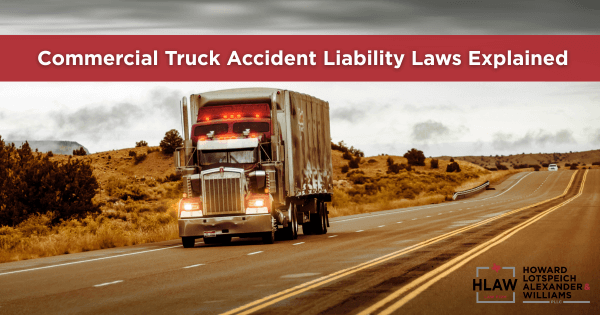
Red semi-truck driving on a Texas highway under cloudy skies, illustrating commercial Texas truck accident liability laws.

Commercial Truck Accident Liability Laws Explained

By jlotspeich · Truck Accidents

Texas Truck Accident Liability: A Complete Guide to Commercial Truck Accident Liability Laws

When an 18-wheeler crashes on Texas roads, commercial truck accident liability laws determine who is responsible for injuries, losses, and property damage.

Red semi-truck driving on a Texas highway under cloudy skies, illustrating commercial Texas truck accident liability laws. Understanding who is responsible after a commercial truck accident can be complex. Our Fort Worth attorneys explain how Texas liability laws apply to trucking crashes.

Victims often face intricate federal regulations and state statutes while grappling with escalating medical expenses and lost income. This guide offers straightforward explanations of how fault is determined, Federal Motor Carrier Safety Administration (FMCSA) requirements, proving negligence, and available compensation options—all within the framework of Texas law. You’ll discover which parties can be held accountable, how to gather crucial evidence, what damages you can seek, and how Howard Lotspeich Alexander and Williams, PLLC provides skilled legal support to injured drivers and passengers. Continue reading to explore:

  • Liable parties and the impact of HB19
  • Key FMCSA rules that influence claims
  • Methods for proving negligence and navigating comparative fault
  • Economic and non-economic damages you can recover
  • The vital role of a dedicated Texas truck accident attorney
  • Common accident causes and current Texas crash trends

Who Bears Liability for a Commercial Truck Accident in Texas?

Pinpointing liability in a Texas commercial truck accident involves scrutinizing negligent actions and legal obligations. Liability arises when a driver, carrier, manufacturer, or another party fails to uphold their duty of care and causes harm. For instance, a driver who exceeds federal Hours of Service limits due to fatigue may be considered negligent per se under FMCSA regulations. Establishing fault often relies on driver logs, vehicle inspection reports, and maintenance records. Understanding these legal principles and how they apply to each involved entity is fundamental to holding responsible parties accountable.


The following parties are most frequently held liable after a Texas 18-wheeler collision:

  • The truck driver for violations such as speeding, distracted operation, or Hours of Service (HOS) violations
  • The trucking company for issues like negligent hiring, insufficient training, maintenance lapses, or vicarious liability
  • The cargo loader for failing to properly secure freight, leading to shifts in the load
  • The manufacturer of defective components like brakes, tires, or steering systems
  • The vehicle maintenance provider for substandard repairs or inadequate inspections
  • A government entity responsible for unsafe road design or insufficient signage

Each of these parties can face claims under both state and federal laws, clearing the path toward obtaining full compensation.

What Role Do Truck Drivers Play in Truck Accident Liability?

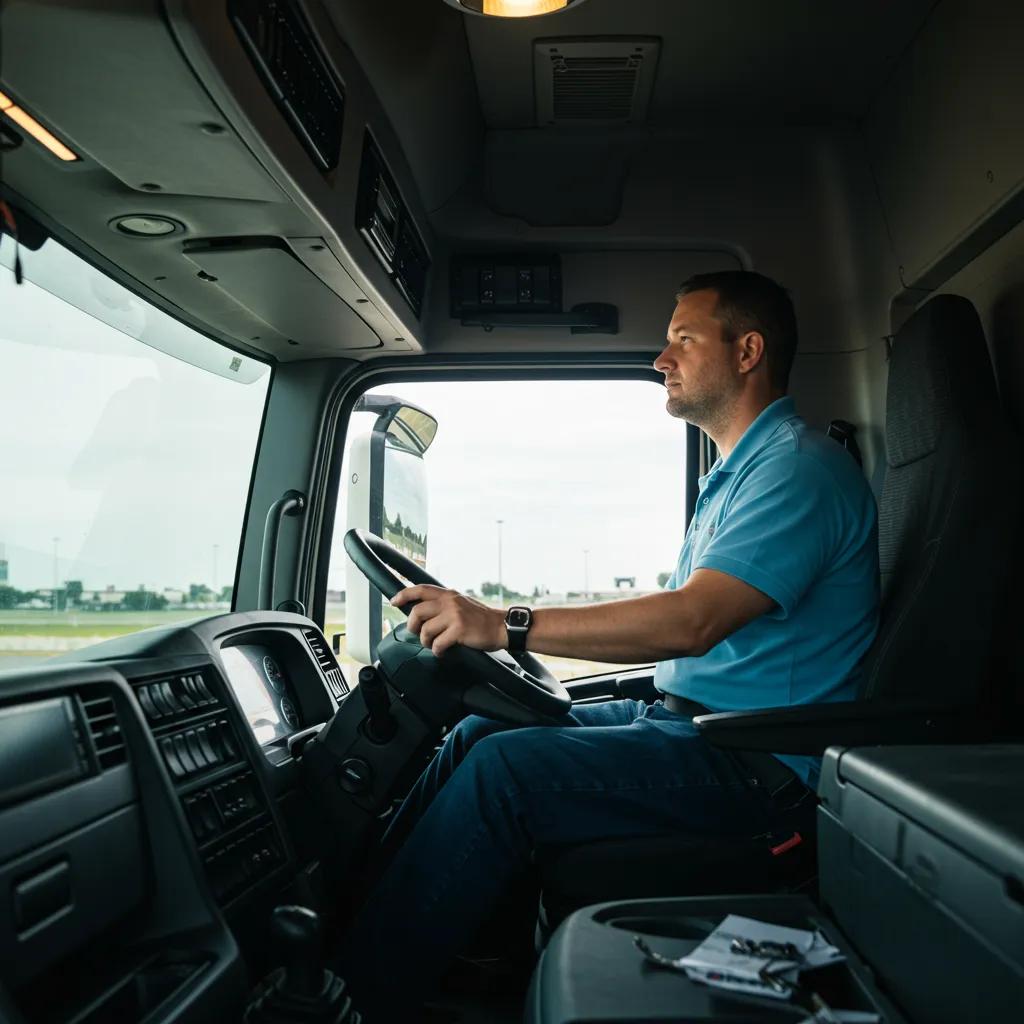
Truck driver focused on the road, illustrating driver responsibility in accident liability

Truck drivers are at the forefront of commercial vehicle safety and can be held liable for negligence if their actions violate federal or state regulations. A truck driver can be found liable due to speeding, distracted driving (such as texting), operating under the influence, or failing to adhere to FMCSA Hours of Service (HOS) limits. When driver logs reveal violations, the doctrine of negligence per se may apply, simplifying the process of proving fault. A driver's decisions have a direct impact on the risk of a crash and an accident victim's eligibility for compensation.

How Are Trucking Companies Held Accountable Under Texas Law?

Trucking companies can be held liable for negligent hiring practices, inadequate training programs, poor vehicle maintenance, and failure to enforce FMCSA regulations. Under the principle of vicarious liability, employers are responsible for the misconduct of their drivers while on duty. Texas House Bill 19 further complicates company liability by requiring a two-phase trial process that separates evidence of negligence from evidence of damages. Carriers must demonstrate robust compliance programs to avoid full accountability for accidents.

Which Other Parties Can Be Held Liable in Texas Truck Accidents?

In addition to drivers and carriers, other parties such as cargo loaders, parts manufacturers, and maintenance contractors may share liability for a truck accident. Cargo loaders are responsible when improperly secured freight shifts, leading to a loss of vehicle control. Defective brake systems, faulty tires, or steering failures can implicate manufacturers. Maintenance shops and mechanics may face negligence claims if inspection records indicate that safety defects were ignored.

How Does Texas House Bill 19 (HB19) Impact Trucking Company Liability?

Texas House Bill 19 mandates a bifurcated trial for claims against trucking companies, where negligence is determined first, followed by damages. This law, effective September 2021, restricts the discovery of financial and punitive evidence until liability is established in the first phase. This procedural change encourages streamlined defenses and may delay victims' access to carriers' safety records until after fault has been determined.

What Are the Key FMCSA Regulations Affecting Truck Accident Claims in Texas?

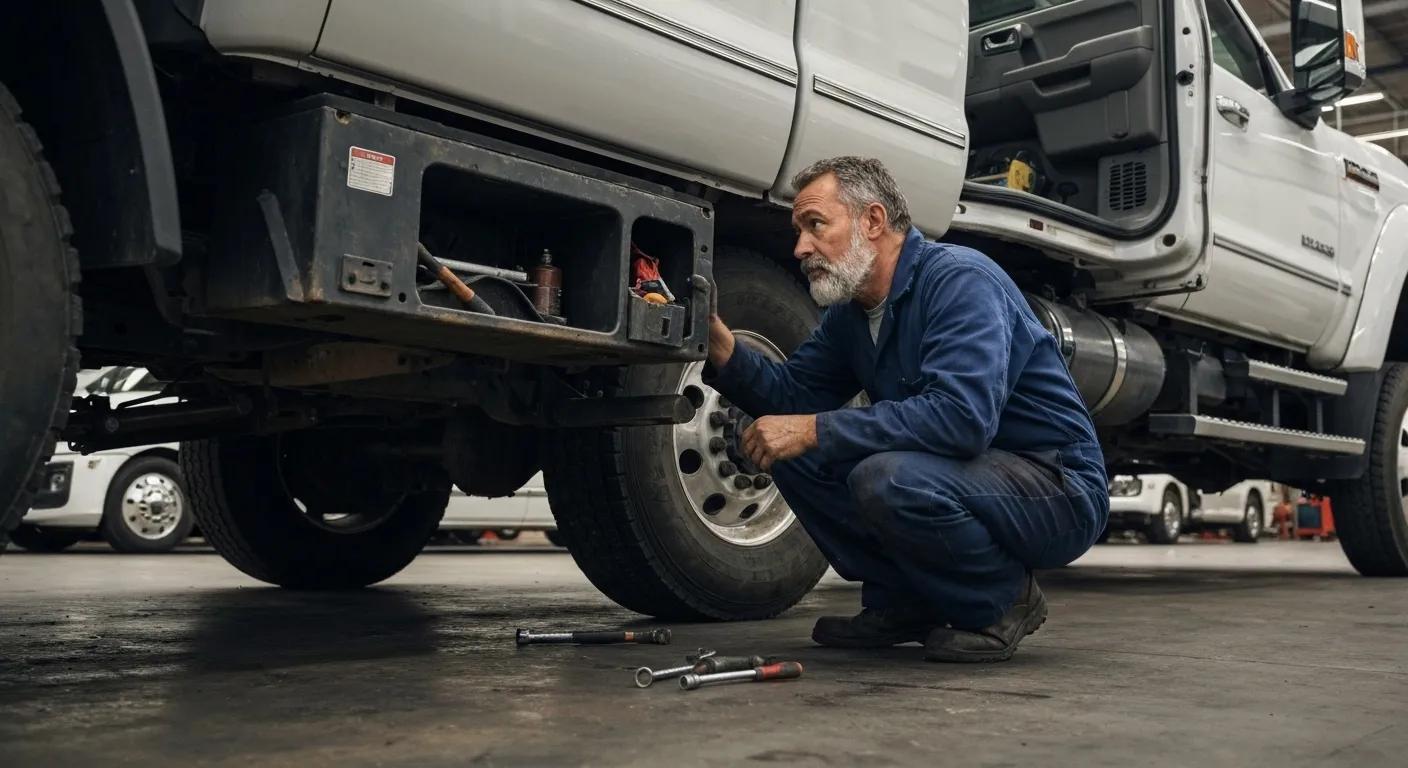
Mechanic inspecting a truck, highlighting FMCSA regulations and vehicle maintenance

Federal Motor Carrier Safety Administration (FMCSA) regulations govern the operations of commercial trucks and significantly influence liability claims in Texas. Key FMCSA rules address Hours of Service limits to prevent driver fatigue, mandate regular vehicle maintenance and inspections to ensure roadworthiness, establish drug and alcohol testing protocols to deter impairment, and set cargo securement standards to prevent load shifts. Violations of these regulations provide strong evidence for negligence per se claims, increasing the accountability of carriers and drivers in court.

Essential FMCSA requirements include:

  • Hours of Service (HOS) regulations governing driving and on-duty rest periods
  • Regular maintenance inspections and detailed repair documentation
  • Pre-employment, post-accident, and random drug and alcohol testing procedures
  • Cargo securement rules for trailers, containerized freight, and bulk loads

Strict adherence to these standards directly impacts how fault is determined and the outcomes of compensation claims.

How Do Hours of Service (HOS) Rules Influence Liability?

Hours of Service rules limit truck drivers to 11 hours of driving within a 14-hour on-duty period and require a 30-minute break after eight hours of driving. Exceeding these limits constitutes a federal violation and supports a negligence per se claim. Data from electronic logging devices (ELDs) often provides irrefutable evidence of HOS violations and driver fatigue, strengthening victims' cases.

What Are the Vehicle Maintenance and Inspection Requirements?

The FMCSA requires carriers to conduct daily pre-trip and post-trip inspections, document any identified repair issues, and perform comprehensive periodic maintenance. Failing to follow these inspection schedules or to record necessary repairs can be used to demonstrate negligence in maintaining safe equipment. Maintenance logs serve as critical proof that carriers neglected their legal duty of care.

How Do Drug and Alcohol Testing Regulations Affect Liability?

Mandatory drug and alcohol testing following certain safety-sensitive events, including accidents, can establish negligence per se if testing protocols are violated or results are concealed. Testing procedures cover pre-employment, random screenings, reasonable suspicion evaluations, and post-accident assessments. Noncompliance with these testing regulations strengthens a negligence case against both the driver and the carrier.

What Is the Role of Cargo Securement Rules in Truck Accident Liability?

Cargo securement regulations mandate that freight be properly blocked, braced, and fastened to prevent movement during transit. Violations, such as missing straps or overloaded trailers, can cause cargo shifts that destabilize the vehicle. Evidence of improper securement directly establishes liability for cargo loaders and carriers under FMCSA guidelines.

A violation of a specific safety statute designed to prevent accidents can lead to a finding of negligence per se, simplifying the burden of proof for injured parties.

Example: Negligence Per Se in Texas Truck Accidents: Statute Violations and Liability
In Texas, the law requiress vehicles approaching a railroad crossing to stop not closer than 15 feet or father than 50 feet from the nearest rail..." A Texas Court theld that that a driver's failure to comply with the statute constituted negligence per se.  Negligence per seis a legal doctrine that allows a court to treat the violation of a statute or ordinanceas automatically constituting a breach of the duty of care, rather than requiring the plaintiff to prove that the defendant acted unreasonably.

How Is Negligence Proven in Texas Commercial Truck Accident Lawsuits?

Demonstrating negligence in Texas commercial truck accident lawsuits requires proving that a breach of duty directly caused harm. Evidence typically includes electronic logging device (ELD) records, black box data, maintenance and inspection logs, police accident reports, and witness testimonies. Presenting clear causation between regulatory violations and the resulting injuries is key to a successful claim.

Type of Evidence Purpose Example
ELD / Black Box Data Confirms Hours of Service compliance Logs showing HOS overages
Maintenance Logs Details inspection and repair history Missing entry for brake repair
Police Crash Reports Provides official accident details Officer's assessment of fault
Witness Statements Corroborates events and driver behavior Eyewitness account of speeding

What Types of Evidence Are Crucial for Establishing Fault?

The most critical types of evidence include ELD data, black box recordings, maintenance and inspection logs, police crash reports, and cargo loading documentation. Collectively, this evidence demonstrates regulatory noncompliance, equipment failures, and driver misconduct.

How Does Texas’ Modified Comparative Negligence Rule Affect Claims?

Under Texas’ modified comparative negligence rule, an injured party can only recover damages if they are found to be 50 percent or less at fault for the accident. Any compensation awarded will be reduced by the injured party's percentage of fault. If a plaintiff is determined to be more than 50 percent responsible, they are barred from recovering any damages.

What Are the Different Legal Theories: Negligence, Vicarious Liability, and Negligence Per Se?

Negligence is based on proving that a party breached a duty of care, causing harm. Vicarious liability holds employers responsible for the actions of their employees within the scope of employment. Negligence per se occurs when a violation of a statute, such as an FMCSA rule, directly results in injury. Each of these theories offers a distinct pathway to establishing fault in truck accident cases.

What Damages Can Victims Recover in Texas Truck Accident Cases?

Victims of commercial truck accidents in Texas may be entitled to recover both economic and non-economic damages to compensate for their losses and suffering. Economic damages cover tangible financial losses, such as medical expenses, lost wages, and property damage. Non-economic damages address intangible losses like pain and suffering, emotional distress, and loss of consortium. In cases of wrongful death, additional damages may include funeral expenses and loss of support for surviving family members, as defined by state statutes.

Category of Damages Examples Purpose
Medical Expenses Emergency care, rehabilitation services Covers all past and future medical treatment costs
Lost Income Wages, benefits, loss of future earning capacity Compensates for income lost due to the injury
Property Damage Vehicle repair or replacement costs Restores the value of the damaged property to its pre-crash condition
Pain & Suffering Physical pain, emotional trauma, mental anguish Addresses subjective, non-economic harm experienced by the victim
Wrongful Death Losses Funeral costs, loss of financial support for survivors Provides for the economic needs of the deceased's family

What Are Economic Damages in Truck Accident Claims?

Economic damages encompass all quantifiable financial losses, including medical bills, prescription costs, physical therapy expenses, lost wages, loss of future earning capacity, and costs associated with vehicle repair or replacement. Each of these items must be documented and itemized to clearly demonstrate the actual financial losses incurred.

What Are Non-Economic Damages?

Non-economic damages are intended to compensate for losses that are not easily quantifiable in monetary terms. These include compensation for pain and suffering, mental anguish, emotional distress, and a diminished quality of life. While intangible, these losses are assessed through detailed testimony and established legal guidelines.

How Are Wrongful Death Claims Handled in Texas Truck Accidents?

Wrongful death lawsuits allow surviving family members to seek compensation for funeral and burial expenses, the loss of companionship and support from the deceased, and potential inheritance losses. Texas statutes specify who is eligible to file such claims and outline limitations on certain non-economic damages.

How Can a Texas Truck Accident Lawyer Help You Navigate Liability Laws?

A lawyer specializing in Texas truck accidents brings extensive knowledge of state and federal regulations to guide victims through the complexities of liability. By meticulously investigating crash scenes, securing critical data from ELDs and black boxes, examining maintenance records, and interviewing witnesses, an attorney can construct a robust liability case. Familiarity with Texas HB19 and comparative negligence rules ensures strategic navigation through each phase of the legal process.

At Howard Lotspeich Alexander and Williams, PLLC (HLAW), we possess significant experience in preserving vital evidence and negotiating with insurance companies to maximize compensation for our clients. Our compassionate approach ensures you remain informed throughout the process, while we aggressively pursue fair outcomes.

What Is the Importance of Legal Expertise in Complex Truck Accident Cases?

Legal expertise is crucial for correctly identifying all applicable FMCSA rules, Texas Transportation Code provisions, and civil practice statutes. Experienced attorneys can anticipate the defenses that trucking companies may present, effectively counter comparative fault arguments, and clearly articulate liability theories to judges and juries.

How Does a Lawyer Identify All Liable Parties?

Through thorough accident reconstruction, detailed review of maintenance logs, inspection of cargo securement records, and analysis of hiring and training documentation, attorneys can uncover additional parties who may share liability, such as shippers, manufacturers, or maintenance firms.

What Are the Benefits of Hiring Howard Lotspeich Alexander and Williams, PLLC?

Clients benefit from our firm’s proven history of success in 18-wheeler crash litigation, our unwavering commitment to comprehensive evidence preservation, and our personalized advocacy. Our deep understanding of Texas truck liability laws and FMCSA regulations positions victims to achieve the best possible recovery.

What Are Common Causes and Contributing Factors in Texas Truck Accidents?

Speeding, distracted driving, driver fatigue, mechanical failures, and improper cargo loading are primary factors contributing to truck crashes in Texas. Speeding reduces a driver's reaction time and intensifies the impact of collisions. Distracted driving, whether from mobile devices or other in-cab activities, impairs hazard recognition. Fatigue resulting from Hours of Service violations significantly increases the risk of accidents. Mechanical malfunctions, such as brake failures or tire blowouts, often stem from inadequate maintenance, while unsecured freight can shift, destabilizing the vehicle.

Common contributing factors include:

  • Excessive speed on both highways and urban roads
  • Use of mobile devices or other in-cab distractions
  • Hours of Service violations leading to drowsy driving
  • Defective vehicle parts or deferred maintenance
  • Improperly secured cargo causing load shifts

How Do Speeding and Distracted Driving Contribute to Liability?

Both speeding and distracted driving constitute a breach of the duty of care by increasing the risk and severity of accidents. The FMCSA and Texas law classify these behaviors as negligence, with evidence from GPS data, witness accounts, and accident reconstructions supporting claims of fault.

What Is the Impact of Fatigued Driving and Hours of Service Violations?

Driver fatigue significantly impairs alertness and reaction times, directly causing many severe truck accidents. FMCSA HOS logs document these violations, providing strong legal grounds for negligence per se claims against both drivers and carriers.

How Do Defective Parts and Improper Cargo Loading Lead to Accidents?

Mechanical defects, such as worn brake pads or faulty steering components, can lead to critical system failures while the vehicle is in operation. Similarly, unsecured or overloaded cargo can shift, altering the vehicle's weight distribution and potentially triggering rollovers or jackknife accidents, thereby implicating loaders and shipping entities in liability.

Understanding the complexities of cargo securement is crucial, as improper loading can lead to severe accidents and implicate multiple parties in liability.

Motor Carrier Crashes: FMCSA Inspection Violations and Load Securement

This paper is the fourth paper in a series of papers that analyzed results from a major damage assessment study that examined challenges products endure during shipping and handling in the mixed-load and less-than-truckload (LTL) logistics environments. The previous three papers are specific to various commodities, such as televisions, appliances, furniture, machinery, doors and windows, and paint products. These products are known to represent high levels of freight damage and corresponding claims to carriers. Products of different sizes and weights are loaded into trailers using various methods both mechanical and manual, by various algorithms to best weigh or cube out a trailer efficiently. However improper loading and lack of load securement inside the trailer can result in damage to both packages and the products they contain, and can lead to subsequent injury during unloading. The paper discusses improperly loaded trailers, and recommends proper loading methods.

Insights into motor carrier crashes: a preliminary investigation of FMCSA inspection violations, Y Gao, 2021

The historical context of cargo securement liability reveals a shift from carrier-centric responsibility to a more diffused model involving shippers and third-party logistics providers.

Texas Truck Accident Liability: Shipper and Carrier Cargo Securement Laws.

Under Texas law, cargo securement duties are informed by FMCSA regulationsadopted in Texas (49 C.F.R. Part 393, Subpart I; 37 Tex. Admin. Code § 4.11). Courts frequently apply the Savage rule, under which the carrier bears the primary duty for safe loading, while a shipperthat loads may be liable for latent, non-observable defectsit creates. Recent cases and commentary reflect that fault can be allocated among multiple actors(shipper, carrier, third-party loaders) under general negligence and comparative fault principles, rather than placed exclusively on one party. 

What Are Recent Trends and Statistics in Texas Commercial Truck Accidents?

Texas consistently ranks highest in the nation for commercial truck crashes and fatalities, with over 35,000 reported incidents and more than 600 deaths in 2023 alone. Recent data indicates that speeding contributed to 38 percent of these crashes, distracted driving accounted for 28 percent, and intersections remained the most frequent site of collisions, accounting for 32.76 percent. Projections through 2025 suggest a continued rise in accident rates, driven by increasing freight volumes, the emergence of challenges related to autonomous truck technology, and persistent gaps in regulatory compliance. These trends highlight the critical need for thorough liability analysis and proactive legal representation.

Year Crashes Reported Fatalities Key Trend
2022 34,150 585 Increased HOS violations observed
2023 35,000+ 600+ Rising rates of speeding and confusion with automation
2024 36,200 (estimated) 620 (estimated) Intersection accidents continue to be the most common type

How Has Texas Become a Leader in Truck Accident Fatalities?

A combination of heavy freight traffic, extensive rural highway networks, and insufficient rest areas contributes to driver fatigue and risky driving behaviors. Challenges in regulatory enforcement and the rapid growth of the trucking industry further increase the exposure to potential crashes.

What Are the Projected Trends for Trucking Accidents Through 2025 and Beyond?

Freight demand is anticipated to increase by over 22 percent by 2030. Simultaneously, the integration of autonomous systems and AI introduces new regulatory and safety complexities. Without enhanced compliance measures, accident rates are likely to continue their upward trajectory.

How Do Accident Locations Like Intersections Affect Liability Cases?

Collisions at intersections often involve intricate fault determinations, as both drivers and carriers may dispute right-of-way and braking capabilities. Detailed traffic signal data, analysis of skid marks, and witness interviews are essential for clarifying liability in these high-risk scenarios.

Victims dealing with the aftermath of a commercial truck crash require clear guidance on liability and compensation.

By understanding the roles of various parties, key FMCSA regulations, methods for proving negligence, and options for recovering damages, injured Texans can pursue fair outcomes. Expert legal counsel from Howard Lotspeich Alexander and Williams, PLLC ensures that every legal avenue is explored—from securing crucial black box data to advocating under Texas HB19—to maximize your recovery and hold those at fault accountable.

Contact Howard Lotspeich Alexander and Williams, PLLC today for a free case evaluation and consultation.

Read full article
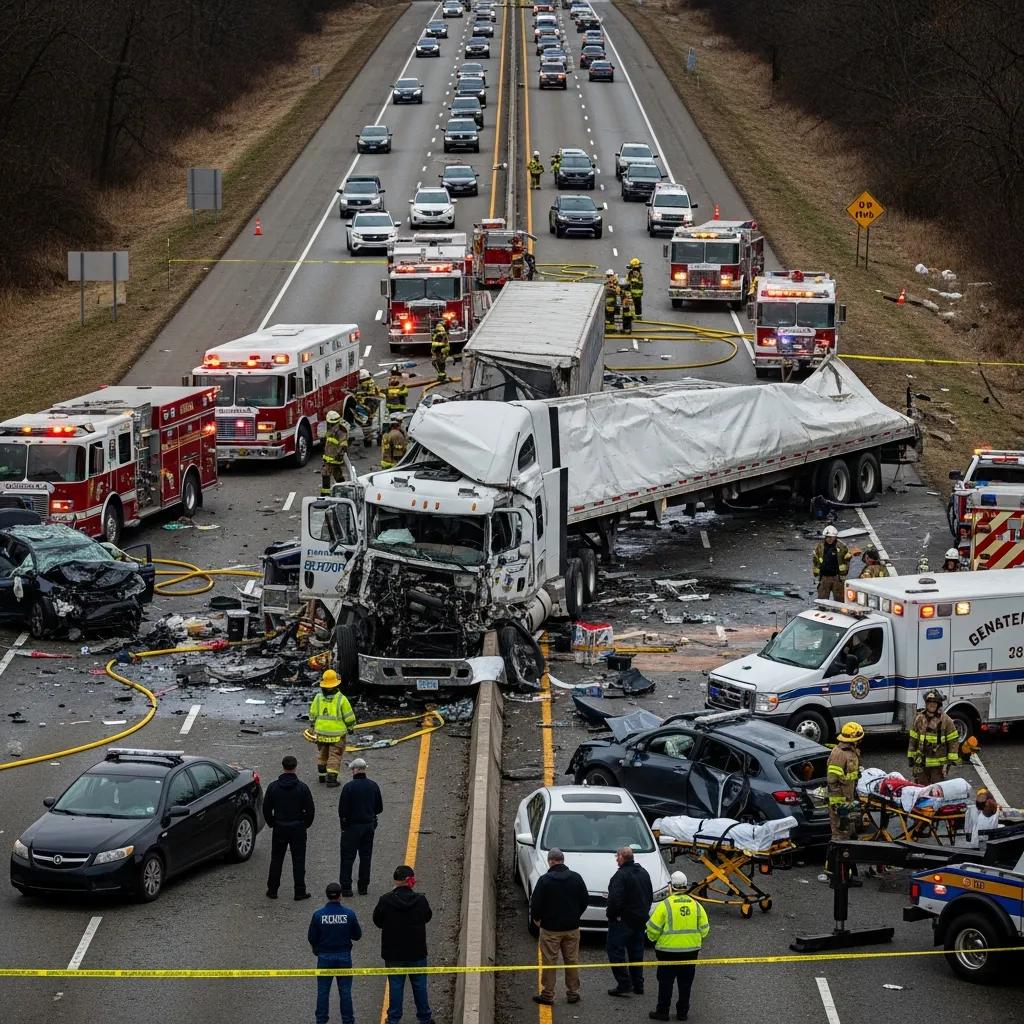
Commercial truck accident scene with emergency responders and damaged vehicles

18-Wheeler and Commercial Truck Crash Guide

By jlotspeich · Truck Accidents

Comprehensive 18-Wheeler and Commercial Truck Crash Guide: Expert Legal Insights and Claim Assistance in Fort Worth

Navigating the aftermath of an 18-wheeler or commercial truck accident can be overwhelming for victims and their families. This guide aims to provide essential legal insights and practical steps for those involved in such incidents. Readers will learn about liability determination, key factors influencing claims, and the role of black box data in establishing fault. Understanding these elements is crucial for maximizing compensation and ensuring that victims receive the justice they deserve. The article will cover various aspects, including Texas commercial truck liability laws, evidence gathering, and the importance of legal consultation. By the end, readers will be equipped with the knowledge needed to effectively handle truck accident claims in Fort Worth.

Liability Determination

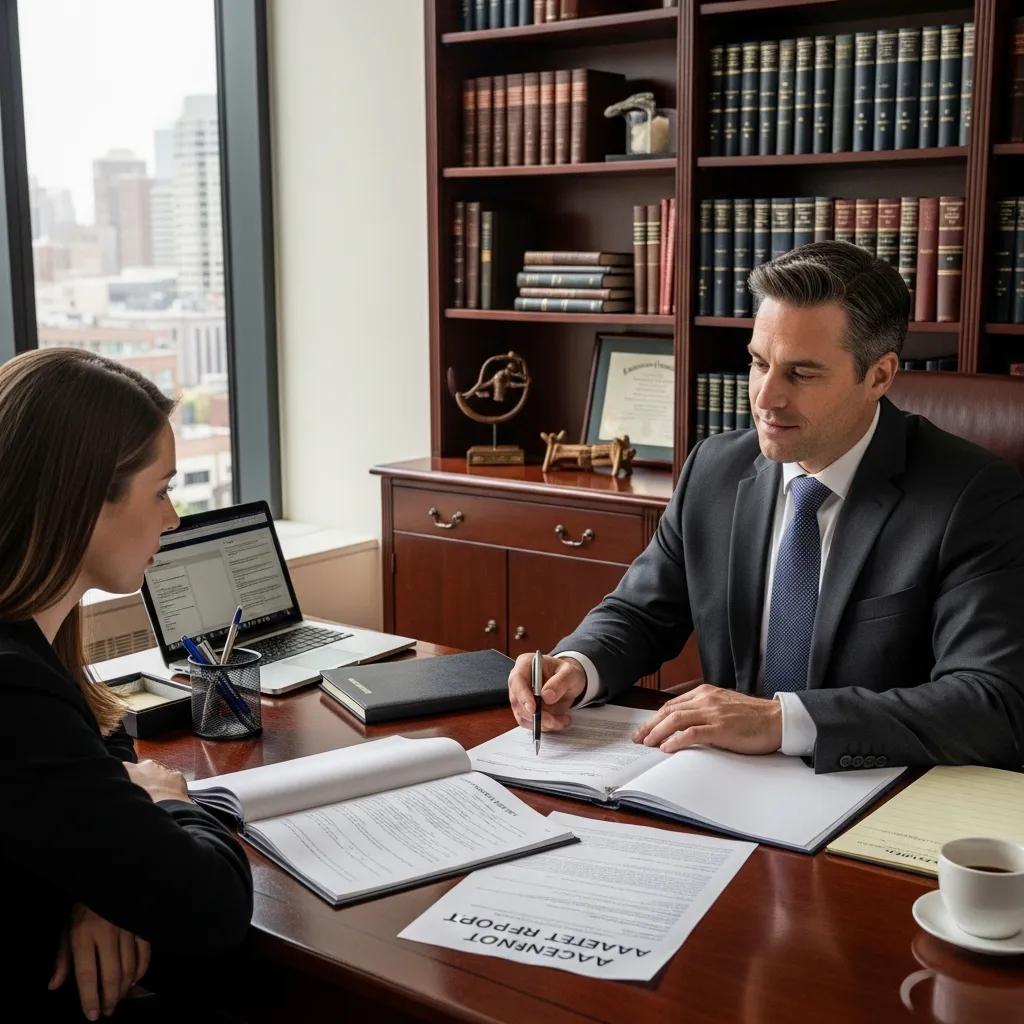
Lawyer consulting with client about truck accident liability in an office

Liability determination in truck accidents involves assessing who is responsible for the crash. Multiple parties can be liable, including the truck driver, trucking company, and even vehicle manufacturers. Establishing negligence is crucial, as it must be proven that a party failed to meet a standard of care, leading to the accident. Federal regulations, such as those set by the Federal Motor Carrier Safety Administration (FMCSA), also play a significant role in determining liability. Understanding these factors is essential for victims seeking compensation.

Key Factors in Establishing Liability

Several key factors influence liability in truck accidents. These include:

  1. Driver Behavior: Actions such as speeding, distracted driving, or driving under the influence can significantly impact liability.
  2. Vehicle Maintenance: Proper maintenance records are crucial; failure to maintain the vehicle can lead to liability for the trucking company.
  3. Regulatory Compliance: Adherence to federal and state regulations is essential; violations can establish negligence.

These factors collectively contribute to the determination of liability in truck accident cases.

Texas Commercial Truck Liability Laws

Texas has specific laws governing commercial truck liability that affect how claims are processed. These laws outline the legal standards for negligence and the responsibilities of trucking companies. Victims may be entitled to compensation for medical expenses, lost wages, and pain and suffering. Understanding these laws is vital for victims to navigate the claims process effectively.

Role of Black Box Data

Black box data plays a critical role in establishing fault in truck accidents. This data provides essential information about vehicle operation, including speed, braking patterns, and driver behavior leading up to the crash. Such evidence can be pivotal in proving negligence and determining liability. The ability to access and analyze this data can significantly influence the outcome of a claim.

Further research emphasizes the growing importance of black box technology in determining liability, especially with the rise of intelligent vehicle systems.

Black Box Data & Liability in Truck Accidents

ABSTRACT: AbstractWith the rapid evolution of intelligent vehicle technology, autonomous driving systems have undeniably boosted traffic efficiency. Nevertheless, they have concurrently muddied the waters of accident liability determination. In the Current research lacks clarity in defining responsible entities, unifying technical standards, and ensuring data reliability, while lagging legal frameworks exacerbate industry uncertainties. This study focuses on accident liability determination for intelligent vehicles, leveraging an integration of black box technology and an autonomous driving level assessment system. Through case analysis (e.g., the Xu case in China), technical standard interpretation like GB44497-2024, and systematic framework construction, the research explores data-driven and legally coordinated approaches for liability allocation. Findings reveal that black box data serves as critical evidence but faces limitations in extreme weather, while the proposed L1-L5 assessment system

Liability Determination for Smart Vehicle Accidents: Based on Black Box and Smart Vehicle Class Assessment, 2025

Evidence Gathering

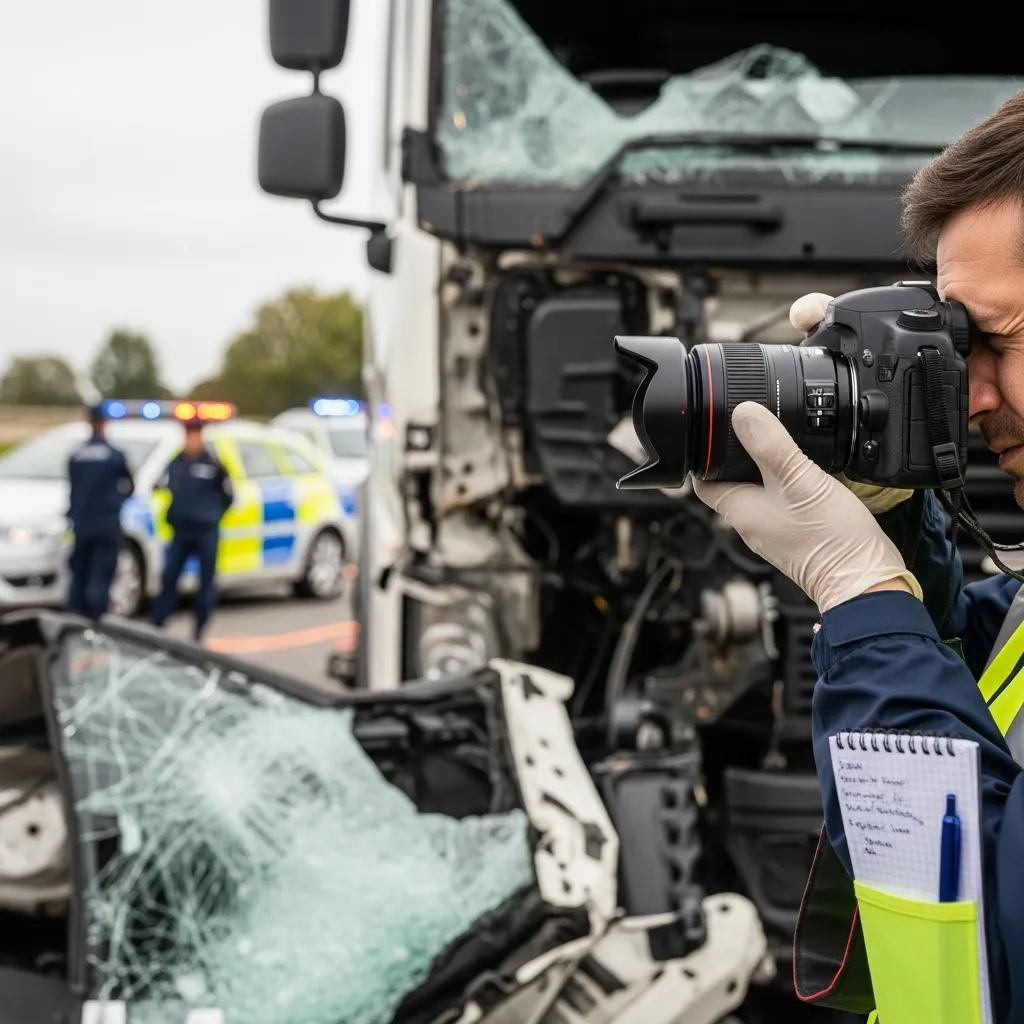
Person gathering evidence at a truck accident scene with camera and notepad

Gathering evidence is a crucial step in the claims process for truck accidents. Victims should focus on collecting the following types of evidence:

  • Accident Reports: Official reports from law enforcement provide a factual account of the incident.
  • Witness Statements: Eyewitness accounts can corroborate the victim's version of events.
  • Photographic Evidence: Images of the accident scene, vehicle damage, and injuries can support the claim.

Timely preservation of this evidence is essential for building a strong case.

Claim Assistance

Legal consultation is vital for victims of truck accidents. Experienced attorneys can help navigate the complexities of the claims process, ensuring that victims understand their rights and options. Consulting with a knowledgeable attorney can maximize compensation by leveraging their expertise in negotiating with insurance companies and understanding the nuances of Texas law. Victims are encouraged to schedule consultations to discuss their specific cases and receive tailored legal advice.

How is Liability Determined in 18-Wheeler and Commercial Truck Accidents?

Liability in 18-wheeler and commercial truck accidents is determined through a comprehensive analysis of the circumstances surrounding the crash. This includes evaluating the actions of all parties involved, the condition of the vehicle, and compliance with relevant regulations. The interplay of these factors can complicate liability determination, making it essential for victims to seek legal guidance.

What Are the Key Factors in Establishing Truck Crash Liability?

Key factors influencing truck crash liability include driver behavior, vehicle maintenance, and adherence to regulatory standards. Each of these elements can significantly impact the outcome of a claim, highlighting the importance of thorough investigation and evidence collection.

How Do Texas Commercial Truck Liability Laws Affect Claims?

Texas commercial truck liability laws establish the framework for how claims are processed and the standards for negligence. These laws dictate the responsibilities of trucking companies and the rights of victims, ensuring that those injured in accidents have a clear path to seek compensation.

What Role Does Black Box Data Play in Commercial Truck Accident Claims?

Black box data serves as a crucial piece of evidence in commercial truck accident claims. It provides insights into the vehicle's operation and can reveal critical information about the circumstances leading to the accident. This data can be instrumental in establishing fault and supporting the victim's claim.

How Is Black Box Data Retrieved and Analyzed in Truck Crashes?

Retrieving and analyzing black box data involves specialized techniques and tools. Typically, this data is extracted by professionals trained in forensic analysis, ensuring that the information is preserved and accurately interpreted. Understanding the retrieval process is essential for victims seeking to utilize this evidence in their claims.

How Does Black Box Evidence Influence Liability and Settlement Outcomes?

Black box evidence can significantly influence liability and settlement outcomes by providing concrete data that supports or refutes claims of negligence. The preservation of this evidence is critical, as it can be the deciding factor in the success of a claim.

What Is the Process for Filing Commercial Truck Accident Claims in Fort Worth?

Filing a commercial truck accident claim in Fort Worth involves several key steps:

  1. Seek Medical Attention: Prioritize health and safety by obtaining necessary medical care.
  2. Call the Police: Report the accident to law enforcement to create an official record.
  3. Collect Evidence: Gather relevant evidence, including photographs and witness statements.

Following these steps can help streamline the claims process and improve the chances of a successful outcome.

What Steps Should Victims Take Immediately After a Truck Crash?

Victims of truck crashes should take immediate action to protect their rights and strengthen their claims. Key steps include:

  1. Check for Injuries: Assess personal health and the health of others involved.
  2. Move to Safety: If possible, relocate to a safe area to avoid further accidents.
  3. Call 911: Notify emergency services to report the incident and request assistance.

Taking these steps can be crucial in the aftermath of a truck accident.

How Does Legal Consultation Support Claim Maximization?

Legal consultation plays a vital role in maximizing claims for truck accident victims. Attorneys can provide guidance on the claims process, assist in evidence gathering, and negotiate with insurance companies on behalf of their clients. This support is essential for ensuring that victims receive the compensation they deserve.

How Can a Commercial Truck Injury Attorney Assist You After a Crash?

A commercial truck injury attorney can offer invaluable assistance following a crash. They provide legal representation, help navigate the claims process, and advocate for the victim's rights. Their expertise in handling truck accident cases can significantly impact the outcome of a claim.

What Expertise Does a Fort Worth Truck Accident Lawyer Provide?

Fort Worth truck accident lawyers bring specialized knowledge and experience to the table. They understand the intricacies of Texas law, the nuances of commercial truck regulations, and the best strategies for building a strong case. This expertise is crucial for victims seeking justice and compensation.

How Do Client Testimonials Reflect Successful Legal Representation?

Client testimonials serve as a testament to the effectiveness of legal representation. They highlight successful outcomes and demonstrate the attorney's ability to navigate complex cases. Positive feedback from previous clients can build trust with potential clients, showcasing the attorney's expertise and commitment to achieving favorable results.

Read full article

Speak with a Fort Worth attorney

Call (817) 993-9249 or send us a message to discuss your case.