Skip to content
Tag

Probable Cause

Page 1 of 3 · 13 articles

Final Four DWI Texas

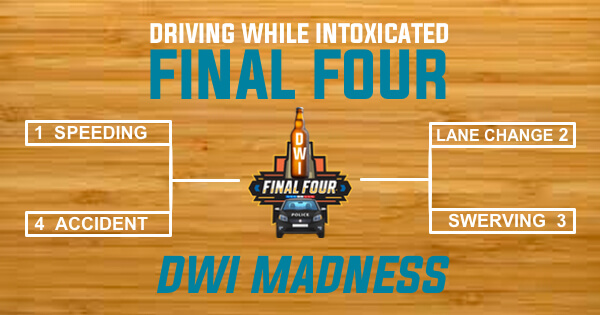
DWI Madness | “The Final Four” Reasons Texans are Stopped for DWI

By Jason H. Howard · DWI

Final Four DWI TexasMarch Madness is here again. With the Final Four approaching, we built a bracket of our own. In this article, DWI attorney Jason Howard discusses the top four reasons people are stopped or detained for a DWI investigation in Texas. We’ve compiled and power-seeded our list based on the numerous Tarrant County DWI cases we handle every year. Before we get to the "Final Four," here are some honorable mentions that didn't quite make the tournament list:

  • Sleeping in a running vehicle
  • Driving the wrong way on a one-way street
  • Rolling through a stop sign
  • Expired registration as seen by police scanner
  • No license plate light

Of course, there are many more reasons that folks are stopped and investigated for DWI, but below are the top four reasons that we see the most.

The Top Four Reasons Drivers Are Stopped for a DWI Investigation in Texas

#4 - Auto Accident

By auto accident, we mean everything from a head-on collision to a run-in with a mailbox. More serious accidents will usually generate the presence of officers on scene within a matter of minutes. Officers are usually looking to rule out the possibility of someone being intoxicated as soon as they arrive on scene. Minor accidents where there are no injuries might elicit a call to 911 (when there would otherwise just be a swap of insurance) if the other party involved suspects a DWI. Easy to see that if you’ve consumed alcohol and are involved in an accident, there is a high probability of a DWI investigation.

#3 – Swerving or Weaving

Please note – there is a difference between the two. Swerving is the more blatant failure to maintain a single lane by driving the vehicle all across the road. Weaving, on the other hand, is usually more subtle and sometimes observed within the lane. Regardless, if it’s late at night and a police officer is behind you and observes either of these driving behaviors, the red and blues are probably going to come on and the driver asked to step out of the vehicle for field sobriety testing.

#2 - Lane Change Problems

The #3 and #4 seeds were probably the top guesses, right? Surprisingly, we see more of numbers 1 and 2 than any other. And they probably weren’t the ones you guessed. I’ve grouped lane change issues because they can vary from the failure to signal a lane change or turn to the failure to make a proper turn at intersection (aka the “wide right” or “wide left” turn.) If you monitor your daily driving (when you’ve consumed no alcohol,) you’ll probably see that you commit many of these types of traffic infractions constantly. You’ll certainly see other people commit them. So, how does that translate to a police officer’s suspicion of drinking and driving? If it’s late at night on a Friday or Saturday, most patrol officers are quick to pull people over for any traffic violation just to check them out and make sure they’re not DWI.

That brings us to our number one reason people are stopped prior to a DWI arrest…

#1 - Speeding

We’re not talking 100mph in a 30mph zone, although we have seen some crazy speeds. No, we’re talking general, everyday speeding; 5 or 10 miles an hour over the speed limit. Nighttime patrol officers love to use their speed detection devices to initiate stops to find DWIs. That’s right! Patrol officers aren’t just looking for obvious impaired driving clues. It’s clear from our experience in handling DWI cases in Tarrant County that most officers are suspicious of anyone out late at night (especially on the weekends.) They know they only need a legal reason to stop someone at any given time. And once they establish their legal reason (even if it’s just speeding,) they then get to proceed with the “where are you coming from, where are you going, have you had anything to drink?” line of questioning. Once they get an admission of “yeah, I had a couple” or smell even the faintest odor of alcohol from the vehicle, they then get the driver out of the vehicle and begin the field sobriety tests. And once they start with the field sobriety tests, the possibility of being arrested goes up astronomically – even if you’re not intoxicated!

If we were to play out the DWI Final Four tournament, Speeding would be your Texas State Champion.

What Should You Do If You Are Suspected of Driving While Intoxicated?

We’ve written on this topic several times, including:
- DWI Information Page
- May I Legally Refuse a Field Sobriety Test?

If you have been arrested for DWI in Tarrant County after being stopped for one of these four reasons (or any other reason), contact our Tarrant County DWI attorneys for a free case evaluation.
Read full article
Can Police Stop You for Driving on the Improved Shoulder of the Road?

Can Police Stop You for Driving on the Improved Shoulder of the Road?

By Brandon Barnett · Drug Crimes

State v. Cortez (Tex. Crim. App. 2018)

Jose Cortez was stopped because a Texas State Trooper allegedly observed him driving on an "improved shoulder" in violation of Texas Transportation Code § 545.058. The officer testified that Cortez touched the white "fog" line of the road and crossed it twice. During the ensuing stop, the trooper searched Cortez's vehicle and found drugs. Cortez moved to suppress the stop (and the search) arguing that the officer lacked probable cause to initiate the stop.

What is Driving on the Improved Shoulder?

The Texas Transportation Code also defines "improved shoulder" as a "paved shoulder" with the "shoulder" being the "portion of the highway that is:

  •  adjacent to the roadway;
  • designed or ordinarily used for parking;
  • distinguished from the roadway by different design, construction, or marking; and
  • not intended for normal vehicular travel."

The Texas Transportation Code §545.058 prohibits drivers from driving on the shoulder unless it is necessary and done safely, "but only:

  1. to stop, stand, or park;
  2. to accelerate before entering the main traveled lane of traffic;
  3. to decelerate before making a right turn;
  4. to pass another vehicle that is slowing or stopped on the main traveled portion of the highway, disabled, or preparing to make a left turn;
  5. to allow another vehicle traveling faster to pass;
  6. as permitted or required by an official traffic-control device; or
  7. to avoid a collision."

Court Suppressed the Traffic Stop Because Driving on the Shoulder Did Not Violate Any Laws

In this case, the trial court determined, after careful review of dashcam footage and officer testimony, that Cortez did not appear to touch the fog line, and that even if he did, that was not a violation of the law. The courts also reasoned that if Cortez did cross the line, he was doing so to let the officer pass and to exit the highway, both reasons justified by the statute. The court of appeals affirmed the trial court's suppression of the stop. The Texas Court of Criminal Appeals agreed and affirmed the lower court's ruling.

What Does This Mean for Texas Drivers?

First, it is not illegal to touch the white line of the shoulder under Texas Transportation Code § 545.058. If you are pulled over for this, the courts have determined this is not a violation of the law and does not provide a reasonable basis for an officer to pull you over and search your vehicle.

Second, if you do cross the white line, that is not necessarily a violation. If one of the acceptable reasons above is present, then it is permissible to cross the shoulder line and the police will not have a reasonable basis for stopping you and should not stop you or search your vehicle.

Overall, you should pay close attention when you are driving. But the courts have acknowledged that it is nearly impossible to drive in a perfectly straight line. The police do not automatically have a reasonable basis to stop you if you cross the white line, and they have NO basis for stopping you if you merely touch it. However, as we have always said, if you are stopped, be polite, be courteous, and do not consent to any searches.

NOTE: Presiding Judge Keller dissented in this case and would hold that driving on the white fog line does constitute driving on the improved shoulder in violation of the transportation code.

Read full article
Shoplifting Before Leaving the Store

Can Police Arrest a Person for Shoplifting Before They Leave the Store?

By Shelby · Theft

Shoplifting Before Leaving the StoreThe Court of Criminal Appeals recently handed down a case regarding a police officer’s findings of reasonable suspicion and probable cause. The issue was whether an officer had probable cause to arrest a customer for theft from a store before she actually exited the store and when she claimed, after being confronted by the officer, that she was going to pay for the items shad had placed in her purse.
State v. Ford, Court of Criminal Appeals (2017)

The Facts—What Happened?

A Corpus Christi Police Department Officer responded to a report regarding a customer in a Dollar General Store concealing store merchandise in her purse and jacket. Upon arriving at the store, the responding officer met with the employee and was given a description of the customer.

The police officer approached a customer matching the employee’s description, identified later as Ford, and informed her that she had been seen concealing merchandise in her purse. Ford replied that she was not done shopping and had intended to pay for the items. However, the officer noticed that Ford had a shopping cart with store items that were not in her purse. The purse was covered by a jacket, which the officer picked up, and discovered that the purse was fully zipped up and full of merchandise. Upon removing the store items from her purse, the officer discovered six small baggies of methamphetamine and two pills.

The State charged Ford with theft over $50 and possession of controlled substances. Ford was subsequently indicted for possession of methamphetamine.

Defendant’s Motion to Suppress—The Trial Court Granted Defendant’s Motion and Determined No Reasonable Suspicion or Probable Cause

The drugs found on the defendant were discovered during a theft investigation. The defendant filed a motion to suppress the drugs. The trial court granted the motion to suppress.

At the suppression hearing, the trial court acknowledged that a theft could be complete without the physical removal of the property; however, the court also observed that the defendant never tried to leave the store with the merchandise and “was still shopping.” Further, the court determined that there was insufficient evidence that the defendant intended to steal the merchandise because she did not attempt to leave the store, she did not run or try to conceal anything when approached by the officer, and she stated that she intended to pay for the merchandise.

The trial court concluded that the “officer acted prematurely” in approaching the defendant and asking questions about the merchandise and that inferring an intent to steal was “too big a leap at [that] point.” The trail court questioned the reliability of the information provided during the suppression hearing as it all came from reports by the store employee and the police officer, both of whom were not at the suppression hearing to substantiate the information.

The Court of Appeals Agreed with the Defendant and the State—Holding that the Officer Had Reasonable Suspicion, but Not Probable Cause

On appeal, the State argued that the conversation between the police officer and the defendant was part of a consensual encounter and that the totality of the circumstances gave rise to probable cause to arrest the defendant.

The court of appeals rejected the State’s first claim that the conversation was part of a consensual encounter, but agreed with the State that the police officer had reasonable suspicion to stop the defendant to ask her questions. The court of appeals held that the trial court erred in concluding that the officer lacked reasonable suspicion to conduct a stop.

The court of appeals held that the trial court was within its discretion when it concluded that the State failed to meet its burden of proof establishing probable cause to arrest. This discretion was used when determining that the evidence used by the State was “questionable” with no one able to corroborate the information provided.

The Court of Criminal Appeals Reversed the COA Judgment and Determined that an Officer has Probable Cause to Arrest for Theft Even Before the Defendant Exits the Store

The Court of Criminal Appeals recognized that both the trial court and the court of appeals recognized that it was not necessary for the defendant to take the merchandise out of the store for her to commit theft. Nevertheless, both of the lower courts erred in concluding that the officer did not have probable cause to believe that the defendant intended to steal the items.

The court explained that the officer had knowledge of at least four undisputed facts supporting the idea that the defendant intended to steal: (1) the store employee reported that the defendant was concealing items in her purse; (2) the defendant admitted to the officer that she had concealed items in her purse; (3) the shopping cart had items from the store that were not in her purse; and (4) the defendant’s jacket was covering her purse. The fact that the defendant placed some items in her shopping cart but concealed others in her purse caused the arresting officer to believe the defendant was intending to steal the concealed items.

The court supported this argument by referring to Groomes v. United States, 155 A.2d 73, 75 (D.C. App. 1959), in which the District of Columbia Court of Appeals heard a case—similar to this one—and concluded that once items are removed from the shelf and concealed or put in a convenient place for removal, the elements of a taking and appropriation are satisfied. Further, the police officer could reasonably believe that the placement of the jacket on top of the bag was used to further conceal items.

The court also addressed the lower courts’ concern of reliability of the reports by the employee and the officer. The court notes that the employee’s report was then corroborated by the admission of the defendant, and further, that the employee served as a citizen informant who the officer could reasonably rely on as one of several factors for determining probable cause.

Here, the Court determined that the lower courts erred in concluding that the police officer lacked probable cause to arrest the defendant. Accordingly, the Court reversed the judgments of the courts below.

See Judge Walker's Dissenting Opinion

Read full article
Reasonable Suspicion Brodnex Texas 2016

Turns Out That Walking Late at Night in a High-Crime Area Is Not Criminal Activity

By Brandon Barnett · Reasonable Suspicion, Search & Seizure

Reasonable Suspicion Brodnex Texas 2016Frequently the public’s perception as to what officers can and cannot do during encounters is convoluted and even wrong. Many people are unaware of what their 4th Amendment rights actually afford them when it comes to contact with police officers. First, it’s important to know that an officer is completely free to approach whomever he wants and have a consensual encounter with someone whether or not he has a specific reason. However, an officer cannot detain you on a simple hunch, the police officer must have reasonable suspicion of criminal activity. Then comes the question of what exactly is reasonable suspicion.

What is Reasonable Suspicion?

According to Fourth Amendment law, reasonable suspicion exists when there are specific articulable facts that, when combined with rational inferences from the facts, would lead a reasonable officer to believe crime was afoot. The police officer must have more than a hunch that a crime was in progress. If a police officer detains, frisks, or searches someone without reasonable suspicion that officer has violated the 4th Amendment and evidence coming from that unlawful detention must be suppressed.

The 4th Amendment in Action - Brodnex v State of Texas (2016)

In a case just decided by the Court of Criminal Appeals of Texas, the Court overturned a conviction because it found the officer did not have reasonable suspicion to detain the defendant, thus, violating the 4th Amendment.

In Brodnex v. State, the defendant was arrested and convicted of possession of a controlled substance. The arresting officer observed Brodnex and a female walking in an area known for narcotic activity around 2 a.m.. The officer approached the two individuals, asked them their names and what they were doing. When Brodnex identified himself, the officer asked him “Didn’t you just get picked up?” and Brodnex replied “Hell no.” The Officer then searched Brodnex and found a cigar tube with crack cocaine.

The Officer’s reasons for detaining Brodnex were:

  • The time of day;
  • The area’s known narcotic activity, and
  • His belief, based on what other officers had told him, that Brodnex was a “known criminal.”

Brodnex filed a motion to suppress challenging both the stop and search. The trial court denied the motion and the appellate court affirmed.

The CCA Overturns the Conviction for Lack of Reasonable Suspicion

The Court of Criminal Appeals of Texas held that Brodnex was illegally detained because at the time of detention, under the totality of the circumstances, the facts apparent to the officer “did not provide him with a reasonable suspicion for the detention.” Therefore, the crack cocaine should have been suppressed. The court's holding relied on the fact that the officer had simply seen Brodnex walking, not doing anything that would suggest he was engaged or about to engage in criminal activity. Additionally, the court found that the officer’s limited personal knowledge of Brodnex’s criminal history was not enough to support the belief that Brodnex was lying about not being picked up.

Know Your Rights

This case explains that the officer must have sufficient information that links the suspect to a particular crime before reasonable suspicion exists. While the time of day and high-crime area are factors that Texas courts consider, those alone are insufficient to develop reasonable suspicion. Since reasonable suspicion is based on the totality of the circumstances, it is often not completely clear as to whether a particular set of facts rises to the level of reasonable suspicion.

If you are facing criminal charges that resulted from a detention or search that might not have been supported by reasonable suspicion, any evidence found from might be able to be suppressed. Contact our criminal defense team today to discuss your case and determine whether a reasonable suspicion issue is present.

*To know your rights on the go, download our FREE Mobile App.

Read full article

Purposeless Pacing Not Evidence of Prostitution

By Brandon Barnett · Prostitution

Prostitution Case Overturned for Lack of Reasonable Suspicion or Probable Cause | Fort Worth Prostitution Defense Attorneys

- San Antonio 4th Court of Appeals (2015)
At approximately 9:00 p.m., San Antonio police officer Christopher Connelly and his partner observed Shamar Johnson "pacing" on the sidewalk in a dimly lit area near two gay clubs. Officer Connelly's testimony differs from Johnson's in some respects, but there is general agreement on the relevant facts. The area was known for gay prostitution. Based on their belief that Johnson had no reason to be loitering in the area, Officer Connelly and his partner pulled up to Johnson in their car, exited the vehicle and began questioning Johnson.

When Johnson saw the car, he stopped. According to Officer Connelly, Johnson appeared to be nervous and put his hands in his pockets. Johnson said that the presence of the officers on either side of him was intimidating. Officer Connelly instructed Johnson to put his hands on the patrol car and asked Johnson if he had anything illegal in his possession. Again, Johnson said that he did not believe he could leave and had to do exactly what the officers said. Johnson told the officers they could search him. The officers found a plastic bag containing cocaine and arrested Johnson.

Johnson moved to suppress the evidence the officers found because the detention and search were unlawful. The trial court found Officer Connelly's testimony "credible" and denied the motion to suppress. Johnson subsequently struck a plea bargain and pled no contest to the charge of possession of a controlled substance.

Johnson appealed the trial court's decision. Consistent with the standard for reviewing a trial court's action on a motion to suppress, the Court of Appeals deferred almost entirely to the trial judge, who was in the best position to assess credibility of witnesses, regarding the facts of the case, but made its own determination regarding how the law applied to the facts.

In a four-step analysis, the Court of Appeals found the officers' encounter with Johnson constituted an unlawful seizure and the motion to suppress should have been granted.

(1) Both sides agreed that the officers' encounter with Johnson was not consensual. The State admitted there was no support to argue the search was consensual.

(2) The state argued the officers' detention of Johnson was based upon reasonable suspicion, which requires the existing of specific facts leading an officer to conclude that a person has committed or is about to commit a crime. The State cited the facts that Johnson was in a dimly lit area known for male prostitution and Johnson's "loitering" looked like someone who was engaged in prostitution. The Court of Appeals disagreed, concluding that being present in a dimly lit area, even an area known for prostitution, does not provide reasonable suspicion that an individual is a prostitute. Because the officers had no reasonable suspicion to detain Johnson, Johnson's detention was a violation of the Fourth Amendment.

(3) The Court considered whether Johnson's consent to search was an act of free will. The court noted the consent occurred shortly after Johnson was told to place his hands on the car and there were no intervening circumstances to lessen the "taint" of the improper detention. Although nothing indicated the officers intended to commit an unlawful detention, the Court found Johnson's consent was not an exercise of his free will and therefore did not remove the taint of the unlawful detention.

(4) After determining the trial court should have granted the motion to suppress, the Court of Appeals considered whether that error made any difference in Johnson's punishment. Although Johnson accepted a plea bargain rather than go to trial, the Court of Appeals believed the denial of the motion to suppress gave the State leverage in the process and may have contributed to Johnson's giving up his right to a trial in order to obtain a favorable punishment recommendation.

Many people believe they are required to cooperate in any encounter with police until the police officers terminate the encounter. However, Johnson v. Texas makes it clear police officers do not have unlimited authority to detain an individual unless they have a reasonable suspicion that a crime has been or is about to be committed. While police officers may see reasonable suspicion where others would not and trial courts may agree, higher court decisions have set a standard for reasonable suspicion which limits police ability to detain citizens who, like Shamar Johnson, just appear to be in the wrong place at the wrong time.

Read full article

Speak with a Fort Worth attorney

Call (817) 993-9249 or send us a message to discuss your case.