
Skip to content

February 2016

Page 1 of 2 · 10 articles

Craigslist Crimes in Texas

Texas’ Online Crime Marketplace: Craigslist Crimes, Craigslist Stings, and Craigslist Thefts

By Brandon Barnett · Computer Crimes, Theft

Craigslist-Related Crimes | New Crimes in the Digital Age

Craigslist Crimes in TexasGone are the days of flipping through your local newspaper’s classified section and circling your favorite ads. These days, Craigslist is the new classifieds of Fort Worth and Dallas. It is the one stop shop source to find a new car, truck, job, furniture, garage sale, or even a love interest. With the rise of Craigslist (and other online forums), there has also been an increase in criminal activity ranging from online scams to fraud and theft. Police stings based on advertisements from Craigslist are also common. Police have seen such a meteoric rise in these “Craigslist related crimes”, that many departments have established “safe exchange locations where transactions can occur under the watchful eye of local law enforcement.

Whenever people meet to engage in a transaction, crime can occur. These crimes can take place anywhere, whether you are in an urban or rural area, in the parking lot of the local shopping center, or even on your own front porch. Craigslist is easily accessible, and is increasingly used to create opportunities for one party to take advantage of another. It is essential to be vigilant whenever meeting up with anyone from the Internet.

Craigslist Criminal Investigations | Fort Worth, Texas

With the advent of Craigslist, law enforcement agencies have seen a few specific areas of criminal activity increase rapidly. These investigations into alleged crimes often facilitated by Craigslist include:

  • Craigslist Robbery: Increasingly, people will post ads on craigslist looking to buy or sell an expensive item, such as a cell phone, and when the other party arrives take either the item or the money by force. Avoid being a target by meeting buyers or sellers at a “safe exchange” location set up by the police department.
  • Craigslist Prostitution: Craigslist is full of ads looking for love, and both men and woman can get caught up in activity they may not have even realized was criminal until too late. Craigslist is used to source potential targets, and can result in charges from soliciting sex with a minor to soliciting sex for pay. Police departments are increasingly using Craigslist to set up sting operations to catch people trying to engage in prostitution.
  • Craigslist Drug Charges: Police are seeing an increase in advertisements for illegal drugs posted on Craigslist using code words. Engaging in a dialogue with someone posting one of these ads could lead police to believe you are involved in drug dealing or drug trafficking through ads placed on Craigslist.

Defending Craigslist-Related Criminal Cases

Defense of Craigslist-related criminal charges can be a very complex proposition, requiring legal counsel experienced in these types of matters and the technology it involves. Forensic Computer Specialists and other experts may be necessary to the investigation and protecting your constitutional rights. Seek counsel from experienced criminal defense attorneys at Barnett Howard & Williams PLLC, former prosecutors with an in-depth understanding of the criminal justice system and its applications in today’s Internet-oriented society.

Contact Our Fort Worth Craigslist Crimes Defense Attorneys Today!

At Barnett Howard & Williams PLLC, our attorneys understand how to investigate and defend against complex computer-related criminal charges, including Craigslist-related charges. To schedule a free consultation, contact us at our offices in Fort Worth, Texas, at 817-993-9249.
Barnett Howard & Williams PLLC Rated 5.0 out of 5 based on 30 Google+ Reviews.
Read full article
Difference in Deferred Adjudication Straight Probation in Texas

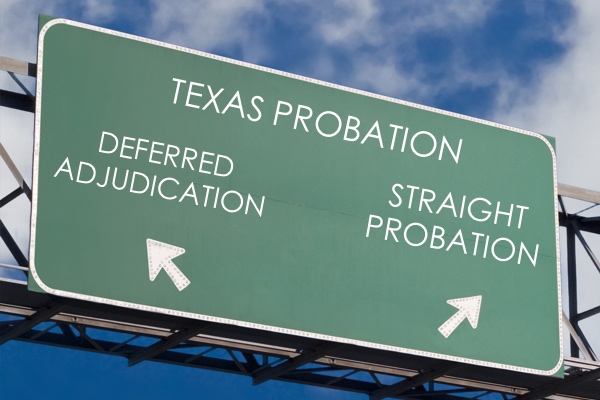
What is the Difference Between Deferred Adjudication and Straight Probation?

By Jason H. Howard · Criminal Defense

Probation in Texas: Make Sure You are Headed Down the Right Path. What is Deferred Adjudication?

Difference in Deferred Adjudication Straight Probation in TexasWhen we are counseling new clients, we routinely address the punishment range that is available for the charged offense and whether probation is an option in their case.  It is important to note that all criminal offenses (except class C citations) are punishable by incarceration. However, first-time offenders and those charged with misdemeanors and non-aggravated felonies will often receive probation when prosecutors, judges, and juries agree that community supervision (probation) is a better alternative to jail time in the given situation.  For some offenses, however, probation is not an option (see our previous article on 3g offenses in Texas).

For those of you that prefer the bullet points up front, here is the short answer regarding the difference between straight probation and deferred adjudication:

Straight Probation in Texas

  • A person on Straight Probation in Texas must report to probation and complete required terms as set by the judge
  • In a straight probation, the case results in a Criminal Conviction
  • In straight probation, there is no option have the case expunged or non-disclosed upon completion of probation
  • If revoked on a straight probation, the penalty range is limited to the underlying jail term (see more below).

Deferred Adjudication in Texas

  • A person on Deferred Adjudication in Texas must report to probation and complete required terms as set by the judge
  • A Deferred Adjudication Case Does NOT result in a Criminal Conviction
  • In a Deferred Adjudication in Texas, there is an option to have the case non-disclosed upon completion (in most cases)
  • Under a Deferred Adjudication, If revoked, the judge may sentence anywhere in the full punishment range for the offense.

Deferred Adjudication vs. Straight Probation

In Texas, there are two types of community supervision in criminal cases: regular community supervision (or what is typically referred to as “straight probation”) and deferred adjudication (or “deferred probation.”) The difference between them is significant.  Chapter 42.12 of the Texas Code of Criminal Procedure covers with both types of probation in Texas.

Straight Probation in Texas

Let’s discuss straight probation first. As an example, assume someone is facing a charge for a Class A Misdemeanor. The penalty range is 0-365 days in jail. A straight probation offer from the state might look like this:

180 days in jail probated for 12 months.

If you agree to this offer and decide to take it, at the time of the plea the judge would ask for your plea of guilty, find you guilty and assess punishment at 180 days in jail. However, he would not require you to actually serve the jail time. Rather, he would probate the jail time and place you on community supervision for a period of 12 months. If you successfully complete the straight probation by reporting as directed and abiding by the terms and conditions, you would not be required to serve jail time for the conviction.

Straight Probation Comes With a Criminal Conviction

With straight probation, the most significant consequence is the conviction itself. When you plead guilty, the judge finds you guilty and a conviction is rendered. You avoid jail time by the sentence being probated, but the conviction remains on your record. A conviction, even if probation, can never be expunged from your record (regardless of the passage of time), so it is important to be wise with your decision to take a plea agreement in which straight probation is offered.

If you receive straight probation and fail to comply with the terms and conditions, the state can seek to have your probation revoked. At a revocation hearing or sentencing, the judge’s sentencing ability is limited by the underlying sentence received at the time of your original plea. So, in the above example, if you received a sentence for 180 days in jail probated for 12 months and are later revoked, the judge cannot sentence you beyond the 180 days (even though the penalty range for a class A misdemeanor is up to 365 days.)

Deferred Adjudication in Texas

Chapter 42.12 section 5 offers a different type of probation than the straight probation discussed above. It’s called deferred adjudication. Let’s go back to our example and say your facing a Class A Misdemeanor with a penalty range of 0-365 days. A deferred adjudication offer might look like this:

18 months probation

If you agree to this offer, you would plead guilty at the time of the plea. However, the judge would withhold finding you guilty and instead place you on probation for a period of 18 months. The reporting and terms and conditions would mirror those of a straight probation. If you successfully complete the probation and are discharged, you would not be required to serve jail time and you would not receive a criminal conviction.

Deferred Adjudication Does Not Come With a Criminal Conviction

With deferred adjudication, the most significant benefit is the case is dismissed upon discharge and no conviction rendered. You not only avoid jail time, but a conviction as well. You also may be eligible to file for a non-disclosure after discharge in most cases. Section 411.081 of the Texas Government Code is the law covering when and if you can file for a non-disclosure after discharge from deferred adjudication.

As with straight probation, if you receive deferred adjudication and fail to comply with the terms and conditions, the state can seek to have your probation revoked. However, there are some significant distinctions at a revocation hearing or sentencing on a deferred adjudication case. First, the judge’s sentencing ability is unlimited. This means he can use the entire penalty range. In our example, if you receive deferred adjudication for 18 months for a class A misdemeanor and are later revoked, the judge can sentence you anywhere in the penalty range of 0- 365 days. Also and more importantly, if revoked, the judge will find you guilty resulting in a conviction.

Contact Our Fort Worth Criminal Defense Firm if You Have Questions About Deferred Adjudication or Straight Probation in Texas

This was a rough overview of the different types of probation in Texas on criminal cases. Of course, there are always factors that can effect if and which type of probation is available as an option to you. The attorneys at Barnett Howard & Williams PLLC would be glad to discuss your situation and provide more information about these options. Please feel free to give us a call at (817) 993-9249.

NOTE:
→ DWI offenses are not eligible for deferred adjudication in Texas. If you’d like to see that changed, contact your state representatives’ offices and voice your opinion

Read full article
Warrantless Search Mattress Protective Sweep Texas

Warrantless Search Under a Man’s Mattress Held Constitutional

By Brandon Barnett · Search & Seizure

United States v. Garcia-Lopez (5th Circuit, 2016)

Warrantless Search Mattress Protective Sweep TexasFACTS: On February 5, 2014, the Wharton County Deputy Sheriff’s Department served a felony arrest warrant on Yonari Garcia at his father’s trailer home. Yonari’s father told law enforcement that Yonari was not home, however, consented to a search of the trailer. Upon entry, Garcia-Lopez, Yonari’s brother, made a beeline for a bedroom, closing and locking the door. Law enforcement followed Garcia-Lopez and demanded that the door be unlocked. Garcia-Lopez opened the door and the police entered, continuing the search for Yonari. Garcia-Lopez asked if he could sit on his bed and eat his dinner while police searched the room. The police obliged the odd request. A minute later, law enforcement discovered two sets of bullet-proof vests in plain sight, prompting a background check. Garcia-Lopez was a convicted felon and having the body armor was a violation for being a felon in possession of body armor, U.S.C. § 922(g)(1). The police arrested Garcia-Lopez after being in the home a total of three minutes. After the arrest, police continued searching the Garcia-Lopez’s room. Concerned Yonari might be sheltered in a hollowed-out mattress, the police lifted the bed up, discovering ammunition and three handguns sandwiched between the mattress and box springs. After a total of seven minutes inside the trailer, the police left with Garcia-Lopez under arrest.



See the 5th Circuit's full opinion in United States v Garcia Lopez.

Garcia-Lopez Indicted for Federal Firearms Charges

In March 2014, Garcia-Lopez was indicted on six counts of being a felon in possession of a firearm in violation of USC §§ 922(g)(1) and 924(a)(2). During an evidentiary hearing, the district court denied Garcia-Lopez’s motion to suppress the guns found under the mattress because law enforcement was originally in the trailer for a legitimate purpose and they had a right to search the home pursuant to the valid arrest warrant for Yonari. The court added that upon the valid search of the premises, law enforcement found contraband and arrested Garcia-Lopez. Further the court stated that upon his arrest, law enforcement had the right to make a protective sweep, so long as it did not last an unreasonable amount of time. Additionally, there was testimony that indicated that suspects have been known to hide in hollowed-out mattress to evade arrest. According to the district court, the search for Yonari and seizure of the guns was proper in every way. Garcia-Lopez was sentenced to forty-six years imprisonment and two years of supervised release. Garcia-Lopez appealed to the Fifth Circuit Court of Appeals, arguing that law enforcement’s belief that Yonari might have been hiding in the bed was unreasonable, and thus, unconstitutional.

Was Lifting the Mattress an Unconstitutional Search or a Lawful Protective Sweep?

The Court of Appeals must determine whether the act of “lifting up the mattress” and seizing the guns violated Garcia-Lopez’s constitutional rights. In other words, was lifting the mattress an unconstitutional search under the Fourth Amendment’s protection against unreasonable searches and seizures?

Under the Fourth Amendment, warrantless searches are pre se unreasonable. Coolidge v. New Hampshire, 403 U.S. 443, 474-75 (1971). A protective sweep may be conducted with [a lower threshold of] reasonable suspicion, probable cause is not necessary. Maryland v. Buie, 494 U.S. 325-27 (1990). “There must be articulable facts which, taken together with the rational references from those facts, would warrant a reasonably prudent officer in believing that the area to be swept harbors an individual posing danger to those on the arrest scene.” Id. A protective sweep [must be] quick and…limited to the safety of the police. Id. Evidence seen in plain view during a lawful sweep can be seized and admitted into evidence during trial. United States v. Jackson, 596 F. 3d 236, 242 (5th Cir. 2010).

5th Circuit Holds that the Warrantless Search of the Mattress was Reasonable

Here, the Court of Appeals held that the district court’s finding of reasonable suspicion was correct because of the amount of evidence supporting such a claim. First, law enforcement became suspicious because of the standoff over the locked door. Second, Garcia-Lopez’s odd request to sit back down on the bed while the police conducted the search is suspicious in light of the circumstances. Third, the belief that a suspect could be hiding in a hollowed-out mattress is reasonable given police training and data supporting such a claim. Fourth, the search lasted a total of seven minutes—a reasonable amount of time to conduct a protective sweep. In sum, the Court says it was logical under the specific facts of this case to suspect that Yonari might have been hiding in the mattress. The Court affirms the district court’s judgment—the warrantless search under Garcia-Lopez’s mattress was not unconstitutional under the circumstances.

Read full article
Bait Cars Backpage Entrapment Texas

Bait Cars, Backpage, and the Entrapment Defense

By Brandon Barnett · Prostitution, Theft

Bait Cars Backpage Entrapment Texas
Our firm has represented many defendants in Fort Worth with cases stemming from a bait car or a Backpage ad. For those of you not familiar with either, let me explain Bait Cars and Backpage.

What is a Bait Car?

A Bait Car is vehicle owned by the police department and equipped with GPS devices and cameras. But, the car looks like any regular car on the street. The police typically place something valuable inside the Bait Car, such as a paint spray rig, and then they park the car (with the keys inside) on the side of the street in a low-income part of town. If someone tries to steal the bait car or the valuables inside, the GPS is triggered, the camera is activated, and the police are alerted. In most cases, the person does not get very far before a patrol car arrives to arrest them for theft.

What is Backpage?

I doubt I can fully explain what Backpage is or how it is used, but in the cases that we see, Backpage is a website (akin to Craigslist) where escorts and ladies of the night advertise their services. Potential Johns can browse the Backpage website to arrange an interlude of momentary love. The police have been using Backpage and arranging for a female officer to meet men at a local motel room posing as a prostitute. With backup officers waiting in the bathroom, the John is arrested for Solicitation of a Prostitute when they arrive to meet the woman/officer they contacted on Backpage.

Is it Entrapment for the Police to Use a Bait Car or to Advertise on Backpage?

We get this question in every Bait Car or Backpage case. To answer the question, we typically explain that fairness and equity are not the same as the legal defense of entrapment. Just because the police conduct doesn’t seem fair or because we think the police are “creating the crimes,” does not mean that it is entrapment.

Section 8.06 of the Texas Penal Code defines the affirmative defense of Entrapment:

“It is a defense to prosecution that the actor engaged in the conduct charged because he was induced to do so by a law enforcement agent using persuasion or other means likely to cause persons to commit the offense."

The Penal Code goes on to explain that: “Conduct merely affording a person an opportunity to commit an offense does not constitute entrapment.”

Therein lies the rub. By using a Bait Car and by advertising escort services on Backpage, the Fort Worth police are “merely affording a person an opportunity to commit an offense,” so under the law, entrapment would not apply to these situations. Don’t get me wrong, we hate Bait Cars and Backpage. We wish the police would use their time and resources toward real crimes, rather than “creating opportunities” for people to commit crimes. Why in the world would we want to create opportunities for people to commit crimes in the first place? That is similar to setting up a keg right outside the AA meeting with a sign for free beer.

Whether we like it or not, entrapment does not apply as an affirmative defense in these cases. Regardless, our attorneys still fight hard to get bait car and Backpage cases dismissed, reduced, or mitigated any way we can. Anecdotally, we’ve seen that a lot of prosecutors don’t like these cases any more than we do. Hopefully, we will see bait cars and Backpage go away soon, but until then, know that Entrapment won’t help you if you choose the wrong car or the wrong escort.

Barnett Howard & Williams PLLC Rated 5.0 out of 5 based on 30 Google+ Reviews.
Read full article
Brass Knuckles, Silencers and Prohibited Weapons in Texas

What Weapons Are Illegal to Possess in Texas?

By Brandon Barnett · Weapons Charges

Prohibited Weapons in Texas | Are Brass Knuckles Illegal in Texas?

Brass Knuckles, Silencers and Prohibited Weapons in TexasYes, brass knuckles are illegal to possess in Texas. Under Texas’ Open Carry laws, qualified Texans can now carry a handgun in a holster on their waist just like they could in the Wild West. But there are still many other weapons that are illegal to possess or carry in Texas. Section 46.05 of the Texas Penal Code outlines the weapons that are prohibited to possess in Texas. The following is the list of weapons that are prohibited weapons in the state of Texas under Section 46.05:

  • Explosive weapons*
  • Machine guns*
  • Short-barrel firearms*
  • Firearm silencers*
  • Brass knuckles
  • Armor-piercing ammunition
  • Chemical dispensing devises
  • Zip guns; and
  • Tire deflation devices

*However, explosive weapons, machine guns, short-barrel firearms, and firearm silencers will not be considered prohibited weapons if the item is registered in the National Firearms Registration and Transfer Record.  There is no such exception for brass knuckles in Texas.

What are the Consequences of Possessing Brass Knuckles or a Prohibited Weapon in Texas? | What is the Punishment for Possession of Silencers?

A person commits a criminal offense if they intentionally or knowingly possess, manufacture, transport, repair, or sell any of the prohibited weapons.

  • Possession of an explosive weapon, machine gun, short-barrel firearm, firearm silencer, armor-piercing ammunition, chemical dispensing device, or a zip gun is a third degree felony, punishable from 2-10 years in prison and a fine of up to $10,000
  • The possession of a tire deflation device is a state jail felony, punishable from 6 months to 2 years in a State Jail Facility and a fine of up to $10,000.
  • Finally, the possession of brass knuckles is a Class A misdemeanor, punishable by 0 – 365 days in county jail and a fine up to $4,000.

Defending Against a Brass Knuckles Charge | What Defenses are Available in a Prohibited Weapons Case?

For persons charged with possession of brass knuckles and other prohibited weapons offenses, there are several defenses that are recognized under the law.

  • It is a defense if the person’s conduct was in connection to the performance of official duty by the armed forces or National Guard, a governmental law enforcement agency, or a correctional facility.
  • Also, it is an affirmative defense if the person was dealing with a tire deflation device or armor-piercing ammunition solely for the performance in one of those official duties.
  • An affirmative defense is also provided to a person dealing with a short-barrel firearm or tire deflation device solely as an antique or curio.
  • Lastly, it is a defense if the possession of a chemical dispensing device if the person is a commissioned security officer and has received training on the use of the device by a training program provided by the Texas Commission on Law Enforcement or approved by the Texas Private Security Board of the Department of Public Safety.

Prohibited Weapons and Brass Knuckles Defense Attorneys in Fort Worth, Texas

If you are under investigation for a prohibited weapons case or if you have been charged with possession of a prohibited weapon, contact our team of Fort Worth criminal defense attorneys today. We provide a free consultation on every criminal case. As avid hunters with military experience, we are familiar firearms laws and defenses in Texas. Contact us today at (817) 993-9249.


Fort Worth Violent Crimes Attorney
Rating: ★★★★★ 5 / 5 stars
Rated By Google User “Can't thank this team enough for what they did for our family.”


Read full article

Speak with a Fort Worth attorney

Call (817) 993-9249 or send us a message to discuss your case.