Skip to content
Tag

Traffic Offenses

Page 1 of 4 · 20 articles

Texas DPS Drivers License Surcharges

Texas Drivers License Surcharge | REPEALED September 2019

By Brandon Barnett · Traffic Offenses

UPDATE: In 2019, the Texas Surcharge Program was repealed by law and all surcharges were forgiven as of September 1, 2019. 

Contact DPS Regarding Your Surcharge Account

For assistance with questions about your Surcharge account, you can contact Texas DPS Municipal Services Bureau (MSB) at:

1-800-688-6882

Check Your DPS Account at www.txsurchargeonline.com

If you are unsure whether you have a pending TX DPS surcharge or if you would like to pay your Texas DPS surcharge, you can do this online at www.txsurchargeonline.com. Surcharges in Texas are frustrating and sometimes confusing. If you need clarification on your TX surcharge, you should contact the Texas Department of Public Safety by phone or on their website at www txsurchargeonline com.

Read full article
Driving Around Barricade Crime Texas

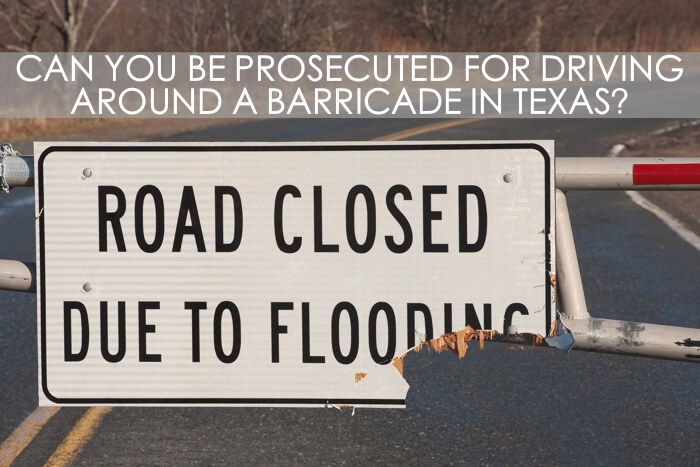
Is Driving Around a Water Barricade a Criminal Offense?

By Brandon Barnett · Criminal Defense

Rules of the Road During Flood Season in Texas

Driving Around Barricade Crime TexasFor four years in a row, Texas has experienced significant flooding due to unusual amounts of rainfall. Many people have lost their lives in cars that were swept away in rushing water and many houses have been ruined by flooding across the state.  First responders are on high alert and have been involved in numerous high water rescues.

One story made the news in 2016 when a man was rescued after his car entered a flooded roadway and was filled with water.  Johnson County had to use a drone to fly overhead and locate the man and then emergency personnel executed a rescue.  But what made this story different was what happened to the man after he was rescued.  Johnson County Sheriff's slapped handcuffs on the man and arrested him for driving around a barricade.

Driving Around a Water Barricade is a Class B Misdemeanor in Texas

Section 472.022 of the Texas Transportation Code governs "OBEYING WARNING SIGNS AND BARRICADES" and provides (in relevant part):

(a) A person commits an offense if the person: (1) disobeys the instructions, signals, warnings, or markings of a warning sign; or (2) drives around a barricade. (d)(2) if a person commits an offense under Subsection (a) where a warning sign or barricade has been placed because water is over any portion of a road, street, or highway, the offense is a Class B misdemeanor.

In Texas, the punishment range for a Class B Misdemeanor is 0-180 days in jail and a fine not to exceed $2,000.

While arrests after a water rescue are not the norm, this certainly provides another reason not to drive around a high water barricade. You would think that the potential danger to life and property would be enough, but sometimes folks need a little more motivation. Johnson County has given us that.

Read full article
Red Light Camera Ticket Texas

Should I Pay My Red Light Camera Ticket?

By Luke A. Williams · Traffic Offenses

Red Light Camera Ticket TexasAnytime someone gets a ticket in the mail from a red light camera, the same questions run through their mind. Do I really have to pay this ticket? Is that even me driving? How do they know whether that is me? What happens if I don't pay this ticket? Why do we even have those cameras anyway? There are a ton of rumors out there and plenty of people ready to tell you that you do or don’t have to pay that ticket, but what is the actual answer? Section 707 of the Texas Transportation Code governs red-light traffic cameras but there are certain ordinances that counties adopt that add onto or affect the Code.

What are the Penalties Associated with Red Light Camera Tickets in Texas?

Red-light camera tickets are considered civil violations and are not considered a conviction.* §707.018. The Code provides that the civil penalty may not exceed $75 and the late payment penalty may not exceed $25. §707.007. If you fail to pay your ticket an arrest warrant will not be issued and it will not be recorded on your driving record. §707.019. Additionally, according to the City of Fort Worth’s Red-Light Camera Safety Program, these violations are not reported to your insurance companies or driver’s license bureau.

Let's recap. If you fail to pay your red light camera ticket:

  • No conviction
  • No arrest warrant
  • Not on driving record
  • Not reported to insurance
  • Not reported to driver's license bureau

So far so good. Looks like nothing will happen if you don't pay the ticket.  But wait, there's more.

Will Failure to Pay Your Red Light Camera Ticket Affect Your Credit Score?

Section 707.003(h) of the Code provides that information of failure to pay a red light ticket cannot be reported to a credit bureau. According to The Dallas Morning News, even the counties, such as Dallas, that had enacted their red-light camera contract before the Texas law went into place in 2007 can no longer report delinquent violations to credit bureaus. This apparently went into effect June 1st after TransUnion, Experian, and Equifax notified the city of Dallas that they would no longer honor the reports of unpaid tickets.

  • No credit bureau reporting

Could Failure to Pay Your Red Light Camera Ticket Affect Your Ability to Register Your Vehicle?

There had to be a catch with these red light camera tickets. This is where they can get you. If a driver fails to pay their red-light camera penalty after it is sent to collections, that information may be sent to the Texas Department of Motor Vehicles and a scofflaw hold, or a vehicle registration hold, will be placed on the vehicle’s registration until all unpaid penalties have been paid. §502.010; §707.017. This does not mean that every county decides to go through the trouble of placing scofflaw holds. As for Fort Worth, according to Fort Worth’s violation information website scofflaw holds will be placed if violation fees remain unpaid. To the contrary, www.trashyourticket.com lists Tarrant County as one of the counties that does not place a hold on your registration. (This information is based on either news articles or reports from people with outstanding tickets). Additionally, since Dallas can no longer report to credit bureaus the plan is to start using registration holds to maintain their red-light camera safety program.

The county assessor-collector is responsible for enforcing these holds, however according to his article “The Wright Stuff” in Taxing News,  Tarrant county tax assessor-collector Ron Wright stated that he will “not block vehicle registrations because of unpaid red light camera fines” and even signed a letter to Governor Greg Abbott calling for a ban on the traffic cameras, along with other Texas officials. While this may be a personal decision on Wright’s part, legislature is in the process of making this opinion a law.

Senate Bill 87, sponsored by Texas Senators Bob Hall, Sylvia Garcia, and Donald Huffines, aims to prohibit county assessor-collectors from placing a hold on vehicle registration if the owner is “delinquent in the payment of a civil penalty”, referring to the civil penalty incurred from a red light traffic camera. The bill passed with 30 “yea” votes and one “nay” on March 29, 2017 and it was referred to the House of Representatives Transportation Committee on May 8, 2017. If the bill makes it all the way through, it would render red light camera tickets unenforceable.

  • No hold on your registration.

Bottom line:  If you decide not to pay your red-light camera ticket, it will not affect your credit score, it will not be reported to your insurance company or the driver’s license bureau, you will not be convicted of anything, and a warrant for your arrest will not be issued, but it is remotely possible that it could affect your ability to renew your vehicle's registration. However, you have the Tarrant County tax assessor-collector’s word that the registration holds will not be enforced. Thus, there isn’t that much that cities can do to you if you fail to pay your ticket. To register your vehicle, even if you have a scofflaw hold, you must register by mail or in person at a local tax collector-assessor office so that it can be overridden.

Ultimately, it’s your choice if you want to take that risk, but now you have all of the facts in order to make that decision.

*Note that all of the information in this article is referring to tickets you receive in the mail after running a red light with a camera, not a ticket received from an officer. It is vitally important to pay attention to traffic signals and stop at red lights for your safety and the safety of others.

Read full article
Radar Detector Illegal Texas

Are Radar Detectors Illegal to Use in Texas?

By Pricer · Traffic Offenses

Radar Detector Illegal TexasLets face it, most of us have received a speeding ticket at some point in our lifetime. As a result, radar detectors have become commonplace for drivers that want to take preventative measures to avoid receiving a ticket. Such preventative measures bring up an important question: are radar detectors illegal? Can I get a ticket for using a radar detector?
In Texas, using a radar detector in a passenger vehicle is legal with certain restrictions.
Under federal law, however, using a radar detector in any commercial vehicle that has a weight of 10,000 pounds or more is strictly prohibited. Commercial drivers are treated as professional drivers, and thus, different laws apply to them. 49 C.F.R. § 392.71(a).

Is it Legal to Mount a Radar Detector on My Windshield?

Although radar detectors are legal in Texas, a person may still be ticketed if they have mounted their radar detector on their windshield, side, or rear window, and that placement obstructs or reduces the operator’s clear view. Whether or not the placement obstructs an operator’s view is up to the officer’s discretion. As such, to avoid the hassle all together, it is best not to mount your radar detector on your windshield.

Radar Detectors on Military Bases

According to the Department of Defense instructions, persons are strictly prohibited from using radar or laser detection devices on military bases. Department of Defense, DoD Instruction 6055.04, DOD TRAFFIC SAFETY PROGRAM pg. 12 (2013).

What is the Difference Between a Radar Detector and a Radar Jammer?

Over the years, many devices have been created to help prevent speeders from being ticketed. The most common device is the radar detector, which is designed to locate radar signals out of the air. However, radar detectors have become less effective due to advances in technology and policing. This has generated the need for LIDAR/RADAR jamming devices. Unlike the traditional radar detector, a jamming device transmits a radio frequency signal that blocks or otherwise interferes with the operation of police LIDAR/RADAR by overloading its receiver with false information. Jamming devices can cause significant damage to police equipment. Moreover, such devices not only prevent police from detecting the speed of the vehicle with the device, but also the vehicles in the surrounding area.

Accordingly, in 2011, Texas passed HB 1116 to prohibit a person from using, attempting to use, installing, operating, or attempting to operate a radar interference device in a motor vehicle operated by the person. A person who commits an offense under this section may be charged with a class C misdemeanor. Tex. Transp. Code § 547.616. A Class C misdemeanor is punishable by a fine not to exceed $500.

Takeaways....

While many people believe radar detectors promote unsafe driving, advocates refute this contention by explaining that radar detectors alert drivers to their speed and remind them to drive the speed limit, and thus, safer.

In conclusion, spending money on a radar detector may help you dodge a speeding ticket and possibly even drive safer, but there are other laws that may be implicated when using such devices.

Read full article
Stale Traffic Violation Zuniga Drug Case

Does a 15-Minute Delay Render a Traffic Violation Stale? | U.S. v. Zuniga

By Brandon Barnett · Drug Crimes

How Long Can an Officer Wait to Pull a Vehicle Over After Observing a Traffic Violation?

Stale Traffic Violation Zuniga Drug CaseUnited States v. Zuniga (US Court of Appeals, 5th Cir. 2017)

In this case, a San Antonio police detective, who was working with an informant, suspected that Appellant Zuniga was transporting methamphetamine in his vehicle and followed it. The detective witnessed the driver of the vehicle fail to engage the turn-signal as required. He did not pull the vehicle over at that time, but radioed the traffic violation to other officers. Approximately fifteen minutes later, an officer who had received the radio dispatch but had not witnessed the turn-signal violation, stopped the vehicle. During the stop, the officer encountered Appellant, who was riding in the passenger seat, and his girlfriend, who was driving the vehicle. The officer arrested Appellant on outstanding warrants and his girlfriend for driving without a valid driver’s license.

The arresting officer conducted a search of Appellant incident to arrest and found methamphetamine on his person. The officer also searched Zuniga’s car and found a backpack containing methamphetamine, a handgun, and other evidence related to drug trafficking.

As a result, the federal government charged Appellant with several drug-related offenses.

Motion to Suppress for Unreasonable Traffic Delay

Appellant filed a motion to suppress the evidence seized during the stop, arguing that the fifteen-minute delay in conducting the stop for the turn-signal violation rendered the information provided by the detective who observed the violation stale.

The trial court denied the motion to suppress, holding that the delay in conducting the stop was not enough to render the information stale or the stop unlawful. The court did not state a specific time limitation to which officers must adhere when conducting a traffic stop. Instead, the court stressed that stops following traffic violations must be reasonable in light of the circumstances. In this case, the court found that the fifteen-minute delay was reasonable. As soon as the officer observed the turn-signal violation, he immediately relayed this information to other officers, although none of those officers were in position to stop the vehicle at that time.

Collective Knowledge Doctrine Allows an Officer to Make a Stop for a Violation He Did Not Observe

The trial court further held that the collective knowledge doctrine allowed the arresting officer to lawfully stop the vehicle even though he did not personally observe the traffic violation. The collective knowledge doctrine allows an officer, who does not observe a criminal (or traffic) violation, to conduct a stop when that officer is acting at the request of another officer who actually did observe the violation. Here, the detective who observed the turn-signal violation communicated this information to the traffic officer who ultimately stopped the vehicle; therefore, the detective’s knowledge transferred to the officer who conducted the stop and made the arrest.

The 5th Circuit upheld the search and the conviction, holding that reasonable suspicion to stop the vehicle continued to exist despite the 15-minute lapse between the original observation of the traffic offense and the stop. The court explained:

“We make no attempt to articulate a specific time limitation to which officers must adhere in effecting a stop following a traffic violation. Rather, we stress that, consistent with our holdings in similar contexts, stops following transportation violations must be reasonable in light of the circumstances. See, e.g., United States v. Robinson, 741 F.3d 588, 598 (5th Cir. 2014) (emphasizing that “[s]tale information cannot be used to establish probable cause”). To reiterate, we hold only that the elapsed time between an observed violation and any subsequent stop must be reasonable upon consideration of the totality of the circumstances.”

Read full article

Speak with a Fort Worth attorney

Call (817) 993-9249 or send us a message to discuss your case.