Skip to content

Category

1

2 articles

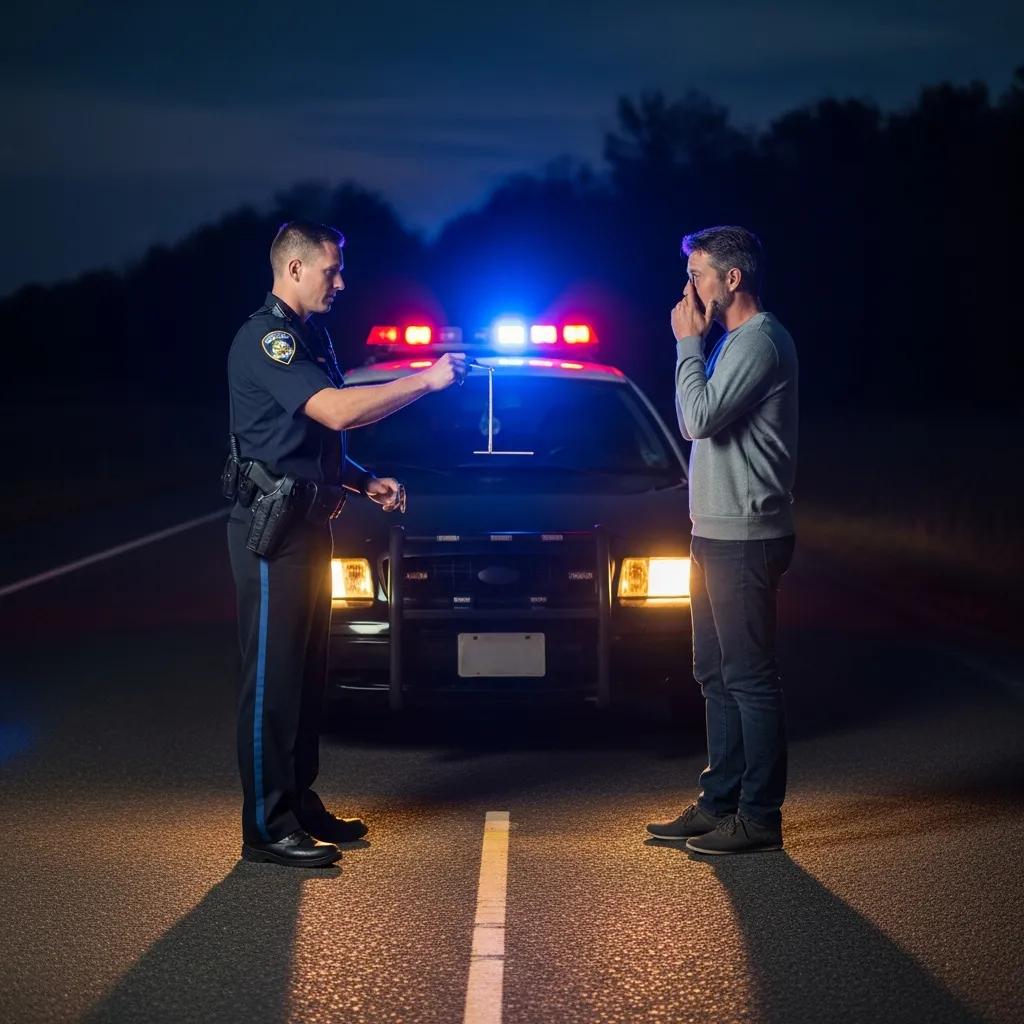
Police officer conducting a field sobriety test at night with a driver

How Refusing Field Sobriety Tests Affects Your DWI Case

By ardent · 1

How Refusing Field Sobriety Tests Affects Your DWI Case: Legal Rights, Penalties, and Defense Strategies

Refusing a field sobriety test (FST) during a DWI stop can significantly impact your legal situation. Understanding the implications of this decision is crucial for anyone facing DWI charges. This article will explore your legal rights when refusing an FST, the potential penalties you may face, and effective defense strategies to navigate your case. Many individuals are unaware that refusing an FST can lead to serious consequences, including license suspension and increased penalties. By understanding the laws surrounding FST refusal, you can better prepare for your defense. We will cover essential topics such as implied consent laws, the consequences of refusal, and how legal representation can aid in your case.

Legal Rights
Close-up of a legal document with gavel and scales of justice in a courtroom

When it comes to field sobriety tests, individuals have specific legal rights that protect them during a DWI stop. The right to refuse an FST is a fundamental aspect of these rights. Drivers also have the right to remain silent and the right to legal representation. Understanding these rights is essential, as they can influence the outcome of your case.

Legal representation is particularly important if you choose to refuse an FST. An experienced attorney can help you navigate the complexities of DWI laws and ensure that your rights are upheld throughout the process. If you find yourself in a situation where you are unsure of your rights, consulting with a legal professional can provide clarity and guidance.

Potential Penalties

Refusing a field sobriety test can lead to various penalties, which may vary by state. The potential consequences include:

  1. Arrest Implications: Refusal can lead to immediate arrest, as law enforcement may interpret it as an admission of guilt.
  2. Limited Evidence Against the Driver: While refusing an FST may limit the evidence available to the prosecution, it does not eliminate the possibility of a DWI charge.
  3. Administrative Penalties: In many jurisdictions, there are immediate administrative penalties for refusing an FST, but this can vary widely.

Understanding these penalties is crucial for anyone considering refusing a field sobriety test. The next step is to explore how these refusal penalties can affect the overall outcome of a DWI case.

Consequences and Penalties for Refusing a Field Sobriety Test

The consequences of refusing a field sobriety test can be severe. In many states, refusing an FST can lead to automatic license suspension, fines, and other legal repercussions. The specific penalties depend on the state's implied consent laws, which dictate the consequences of refusing a sobriety test.

Research further elaborates on the prevalence and impact of implied consent laws across the nation.

Implied Consent Laws & DWI Refusal Rates

literature on refusal/implied-consent laws to provide estimates of the prevalence of refusal rates across the nation. Then, we present the current status of implied-consent laws and

Implied-consent laws: a review of the literature and examination of current problems and related statutes, T Kelley-Baker, 2009

License Suspensions and Fines Resulting from FST Refusal

The penalties for refusing a field sobriety test often include:

Penalty Type Description Duration/Amount
License Suspension Automatic suspension of driving privileges Varies by state, often 6 months to 1 year
Fines Monetary penalties imposed for refusal Ranges from $300 to $1,000
Increased DWI Penalties Enhanced penalties if charged with DWI Varies based on prior offenses

These penalties highlight the importance of understanding the implications of refusing a field sobriety test. The next section will discuss how refusal penalties can impact the overall outcome of your DWI case.

Indeed, the immediate consequence of refusing a field sobriety test often involves the suspension of driving privileges, as highlighted by legal precedents.

FST Refusal & Driver's License Suspension

field sobriety tests can refuse to submit to the tests, but the motorist's driver's license will be subject to suspension

Walking the Line: The Oregon Supreme Court, Field Sobriety Tests, and the Right Against Self-Incrimination, 1996

How Do Refusal Penalties Affect Your DWI Case Outcome?

Refusal penalties can complicate your DWI case significantly. While refusing an FST may limit the evidence against you, it can also lead to harsher penalties if you are convicted of DWI. Courts may view refusal as an indication of guilt, which can influence the judge's decision during sentencing.

Understanding the potential ramifications of refusing a field sobriety test is essential for anyone facing DWI charges. The next section will explore effective defense strategies available for individuals who refuse an FST.

Defense Strategies

Attorney reviewing case notes in an office with law books and city view

When facing DWI charges after refusing a field sobriety test, several defense strategies can be employed. Documenting the encounter with law enforcement is crucial, as it can provide valuable evidence in your favor. Additionally, consulting with an attorney who specializes in DWI cases can help you understand your options and build a strong defense.

  1. Documenting the Encounter: Keeping a detailed account of the events leading up to the refusal can help establish your case.
  2. Consulting an Attorney: Legal counsel can provide guidance on the best defense strategies tailored to your situation.
  3. Understanding Common Misconceptions: Many individuals believe that refusing an FST guarantees a better outcome, but this is not always the case.

How Can Legal Counsel Challenge FST Refusal Penalties?

Legal counsel can challenge the penalties associated with refusing a field sobriety test by arguing that the refusal was justified under specific circumstances. For example, if the driver was not adequately informed of their rights or if the test was administered improperly, these factors can be used to contest the penalties.

The scientific and legal scrutiny of standardized field sobriety tests reveals inherent limitations that can be leveraged in defense strategies.

Scientific & Legal Challenges of Field Sobriety Tests

This article details the history and development of the National Highway and Safety Administration’s Standardized Field Sobriety Tests. They are reviewed in terms of relevant scientific, psychometric, and legal issues. It is concluded that the research that supports their use is limited, important confounding variables have not been thoroughly studied, reliability is mediocre, and that their developers and prosecution-oriented publications have oversold the tests. Further, case law since their development has severed the tests from their validation data, so that they are not admissible on the criterion for which they were validated (blood alcohol concentration), and admissible for a criterion for which they were not (mental, physical, or driving impairment). Directions for further research are presented.

The standardized field sobriety tests: a review of scientific and legal issues, 2008

What Case Examples Demonstrate Successful Defense Approaches?

Several case examples illustrate how effective defense strategies can lead to favorable outcomes for individuals who refuse field sobriety tests. In some instances, defendants have successfully argued that their refusal was based on a lack of understanding of the consequences or that the tests were not conducted according to legal standards.

How Can You Schedule a Consultation for DWI Defense After Refusing a Field Sobriety Test?

If you find yourself facing DWI charges after refusing a field sobriety test, it is crucial to seek legal representation. BHW Law Firm specializes in criminal defense with a focus on DWI cases, including legal representation for clients who refuse field sobriety tests. Consulting with an experienced attorney can provide you with the guidance needed to navigate your case effectively.

What Information Should You Prepare for Your Legal Consultation?

When preparing for a legal consultation, gather all relevant information regarding your case, including:

  • Details of the DWI stop
  • Any documentation related to the incident
  • A list of questions you may have for your attorney

This preparation will help your attorney understand your situation better and provide tailored advice.

How Does BHW Law Firm Support Clients Facing FST Refusal Charges?

HLAW Law Firm is dedicated to supporting clients facing DWI charges, including those who have refused field sobriety tests. With a focus on criminal defense, the firm offers comprehensive legal representation to ensure that your rights are protected throughout the legal process. Their expertise in DWI cases can make a significant difference in the outcome of your case.

Read full article
Individual asserting Fourth Amendment rights during a police encounter

Search and Seizure Defense: Protect Your Rights

By Luke A. Williams · 1, Criminal Defense

Search and Seizure Defense: Protect Your Fourth Amendment Rights with Expert Legal Guidance

Understanding your rights during search and seizure incidents is crucial for protecting your civil liberties. The Fourth Amendment of the U.S. Constitution safeguards individuals against unreasonable searches and seizures, ensuring that law enforcement must have probable cause and, in most cases, a warrant to conduct searches. This article will delve into the key legal principles surrounding search and seizure, effective defense strategies, and the vital role of legal representation in these situations. Many individuals may find themselves confused or intimidated when confronted by law enforcement, leading to potential violations of their rights. By equipping yourself with knowledge about your rights and the legal processes involved, you can better navigate these challenging encounters. We will explore the fundamental aspects of search and seizure law, your rights during warrantless searches, and how to effectively defend against illegal traffic stop searches.

Key Legal Principles

The legal framework governing search and seizure is primarily established by the Fourth Amendment, which protects citizens from arbitrary governmental intrusions. This amendment requires that searches be reasonable and typically mandates a warrant based on probable cause. Understanding the exceptions to this rule is essential, as there are circumstances where law enforcement can conduct searches without a warrant. These exceptions include exigent circumstances, consent, and the plain view doctrine. Each of these principles plays a critical role in determining the legality of a search and the admissibility of evidence obtained during such searches.

Strategies for Defense

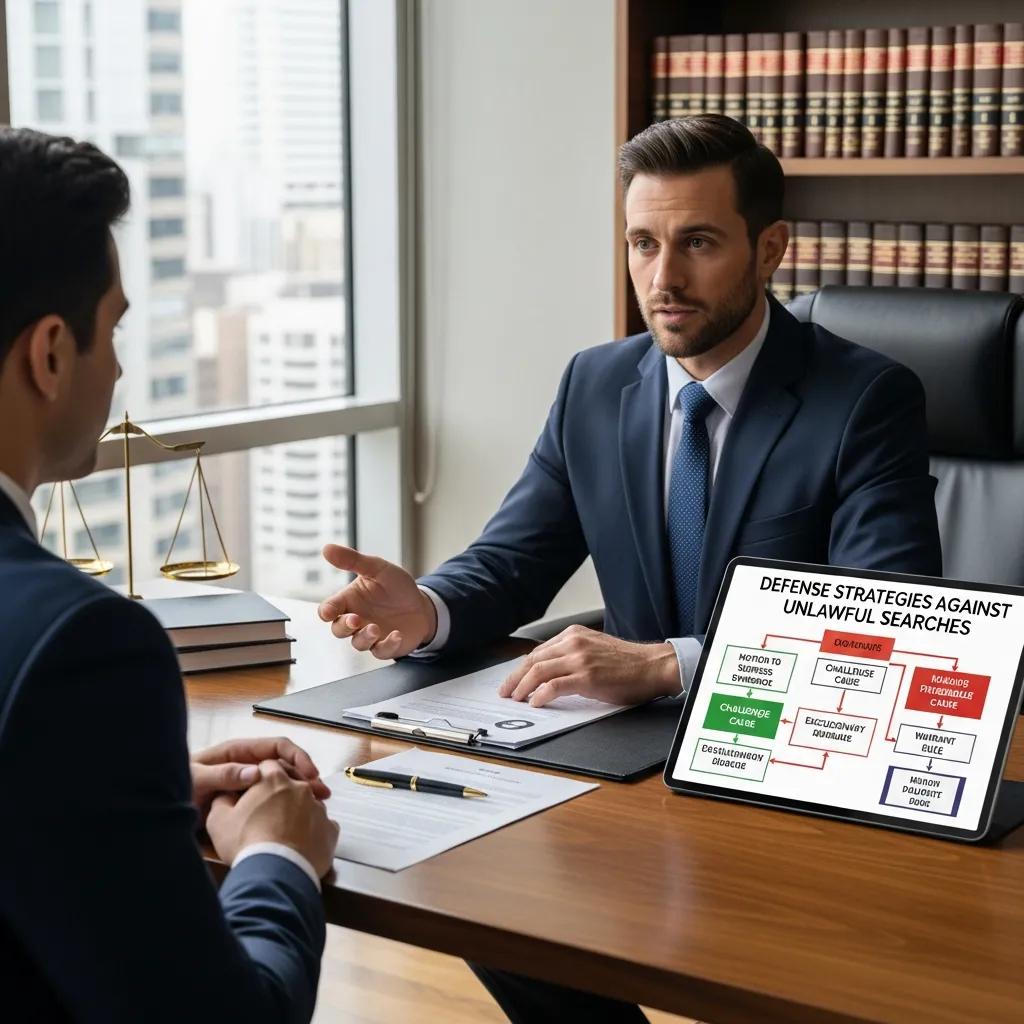
Lawyer explaining defense strategies to a client regarding unlawful searches

When facing unlawful searches, several defense strategies can be employed to protect your rights. These strategies include:

  1. Challenging Unlawful Searches: If a search is conducted without a warrant or probable cause, it may be deemed unlawful, and any evidence obtained can be challenged in court.
  2. Documenting Encounters: Keeping a detailed record of interactions with law enforcement can provide crucial evidence in defending against illegal searches.
  3. Citing Legal Precedents: Utilizing established case law that supports your defense can strengthen your position in court.

These strategies are vital for ensuring that your rights are upheld during legal proceedings.

Role of Legal Representation

Client consulting with a lawyer about search and seizure rights

Having expert legal representation during search and seizure cases is essential for effectively navigating the complexities of the law. A qualified attorney can provide invaluable guidance on how to challenge evidence obtained through unlawful searches. They can also help you understand your rights and the legal options available to you. Engaging with a legal professional ensures that you have the support needed to advocate for your rights effectively. If you find yourself in a situation involving search and seizure, consider reaching out to a law firm specializing in criminal defense, which can assist you in developing a robust defense strategy.

What Are Your Rights During a Warrantless Search?

During a warrantless search, individuals have specific rights that must be respected by law enforcement. You have the right to refuse consent to a search if law enforcement does not have a warrant. Additionally, you should be aware that any evidence obtained through an unlawful search may be inadmissible in court. If approached by law enforcement, it is crucial to remain calm and assert your rights clearly. Knowing what to do in these situations can significantly impact the outcome of any legal proceedings that may follow.

How Does the Fourth Amendment Protect Against Unreasonable Searches?

The Fourth Amendment serves as a fundamental protection against unreasonable searches by requiring law enforcement to demonstrate probable cause before conducting a search. This constitutional safeguard ensures that individuals are not subjected to arbitrary invasions of privacy. Understanding the definition of unreasonable searches and the exceptions to warrant requirements is essential for recognizing when your rights may be violated. Legal precedents have established various interpretations of what constitutes an unreasonable search, further emphasizing the importance of legal representation in these matters.

When Can Police Conduct a Warrantless Search?

Police can conduct warrantless searches under specific circumstances, including:

  • Exigent Circumstances: Situations where immediate action is necessary to prevent harm or destruction of evidence.
  • Consent: If an individual voluntarily consents to a search, law enforcement may proceed without a warrant.
  • Plain View Doctrine: If law enforcement officers observe evidence of a crime in plain view while lawfully present, they may seize it without a warrant.

Understanding these conditions can help individuals recognize their rights during encounters with law enforcement.

How Can You Defend Against Illegal Traffic Stop Searches?

Defending against illegal traffic stop searches involves understanding your rights and the legal framework surrounding traffic stops. Key strategies include:

  1. Knowing Your Rights: Familiarize yourself with your rights during traffic stops, including the right to remain silent and the right to refuse consent to a search.
  2. Documenting the Encounter: Take note of the details of the traffic stop, including the officer's name, badge number, and any statements made.
  3. Consulting an Attorney: If you believe your rights have been violated, seek legal counsel to explore your options for challenging the search.

These steps can significantly enhance your ability to defend against unlawful searches during traffic stops.

What Legal Defenses Apply to Traffic Stop Search Violations?

Several legal defenses can be applied to traffic stop search violations, including:

  • Challenging the Legality of the Stop: If the initial stop was not based on reasonable suspicion, any subsequent search may be deemed unlawful.
  • Consent Issues: If consent was obtained under duress or without proper understanding, it may not be valid.
  • Probable Cause: If law enforcement lacked probable cause to conduct the search, any evidence obtained may be inadmissible.

Understanding these defenses is crucial for effectively challenging illegal searches.

How to Challenge Evidence Obtained from an Illegal Traffic Stop Search?

Challenging evidence obtained from an illegal traffic stop search involves several steps:

  1. Documenting the Encounter: Keep a detailed record of the traffic stop, including the time, location, and circumstances.
  2. Consulting an Attorney: Seek legal advice to understand the best approach for challenging the evidence in court.
  3. Filing a Motion to Suppress Evidence: Your attorney can file a motion to suppress any evidence obtained through an unlawful search, arguing that it violates your rights.

These steps are essential for protecting your rights and ensuring that any evidence presented in court is obtained lawfully.

What Is Probable Cause and How Does It Affect Search Legality?

Probable cause is a legal standard that requires law enforcement to have sufficient reason to believe that a crime has been committed or that evidence of a crime will be found in a specific location. This standard is crucial in determining the legality of searches and seizures. Without probable cause, any search conducted may be deemed unlawful, leading to the exclusion of evidence obtained during the search. Understanding the implications of probable cause is vital for recognizing when your rights may be violated.

How to Schedule a Consultation with a Search and Seizure Lawyer?

Scheduling a consultation with a search and seizure lawyer is a straightforward process. Here are the steps to follow:

  1. Research Potential Lawyers: Look for attorneys who specialize in criminal defense and have experience with search and seizure cases.
  2. Contact the Law Firm: Reach out to the law firm to inquire about scheduling a consultation. A law firm specializing in protecting clients' rights during search and seizure incidents can assist you.
  3. Prepare for the Consultation: Gather any relevant documents or information related to your case to discuss during the consultation.

Taking these steps can help ensure that you receive the legal support necessary to protect your rights.

What to Expect During Your Legal Consultation?

During your legal consultation, you can expect an initial assessment of your case, where the attorney will review the details of your situation. This discussion will typically cover:

  • Discussion of Legal Options: The attorney will outline the potential legal strategies available to you based on the specifics of your case.
  • Next Steps in the Legal Process: You will be informed about the next steps to take, including any necessary documentation or actions required on your part.

This consultation is an essential opportunity to gain clarity on your legal standing and the options available to you.

How Can Expert Legal Representation Protect Your Rights?

Expert legal representation plays a crucial role in protecting your rights during search and seizure incidents. A knowledgeable attorney can navigate the complexities of search and seizure law, ensuring that your rights are upheld throughout the legal process. They can challenge unlawful searches, advocate for the suppression of illegally obtained evidence, and provide guidance on the best strategies for your defense. Engaging with a skilled attorney can significantly impact the outcome of your case, providing you with the support needed to effectively assert your rights.

Read full article

Speak with a Fort Worth attorney

Call (817) 993-9249 or send us a message to discuss your case.