Can Texans be charged with DWI while riding a horse? Our law firm explains what the law actually says about this surprising question.
Stories of Texans riding home after a night out—on horseback rather than behind the wheel—are becoming social media gold. And trust us, we’ve seen just about everything at Howard Lotspeich Alexander & Williams, PLLC (HLAW).
Texans riding horses after a night out often become social media sensations.
But what does Texas law actually say about intoxicated riders on horseback or other means of transportation? And, what penalties or criminal charges could you face in these unique situations?
“Not having the normal use of mental or physical faculties by reason of the introduction of alcohol, a controlled substance, a drug, a dangerous drug, or a combination thereof; or having a BAC of 0.08 or higher.”
The key is what counts as a “motor vehicle.”
Texas Penal Code §49.01(3) (by way of §32.34(2)) defines a motor vehicle as: “A device in, on, or by which a person or property is or may be transported or drawn on a highway, except devices used exclusively on stationary rails or tracks.”
Does a Horse Count as a Motor Vehicle in Texas?
Although a horse can transport people on a public highway, it is not a device in the mechanical sense. For this reason, courts and prosecutors in Texas should not treat intoxicated horseback riding as a DWI offense.
Other states differ widely. Florida, for instance, interprets “vehicle” broadly and has upheld DUI convictions for drunk horseback riders. California applies DUI laws to anyone riding an animal on a road. Texas maintains the stricter “motor vehicle” definition, so a DWI charge should not apply to riding a horse home aftera night out.
Related Offenses for Intoxicated Riders
But just because DWI doesn’t apply in Texas, that doesn’t mean you can ride your horse drunk without potential consequences:
“A person commits an offense if the person appears in a public place while intoxicated to the degree that the person may endanger the person or another.”
This law applies no matter your mode of transport—horse, bicycle, or even walking.
Public intoxication laws apply regardless of your mode of transport.
Transporting a child while intoxicated, regardless of vehicle, can result in felony charges.
DWI Penalties for Motor Vehicles vs. Horseback
Motor vehicle DWI brings serious penalties in Texas:
First offense: Up to 180 days in jail, fines, and one-year license suspension.
Second offense: Fines, up to 1 year in jail, and two-year suspension.
Third offense: Heavy fines, 2-10 years in prison, and permanent record.
For drunk riders on horses, public intoxication is a class C misdemeanor, often punished with fines but still carrying potential criminal record consequences, especially if repeated or if other aggravating factors (like injury or animal abuse) are present.
If you’re operating a motorized boat while intoxicated, you will be charged with BWI, formally defined in Texas Penal Code §49.06.
Golf Carts & ATVs:
If it’s motorized and driven on a public roadway, you can absolutely be charged with DWI.
Bicycles:
Although unlikely, it is possible under the current broad definition of “motor vehicle” that someone who is intoxicated on a bicycle could possibly be charged with DWI. It’s most likely in that scenario the person would be charged with public intoxication or disorderly conduct.
In Texas, intoxication laws extend beyond cars to boats, golf carts, and potentially even bicycles.
Quick Reference Table
Transport
DWI?
Other Charges Possible
Statute Reference (Texas Penal Code)
Car/Truck/Motorcycle
Yes
-
§49.04, §49.01
Horse
No
Public intox., animal cruelty, child endangerment
§49.02, §42.092
Bicycle
Possibly
Most likely Public intox., Disorderly conduct
§49.02, §42.01
Golf Cart/ATV
Yes
-
§49.04
Boat
BWI
-
§49.06
Policy Rationale and Best Practices
Texas statutes draw a distinction based on public safety: motor vehicles present greater risk than horses, but intoxicated riders still face legal and even potential civil consequences. The law’s intent is to protect lives and property while recognizing unique Texas traditions.
Frequently Asked Questions
Q: Can I legally ride my horse home after drinking?
A: You shouldn’t be charged with DWI, but public intoxication, animal cruelty, or other charges could still result.
Q: What about riding a golf cart?
A: DWI absolutely applies if you’re operating any motor vehicle—including golf carts—on public roads.
Q: Is boating treated differently?
A: Yes, BWI is a separate criminal charge under Texas law.
Q: What if I cause a crash or injure someone on a horse?
A: Civil liability and criminal charges could still arise, even if DWI doesn’t technically apply.
Best Practices for Texans
Avoid operating any transport while impaired, motorized or not. If cited, consult a qualified defense attorney; definitions matter greatly for your future record. Educate yourself on the DWI statute and related laws (see more articles from our website about DWI). Remember that public intoxication, animal cruelty, child endangerment, and even reckless driving can have life-altering consequences. Always prioritize safety and responsible decision-making when it comes to operating any form of transport.
Bottom line
While you can’t get a DWI on a horse in Texas, you can be prosecuted for public intoxication, animal endangerment, and related offenses. Public safety—and your legal future—deserve attention.
Charged or Arrested? What To Do
If you are cited or arrested for any intoxication offense (or related criminal offense), whether DWI, BWI, or public intoxication, contact our qualified and experienced defense attorneys immediately. Legal definitions matter and so does your defense— and an experienced lawyer can protect your record.
At Howard Lotspeich Alexander & Williams, PLLC (HLAW) we offer free case evaluations and consultations. If you find yourself in a situation where you’ve been charged with a crime, contact our office today to get started on your best defense with a team that is experienced and proven.
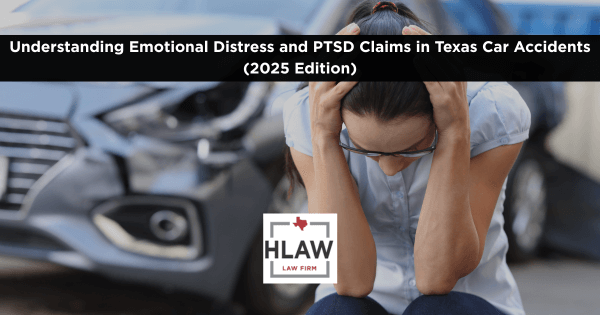
The unseen impact: Psychological injuries often follow physical trauma.
Emotional distress and PTSD are real injuries after Texas car accidents—know your rights under 2025 law.
Car accidents don’t just leave visible wounds. For thousands of Texans each year, the problems begin long after bones have mended and bruises faded. Psychological injuries—like post-traumatic stress disorder (PTSD), anxiety, depression, insomnia, and crippling fear—are among the most overlooked and hardest-fought elements of any personal injury claim. Yet Texas law allows victims to be compensated for these “invisible injuries,” so long as they’re properly documented and presented.
Defining Emotional Distress and PTSD Under Texas Law
What Is Emotional Distress?
In Texas, emotional distress is legally described as “mental anguish,” which the Texas Civil Practice & Remedies Code § 41.001(12) defines as “a high degree of mental pain and distress” accompanying or following a traumatic event. Unlike casual or passing sadness, real mental anguish creates a substantial disruption in a person’s routine, affecting work, relationships, and enjoyment of life.
The Distinction Between Emotional Distress and Mental Anguish
Though the terms are often used interchangeably, Texas law differentiates them. “Emotional distress” can include everyday psychological effects like fear and stress, while “mental anguish” is more severe, involving symptoms that result in major life changes or chronic suffering.
To succeed in a mental anguish claim, it’s not enough to prove you were worried or sad. Plaintiffs must show a profound and lasting disruption to their way of life, backed by evidence.
As a matter of policy, Texas law typically requires a physical injury before non-economic damages (like emotional distress) are available. However, two critical exceptions exist:
In most routine car accident claims, some evidence of physical injury—no matter how minor—is necessary to prevail on an emotional distress claim.
Pure Emotional Harm: When the Rule is Relaxed
Where a defendant’s conduct is willfully malicious, or where a plaintiff is a close witness to a traumatic event (such as a parent seeing a child’s injury), Texas courts allow recovery even in the absence of physical harm. However, these cases are rare and face a high evidentiary threshold.
Symptoms and Diagnosis: What to Watch For
Common Psychological Injuries After Texas Car Accidents
Post-Traumatic Stress Disorder (PTSD): Marked by flashbacks, nightmares, hyper-vigilance, emotional numbness, as diagnosed by the DSM-5 criteria.
Anxiety and Panic Disorders: Including racing thoughts, sudden fear, avoidance behaviors, uncontrollable worry.
Depression: Ranging from persistent sadness to loss of motivation, feelings of hopelessness, suicidal thoughts.
Sleep Disorders: Insomnia, nightmares, frequent waking, sleep avoidance due to fear of reliving the crash.
Phobias: Especially vehophobia (fear of driving or riding in vehicles).
Chronic Mood Swings: Irritability, angry outbursts, withdrawal from social connections.
Why Early Detection Is Critical
Unaddressed psychological injuries rarely resolve on their own. In fact, early symptoms can easily be missed, downplayed, or misinterpreted by loved ones or medical providers. Prompt assessment by mental health professionals—psychologists, psychiatrists, licensed counselors—is crucial. Not only does this accelerate healing, it also generates documentation essential for a successful legal claim.
Proving Emotional Distress: The Texas Standard
Evidence Required
Insurance companies—and Texas courts—demand robust proof when it comes to claims for PTSD and emotional harm. Evidence includes:
Medical records: Therapy notes, diagnoses, treatment plans
Letters or testimony from licensed therapists or psychiatrists: Establishing a direct connection to the crash
Prescription records: For anti-anxiety, antidepressant, or sleep medications
Workplace records: Documenting lost time and diminished performance
Witness statements: Observations from friends, family, coworkers
Personal journals: Daily tracking of symptoms, emotional struggles, changes over time
Objective proof: Missed milestones, changed routines, breakdown in relationships
Expert testimony: Qualified mental health experts can critically support causation and prognosis.
The “Substantial Disruption” Test
Texas courts are clear: you must prove that emotional distress caused a significant, not trivial, impact on your ability to function. Passing anxiety or occasional fear is not enough. Evidence should relate to:
“Mental anguish means a relatively high degree of mental pain and distress that is more than mere disappointment, anger, resentment, or embarrassment, although it may include all of these, and is such that it produces a substantial disruption in the daily routine of the plaintiff.”
Reduced earning capacity (where psychological injuries are disabling)
Anticipated future medical/mental health costs.
Non-Economic Damages
Pain and suffering (including both physical and psychological trauma)
Loss of enjoyment of life, hobbies, and family interaction
Loss of consortium (impact on marriage or close relationships)
Diminished quality of life due to chronic mental health problems
Damages for disfigurement and the resulting psychological trauma
Punitive Damages
Awarded in claims of extreme recklessness, gross negligence, or intentional infliction of harm. These are rare but important in precedent-setting cases or when the defendant’s conduct shocks the conscience.
Common Hurdles in Psychological Injury Claims
Navigating the common obstacles in psychological injury claims.
1. Delayed Onset of Symptoms
PTSD and related psychological problems may not arise until weeks or months post-accident. This delay allows insurers to argue alternative causes or deny connection to the crash. Consistent, early documentation is crucial to linking the symptoms to the original trauma.
2. Pre-existing Conditions
If you had a history of mental health problems prior to the crash, insurers often try to “blame” your symptoms on those. Under the “eggshell plaintiff” doctrine, Texas still allows compensation for mental anguish if the accident exacerbated a pre-existing condition, but medical and legal evidence becomes even more important.
3. Lack of Objective Evidence
Unlike broken bones, psychological injuries are not easily photographed or scanned on x-rays. That’s why Texas law places a high value on reports from professionals, contemporaneous counseling records, and outside testimonials.
Steps for Building a Strong Claim
1. Early Diagnosis and Documentation
Seek prompt mental health treatment, whether via emergency counseling, therapy, or psychiatric evaluation. Ask your provider to keep detailed notes about the cause and duration of your symptoms, changes in behavior, and prognosis.
2. Maintain Comprehensive Written Records
Personal journals, symptom trackers, and appointment logs can all be admitted as evidence and help substantiate your experience. Encourage family and close friends to provide statements regarding changes noticed since the accident.
3. Engage Qualified Experts
Select a personal injury attorney well-versed in psychological and PTSD claims in Texas. Your legal team should secure testimony from medical experts who can directly link the trauma, even when symptoms are subtle or delayed.
4. Communicate All Symptoms
Be candid and thorough about nightmares, panic attacks, mood swings, and functional impacts, even if they seem minor. “Hidden” injuries form a critical part of your claim.
5. Don’t Let Insurers Minimize Real Suffering
Never accept a settlement without reviewing the true long-term costs—therapy may last years, and trauma may resurface after stressful triggers or events.
Practical Examples and Settlements
Texas verdicts and settlements for PTSD and emotional distress vary widely depending on the severity, documentation, and facts. Substantial recoveries typically occur where:
A crash leads to lifelong disability and severe PTSD
The victim is unable to return to work due to panic attacks or depression
Severe psychological harm disrupts marriage, parenting, or close relationships
Vetted cases and public settlements demonstrate that sustained, well-documented emotional injuries can result in six- and even seven-figure damage awards, especially when supported by expert psychiatric testimony.
Frequently Asked Questions About Emotional Distress Claims
Can I bring a claim if I didn’t see a therapist?
You can file, but without professional documentation or evaluation, success is unlikely. Insurers and courts require medical evidence to establish both severity and causation.
What’s the difference between pain and suffering versus emotional distress?
“Pain and suffering” is a broad term covering all non-economic damages (physical and mental). “Emotional distress” focuses only on the psychological effects.
Does the type of accident matter?
Serious, multi-car, or catastrophic crashes are more likely to result in recognized mental anguish. Proof is still necessary in all cases—minor accidents with severe psychological sequelae must be well-documented.
Partnering with an experienced attorney ensures your rights are protected. Emotional trauma is real, lasting, and compensable under Texas law for car accident victims. Successful claims require early intervention, expert diagnosis, thorough documentation, and an experienced personal injury law firm ready to fight for holistic recovery.
Victims shouldn’t let skepticism about “invisible injuries” keep them from pursuing justice. By partnering with a knowledgeable Texas personal injury attorney, you ensure your story is told—and your rights protected—both in settlement talks and, if needed, before a Texas jury.
At HLAW, our attorneys have the experience and knowledge to help you through one of life's toughest challenges - recovering from an accident and injury that was never your fault. Victims of car wrecks don't choose to be put in that position, but having compassionate but aggresive representation can help. Contact our office today for a free case evaluation and consultation. We're here to help you move forward and get the justice you deserve.
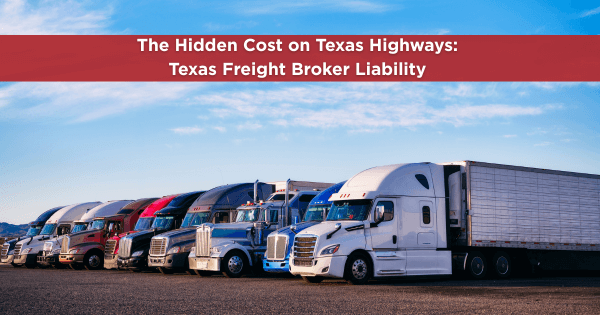
Texas highways see thousands of freight trucks daily—know how freight broker liability impacts road safety and legal responsibility.
It’s just after sunrise on I-35 near Fort Worth when a family’s car is struck head-on by a tractor-trailer that drifts across the median. The 18-wheeler is hauling freight for a large national logistics company. But, the name on the truck’s door belongs to a tiny independent carrier out of the Rio Grande Valley.
Within weeks, the carrier dissolves. The driver, an undocumented immigrant using a borrowed CDL, disappears. When the family’s attorney seeks damages from the freight broker and trailer owner, both are denied liability — claiming they had merely “arranged transportation” through a third-party hauler.
This scenario isn’t unique. It’s the new face of the trucking industry in Texas, where major freight companies increasingly insulate themselves from responsibility through independent contractors, shell carriers, and legal loopholes. And now, a case before the United States Supreme Court may determine whether that system remains untouchable. Or, whether victims finally get a path to justice.
Can a freight broker or logistics company be held liable under state law for negligently hiring an unsafe or illegal motor carrier? Or, does federal law shield them from all responsibility? This question sits at the intersection of federal deregulation, public safety, and corporate accountability.
The answer could reshape how every trucking-related personal injury case in Texas is litigated.
The Legal Framework: The FAAAA and the “Safety Exception”
The battle revolves around the Federal Aviation Administration Authorization Act (FAAAA), enacted in 1994 to deregulate the trucking and freight industry. The Act prohibits states from enforcing laws “related to a price, route, or service of any motor carrier or broker.” In practice, brokers and large logistics companies have invoked this statute as a liability shield, arguing that state-law tort claims (such as negligent hiring or negligent entrustment) interfere with federal uniformity. But the FAAAA includes an important carve-out: States may still regulate “the safety of motor vehicles.” This is known as the “safety exception.” The question before the Supreme Court is whether that exception allows victims to bring state-law negligence claims against brokers who recklessly choose unsafe or unqualified carriers.
A Split in the Courts
Federal appellate courts have been divided for years:
The Seventh and Ninth Circuits (covering parts of the Midwest and West Coast) have allowed victims to pursue negligent-hiring claims under the safety exception, recognizing that public safety outweighs deregulation in these cases.
The Eleventh Circuit (covering the Southeast) — and several Texas federal courts — have held that the FAAAA preempts such claims entirely, leaving victims with no remedy beyond the small carrier that caused the crash.
That conflict between circuits is what brought Montgomery to the Supreme Court.
Texas: The Epicenter of the Freight and Liability Debate
Texas is the beating heart of America’s freight economy and the front line of its liability crisis.
More trucks travel through Texas highways than any other state, and Texas consistently ranks #1 in fatal trucking crashes nationwide. This high traffic volume, combined with proximity to the Mexican border, has created the perfect environment for fragmented, loosely regulated trucking operations:
Independent contractors and small carriers bid for jobs through national freight-matching platforms.
Brokers and shippers outsource responsibility through layers of contracts.
And some carriers employ or subcontract unlicensed or undocumented drivers, often paid in cash, without meaningful oversight.
For accident victims, these complex arrangements create a maze of dead ends.
Independent Trucking and the “Liability Shell Game”
In traditional trucking, a motor carrier owns its trucks, employs its drivers, and carries insurance.
But in today’s fragmented freight world, that structure has eroded. Now, it’s common to see:
“Lease-on” drivers who operate under another company’s DOT number.
Shell carriers that exist only on paper to secure loads.
“Chameleon carriers,” companies that close after an accident and reopen under a new name.
Freight brokers who claim to be mere intermediaries, even when they exercise control over routes, schedules, or safety.
The result? When a catastrophic crash occurs, the entity with the deep pockets — the broker, shipper, or trailer owner — often says, “Not our truck, not our problem.”
And the victims are left suing a defunct LLC with minimal insurance.
The Border Connection: Immigration and Labor Exploitation
Because Texas is a border state, its trucking industry is deeply tied to cross-border labor and immigration issues.
Investigations by both state and federal agencies have uncovered:
Drivers operating under fraudulent or borrowed CDLs.
Companies hiring undocumented immigrants through layered subcontracting chains.
Fly-by-night carriers that register with fake addresses or falsified insurance.
These aren’t isolated incidents. Many independent operators are pressured into unsafe work, long hours, or driving without proper credentials. While brokers turn a blind eye, prioritizing delivery speed and low rates over safety compliance.
This pattern blurs the line between labor exploitation and public endangerment. And when disaster strikes, the system offers no recourse for victims (or the exploited workers themselves).
How Texas Courts Handle These Cases Today
Under current Texas federal court precedent, most negligent-hiring claims against brokers are dismissed as preempted by the FAAAA.
For example:
In Hamby v. Wilson (E.D. Tex. 2023), the court found that a broker’s decision to hire a carrier (even one with a poor safety record) was a “service” covered by federal preemption.
The court rejected the argument that the “safety exception” applied, concluding that Congress intended deregulation to take priority.
Similar rulings in the Southern and Northern Districts of Texas have echoed that reasoning, effectively closing the courthouse doors to victims seeking to hold brokers accountable.
This has left plaintiffs’ lawyers in Texas with limited options: pursue the small carrier’s minimal insurance, or attempt to pierce corporate veils — a difficult and expensive process.
What’s at Stake in the Supreme Court
If the Court Upholds Broad Preemption
If the Court Expands the Safety Exception
Brokers remain immune from negligent-hiring claims.
Victims may sue brokers for hiring unsafe or illegal carriers.
Accident victims must rely solely on small carriers’ insurance.
Large logistics companies face renewed accountability.
Illegal or unsafe hiring practices continue with little deterrent.
Brokers must tighten vetting, insurance, and compliance procedures.
Exploited or undocumented drivers remain hidden in gray markets.
Safer roads, fairer oversight, and stronger deterrence for reckless brokers.
The decision will likely come by June 2026 and will immediately impact ongoing and future trucking litigation in Texas.
The Human Cost: Victims Without Justice
Every trucking lawyer in Texas has seen it: the victim who did everything right, yet ends up fighting a legal ghost. They sue the driver (who’s judgment-proof). They sue the carrier (which vanishes or files bankruptcy). And when they turn to the broker, they’re told federal law won’t allow it.
For families who’ve lost loved ones, that feels like betrayal by the system itself.
This isn’t just a legal issue; it’s a moral one. When billion-dollar corporations profit from dangerous networks while evading responsibility, the balance of justice tips away from victims and toward impunity.
The Broader Impact on Texas Safety and Commerce
If Montgomery expands broker liability, expect to see a seismic shift in Texas transportation practices:
More rigorous carrier vetting. Brokers would need to verify licensing, insurance, and driver credentials.
Better compliance auditing. Shippers and brokers could be held to higher due-diligence standards.
Fewer shell operations. Increased accountability would discourage “pop-up” carriers used to skirt liability.
Improved highway safety. Greater responsibility at the top often leads to safer conduct at every level of the supply chain.
But if the Court sides with preemption, Texas may see the opposite — more layers, less transparency, and continued exploitation of both victims and under-the-radar drivers.
Sidebar: How Unlicensed and Undocumented Drivers Slip Through
Falsified Licensing – Some drivers borrow or buy CDLs from legitimate holders, exploiting weak verification in smaller carriers.
Shell Companies – A carrier forms under a new DOT number after a crash or inspection failure.
Broker Blind Spots – Brokers rely on public FMCSA databases but rarely verify insurance or driver identity beyond surface checks.
Labor Exploitation – Drivers without legal status may work under dangerous conditions with no recourse or benefits.
Each of these loopholes erodes public safety — and each could be curtailed if brokers faced legal accountability.
Voices from Both Sides
Proponents of limiting liability argue that brokers can’t police every carrier and that excessive litigation would cripple the freight economy. Opponents say deregulation has gone too far, allowing corporate actors to outsource risk and undercut safety. In truth, the issue isn’t whether every broker is bad — it’s whether the law should protect those who act irresponsibly at the expense of human life.
A Path Toward Justice
Whatever the Supreme Court decides, Texas attorneys and policymakers must confront an uncomfortable truth: the trucking industry’s growth has outpaced its accountability. Texas families deserve safer highways. Legitimate drivers deserve fair, lawful work. And when tragedy strikes, victims deserve meaningful justice — not excuses rooted in federal loopholes.
HLAW’s Perspective
At Howard Lotspeich Alexander & Williams, PLLC, our team sees beyond the crash report.
We investigate every layer — from the driver’s credentials to the broker’s contracts — to uncover who truly bears responsibility.
Our attorneys have handled cases involving:
Negligent hiring of unqualified or unsafe carriers.
Fatal crashes caused by drivers without valid CDLs.
Brokers and logistics firms attempting to hide behind corporate shells.
We believe accountability shouldn’t stop at the bottom of the supply chain. It should start where the power — and profit — begins.
Conclusion: Justice on the Line
The Supreme Court’s ruling in Montgomery v. Caribe Transport may decide whether Texas victims of trucking accidents can finally pursue the companies that put unsafe drivers on the road — or whether the law will continue to let those companies hide behind paperwork. Either way, one thing is clear: the safety of Texas highways, and the fairness of its justice system, hang in the balance.
Contact HLAW if you or a loved one has been injured in an Trucking Accident
If you or someone you love has been injured in a trucking accident, don’t assume the company behind the truck is beyond reach.
Call Howard Lotspeich Alexander & Williams, PLLC today for a free consultation. Our team will trace every link in the chain — from the driver to the carrier to the broker — and fight for the justice you deserve.
About the Author
Jesse J. Lotspeich is a seasoned trial attorney and partner at Howard Lotspeich Alexander & Williams, PLLC, where he leads the firm’s Personal Injury practice.
Raised in the small West Texas town of Crane, Jesse was instilled early with a strong work ethic and a sense of duty to others. After earning his B.A. cum laude from Howard Payne University and his J.D. from Texas Tech University School of Law, Jesse went to work in Fort Worth. For over 12 years, he worked at the Law Office of James Stanley handling complex accident and injury cases before joining HLAW as a partner.
Jesse specializes exclusively in personal injury litigation, and he carries that focus into every case—whether it’s catastrophic auto or trucking accidents, wrongful death, workplace injuries, or defective products. Known for being a staunch advocate in the courtroom, he personally handles depositions, case investigations, and all trial-level work, never shying from a fight on behalf of his clients.
Grieving family receives guidance from experienced wrongful death attorneys in Tarrant County.
Securing experienced legal support after a loved one’s wrongful death in Tarrant County demands both compassion and expertise.
In this guide, you will learn who is eligible to file a claim, the critical two‐year deadline under Texas law, the full range of economic and non-economic compensation, how to prove negligence, the distinction between wrongful death and survival actions, a step-by-step overview of the claims process, and why Howard Lotspeich Alexander & Williams, PLLC's approach in Fort Worth delivers trusted advocacy. By the end, you will understand both your legal rights under Chapter 71 of the Texas Civil Practice and Remedies Code and how compassionate representation on a contingency-fee basis can help grieving families move forward.
Who Can File a Wrongful Death Claim in Texas?
Only specific close relatives and estate representatives may pursue compensation when negligence or wrongful acts cause a fatality. Eligible parties include the surviving spouse, all children (biological or legally adopted), and parents of the deceased. If none of these immediate family members files within three months of appointment, an appointed executor or administrator of the deceased’s estate may step in, provided no eligible family member objects.
Eligible parties share a direct relationship to the decedent and a legal interest in pursuing damages. Establishing this relationship often requires certified birth, marriage, or adoption records. In rare situations, such as when no spouse, child, or parent survives, the estate representative’s authority becomes paramount, ensuring that the claim proceeds on behalf of all potential beneficiaries.
Surviving spouse of the deceased
All children, including legally adopted offspring
Biological or adoptive parents
These defined roles guarantee that those most affected can seek justice and financial recovery, laying the groundwork for pursuing compensation in subsequent stages.
What Is the Statute of Limitations for Wrongful Death Claims in Texas?
In Texas, wrongful death lawsuits must generally be filed within two years of the date of death. This deadline arises directly from Chapter 16 of the Texas Civil Practice and Remedies Code and applies to all wrongful death claims unless a specific exception intervenes. Missing this two-year cutoff typically bars any legal action, making early consultation with an attorney essential.
Three principal exceptions extend or modify the filing period. First, a minor beneficiary under age 18 may file within two years of turning 18. Second, if the claimant is incapacitated by unsound mind, the two‐year clock does not start until the disability is removed. Third, in “delayed discovery” cases—where the negligent act was not immediately known—the statute may begin on the date the injury was discovered or reasonably should have been discovered.
Exception Type
Trigger Event
Filing Extension
Minor Beneficiary
18th birthday of minor
2 years from that birthday
Mental Incapacity
Restoration of sound mind
2 years from restoration
Delayed Discovery
Date negligence becomes known
2 years from discovery date
These extensions guard against unfair dismissal of claims when strict deadlines clash with real-world impediments, ensuring wrongful death actions remain viable under equitable circumstances.
Texas Civil Practice & Remedies Code Chapter 71 for Wrongful Death Claims brought under Chapter 71 of the Texas Civil Practice and Remedies Code are often complex and require careful consideration of the specific facts and circumstances of each case.
What Types of Damages Can You Recover in a Texas Wrongful Death Lawsuit?
A Texas wrongful death claim can recover three primary categories of damages: economic, non-economic, and exemplary (punitive). Economic damages compensate measurable financial losses, non-economic damages address emotional harm, and exemplary damages punish particularly reckless or malicious conduct.
Economic damages encompass tangible losses resulting directly from the death. Non-economic damages recognize intangible suffering. Exemplary damages may be awarded when evidence shows gross negligence or willful misconduct. Recovering the full spectrum of compensatory relief requires careful documentation of expenses and emotional impacts, with exemplary awards reserved for truly egregious cases.
Damage Category
Description
Examples
Economic
Financial losses with objective proof
Lost income, medical bills, funeral expenses
Non-Economic
Subjective harm affecting quality of life
Mental anguish, loss of companionship, comfort
Exemplary (Punitive)
Punishment for gross negligence or malice
Jury-awarded fines beyond compensatory losses
Although Texas imposes no general cap on compensatory damages, special limits apply when suing government entities or in certain medical-malpractice scenarios. Understanding each damage type helps grieving families obtain full and fair compensation.
How Do You Prove Negligence in a Tarrant County Wrongful Death Case?
Proving negligence in a wrongful death action requires establishing four elements: duty, breach, causation, and damages. Duty refers to a legal obligation the wrongdoer owed the deceased. Breach demonstrates how the duty was violated. Causation connects the breach directly to the death, and damages quantify the resulting losses.
Compelling evidence often includes official accident or death reports, eyewitness statements, medical records, and expert testimony—such as reconstruction specialists or medical examiners. Documentation of the decedent’s lost earning capacity and family testimony regarding emotional suffering further solidifies the claim. Clear demonstration of each element under Texas law increases the likelihood of a favorable settlement or verdict.
Official incident or police reports establishing fault.
Witness affidavits detailing reckless or negligent acts.
Expert opinions quantifying causation and damages.
Financial records proving income loss and expenses.
Meticulous preparation of legal filings and evidence collection ensures each negligence element is fully supported, creating a persuasive narrative for compensation.
What Is the Difference Between Wrongful Death and Survival Action in Texas?
Wrongful death and survival actions serve related but distinct purposes under Texas law. A wrongful death claim compensates surviving family members for losses caused by the decedent’s passing. By contrast, a survival action allows the decedent’s estate to recover damages the deceased endured from injury until death.
Wrongful death awards flow to the spouse, children, or parents and address economic and emotional harms to survivors. Survival action proceeds become part of the estate and can include medical expenses and lost wages the decedent incurred before dying. Filing both claims concurrently often maximizes overall recovery by addressing separate harms accruing before and after death.
Claim Type
Beneficiary
Scope of Recovery
Purpose
Wrongful Death
Spouse, children, parents
Economic & non-economic losses of survivors
Compensate survivors for their loss
Survival Action
Decedent’s estate
Pre-death expenses and suffering
Restore estate for losses up to time of death
Understanding these complementary actions allows families and estate representatives to pursue every available remedy under Chapter 71 and Chapter 71A of the Texas Civil Practice and Remedies Code.
What Is the Wrongful Death Claim Process in Tarrant County?
The wrongful death process in Tarrant County begins with preserving key evidence and securing legal counsel. First, families should immediately document accident scenes, collect witness information, and obtain medical and police records. Next, an attorney conducts a thorough investigation to assess liability and damages.
Once the evidence is assembled, the attorney prepares and files a petition in the appropriate Tarrant County district court before the two-year deadline. Discovery follows, during which both sides exchange information. Settlement negotiations or mediation typically occur next, aiming to resolve the claim without trial. If no fair agreement emerges, the case proceeds to a jury trial for final resolution.
Preserve evidence and contact experienced counsel.
File petition in Tarrant County district court.
Engage in discovery and document exchanges.
Conduct settlement negotiations or mediation.
Proceed to trial if necessary.
Families can expect periodic status updates, assistance with administrative tasks, and compassionate guidance throughout each phase, ensuring clarity during a challenging time.
Why Choose the HLAW Law Firm for Wrongful Death Cases in Fort Worth?
HLAW Law Firm combines decades of wrongful death expertise with a faith-guided, compassionate approach that honors grieving families. Our attorneys have secured substantial recoveries for Tarrant County clients in vehicle collisions, workplace tragedies, and medical negligence cases. By focusing on personalized service and attentive communication, we guide clients through each legal milestone with empathy and professionalism.
Operating on a contingency-fee basis, HLAW Law Firm ensures that families never face upfront legal costs while pursuing justice. Our local knowledge of Fort Worth courts, relationships with experts, and commitment to ethical advocacy differentiate our firm. Community testimonials consistently highlight our responsiveness, trial-tested skill, and unwavering support during the most difficult periods.
Experienced trial attorneys with deep Tarrant County roots
Faith-guided counsel that respects your family’s values
No-fee-unless-we-win contingency structure
With HLAW Law Firm by your side, you gain both seasoned legal strategy and compassionate guidance tailored to Fort Worth families.
Grieving families deserve both legal skill and heartfelt support when seeking compensation for a wrongful death. By understanding eligibility, deadlines, damages, proof requirements, claim types, and procedural steps, you can confidently pursue justice. When you partner with BHW Law Firm, you secure dedicated advocacy on a contingency-fee basis—so you can focus on healing while we focus on your case.
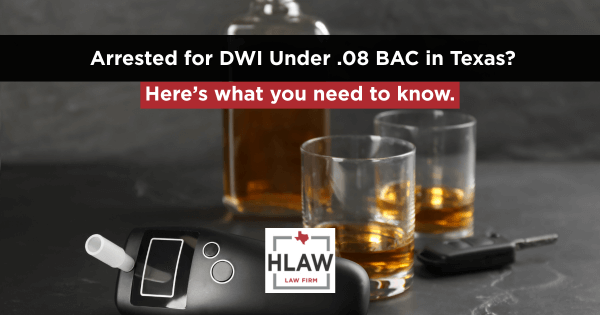
Texas law allows for DWI arrests even with a BAC under .08. Find out what this means for you and how to protect your rights.
Getting arrested for DWI when your BAC (Blood Alcohol Concentration) is actually under the legal limit of .08 can be incredibly confusing and even scary. But don't worry, understanding your rights and defense options can bring a lot of clarity. This guide, put together with insights from our experienced attorneys, will walk you through how Texas defines intoxication beyond just a BAC number, how officers try to prove impairment, the tricky parts of field sobriety and chemical tests, your legal protections during a stop, potential penalties, and why having an experienced DWI tips team on your side is absolutely essential for a better outcome.
Understanding your rights is crucial when facing DWI charges below the legal BAC limit.
Can You Really Be Charged With DWI Even If Your BAC Is Below .08?
Yes, you absolutely can! In Texas, you can face DWI charges even if your BAC is under .08. Why? Because intoxication isn't just about a number; it's also about losing the normal use of your mental or physical faculties. In these cases, police officers need to show that you were impaired through their observations or tests. This means they could charge you for noticeable impairment, no matter what your measured alcohol concentration was. Grasping this fundamental legal point is key to building a strong defense and protecting your driving privileges.
Intoxication in Texas isn't solely defined by a BAC number, but also by the loss of normal faculties.
What Does "Intoxication" Mean Beyond Just Your BAC?
Texas Penal Code §49.01(2) defines intoxication in two ways: either you've lost the normal use of your mental or physical faculties because of alcohol or drugs (regardless of your BAC), OR you have an alcohol concentration of .08 or more. This "dual definition" is super important. It means someone with a BAC as low as .05 could still be considered intoxicated if their driving, speech, coordination or other observable signs clearly show impairment. This definition can be highly subjective, yet legally binding.. Understanding this difference is paramount for any effective low BAC DWI defense strategy.
In Texas, intoxication is about losing your normal faculties, not just a BAC number.
How Do Officers Establish Probable Cause? The Role of FSTs (Field Sobriety Tests)
Officers are trained to meticulously observe your driving behavior, roadside interactions, and field sobriety tests (FSTs) to infer impairment and establish probable cause for an arrest. They can do this even if a breath or blood test later shows your BAC is below .08. Things like erratic driving, red and bloodshot eyes, the smell of alcohol, or fumbling for your documents all contribute to their assessment. FSTs are designed to check your coordination, balance, and ability to multitask, giving them evidence of impairment for charges based on your faculties.
Challenging Field Sobriety Tests in Low BAC Cases
Field Sobriety Tests are a big tool for officers, but their administration can definitely be challenged.
While officers are supposed to follow standardized procedures for FSTs, mistakes in how they give instructions, time the tests, or even score them can completely undermine their validity. Here's a quick look at the main roadside evaluations and where they can go wrong:
Test Name
Purpose
Potential Error Points
Horizontal Gaze Nystagmus
Checks for involuntary jerking of the eyeballs
Improper administration of the test, improper stimulus angle, poor lighting, pre-existing medical conditions
Walk-and-Turn
Tests divided attention and ability to follow instructions
Uneven surface, unclear instructions, improper demonstration, distractions during the test
One-Leg Stand
Tests divided attention and ability to follow instructions
Timing mistakes, environmental factors, physical limitations, distractions during the test
Standardized Field Sobriety Tests (SFSTs) have faced a lot of scrutiny over how reliable they actually are, with some studies even pointing to significant error rates. This potential inherent unreliability is often a cornerstone of many successful DWI defenses. Errors like improper instructions, erroneous administration, or even environmental obstacles can invalidate FST results, poking holes in the prosecution’s story of noticeable impairment. Remember, refusing voluntary field sobriety tests doesn't trigger statutory refusal penalties, though it might make an officer more suspicious. Your legal counsel can rigorously attack FST evidence by highlighting training gaps, environmental interferences, and subjective scoring biases, often leading to favorable outcomes.
How Accurate Are Chemical Tests? And What Can Affect Them?
When BAC levels are lower, chemical tests could be much more prone to error due to how sensitive the machines are, various physiological factors, and even the sampling techniques used. Many different things can skew the readings, which often presents critical defense opportunities. The accuracy of chemical tests, especially at lower BAC levels, can be influenced by many factors. These include:
Machine Calibration – If machines aren't maintained or calibrated properly, it can lead to consistent errors, making the results unreliable.
Mouth Alcohol – Things like recent belching, vomiting, or even using mouthwash can artificially inflate breath readings, leading to false positives.
Physiological Variations – Your body temperature, hematocrit levels, and certain medical conditions can all alter how alcohol is absorbed and metabolized, impacting accuracy.
Sampling Technique – Poor or improper blood draws, improper storage, or contaminated vials can compromise the sample's integrity, potentially making the results inadmissible.
One significant investigationeven revealed that breath test devices frequently give inaccurate readings due to systemic issues like improper calibration, human error, and a severe lack of oversight in device maintenance, with some machines reporting results up to 40% too high!
Chemical tests, especially at lower BAC levels, can be susceptible to various factors affecting their accuracy.
Rising BAC & Medical Defenses
The "rising BAC" defense argues that alcohol you drank before driving might still be absorbed into your bloodstream after you've been stopped. This could lead to a higher BAC reading at the time of the test than you actually had while driving. By showing post-stop absorption curves through expert testimony, attorneys can demonstrate that a breath or blood test might overstate your impairment at the time of operation. Plus, medical issues like gastroesophageal reflux, diabetes, or unusual metabolism can mimic or mask alcohol presence, potentially producing false positives. Presenting thorough medical evidence helps defense teams challenge the accuracy of chemical tests and raise reasonable doubts.
Common Legal Defenses Against Chemical Test Evidence
When it comes to challenging chemical test results, defense strategies usually involve a multi-pronged approach:
Contesting the machine's maintenance and calibration records, demanding full transparency.
Showing that there were procedural violations in how the sample was collected, stored, or analyzed.
Bringing in expert testimony about physiological differences and how they impact readings.
Using independent blood sample retesting by accredited laboratories to either confirm or refute the initial findings.
Your Rights During a DWI Stop & Arrest
Knowing your legal protections is incredibly important. It helps you navigate roadside interactions, minimize self-incrimination, and protect your defense. Under Texas's implied consent laws, driving on public roads means you automatically agree to chemical testing, and refusing it can lead to an automatic license suspension and fines. However, you do have the right to remain silent and can politely decline to perform voluntary sobriety exercises. You should also invoke your right to counsel immediately after an arrest. Getting a qualified DWI defense attorney involved early ensures that evidence is properly preserved, administrative hearing requests are made on time, and you get strategic guidance through every legal step.
Understanding and asserting your rights is critical during a DWI stop.
Protecting Your Driver’s License
In most instances, you can request an administrative license revocation (ALR) hearing within 15 days of your arrest to fight the suspension. Presenting strong arguments about test refusal, procedural errors, or a lack of probable cause might help you keep your driving privileges during the prosecution, significantly reducing the impact on your job and daily life.
Penalties & Long-Term Consequences of a Low BAC DWI
Even with a low BAC, DWI convictions come with serious fines, potential jail time, and lasting consequences that go far beyond the courthouse, affecting your life for years. Penalties get much steeper if you have prior offenses or if impairment is clearly proven, as you can see below. It's crucial to remember that a lower BAC doesn't prevent you from facing full statutory penalties if impairment is proven, so understanding these ranges really highlights the urgency of building a strong defense.
Offense Type
Fine Range
Jail Time
License Action
First-Offense DWI
0–$2,000
3 to 180 days
90-day - 1year suspension
Second-Offense DWI
0–$4,000
30 days to 1 year
1-2 year suspension
Third-Offense DWI
0–$10,000
2–10 years
2-year suspension
DWI convictions carry severe and lasting consequences, regardless of your BAC level.
How It Impacts Your License, Insurance, & Employment
A conviction means you may need SR-22 insurance, get significant points on your driving record, and face possible substantial premium hikes. License suspensions make travel and employment challenges even worse, often requiring expensive ignition interlock devices for reinstatement, which creates a long-term financial burden. A DWI conviction can show up on background checks for life, potentially disqualifying you from jobs that require clean driving records or security clearances. And if you're a repeat offender, you'll face dramatically higher fines, longer jail sentences, and extended license revocations.
How a DWI Defense Attorney Can Really Help You
In low BAC DWI cases, having specialized legal representation isn't just helpful; it's absolutely essential. You'll want counsel with a proven track record and specific expertise, including:
Demonstrated experience in low BAC and impairment-based DWI defense, understanding all the unique nuances.
In-depth knowledge of Texas Penal Code §49.01 definitions and how they apply in court.
A strong track record of successfully challenging field sobriety and chemical test results.
Exceptional negotiation skills for plea agreements or alternative sentencing, and formidable trial advocacy.
A specialized DWI defense attorney is indispensable for navigating the complexities of low BAC cases.
Challenging Probable Cause & Improving Outcomes
Defense lawyers can file motions to suppress evidence based on a lack of reasonable suspicion, improper FST administration, or faulty chemical test procedures. They might depose arresting officers, subpoena maintenance and/or blood testing records, and sometimes bring in expert witnesses to dismantle the prosecution’s proof of impairment. Getting an attorney involved early preserves critical evidence, secures administrative hearing dates, and prevents costly procedural missteps, dramatically improving your chances of a favorable outcome.
The Process for Hiring a DWI Defense Lawyer
Initial Consultation – This is a critical first step to review your arrest details and initial evidence.
Engagement Agreement – A clear outline of what the representation covers and the associated fees.
Case Evaluation – A thorough assessment to pinpoint strengths, weaknesses, and the best defense angles.
Formal Representation – Your attorney files motions, negotiates with prosecutors, and represents you at all hearings and trial, providing unwavering advocacy.
Facing a Low BAC DWI Charge? Don't Wait!
The complexities of low BAC DWI cases demand immediate and expert legal intervention. Protect your rights, your license, and your future by consulting with a dedicated defense attorney today.
At Howard Lotspeich Alexander & Williams, PLLC (HLAW), our DWI attorneys are among the most respected in North Texas for their skill, experience, and results. We understand that a DWI arrest can threaten your freedom, reputation, and future — and we treat every case with the precision it deserves. Our lawyers are former prosecutors and seasoned trial advocates who know how to challenge field sobriety tests, breath or blood results, and every aspect of the state’s evidence. Whether it’s a first-time offense or a felony DWI, we bring a proven track record of dismissals, reductions, and victories in court — all backed by our firm’s commitment to compassion and preparation..
Don't face a low BAC DWI charge alone. Our experienced attorneys are here to provide the expert legal defense you need.
Why Choose Our Firm for Your Low BAC DWI Defense?
When your future is on the line, you need more than just legal representation—you need a dedicated advocate with a proven track record. Our firm specializes in low BAC DWI cases, truly understanding the intricate legal landscape and the scientific nuances needed to build an impenetrable defense. We offer:
Unmatched Expertise: Deep knowledge of Texas DWI law, including that subjective "loss of faculties" definition.
Strategic Defense Planning: Tailored strategies, from rising BAC defenses to medical condition arguments.
Client-Centered Advocacy: Protecting your rights, license, and future with unwavering dedication.
Aggressive Evidence Challenge: Meticulous scrutiny of FSTs, breathalyzer calibration, and blood test protocols.
Immediate Steps After a Low BAC DWI Arrest
Taking proactive steps right after an arrest is essential and can really strengthen your defense by preserving crucial evidence and effectively asserting your rights. Immediately record the date, time, location, officer names, any witness contacts, and your own detailed notes on road conditions and officer statements. If you initially refused, request independent blood testing within hours at a certified lab to get objective data. Filing an ALR hearing request within 15 days of arrest may be necesary to challenge evidence, refusal grounds, or probable cause. And make sure to work closely with your attorney to gather all relevant medical records, expert reports on test accuracy, and witness statements.
Key Takeaways from Legal Experts
Intoxication Isn't Just a Number: Texas law defines intoxication by "loss of normal mental or physical faculties," meaning you can be charged even if your BAC is below .08.
Challenge Every Piece of Evidence: Field sobriety tests and chemical tests are prone to errors. A skilled attorney will scrutinize how they were administered, calibrated, and any physiological factors.
Know Your Rights: You have the right to remain silent and should ask for legal counsel immediately after an arrest. Refusing voluntary FSTs isn't penalized like refusing chemical tests.
Consequences Are Severe: Even low BAC DWI convictions come with significant fines, jail time, license suspensions, and long-term impacts on your employment and insurance.
Expert Legal Counsel is Indispensable: A specialized DWI defense attorney is crucial for navigating the complexities, challenging evidence, and securing the best possible outcome.
Being arrested for DWI below the legal BAC limit definitely calls for specialized legal defense and consultation to protect your rights and driving privileges. By understanding the nuanced definitions of impairment, rigorously challenging test reliability, asserting your rights during stops, and enlisting experienced counsel, you can navigate this complex legal process with confidence and pursue the best possible outcome. If you’re facing a low BAC DWI charge in Texas, don't delay—seek a qualified DWI defense attorney today to start building your robust defense strategy and protect your future.
About the Author
Jason H. Howard is a seasoned trial attorney based in Fort Worth, Texas, dedicated to defending clients in criminal and DWI matters. Before entering private practice, he served as a felony chief prosecutor in the Lubbock County Criminal District Attorney’s Office, gaining extensive courtroom experience on both sides of the aisle. Jason focuses his practice entirely on litigation, with a special concentration in DWI / intoxication offenses, criminal defense, and personal injury. Over his career, he has handled more than a thousand cases from start to finish and has earned recognition as one of Fort Worth’s Top Attorneys and a “Super Lawyer” from Thomson Reuters. Raised in small-town West Texas, Jason brings both legal skill and a grounded sense of purpose to his work. Outside the courtroom, he enjoys fly fishing, time outdoors, and serving his community and church.