Skip to content

October 2025

Page 2 of 3 · 11 articles

Red semi-truck driving on a Texas highway under cloudy skies, illustrating commercial Texas truck accident liability laws.

Commercial Truck Accident Liability Laws Explained

By Jesse Lotspeich · Truck Accidents

Texas Truck Accident Liability: A Complete Guide to Commercial Truck Accident Liability Laws

When an 18-wheeler crashes on Texas roads, commercial truck accident liability laws determine who is responsible for injuries, losses, and property damage.

Red semi-truck driving on a Texas highway under cloudy skies, illustrating commercial Texas truck accident liability laws.
Understanding who is responsible after a commercial truck accident can be complex. Our Fort Worth attorneys explain how Texas liability laws apply to trucking crashes.

Victims often face intricate federal regulations and state statutes while grappling with escalating medical expenses and lost income. This guide offers straightforward explanations of how fault is determined, Federal Motor Carrier Safety Administration (FMCSA) requirements, proving negligence, and available compensation options—all within the framework of Texas law. You’ll discover which parties can be held accountable, how to gather crucial evidence, what damages you can seek, and how Howard Lotspeich Alexander and Williams, PLLC provides skilled legal support to injured drivers and passengers. Continue reading to explore:

  • Liable parties and the impact of HB19
  • Key FMCSA rules that influence claims
  • Methods for proving negligence and navigating comparative fault
  • Economic and non-economic damages you can recover
  • The vital role of a dedicated Texas truck accident attorney
  • Common accident causes and current Texas crash trends

Who Bears Liability for a Commercial Truck Accident in Texas?

Pinpointing liability in a Texas commercial truck accident involves scrutinizing negligent actions and legal obligations. Liability arises when a driver, carrier, manufacturer, or another party fails to uphold their duty of care and causes harm. For instance, a driver who exceeds federal Hours of Service limits due to fatigue may be considered negligent per se under FMCSA regulations. Establishing fault often relies on driver logs, vehicle inspection reports, and maintenance records. Understanding these legal principles and how they apply to each involved entity is fundamental to holding responsible parties accountable.


The following parties are most frequently held liable after a Texas 18-wheeler collision:

  • The truck driver for violations such as speeding, distracted operation, or Hours of Service (HOS) violations
  • The trucking company for issues like negligent hiring, insufficient training, maintenance lapses, or vicarious liability
  • The cargo loader for failing to properly secure freight, leading to shifts in the load
  • The manufacturer of defective components like brakes, tires, or steering systems
  • The vehicle maintenance provider for substandard repairs or inadequate inspections
  • A government entity responsible for unsafe road design or insufficient signage

Each of these parties can face claims under both state and federal laws, clearing the path toward obtaining full compensation.

What Role Do Truck Drivers Play in Truck Accident Liability?
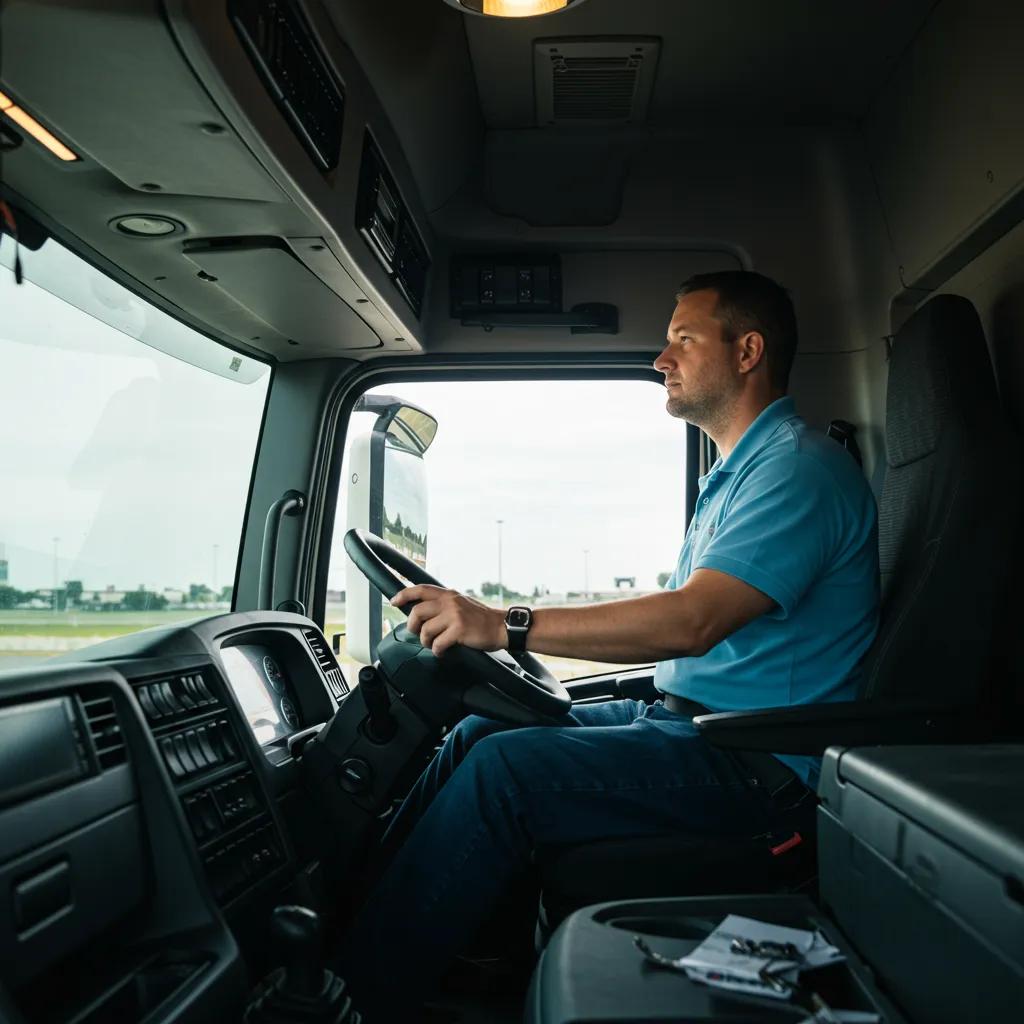
Truck driver focused on the road, illustrating driver responsibility in accident liability

Truck drivers are at the forefront of commercial vehicle safety and can be held liable for negligence if their actions violate federal or state regulations. A truck driver can be found liable due to speeding, distracted driving (such as texting), operating under the influence, or failing to adhere to FMCSA Hours of Service (HOS) limits. When driver logs reveal violations, the doctrine of negligence per se may apply, simplifying the process of proving fault. A driver's decisions have a direct impact on the risk of a crash and an accident victim's eligibility for compensation.

How Are Trucking Companies Held Accountable Under Texas Law?

Trucking companies can be held liable for negligent hiring practices, inadequate training programs, poor vehicle maintenance, and failure to enforce FMCSA regulations. Under the principle of vicarious liability, employers are responsible for the misconduct of their drivers while on duty. Texas House Bill 19 further complicates company liability by requiring a two-phase trial process that separates evidence of negligence from evidence of damages. Carriers must demonstrate robust compliance programs to avoid full accountability for accidents.

Which Other Parties Can Be Held Liable in Texas Truck Accidents?

In addition to drivers and carriers, other parties such as cargo loaders, parts manufacturers, and maintenance contractors may share liability for a truck accident. Cargo loaders are responsible when improperly secured freight shifts, leading to a loss of vehicle control. Defective brake systems, faulty tires, or steering failures can implicate manufacturers. Maintenance shops and mechanics may face negligence claims if inspection records indicate that safety defects were ignored.

How Does Texas House Bill 19 (HB19) Impact Trucking Company Liability?

Texas House Bill 19 mandates a bifurcated trial for claims against trucking companies, where negligence is determined first, followed by damages. This law, effective September 2021, restricts the discovery of financial and punitive evidence until liability is established in the first phase. This procedural change encourages streamlined defenses and may delay victims' access to carriers' safety records until after fault has been determined.

What Are the Key FMCSA Regulations Affecting Truck Accident Claims in Texas?
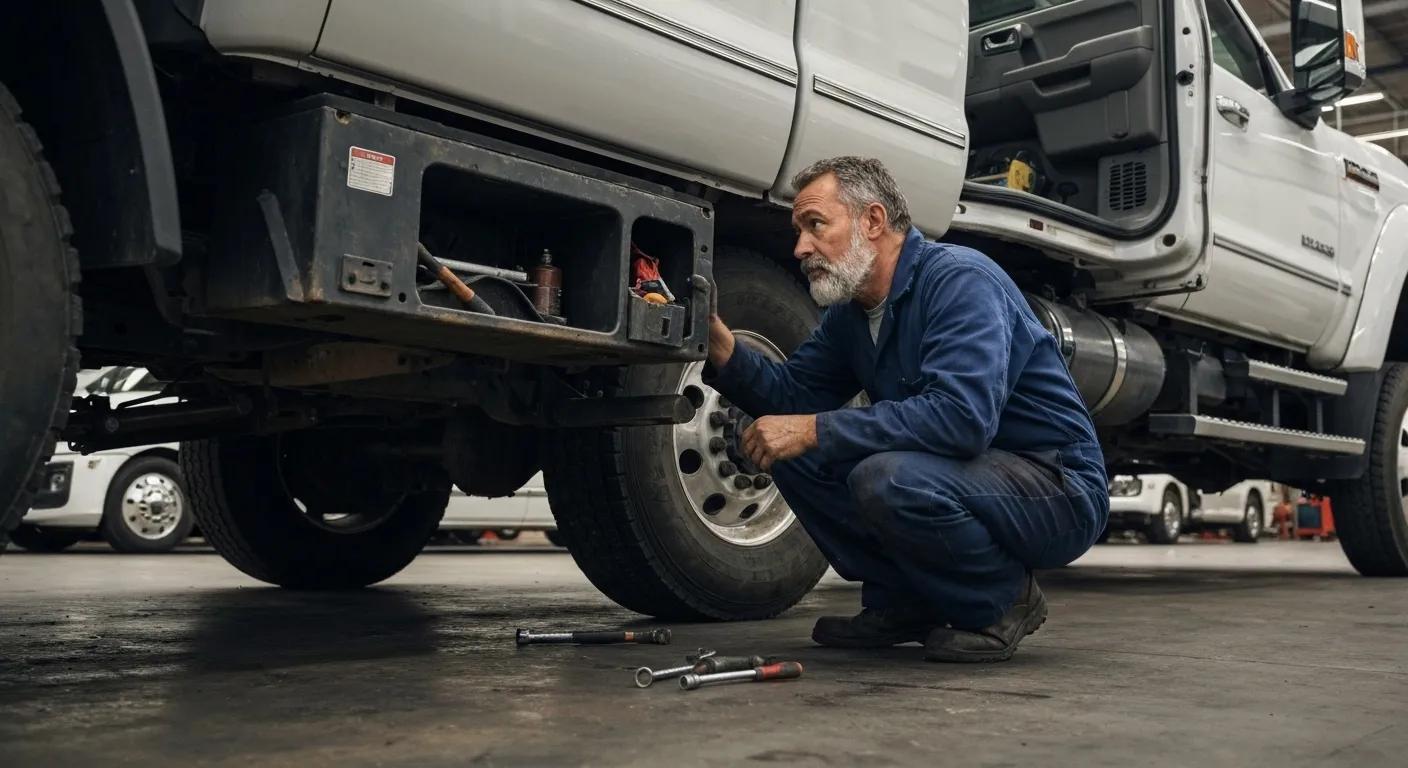
Mechanic inspecting a truck, highlighting FMCSA regulations and vehicle maintenance

Federal Motor Carrier Safety Administration (FMCSA) regulations govern the operations of commercial trucks and significantly influence liability claims in Texas. Key FMCSA rules address Hours of Service limits to prevent driver fatigue, mandate regular vehicle maintenance and inspections to ensure roadworthiness, establish drug and alcohol testing protocols to deter impairment, and set cargo securement standards to prevent load shifts. Violations of these regulations provide strong evidence for negligence per se claims, increasing the accountability of carriers and drivers in court.

Essential FMCSA requirements include:

  • Hours of Service (HOS) regulations governing driving and on-duty rest periods
  • Regular maintenance inspections and detailed repair documentation
  • Pre-employment, post-accident, and random drug and alcohol testing procedures
  • Cargo securement rules for trailers, containerized freight, and bulk loads

Strict adherence to these standards directly impacts how fault is determined and the outcomes of compensation claims.

How Do Hours of Service (HOS) Rules Influence Liability?

Hours of Service rules limit truck drivers to 11 hours of driving within a 14-hour on-duty period and require a 30-minute break after eight hours of driving. Exceeding these limits constitutes a federal violation and supports a negligence per se claim. Data from electronic logging devices (ELDs) often provides irrefutable evidence of HOS violations and driver fatigue, strengthening victims' cases.

What Are the Vehicle Maintenance and Inspection Requirements?

The FMCSA requires carriers to conduct daily pre-trip and post-trip inspections, document any identified repair issues, and perform comprehensive periodic maintenance. Failing to follow these inspection schedules or to record necessary repairs can be used to demonstrate negligence in maintaining safe equipment. Maintenance logs serve as critical proof that carriers neglected their legal duty of care.

How Do Drug and Alcohol Testing Regulations Affect Liability?

Mandatory drug and alcohol testing following certain safety-sensitive events, including accidents, can establish negligence per se if testing protocols are violated or results are concealed. Testing procedures cover pre-employment, random screenings, reasonable suspicion evaluations, and post-accident assessments. Noncompliance with these testing regulations strengthens a negligence case against both the driver and the carrier.

What Is the Role of Cargo Securement Rules in Truck Accident Liability?

Cargo securement regulations mandate that freight be properly blocked, braced, and fastened to prevent movement during transit. Violations, such as missing straps or overloaded trailers, can cause cargo shifts that destabilize the vehicle. Evidence of improper securement directly establishes liability for cargo loaders and carriers under FMCSA guidelines.

A violation of a specific safety statute designed to prevent accidents can lead to a finding of negligence per se, simplifying the burden of proof for injured parties.

Example: Negligence Per Se in Texas Truck Accidents: Statute Violations and Liability
In Texas, the law requiress vehicles approaching a railroad crossing to stop not closer than 15 feet or father than 50 feet from the nearest rail..." A Texas Court theld that that a driver's failure to comply with the statute constituted negligence per se.  Negligence per seis a legal doctrine that allows a court to treat the violation of a statute or ordinanceas automatically constituting a breach of the duty of care, rather than requiring the plaintiff to prove that the defendant acted unreasonably.

How Is Negligence Proven in Texas Commercial Truck Accident Lawsuits?

Demonstrating negligence in Texas commercial truck accident lawsuits requires proving that a breach of duty directly caused harm. Evidence typically includes electronic logging device (ELD) records, black box data, maintenance and inspection logs, police accident reports, and witness testimonies. Presenting clear causation between regulatory violations and the resulting injuries is key to a successful claim.

Type of Evidence Purpose Example
ELD / Black Box Data Confirms Hours of Service compliance Logs showing HOS overages
Maintenance Logs Details inspection and repair history Missing entry for brake repair
Police Crash Reports Provides official accident details Officer's assessment of fault
Witness Statements Corroborates events and driver behavior Eyewitness account of speeding

What Types of Evidence Are Crucial for Establishing Fault?

The most critical types of evidence include ELD data, black box recordings, maintenance and inspection logs, police crash reports, and cargo loading documentation. Collectively, this evidence demonstrates regulatory noncompliance, equipment failures, and driver misconduct.

How Does Texas’ Modified Comparative Negligence Rule Affect Claims?

Under Texas’ modified comparative negligence rule, an injured party can only recover damages if they are found to be 50 percent or less at fault for the accident. Any compensation awarded will be reduced by the injured party's percentage of fault. If a plaintiff is determined to be more than 50 percent responsible, they are barred from recovering any damages.

What Are the Different Legal Theories: Negligence, Vicarious Liability, and Negligence Per Se?

Negligence is based on proving that a party breached a duty of care, causing harm. Vicarious liability holds employers responsible for the actions of their employees within the scope of employment. Negligence per se occurs when a violation of a statute, such as an FMCSA rule, directly results in injury. Each of these theories offers a distinct pathway to establishing fault in truck accident cases.

What Damages Can Victims Recover in Texas Truck Accident Cases?

Victims of commercial truck accidents in Texas may be entitled to recover both economic and non-economic damages to compensate for their losses and suffering. Economic damages cover tangible financial losses, such as medical expenses, lost wages, and property damage. Non-economic damages address intangible losses like pain and suffering, emotional distress, and loss of consortium. In cases of wrongful death, additional damages may include funeral expenses and loss of support for surviving family members, as defined by state statutes.

Category of Damages Examples Purpose
Medical Expenses Emergency care, rehabilitation services Covers all past and future medical treatment costs
Lost Income Wages, benefits, loss of future earning capacity Compensates for income lost due to the injury
Property Damage Vehicle repair or replacement costs Restores the value of the damaged property to its pre-crash condition
Pain & Suffering Physical pain, emotional trauma, mental anguish Addresses subjective, non-economic harm experienced by the victim
Wrongful Death Losses Funeral costs, loss of financial support for survivors Provides for the economic needs of the deceased's family

What Are Economic Damages in Truck Accident Claims?

Economic damages encompass all quantifiable financial losses, including medical bills, prescription costs, physical therapy expenses, lost wages, loss of future earning capacity, and costs associated with vehicle repair or replacement. Each of these items must be documented and itemized to clearly demonstrate the actual financial losses incurred.

What Are Non-Economic Damages?

Non-economic damages are intended to compensate for losses that are not easily quantifiable in monetary terms. These include compensation for pain and suffering, mental anguish, emotional distress, and a diminished quality of life. While intangible, these losses are assessed through detailed testimony and established legal guidelines.

How Are Wrongful Death Claims Handled in Texas Truck Accidents?

Wrongful death lawsuits allow surviving family members to seek compensation for funeral and burial expenses, the loss of companionship and support from the deceased, and potential inheritance losses. Texas statutes specify who is eligible to file such claims and outline limitations on certain non-economic damages.

How Can a Texas Truck Accident Lawyer Help You Navigate Liability Laws?

A lawyer specializing in Texas truck accidents brings extensive knowledge of state and federal regulations to guide victims through the complexities of liability. By meticulously investigating crash scenes, securing critical data from ELDs and black boxes, examining maintenance records, and interviewing witnesses, an attorney can construct a robust liability case. Familiarity with Texas HB19 and comparative negligence rules ensures strategic navigation through each phase of the legal process.

At Howard Lotspeich Alexander and Williams, PLLC (HLAW), we possess significant experience in preserving vital evidence and negotiating with insurance companies to maximize compensation for our clients. Our compassionate approach ensures you remain informed throughout the process, while we aggressively pursue fair outcomes.

What Is the Importance of Legal Expertise in Complex Truck Accident Cases?

Legal expertise is crucial for correctly identifying all applicable FMCSA rules, Texas Transportation Code provisions, and civil practice statutes. Experienced attorneys can anticipate the defenses that trucking companies may present, effectively counter comparative fault arguments, and clearly articulate liability theories to judges and juries.

How Does a Lawyer Identify All Liable Parties?

Through thorough accident reconstruction, detailed review of maintenance logs, inspection of cargo securement records, and analysis of hiring and training documentation, attorneys can uncover additional parties who may share liability, such as shippers, manufacturers, or maintenance firms.

What Are the Benefits of Hiring Howard Lotspeich Alexander and Williams, PLLC?

Clients benefit from our firm’s proven history of success in 18-wheeler crash litigation, our unwavering commitment to comprehensive evidence preservation, and our personalized advocacy. Our deep understanding of Texas truck liability laws and FMCSA regulations positions victims to achieve the best possible recovery.

What Are Common Causes and Contributing Factors in Texas Truck Accidents?

Speeding, distracted driving, driver fatigue, mechanical failures, and improper cargo loading are primary factors contributing to truck crashes in Texas. Speeding reduces a driver's reaction time and intensifies the impact of collisions. Distracted driving, whether from mobile devices or other in-cab activities, impairs hazard recognition. Fatigue resulting from Hours of Service violations significantly increases the risk of accidents. Mechanical malfunctions, such as brake failures or tire blowouts, often stem from inadequate maintenance, while unsecured freight can shift, destabilizing the vehicle.

Common contributing factors include:

  • Excessive speed on both highways and urban roads
  • Use of mobile devices or other in-cab distractions
  • Hours of Service violations leading to drowsy driving
  • Defective vehicle parts or deferred maintenance
  • Improperly secured cargo causing load shifts

How Do Speeding and Distracted Driving Contribute to Liability?

Both speeding and distracted driving constitute a breach of the duty of care by increasing the risk and severity of accidents. The FMCSA and Texas law classify these behaviors as negligence, with evidence from GPS data, witness accounts, and accident reconstructions supporting claims of fault.

What Is the Impact of Fatigued Driving and Hours of Service Violations?

Driver fatigue significantly impairs alertness and reaction times, directly causing many severe truck accidents. FMCSA HOS logs document these violations, providing strong legal grounds for negligence per se claims against both drivers and carriers.

How Do Defective Parts and Improper Cargo Loading Lead to Accidents?

Mechanical defects, such as worn brake pads or faulty steering components, can lead to critical system failures while the vehicle is in operation. Similarly, unsecured or overloaded cargo can shift, altering the vehicle's weight distribution and potentially triggering rollovers or jackknife accidents, thereby implicating loaders and shipping entities in liability.

Understanding the complexities of cargo securement is crucial, as improper loading can lead to severe accidents and implicate multiple parties in liability.

Motor Carrier Crashes: FMCSA Inspection Violations and Load Securement

This paper is the fourth paper in a series of papers that analyzed results from a major damage assessment study that examined challenges products endure during shipping and handling in the mixed-load and less-than-truckload (LTL) logistics environments. The previous three papers are specific to various commodities, such as televisions, appliances, furniture, machinery, doors and windows, and paint products. These products are known to represent high levels of freight damage and corresponding claims to carriers. Products of different sizes and weights are loaded into trailers using various methods both mechanical and manual, by various algorithms to best weigh or cube out a trailer efficiently. However improper loading and lack of load securement inside the trailer can result in damage to both packages and the products they contain, and can lead to subsequent injury during unloading. The paper discusses improperly loaded trailers, and recommends proper loading methods.

Insights into motor carrier crashes: a preliminary investigation of FMCSA inspection violations, Y Gao, 2021

The historical context of cargo securement liability reveals a shift from carrier-centric responsibility to a more diffused model involving shippers and third-party logistics providers.

Texas Truck Accident Liability: Shipper and Carrier Cargo Securement Laws.

Under Texas law, cargo securement duties are informed by FMCSA regulationsadopted in Texas (49 C.F.R. Part 393, Subpart I; 37 Tex. Admin. Code § 4.11). Courts frequently apply the Savage rule, under which the carrier bears the primary duty for safe loading, while a shipperthat loads may be liable for latent, non-observable defectsit creates. Recent cases and commentary reflect that fault can be allocated among multiple actors(shipper, carrier, third-party loaders) under general negligence and comparative fault principles, rather than placed exclusively on one party. 

What Are Recent Trends and Statistics in Texas Commercial Truck Accidents?

Texas consistently ranks highest in the nation for commercial truck crashes and fatalities, with over 35,000 reported incidents and more than 600 deaths in 2023 alone. Recent data indicates that speeding contributed to 38 percent of these crashes, distracted driving accounted for 28 percent, and intersections remained the most frequent site of collisions, accounting for 32.76 percent. Projections through 2025 suggest a continued rise in accident rates, driven by increasing freight volumes, the emergence of challenges related to autonomous truck technology, and persistent gaps in regulatory compliance. These trends highlight the critical need for thorough liability analysis and proactive legal representation.

Year Crashes Reported Fatalities Key Trend
2022 34,150 585 Increased HOS violations observed
2023 35,000+ 600+ Rising rates of speeding and confusion with automation
2024 36,200 (estimated) 620 (estimated) Intersection accidents continue to be the most common type

How Has Texas Become a Leader in Truck Accident Fatalities?

A combination of heavy freight traffic, extensive rural highway networks, and insufficient rest areas contributes to driver fatigue and risky driving behaviors. Challenges in regulatory enforcement and the rapid growth of the trucking industry further increase the exposure to potential crashes.

What Are the Projected Trends for Trucking Accidents Through 2025 and Beyond?

Freight demand is anticipated to increase by over 22 percent by 2030. Simultaneously, the integration of autonomous systems and AI introduces new regulatory and safety complexities. Without enhanced compliance measures, accident rates are likely to continue their upward trajectory.

How Do Accident Locations Like Intersections Affect Liability Cases?

Collisions at intersections often involve intricate fault determinations, as both drivers and carriers may dispute right-of-way and braking capabilities. Detailed traffic signal data, analysis of skid marks, and witness interviews are essential for clarifying liability in these high-risk scenarios.

Victims dealing with the aftermath of a commercial truck crash require clear guidance on liability and compensation.

By understanding the roles of various parties, key FMCSA regulations, methods for proving negligence, and options for recovering damages, injured Texans can pursue fair outcomes. Expert legal counsel from Howard Lotspeich Alexander and Williams, PLLC ensures that every legal avenue is explored—from securing crucial black box data to advocating under Texas HB19—to maximize your recovery and hold those at fault accountable.

Contact Howard Lotspeich Alexander and Williams, PLLC today for a free case evaluation and consultation.
Read full article
Front of an 18-wheeler semi-truck at night symbolizing the power and danger of large commercial vehicles in Texas truck accident cases.

18-Wheeler vs. Passenger Car Accidents: Why These Cases Are Different

By Jason H. Howard · Personal Injury

Front of an 18-wheeler semi-truck at night symbolizing the power and danger of large commercial vehicles in Texas truck accident cases.
When an 18-wheeler collides with a passenger car, the results can be devastating. Learn why truck accident cases require specialized legal experience.
When a crash involves an 18-wheeler and a passenger car, the consequences are often life-changing. These cases are not simply larger versions of car accidents. They involve different physics, specialized federal trucking regulations, and complex legal claims.

At Howard Lotspeich Alexander & Williams, PLLC (HLAW), our team of experienced Texas truck accident lawyers understands what makes these cases unique. Below, we explain the key factors that set truck-car collisions apart—focusing on the physics of big rigs, the urgency of preserving evidence, and the often catastrophic injuries suffered by passenger-vehicle occupants.

The Physics of 18-Wheeler Accidents

A fully loaded commercial truck can weigh up to 80,000 pounds, compared to 3,000–4,000 pounds for an average car. That massive size and weight dramatically change how these crashes occur.

Momentum and Force

  • At highway speeds, an 18-wheeler generates 20–30 times more momentum than a passenger car.

  • The energy transferred in a collision is exponentially higher, often causing devastating crush injuries to those in the smaller vehicle.

Stopping Distances

  • A loaded tractor-trailer traveling at 65 mph may require 500–525 feet to stop—nearly two football fields.

  • Any speeding, downhill travel, or poorly maintained brakes can lengthen that distance, reducing the driver’s ability to avoid a collision.

Blind Spots and Turning Radius

  • Big rigs have large “no-zones”—blind spots on all four sides where cars can disappear from the truck driver’s view.

  • Their wide turning radius and long stopping distance make them less maneuverable, especially in city traffic.

These physical realities explain why 18-wheeler crashes often cause more severe property damage and injuries than typical car accidents.

Preserving Evidence in Commercial Truck Accident Claims

One of the biggest differences between a car-on-car accident and a trucking crash is the evidence involved—and how quickly it can disappear. A skilled 18-wheeler accident attorney acts fast to preserve critical proof.

Time-Sensitive Evidence

  • Electronic Logging Devices (ELDs): Show hours-of-service compliance and potential driver fatigue. Many carriers are only required to keep these for six months.

  • Event Data Recorders (Black Boxes): Record speed, braking, steering, and throttle use seconds before the crash—often overwritten if not retrieved promptly.

  • Maintenance and Inspection Records: Reveal whether the truck was safe to operate.

  • Driver Qualification Files: Can show patterns of negligent hiring or supervision.

  • Dispatch Notes and Bills of Lading: May expose unsafe schedules or pressure to meet deadlines.

  • Dashcams and Third-Party Surveillance Footage: Often deleted or recorded over within days.

Spoliation Letters

An experienced Texas truck accident lawyer will immediately send spoliation (evidence-preservation) letters to the trucking company and other parties. This legal step forces them to retain logs, electronic data, and other records that could prove negligence.


Failing to secure this evidence early can weaken a victim’s claim.

Why Injuries Are Typically More Severe

The immense force of a truck vs. car accident often leaves the smaller-vehicle occupants with catastrophic injuries. Common examples include:

  • Spinal cord injuries and paralysis

  • Crush injuries, amputations, and severe orthopedic fractures

  • Internal organ damage and internal bleeding

  • Severe burns from fuel-related fires or explosions

Recovery can require:

  • Extensive surgeries and hospital stays

  • Long-term rehabilitation and assistive devices

  • Home modifications for disability access

  • Significant lost income and diminished future earning potential

These injuries often result in commercial truck accident claims that are far more substantial than those arising from car-on-car collisions—reflecting both the financial and human toll.

Legal Complexities Unique to Truck Accidents

Unlike most car accidents, truck crashes often involve multiple liable parties, including:

  • The truck driver

  • The trucking company or motor carrier

  • Freight brokers or shippers that set unrealistic deadlines

  • Maintenance or repair contractors

  • Manufacturers of defective truck components

Trucking companies and their insurers are also subject to federal regulations enforced by the FMCSA (Federal Motor Carrier Safety Administration), covering hours of service, vehicle maintenance, and safety compliance.


These layers of liability and regulation make it essential to have a skilled 18-wheeler accident attorney who can identify all responsible parties and pursue every avenue of compensation.

Why You Need an Experienced Texas Truck Accident Lawyer

A serious truck crash is not just another motor-vehicle accident claim. It requires:

  • Immediate investigation and evidence preservation

  • Accident reconstruction experts to analyze skid marks, impact angles, and black-box data

  • Deep knowledge of federal trucking laws and safety standards

  • Experienced negotiation and trial skills to counter large insurance companies

At Howard Lotspeich Alexander & Williams, PLLC (HLAW), our attorneys understand how to build strong commercial truck accident claims by acting quickly, leveraging experts, and fighting for the full value of our clients’ damages.

Compassionate Support for Truck Accident Victims

After a severe truck accident, victims and their families often face a long recovery and enormous expenses. Our team is committed to handling the legal battle so you can focus on healing.

If you or a loved one has been hurt in a collision with a commercial truck or 18-wheeler, contact HLAW today for a free consultation. We’ll explain your rights and help you pursue the compensation you deserve.

About the Author

Jason Howard is a founding partner at Howard Lotspeich Alexander & Williams, PLLC (HLAW) in Fort Worth, Texas. A seasoned Texas truck accident lawyer and trial attorney, Jason has more than two decades of experience representing victims of catastrophic injuries and wrongful deaths caused by negligent drivers and trucking companies.


Recognized for his skill in the courtroom and his commitment to compassionate, client-focused advocacy, Jason has been named to Texas Super Lawyers every year since 2015. He draws on a deep understanding of both state and federal trucking regulations to build strong cases that hold commercial carriers accountable.


Beyond his legal achievements, Jason is committed to guiding injured clients and their families through every step of the recovery process—ensuring they feel supported, informed, and empowered.

Read full article
Stressed grocery delivery driver unloading bags from car on residential street as traffic passes by

Who Pays When Injured by an Instacart or DoorDash Driver?

By Jesse Lotspeich · Personal Injury

Stressed grocery delivery driver unloading bags from car on residential street as traffic passes by
When grocery delivery drivers like those for Instacart or DoorDash cause a crash, knowing whose insurance applies can make all the difference

Grocery and meal delivery services like Instacart and DoorDash have made life more convenient. But when one of their drivers causes an accident, victims are often left wondering: who pays for the damages?

The answer depends on how the accident happened, the driver’s insurance coverage, and whether the driver was “on the clock” at the time of the crash.

In this post, the team at Howard Lotspeich Alexander & Williams, PLLC (HLAW) explains how Texas law handles these claims, what insurance policies may apply, and the steps you should take after such an accident.

The Basics: Delivery Drivers Are Often Independent Contractors

Instacart delivery driver unloading groceries out of car. Vantage is a moderate distance away from vehicle from the side. Vehicle is in a neighborhood parked on street outside of a house with other cars passing by.

Most drivers for Instacart and DoorDash are independent contractors, not employees. This classification has been a subject of ongoing legal debate, but for now, it significantly impacts liability in accident cases.

This distinction matters because:

  • Employers are usually liable for their employees’ negligence while on the job.
  • Companies that rely on independent contractors often try to avoid direct liability.

Instead, victims often need to pursue the driver’s personal auto insurance, the company’s commercial coverage (if available), or sometimes both.

Whose Insurance Applies?

Here’s how insurance responsibility typically breaks down:

1. Driver’s Personal Auto Policy

Texas law requires drivers to carry minimum liability insurance:

  • $30,000 for bodily injury per person
  • $60,000 per accident
  • $25,000 for property damage

However, many personal auto policies exclude coverage for accidents that happen while the driver is using their car for commercial purposes, like food or grocery delivery. This is known as a "commercial use exclusion" or "business use exclusion." If a driver's personal policy denies a claim due to this exclusion, it can leave victims without immediate recourse from the driver's primary insurer.

Some drivers purchase a "rideshare endorsement" or "hybrid policy" from their personal insurer to cover this gap. This add-on extends coverage to periods when they are logged into a delivery app but haven't yet accepted an order, or are waiting for one. However, many drivers do not carry this additional coverage, making the company's commercial policy crucial.

2. Instacart and DoorDash Commercial Policies

Both Instacart and DoorDash provide contingent liability coverage, but the details differ significantly based on the "period" of the driver's activity. This coverage typically acts as a secondary layer, kicking in only after the driver's personal insurance is exhausted or denied due to a commercial exclusion.

Delivery Service Insurance Coverage Comparison

Coverage Period Driver's Personal Policy Instacart Commercial Policy DoorDash Commercial Policy
**Period 0: App Off** (Not logged in) Applies (standard personal coverage) Does NOT apply Does NOT apply
**Period 1: App On/Waiting for Order** (Logged in, no accepted order) May be excluded (commercial use); Rideshare endorsement needed **No coverage** provided by Instacart **No coverage** provided by DoorDash
**Period 2: En Route to Pickup** (Accepted order, driving to store/restaurant) May be excluded (commercial use); Rideshare endorsement needed Up to $1 million in excess liability coverage Up to $1 million in excess liability coverage (driver's personal policy must be exhausted first)
**Period 3: During Delivery** (Picked up order, driving to customer) May be excluded (commercial use); Rideshare endorsement needed Up to $1 million in excess liability coverage Up to $1 million in excess liability coverage (driver's personal policy must be exhausted first)

3. Your Own Auto Policy

If you carry uninsured/underinsured motorist (UM/UIM) coverage or personal injury protection (PIP), these benefits may also help cover your medical bills, lost wages, or other expenses—especially if the delivery driver’s coverage is inadequate or if their policy denies the claim. UM/UIM coverage is particularly valuable when dealing with drivers whose personal policies exclude commercial use or whose company coverage has limitations.

Understanding the 'Periods' of Delivery Driving

As highlighted in the table above, insurance coverage for delivery drivers is highly dependent on their activity at the exact moment of the accident. These "periods" are critical:

  • App Off (Period 0): The driver is not logged into the delivery app. Only their personal auto insurance applies.
  • App On/Waiting for Order (Period 1): The driver is logged into the app and available to accept orders but has not yet accepted one. During this period, neither Instacart nor DoorDash typically provides commercial coverage. The driver's personal policy may deny coverage due to commercial use, creating a significant "gap" unless they have a specific rideshare endorsement.
  • En Route to Pickup (Period 2): The driver has accepted an order and is on their way to the store or restaurant to pick it up. Both companies' commercial policies generally offer contingent liability coverage during this phase.
  • During Delivery (Period 3): The driver has picked up the order and is en route to the customer's delivery address. This is also covered by the companies' commercial policies.

Determining which period the driver was in at the time of the crash is often a key point of contention in these cases, requiring careful investigation of app logs and other evidence.

Proving Liability

To recover damages, you’ll need to establish that:

  • The delivery driver’s negligence caused the accident. This could include actions like distracted driving (e.g., looking at the delivery app, texting), speeding, failing to yield, running a red light, or driving under the influence.
  • The driver was “on the clock” for Instacart or DoorDash at the time of the crash, specifically in Period 2 or 3, to trigger the company's commercial policy.

Police reports, delivery app logs (which can be subpoenaed), dashcam footage, traffic camera recordings, and witness statements can be critical evidence in proving both negligence and the driver's active status.


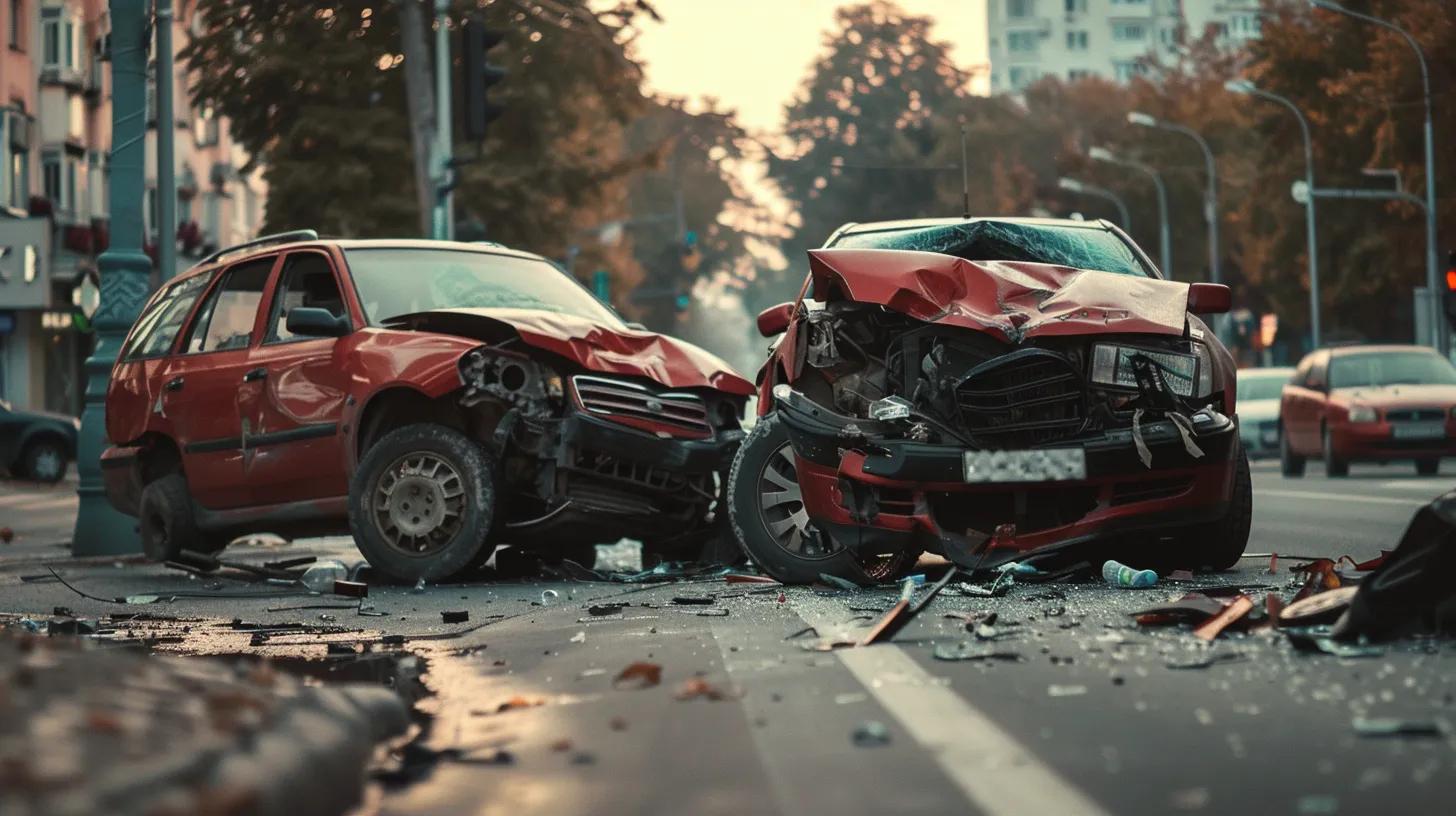
realistic car wreck between two cars, one car is a food delivery driver (like doordash or instacart)


Steps to Take After an Accident

If you’ve been injured in a crash involving a delivery driver:

  • Call 911 and get a police report.
  • Seek medical attention right away—even for seemingly minor injuries.
  • Gather information at the scene: driver’s license, insurance details, delivery app status, and witness contact info.
  • Take photos and videos of the vehicles, the scene, and your injuries.
  • Avoid giving recorded statements to insurance companies without legal guidance.
  • Contact an experienced (and proven) personal injury attorney who understands the nuances of delivery driver accidents.

Why These Cases Are Complex

Delivery-related accidents often involve multiple insurance policies, overlapping coverage periods, and disputes over who was responsible at the time of the accident.

At HLAW, we’ve seen firsthand how insurance companies may delay, deny, or minimize valid claims—especially when a large delivery platform is involved.

How HLAW Can Help

Our Fort Worth-based personal injury attorneys focus on:

  • Investigating all available insurance policies
  • Gathering evidence of the driver’s active status at the time of the accident
  • Negotiating aggressively with insurers for full compensation
  • Taking cases to court if needed to protect your rights

We’re committed to compassionate, client-focused representation so you can focus on healing while we pursue the recovery you deserve.

Final Thoughts

Being injured in an accident with an Instacart or DoorDash driver can be overwhelming, especially when you’re unsure whose insurance will cover your losses. The good news is, you don’t have to face the process alone.

If you or a loved one has been hurt in a delivery driver accident in Fort Worth or anywhere in Texas, reach out to HLAW for a free consultation.

We’ll guide you through your options and fight to secure the compensation you need for medical bills, lost wages, and other damages.

About the Author

Jesse J. Lotspeich is a seasoned trial attorney and partner at Howard Lotspeich Alexander & Williams, PLLC, where he leads the firm’s Personal Injury practice. 

Raised in the small West Texas town of Crane, Jesse was instilled early with a strong work ethic and a sense of duty to others.  After earning his B.A. cum laude from Howard Payne University and his J.D. from Texas Tech University School of Law, Jesse went to work in Fort Worth.  For over 12 years, he worked at the Law Office of James Stanley handling complex accident and injury cases before joining HLAW as a partner. 

Jesse specializes exclusively in personal injury litigation, and he carries that focus into every case—whether it’s catastrophic auto or trucking accidents, wrongful death, workplace injuries, or defective products.  Known for being a staunch advocate in the courtroom, he personally handles depositions, case investigations, and all trial-level work, never shying from a fight on behalf of his clients. 

Read full article
Man sleeping in driver’s seat of a car after drinking — illustrating risk of DWI arrest in Texas

Can You Be Arrested for DWI While Sleeping in Your Car in Texas? What You Need to Know

By Jason H. Howard · DWI

Man sleeping in driver’s seat of a car after drinking — illustrating risk of DWI arrest in Texas
Sleeping in your car while intoxicated can still lead to a DWI arrest in Texas if you’re found in ‘actual physical control’ of the vehicle.

Ever thought about sleeping off a few drinks in your car? In Texas, that seemingly harmless decision could land you a DWI arrest. Our state's definition of "operation" means you risk a DWI even if you never intended to drive. This article will break down how Texas law defines vehicle operation, why law enforcement applies it to "sleeping-it-off" cases, outline defense strategies, detail the penalties you could face, and offer proactive steps to avoid charges while reinforcing your rights under Texas DWI laws.

Ready to Discuss Your Case? Facing a Parked Car DWI in Texas?

If you're facing a DWI charge in Texas, especially one involving a parked car, don't delay. Our experienced legal team is here to provide the guidance you need. Get a Free Consultation

What Does "Operating a Vehicle" Mean in Texas DWI Cases?

Here in Texas, our DWI law (specifically Texas Penal Code § 49.04) states that "A person commits an offense if the person is intoxicated while operating a motor vehicle in a public place." The statute doesn't explicitly define "operating," so Texas courts have stepped in to interpret it. Essentially, they've defined "operation" broadly to allow DWI charges when an intoxicated person has the *present ability* to operate a vehicle, even if it's parked.

This interpretation focuses on your ability to steer, shift gears, or start the engine. It effectively closes the "no-drive" loophole, promoting public safety by discouraging intoxicated individuals from remaining behind the wheel. The core principle is that an intoxicated person in control of a vehicle poses an inherent risk, regardless of whether the vehicle is actually moving. Texas courts consider the "totality of circumstances" when deciding if a vehicle was "operated."

This broad definition is touted as a preventative measure, allowing Texas law enforcement to intervene before a potentially dangerous situation escalates into an actual driving incident. It emphasizes preventive law enforcement, aiming to reduce drunk-driving incidents by intervening before motion occurs.

How Texas Law Applies "Operation" to Parked Vehicles

Texas courts and law enforcement apply the concept of vehicle operation even when your car is stationary. Why? Because the danger of an intoxicated person restarting and operating the engine remains. Law enforcement views a parked car as a potential roadway hazard if you, while intoxicated, can restart and operate it without delay. The legal reasoning is that the potential for harm exists as long as you have immediate control over the vehicle's functions.

When evaluating parked vehicles under the definition of operation, authorities look at:

  • Your position in the car (e.g., driver's seat)
  • The vehicle’s operability (can it start?)
  • Your access to ignition devices (keys, fob)

Understanding these elements clarifies why sleeping in the driver’s seat with keys at hand could satisfy operation criteria and trigger an arrest in Texas. "Imminent" in this context often means the ability to start the vehicle and drive away within a very short timeframe, without significant obstacles. This proactive stance in Texas aims to prevent impaired driving before it starts.

What Factors Do Texas Courts Consider for Vehicle Operation?

Texas courts look at a combination of situational factors to determine if you were "operating" a vehicle. Here's what they consider:

  • Your Position in the Driver’s Seat: Sitting in the driver’s seat strongly suggests you're ready to operate the steering and pedals. Even if you're slumped over or asleep, your presence there indicates you were in a position to operate the vehicle. Conversely, being in the passenger or back seat could significantly weaken the argument for operation, especially if keys aren't readily accessible.
  • Key Location: Having keys in the ignition, on a seat, or within reachable distance signals your immediate ability to operate the vehicle. This includes traditional keys, key fobs, or smart keys. If keys are hidden or disabled (e.g., locked in the trunk, given to a sober friend, or the battery disconnected), it may weaken operation claims by showing a deliberate disconnection from vehicle controls.
  • Engine Status: A running engine or a hot engine block indicates recent operation and the capacity to re-engage immediately. This is often strong evidence for operation. A cold engine may suggest the vehicle wasn't recently operated, though it doesn't eliminate concerns if keys are still accessible. For electric or hybrid vehicles, the "on" status or readiness to drive would be the equivalent indicator.
  • Vehicle Location: Parking on public roads or in open parking lots exposes you to traffic risks, strengthening the justification for an operation charge. In Texas, "public places" are broadly defined to include any area accessible to the public, such as streets, highways, public parking lots, and even some private parking lots if they serve a public business. While private property locations *sometimes* reduce enforcement priority, the capacity to operate still applies if the ability exists, especially if the private property is accessible to the public (e.g., a private road within a gated community).
  • Intent to Drive: While a lack of intent can support your defense, Texas courts often infer intent from readily available controls and your impaired condition. For example, if you're found intoxicated in the driver's seat with keys in the ignition and the engine running, the court may infer an intent to drive, even if you claim you were just "sleeping it off." Demonstrating a clear lack of intent (e.g., calling a a ride-share, waiting for a sober friend, or having no immediate plans to move the vehicle) could still be a key defense strategy.

How Sleeping in a Parked Car Can Lead to a DWI Arrest in Texas

Sleeping in a parked car while intoxicated can lead to a DWI arrest in Texas because the concept of "operation" targets potential vehicle use, not just physical driving. Texas officers prioritize public safety by intervening whenever an intoxicated individual remains in immediate control. The rationale is simple: an intoxicated person behind the wheel, even if asleep, could awaken, make a poor decision, and drive, posing a significant risk to themselves and others.

Texas law enforcement will typically conduct field sobriety tests and/or blood alcohol concentration tests if they find a driver’s seat occupant slumped over the wheel. Your ability to move the car, even if you haven't exercised it, triggers enforcement based on operation and (after investigation) can justify an arrest. This is often initiated by a welfare check or a report of a suspicious vehicle. This enforcement approach underscores that "sleeping it off" behind the wheel does not immunize you from DWI charges in Texas.

Why You Can Be Charged Even Without Driving in Texas

You can be charged without driving because Texas's definition of "operation" focuses on your *capacity* to operate, rather than actual motion. Having the capacity to steer, shift gears, or move the vehicle creates sufficient legal grounds for a DWI offense aimed at preventing impaired operation. Texas law is designed to prevent the *potential* for harm, not just to punish actual harm. This is a critical distinction from other traffic offenses that require actual movement.

Common Police Interpretations in Texas "Sleeping-It-Off" Cases

Texas police often interpret a slouched occupant in the driver’s seat with accessible keys as a likely driver. Officers routinely check engine warmth, key proximity, and look for open containers to establish probable cause for a DWI based on operation. Other indicators include the smell of alcohol, slurred speech upon waking, bloodshot eyes, or an admission of drinking. Officers are trained to look for any signs that you were recently driving or intended to drive.

Texas-Specific Laws for Parked Car DWI

Texas law defines “operating a motor vehicle” broadly to include situations where an intoxicated person has the present ability to operate the vehicle, even if it is parked. The Texas Penal Code and Administrative Code clarify that mere readiness to operate suffices for a DWI offense, focusing on the capacity to initiate movement rather than requiring actual driving.

Texas statutes target public safety by interpreting sitting in the driver’s seat with keys within reach as operating. This broad definition enhances deterrence and reduces drunk-driving risks statewide. Texas courts have consistently upheld this interpretation, emphasizing the preventative nature of the law. Understanding these Texas-specific provisions is crucial for anyone facing such a charge.

Can You Get a DWI on Private Property in Texas?

Yes, Texas law applies the definition of operation on private property if public safety risks arise. While enforcement priority may differ, an intoxicated occupant with key access can still face a DWI charge regardless of property status. The key is whether the private property is considered a "public place" for the purposes of DWI law. Texas courts have interpreted "public place" broadly to include any place to which the public or a substantial group of the public has access, such as parking lots of businesses, apartment complexes, or even private roads within subdivisions.

Legal Defenses Against Parked Car DWI Charges in Texas

Defending against a parked-car DWI in Texas requires undermining one or more factors indicating operation or the basis for probable cause. Your attorney will meticulously examine every detail of the arrest. By evaluating each element—your seat position, key access, engine status, and location—your defense attorney can possibly create reasonable doubt about whether the vehicle was being operated. This multi-pronged approach often could yield reduced charges or dismissals.

For example, if the keys were in the back seat and you were asleep in the passenger seat, it becomes much harder for the prosecution to prove "actual physical control." Seasoned practitioners also scrutinize law enforcement protocols to ensure proper stop and arrest procedures, bolstering challenges to evidentiary legitimacy. This includes reviewing dashcam footage, body camera footage, and police reports for inconsistencies or violations of your rights.

Texas-Specific Defense Strategies for Parked Car DWI

Here are some common defense strategies in Texas:

  • No Actual Physical Control: Arguing that you did not have the immediate ability to operate the vehicle (e.g., keys were in the trunk, battery was dead, vehicle was inoperable).
  • Not in a Public Place: If the vehicle was truly on private property with no public access, this could be a defense.
  • Lack of Intent to Drive: Presenting evidence that you had no intention of driving (e.g., waiting for a ride, calling a tow, sleeping in the back seat).
  • Challenging Probable Cause: Disputing the officer's initial reason for contact or arrest. Your attorney will demand proof of a lawful stop and inquire whether the officer had specific, articulable facts indicating risk. Lack of clear impairment signs or improper traffic stop procedures could also void probable cause.
  • Disputing Circumstantial Evidence: Your defense can contest open container presence, odor assessments, and field sobriety test administration. Disputing chain-of-custody and test validity reduces the weight of circumstantial indicators. For example, an attorney might argue that the odor of alcohol came from spilled drinks, not your breath, or that field sobriety tests were improperly administered or interpreted due to your physical condition (e.g., injury, fatigue).

Case Study: The "Sleeping It Off" Scenario in Texas

Scenario: John's Night Out

John had too much to drink at a bar in Fort Worth. Knowing he shouldn't drive, he decided to "sleep it off" in his car. He parked his vehicle legally in the bar's parking lot (which is considered a public place in Texas), reclined the driver's seat, and put his keys in the center console. He fell asleep. A Fort Worth police officer on patrol noticed John's car, saw him slumped over, and conducted a welfare check. Upon waking John, the officer noticed signs of intoxication. John admitted to drinking and stated he was just "sleeping it off". The officer then observed the keys within John's reach in the center console and the engine was still warm from his drive to the parking spot. Based on these observations (John in the driver's seat, keys accessible, engine warm, public parking lot, signs of intoxication), the officer determined John had "physical control" of the vehicle and arrested him for DWI.

Legal Outcome in Texas: John would likely face a DWI charge. Even though he had no *intent* to drive further, his *present ability* to operate the vehicle, combined with his intoxication and the vehicle's location in a public place, satisfies the "operation" criteria under Texas law. His defense would focus on challenging the "operation" by arguing the keys were not *immediately* accessible or that he had taken steps to relinquish control, but the prosecution would have strong evidence.

Consequences of a Parked Car DWI Arrest in Texas

A parked-car DWI arrest in Texas carries the same severe penalties as a driving offense. Fines, jail time, license suspension, and mandatory interventions apply, reflecting the seriousness of violations related to vehicle operation. These consequences can be severe and long-lasting, impacting various aspects of your life.

Beyond criminal sanctions, a DWI arrest in Texas can lead to:

  • Administrative License Revocation (ALR): This process begins immediately after arrest, often before your trial, threatening your driving privileges independent of a conviction.
  • Insurance Premium Spikes: Insurers classify DWI convictions as high-risk, causing premium increases of 100–200% or even policy cancellation.
  • Employment Prospects Suffer: Certain professions require clean driving records, and a DWI can derail career opportunities.
  • Mandatory Ignition Interlock Devices: Many convictions trigger installation for six months to two years.

Understanding these consequences underscores the urgency of proactive legal defense.

Legal Penalties for Parked Car DWI Charges in Texas

For a first-time parked car DWI in Texas, penalties can range from class B misdemeanor fines up to $2,000, 72 hours to 180 days in jail, and up to two years of license suspension. Additionally, you may face mandatory DWI education, community service, and probation. Repeat offenders face significantly harsher penalties, including felony charges.

How Administrative License Revocation (ALR) Works in Texas

Following a DWI arrest in Texas, ALR initiates an automatic license suspension unless you file a hearing request within 15 days. Failure to act leads to immediate license loss. At the ALR hearing, an administrative law judge determines if the officer had probable cause for the arrest and if you refused or failed a breath/blood test. If the judge rules against you, the license suspension goes into effect, regardless of the criminal case outcome.

Long-Term Effects on Insurance and Employment in Texas

In Texas, insurers classify DWI convictions as high-risk, causing premium increases of 100–200% or even policy cancellation. Certain professions require clean driving records (e.g., commercial drivers, healthcare professionals, teachers), and a DWI can derail career opportunities, making it difficult to find or retain employment. A DWI conviction also becomes part of your criminal record, which can impact background checks for housing, loans, and other opportunities.

Are Ignition Interlock Devices Required After a Parked Car DWI in Texas?

Many DWI convictions in Texas trigger mandatory ignition interlock device installation for six months to two years. This device prevents you from operating your vehicle without a clean breath test. It must be installed at your expense and requires regular calibration and monitoring. Failure to comply can lead to further license suspension or probation violations.

How to Avoid a DWI Arrest While Sleeping in Your Car in Texas

Preventing a parked-car DWI arrest in Texas starts with removing all elements that could indicate vehicle operation. By distancing keys, choosing safe sleeping locations, and using alternative transportation, you eliminate the risk of being charged with operation. The goal is to clearly demonstrate that you have no "actual physical control" over the vehicle.

Is Using a Ride-Share or Alternative Transportation Safer in Texas?

Absolutely. Securing a ride-share or designated driver eliminates any vehicle control concern. Transferring travel responsibility to a sober operator removes DWI risk entirely. This is always the safest and most recommended option after consuming alcohol in Texas.

How Vehicle Location Affects Your Risk of Arrest in Texas

Parking on truly private property reduces police patrol frequency, though the capacity to operate still applies if the property is accessible to the public. Public lots or roadside parking invite greater scrutiny and increase chances of encountering Texas law enforcement. Remember, in Texas, the definition of a "public place" is broad, so even some private parking lots (e.g., shopping centers, apartment complexes) can be considered public for DWI purposes. Always aim for a truly private, non-publicly accessible location if you must sleep in your car.

Common Myths About "Sleeping It Off" in a Car in Texas

Don't fall for these falsehoods:

  • Myth: Sleeping in the back seat guarantees immunity from charges of vehicle operation. While it significantly reduces risk, if keys are still readily accessible and the vehicle is in a public place, an arrest is still possible in Texas, though harder to prosecute.
  • Myth: Turning off the engine automatically voids a finding of vehicle operation. A warm engine can still indicate recent operation, and accessible keys still imply "actual physical control" under Texas law.
  • Myth: Private property status shields you from law enforcement intervention. As discussed, many "private" properties are considered "public places" under Texas DWI law.
  • Myth: As long as the car isn't moving, you're safe. This is the fundamental misunderstanding that Texas's "definition of operation" aims to correct.

Frequently Asked Questions About Sleeping in a Car and DWI Arrests in Texas

Many drivers assume that remaining motionless in a parked car absolves them of DWI risk. In reality, Texas legal doctrine centers on your capacity to operate rather than movement, making "sleeping it off" potentially hazardous. Recognizing key factors indicating operation equips you to make safe, lawful decisions. Here are some common questions:

  • Can You Get a DWI for Sleeping in Your Car in Texas? Yes, in Texas you can be charged with DWI while sleeping in a parked car if you occupy the driver’s seat with keys accessible, since the capacity to operate the vehicle constitutes "operation" under state law. The "actual physical control" element is key.
  • What Are the Key Factors for Determining Vehicle Operation in Texas DWI Cases? Your position in the driver’s seat, proximity to ignition, engine status, vehicle operability, and location form the core criteria that Texas officers evaluate to justify a DWI arrest based on vehicle operation. The totality of these circumstances is considered.
  • Is It Illegal to Sleep in Your Car While Drunk in Texas? Sleeping in a car while intoxicated is not per se illegal in Texas, but if elements indicating vehicle operation are present (e.g., in the driver's seat, keys accessible, in a public place), law enforcement can proceed with a DWI arrest to mitigate potential risk. The act of sleeping itself isn't the crime; it's the potential for impaired operation.
  • What Should You Do If Arrested for DWI While Parked in Texas? Immediately consult with an attorney, challenge probable cause, document factors related to vehicle operation, and seek an ALR hearing within the statutory 15-day deadline to protect your driving privileges.

Sleeping in a parked car after drinking may feel innocuous, but in Texas, the definition of vehicle operation ensures that vehicle readiness, your position, and key access matter more than motion. By understanding the elements indicating vehicle operation, Texas-specific laws, defense strategies, and prevention steps, you equip yourself to avoid charges or mount a robust defense. Prioritize safety and know your rights—consult experienced DWI defense counsel if you face a parked-car arrest in Texas.

Call for a Confidential Consultation

Need Immediate Legal Assistance in Texas?

Don't face a DWI charge alone. Our team at HLAW is ready to help protect your rights and future.

Protect Your Future: Contact a Texas DWI Defense Attorney Today

A DWI charge in Texas, even for sleeping in your car, can have severe and lasting consequences. Don't leave your future to chance. Our experienced legal team specializes in DWI defense and can help you navigate the complexities of Texas law. Contact our office 24/7 to schedule a free constulation to discuss your case.

About the Author

Jason H. Howard is a seasoned trial attorney based in Fort Worth, Texas, dedicated to defending clients in criminal and DWI matters. Before entering private practice, he served as a felony chief prosecutor in the Lubbock County Criminal District Attorney’s Office, gaining extensive courtroom experience on both sides of the aisle. Jason focuses his practice entirely on litigation, with a special concentration in DWI / intoxication offenses, criminal defense, and personal injury. Over his career, he has handled more than a thousand cases from start to finish and has earned recognition as one of Fort Worth’s Top Attorneys and a “Super Lawyer” from Thomson Reuters. Raised in small-town West Texas, Jason brings both legal skill and a grounded sense of purpose to his work. Outside the courtroom, he enjoys fly fishing, time outdoors, and serving his community and church.

Read full article
Longhorn cattle being driven along a cobblestone street at the Fort Worth Stockyards, with pedestrians nearby, highlighting the unique hazards for pedestrians in busy tourist areas.

Pedestrian Injuries at Fort Worth Stockyards or Downtown Fort Worth, Texas

By Luke A. Williams · Personal Injury

Longhorn cattle being driven along a cobblestone street at the Fort Worth Stockyards, with pedestrians nearby, highlighting the unique hazards for pedestrians in busy tourist areas.
The Fort Worth Stockyards and downtown areas pose unique risks for pedestrians due to heavy crowds, tourist activity, and mixed vehicle traffic.

Fort Worth Pedestrian Accidents: Asserting Your Rights and Securing Comprehensive Recovery

Fort Worth has seen a concerning rise in pedestrian injuries, escalating over 27 percent in five years. This trend highlights the critical need for victims to understand their rights and pursue fair compensation. If you've been injured, you're likely facing overwhelming medical bills, lost income, and emotional distress. Texas law offers different recovery avenues, and our firm is ready to guide you. This guide details common causes of pedestrian accidents, legal principles of right-of-way and negligence, types of damages, steps after an accident, and the role of an experienced Fort Worth pedestrian accident lawyer. We also cover dangers in the Fort Worth Stockyards and downtown areas, the impact of drunk driving, and filing deadlines to protect your rights.

Understanding Fort Worth Pedestrian Accidents: Causes and Risks

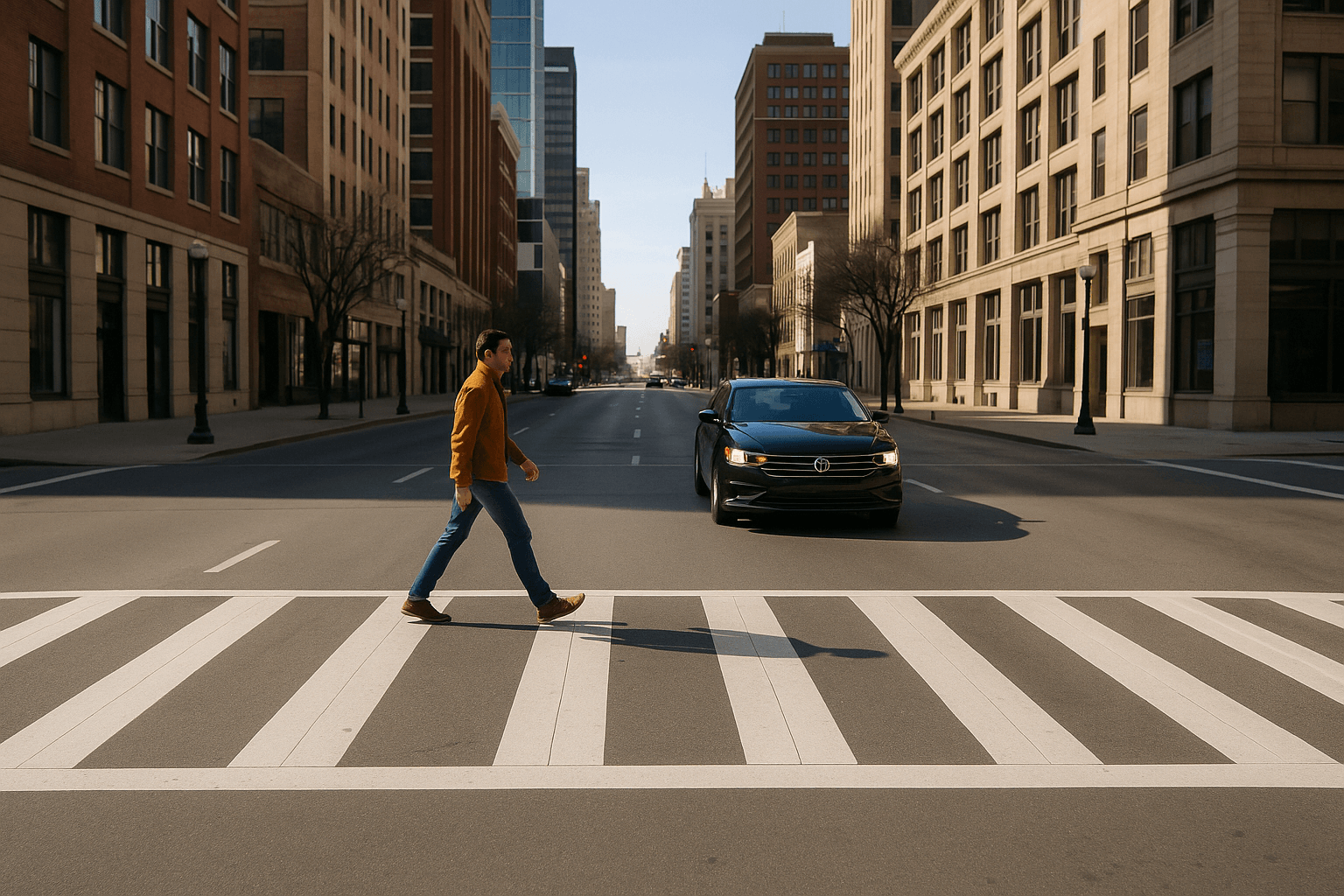
Pedestrian crossing a downtown Fort Worth crosswalk as a car approaches, illustrating risks for pedestrians at busy urban intersections.What Fuels Pedestrian Accidents in Fort Worth?

Our experience shows that distracted drivers create significant risks for pedestrians, drastically reducing reaction time. A quick glance at a phone can mean the difference between spotting a pedestrian and causing an accident. Driving under the influence of alcohol profoundly impairs judgment, leading to catastrophic decisions. Excessive speed further shrinks reaction time. Recognizing these behaviors is paramount to understanding driver negligence and establishing liability.

Fort Worth's High-Risk Zones for Pedestrians – Targeted Insights

The Fort Worth Stockyards and downtown intersections are high-risk zones due to heavy foot traffic and complex vehicle movements. In the Stockyards, narrow streets, dense tourist crowds, and events and festivals create unpredictable encounters. Downtown's bustling streets, rush-hour commuters, and frequent ride-share drop-offs also contribute to higher collision risks. Identifying these areas helps victims pinpoint incident circumstances for compensation.

How Local Safety Efforts Influence Accident Rates – Advocacy Perspective

Vision Zero Fort Worth aims to eliminate traffic fatalities through street redesign and infrastructure improvements. Walk Fort Worth enhances pedestrian safety by addressing sidewalk gaps and improving crosswalk visibility. High-visibility signals and curb extensions have reduced collisions by an estimated 15 percent since 2023. These programs show how planning and enforcement reshape risk and highlight the municipality's duty of care, which our firm investigates.

Your Legal Rights as a Pedestrian Accident Victim in Fort Worth and Texas 

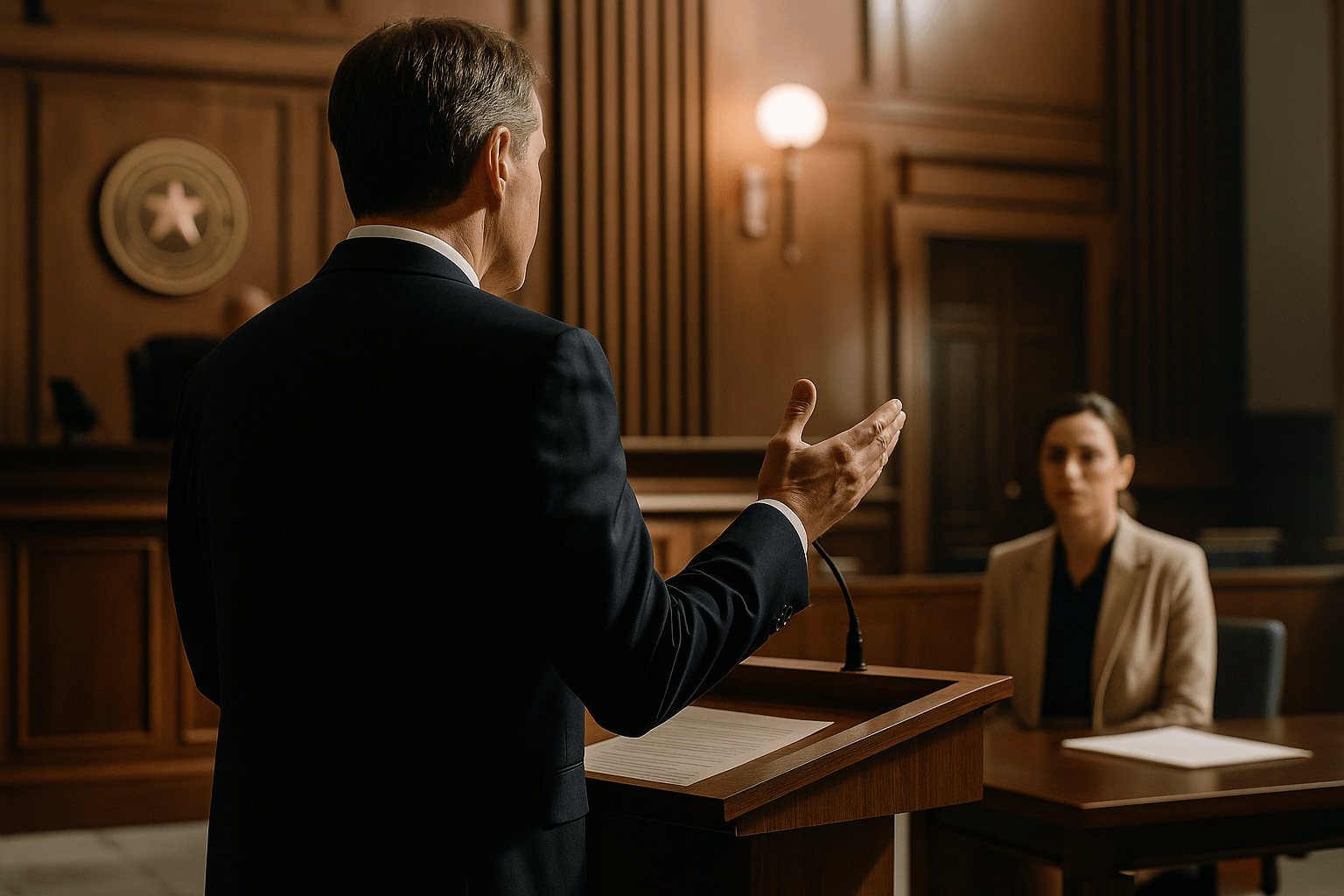
Attorney standing at a courtroom podium arguing on behalf of a seated female client before the judge, illustrating strong legal representation.

Texas Pedestrian Laws and Right-of-Way Essentials – Our Definitive Interpretation

Texas Transportation Code § 552.003 states pedestrians in marked or unmarked crosswalks at intersections have absolute right-of-way. Drivers must yield and proceed cautiously. Failing to yield to a pedestrian in a downtown crosswalk, for example, violates state law and incurs significant liability. Asserting these rules is fundamental to proving your entitlement to compensation.

Establishing Negligence in Fort Worth Pedestrian Collisions – Legal Approach

Negligence occurs when a driver fails their duty of care to pedestrians. Our firm proves negligence by demonstrating four elements: (1) the driver had a legal duty, (2) they breached it, (3) the breach caused the accident, and (4) the collision resulted in your injuries. For instance, if a speeding or distracted driver hits a pedestrian in a marked Stockyards crosswalk, it clearly shows a breach of duty and causation, forming the basis for a successful personal injury claim.

Understanding Modified Comparative Negligence and Its Impact on Claims 

Modified comparative negligence allows injured parties to recover damages even if partially at fault (50% or less). Your compensation is reduced by your fault percentage; over 50% fault bars recovery. Our attorneys strategically minimize assigned fault to maximize your recovery. For example, a pedestrian 30 percent at fault for stepping into the street mid-block can still recover 70 percent of damages. This principle could significantly influences claim outcomes.

Injury Threshold Compensation Adjustment Eligibility
25% or Less Pedestrian Fault Full potential award minus pedestrian's share of fault Eligible for full damages, reduced by fault percentage
26%–50% Pedestrian Fault Award reduced proportionally by fault percentage Eligible, but compensation is reduced
Over 50% Pedestrian Fault No recovery available Claim is barred

Types of Injuries and Compensation for Fort Worth Pedestrian Victims – A Comprehensive Valuation

Common Injuries Sustained in Pedestrian Accidents – Medical-Legal Insight

Pedestrian collisions often cause severe injuries like traumatic brain injuries (TBIs), spinal cord damage, broken bones, and extensive soft tissue trauma. TBIs can lead to long-term cognitive issues, spinal cord injuries may require lifelong care, and fractures demand intensive treatment. Understanding these patterns is crucial for accurately valuing damages and pursuing all eligible compensation.

Economic Damages Available for Recovery – Meticulous Calculation

Economic damages reimburse direct, quantifiable financial losses, including medical expenses, lost wages, and rehabilitation costs. Our firm meticulously accounts for every expense to restore victims' financial stability.

Expense Type Coverage Detail Example Value
Medical Bills Hospital stays, surgical procedures, ongoing therapies $150,000+
Lost Income Wages missed due to injury, potential future loss of earning capacity Varies by profession
Rehabilitation Physical therapy, necessary assistive devices, long-term care $20,000–$50,000

Non-Economic Damages for Pedestrian Injuries – Our Advocacy for Intangible Losses

Non-economic damages address profound, intangible harms like physical pain and suffering, severe emotional distress, and loss of consortium. Pain and suffering covers physical agony, emotional distress covers psychological impacts, and loss of consortium acknowledges diminished companionship. Expertly valuing these elements ensures comprehensive compensation reflecting both physical and emotional tolls.

When Wrongful Death Claims Apply in Pedestrian Accidents – HLAW's Compassionate Yet Rigorous Pursuit of Justice

A wrongful death claim can be filed when a pedestrian fatality results from another party's negligence. Eligible surviving family members can seek compensation for funeral expenses, loss of financial support, and loss of companionship. Texas law mandates filing within two years of death, making prompt legal action crucial. Proving the driver's breach of duty directly caused the fatality provides essential support to grieving families.

Immediate Steps After a Fort Worth Pedestrian Accident

Prioritizing Your Health and Legal Rights Post-Accident – Our Essential Directives

After a collision, immediately seek medical attention for injury evaluation and documented treatment. Call 911 for an official police report and remain at the scene, but never admit fault. These actions secure health records and build evidence for your compensation claim.

Key Actions at the Accident Scene:

  • Ensure your safety and move out of traffic if possible.
  • Check for injuries and call 911 immediately.
  • Do not admit fault or apologize to anyone.
  • Exchange information with the driver (name, insurance, license plate).
  • Get contact details from any witnesses.
  • Take photos of the scene, vehicle damage, and your injuries.
  • Cooperate with police and ensure an official report is filed.

Gathering and Preserving Crucial Evidence

Document the accident scene with photos of the location, vehicle damage, skid marks, and signals. Collect witness contact information and preserve clothing or personal items. This evidence is critical for linking driver negligence to your injuries, enabling your Fort Worth pedestrian accident lawyer to build a compelling case.

When and Why to Contact an experienced Fort Worth Pedestrian Accident Lawyer – Our Urgent Recommendation

Engaging experienced legal counsel (who handle these types of claims on a regular basis) early is essential to preserve evidence and protect against aggressive insurance company tactics. Our attorneys evaluate your case, negotiate with insurers (often on a contingency fee basis), and handle legal filings, allowing you to focus on recovery. Early involvement often leads to more favorable settlement offers and a clearer path to resolution, whether through negotiation or litigation.

How a Fort Worth Pedestrian Accident Lawyer Can Help You Get Compensation – Our Unmatched Advocacy

Investigating and Proving Liability in Pedestrian Cases

Our attorneys meticulously reconstruct accident dynamics by analyzing the scene, consulting expert witnesses, and reviewing surveillance footage to link driver negligence to your injuries. We gather medical records and economic losses to precisely quantify damages.

Negotiating with Insurance Companies: Effective Strategies and our Aggressive Representation

Our skilled negotiators present comprehensive demand packages, strategically use comparative negligence laws, and counter lowball settlement offers with expert assessments of long-term care and future losses. This approach enhances leverage and expedites the claims process for the best outcome.

The Advantages of Legal Representation and Litigation – Our Courtroom Readiness

Legal representation from our firm provides an unwavering advocate if insurers refuse a reasonable settlement. Our contingency fee arrangements align our interests with your recovery. Litigation compels evidence disclosure and applies pressure through the potential of a trial verdict. Professional legal counsel simplifies complex procedures and shields you from missteps, ensuring a robust defense of your claim.

Unique Challenges and Rights in Fort Worth Stockyards Pedestrian Accidents – Specialized Local Knowledge

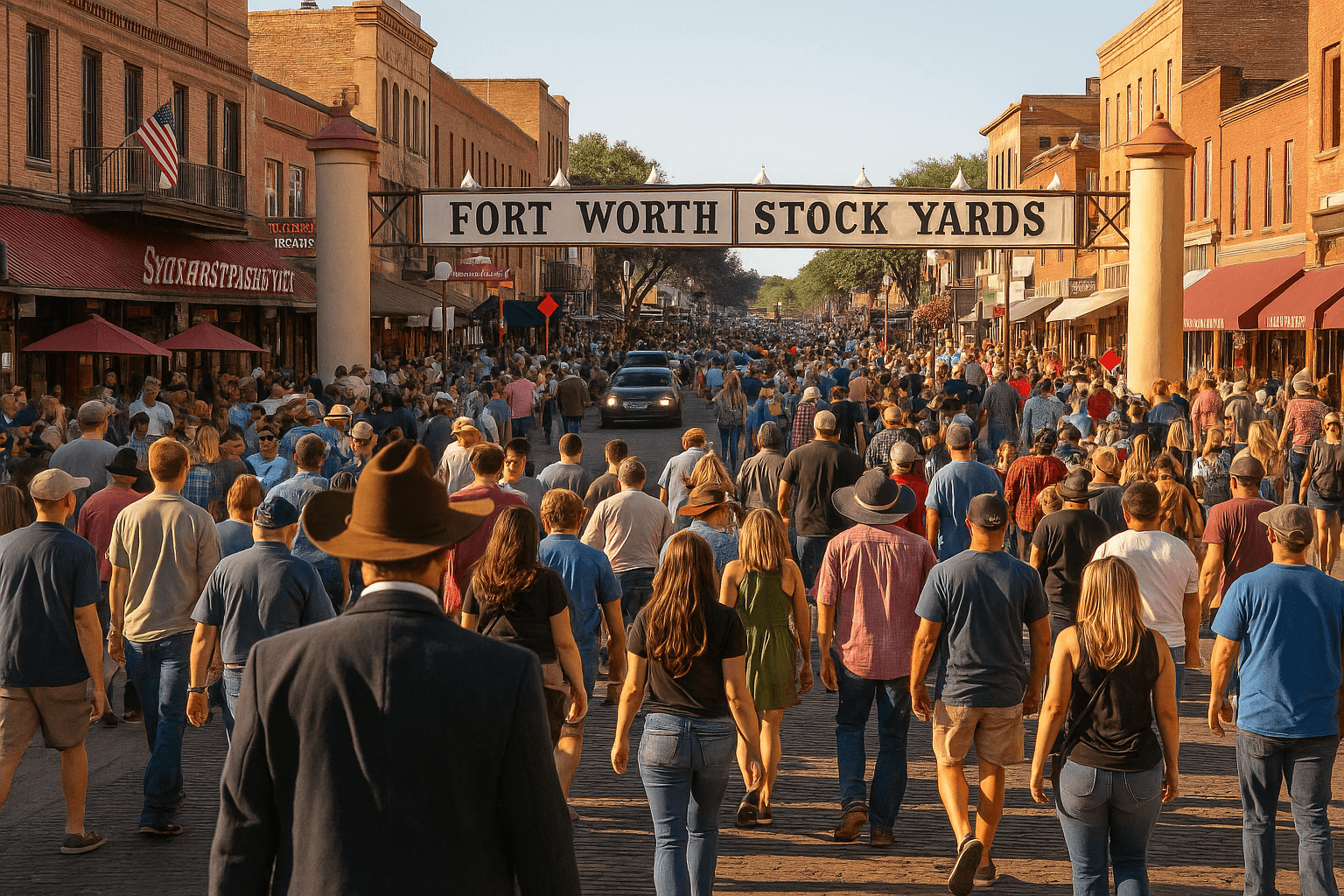
A busy daytime crowd walking along the cobblestone street at the historic Fort Worth Stockyards under the iconic sign, illustrating heavy pedestrian traffic in a high-risk accident area.Common Hazards in the Fort Worth Stockyards Area

Common Hazard Characteristic Impact
Cattle Drives and Special Events Unscheduled street crossings Sudden conflicts between pedestrians and riders
Trolley/Bus Operations Fixed-track/route vehicles Limited escape routes for drivers
Tourist Crowds High foot traffic near shops Increased instances of jaywalking

The Fort Worth Stockyards presents unique hazards. Cattle drives and special events create sudden conflicts, trolley and bus operations limit escape routes, and dense tourist crowds increase jaywalking. These conditions elevate the duty of care for drivers and the municipality in historic districts.

Pedestrian Rights in Tourist and Historic Districts: Key Differences – A Nuanced Legal Perspective

Historic preservation regulations can limit infrastructure modernization, requiring pedestrians to rely on existing crosswalks. Municipal negligence may arise if narrow sidewalks or faded markings fail safety standards in high-volume tourist areas. A pedestrian adhering to signs retains full right-of-way protection, and any failure by authorities to uphold their duty of care can support a strong legal claim. Collisions frequently occur when distracted drivers fail to yield at cattle-drive detours, ride-share vehicles obstruct walkways, or impaired drivers misjudge pedestrian density during evening events. These patterns guide our tailored legal strategies.

Distinguishing Downtown Fort Worth Pedestrian Accident Claims

Common Causes of Pedestrian Accidents Downtown

Downtown accidents often stem from pervasive distracted driving, failure to yield at unmarked crossings, and speeding. Heavy traffic and ride-hail services complicate pedestrian movement, increasing collision likelihood near transit hubs. Downtown crosswalks are rigorously governed by Texas Transportation Code right-of-way rules, mandating drivers stop for pedestrians. Intersection designs like countdown signals enhance pedestrian visibility. Drivers disregarding signals violate their statutory duty and are liable for injuries.

Downtown Fort Worth's Most Dangerous Intersections for Pedestrians

  • Houston and Fifth Streets: A convergence of limited sightlines and heavy traffic, demanding extreme caution.
  • Main and Weatherford Streets: Characterized by complex turn lanes and high ride-share activity, posing elevated risks.
  • Commerce and Taylor Streets: Located near nightlife areas with frequent instances of impaired driving, making them particularly hazardous.

Awareness of high-risk intersections helps establish location-specific negligence and strengthens claims.

The Impact of Drunk Driving on Fort Worth Pedestrian Accident Claims

Legal Repercussions of Drunk Driving in Pedestrian Accidents – Our Firm's Stance

Operating a vehicle with a Blood Alcohol Content (BAC) of 0.08 percent or higher is a severe criminal offense in Texas. If a pedestrian is injured or even killed, the driver may face intoxication assault or manslaughter charges. Criminal convictions bolster civil claims by providing clear evidence of a willful breach of duty, potentially entitling victims to substantial punitive damages under Texas law.

Pursuing Enhanced or Punitive Damages in Drunk Driving Cases – Our Strategy for Maximum Recovery

Victims can pursue significant punitive damages by proving the driver's intoxication constituted gross negligence or reckless disregard for safety. This punishes wrongdoers and deters future egregious conduct. Our firm is highly experienced in securing these enhanced awards.

Punitive Criteria Requirement Outcome
Reckless Conduct BAC above the legal limit, or evidence of impairment Potential for an enhanced damage award
Knowingly Intoxicated Admission of intoxication or confirmed test results Possibility of tripling compensatory damages

The Role of Drunk Driving in Fort Worth Pedestrian Fatalities

Drunk driving contributes to nearly one in four pedestrian fatalities in Tarrant County. Impaired drivers often fail to yield and misjudge pedestrian speeds, leading to catastrophic outcomes. This correlation is vital for both criminal prosecutions and civil claims, allowing families to seek aggravated damages when intoxication causes fatal incidents.

Statute of Limitations and Filing Deadlines for Texas Pedestrian Injury Claims

Your Deadline to File a Pedestrian Accident Lawsuit in Fort Worth – A Critical Reminder

Texas law imposes a strict two-year statute of limitations for filing personal injury lawsuits, and also for wrongful death claims from the date of death. Missing these deadlines will almost certainly bar you from seeking compensation, making prompt consultation with our firm essential. While narrow exceptions exist, they are rarely granted, underscoring the paramount importance of adhering to these critical deadlines.

If you've been injured as a pedestrian in the Fort Worth Stockyards or downtown, Texas law provides strong protections and avenues for compensation when driver negligence causes harm. Partnering with a dedicated Fort Worth pedestrian accident lawyer from our firm is crucial for navigating complex right-of-way statutes, negligence principles, and comparative fault rules. By taking timely legal action and preserving evidence, you can maximize your recoverable damages and secure comprehensive support for your recovery. Act promptly to protect your rights and pursue the full compensation you are entitled to.

About the Author

Luke Williams is a distinguished Partner at Howard Lotspeich Alexander & Williams, PLLC (HLAW), advocating for victims of personal injury, including those involved in pedestrian accidents. With unparalleled expertise and extensive experience in Texas law and courtroom litigation, Luke is committed to ensuring his clients understand their rights and receive the full, just compensation they deserve. His deep understanding of negligence principles, comparative fault rules, and local Fort Worth legal nuances makes him a formidable and highly respected advocate for injured pedestrians seeking justice.

Get a Free Case Evaluation Today – Assert Your Rights Now

If you or a loved one has been injured in a pedestrian accident in Fort Worth, do not navigate the complex legal process alone. Contact Howard Lotspeich Alexander & Williams, PLLC (HLAW) for a free, no-obligation consultation. Our experienced and authoritative team is ready to rigorously review your case, clearly explain your options, and aggressively fight for the maximum compensation you deserve.

Your rights come first. We’re here to fight for the full compensation you deserve and help you move forward with confidence.

Read full article

Speak with a Fort Worth attorney

Call (817) 993-9249 or send us a message to discuss your case.