Skip to content

January 2016

Page 1 of 2 · 7 articles

12.44(a) and 12.44(b) State Jail Felony Reduction

Explaining Section 12.44 | Felony Reduced to Misdemeanor

By Jason H. Howard · Sentencing

What is Section 12.44(a) and Why Does it Matter to the State Jail Felony Defendant?
1244(a) and 1244(b) State Jail Felony Reduction Our Fort Worth criminal defense attorneys are routinely asked by family and friends of clients charged with State Jail Felony offenses about 12.44(a) and 12.44(b). Although it is sometimes elusive, our attorneys have had success in reducing State Jail Felony cases under Section 12.44. This article will discuss Sections 12.44(a) and 12.44(b) of the Texas Penal Code and explain why they are important to the State Jail Felony defendant.

State Jail Felony Punishment in Texas

In accordance with Section 12.35 of the Texas Penal Code, the confinement range for a State Jail Felony in Texas:

  • From 180 days to 2 years in a State Jail facility.

Any resulting conviction under Section 12.35 is considered a felony conviction for most purposes.

When a person is sentenced to confinement for a State Jail Felony offense, the sentence is served day for day. Aside from State Jail Diligent Participation Credit, a state jail sentence will last for every single day of the term, unlike a prison sentence, which may be cut short for parole or good time. For example, if someone receives a sentence for 12 months in state jail, that person will serve 365 actual days on the sentence.

What about 12.44?

Since parole and good time are not options for state jail time, Section 12.35 requires the defendant to serve that sentence day for day. However, section 12.44 of the Texas Penal Code allows for a reduction of the above consequences for someone charged with a state jail felony.

Sec. 12.44. REDUCTION OF STATE JAIL FELONY PUNISHMENT TO MISDEMEANOR PUNISHMENT.
(a) A court may punish a defendant who is convicted of a state jail felony by imposing the confinement permissible as punishment for a Class A misdemeanor if, after considering the gravity and circumstances of the felony committed and the history, character, and rehabilitative needs of the defendant, the court finds that such punishment would best serve the ends of justice.
(b) At the request of the prosecuting attorney, the court may authorize the prosecuting attorney to prosecute a state jail felony as a Class A misdemeanor.

Please note section 12.44 has two subsections. The differences between them are significant.

What is the Difference Between 12.44(a) and 12.44(b)?

12.44(a)

Under 12.44(a), at the discretion of the court, a state jail felony can be punished as a Class A misdemeanor. If convicted, the conviction results in a felony conviction. However, if sentenced to confinement, the defendant is allowed to serve time the same as if he were convicted of a Class A misdemeanor. That means the defendant can serve his time in the local county jail as opposed to a State Jail facility. That also may allow the defendant to have access to good time offered by the county jail in his jurisdiction (e.g. In Tarrant County, this could result in 2 for 1 credit or 3 for 1 if the defendant is a trustee).

12.44(b)

Under 12.44(b), at the discretion of the prosecutor, a state jail felony can be converted to a Class A misdemeanor. If convicted, the conviction results in a misdemeanor conviction. If incarcerated, the defendant would serve his time in the county jail the same as described in the above paragraph.
Note: Both 12.44(a) and (b) require the sentence to be within the penalty range of a Class A misdemeanor (0-365 days confinement and a fine, if any, not to exceed $4,000).

Probation Under 12.44

Straight Probation and Deferred Adjudication probation are also allowed under both 12.44(a) and 12.44(b). Straight probation would result in a conviction for a felony if reduced under 12.44(a) and a conviction for a misdemeanor if reduced under 12.44(b). If you receive deferred adjudication probation under either a 12.44(a) or 12.44(b) reduction, a conviction can be avoided altogether if the probation is successfully completed. Any future probation revocation proceedings by the state would be limited at sentencing to the misdemeanor punishment provided by section 12.44 as discussed in the paragraphs above.

Note: A probated sentence under 12.44 cannot exceed 2 years – the maximum time allowed for a probated sentence for a Class A misdemeanor.

State Jail Felony Defense Attorneys, Fort Worth, Texas

Depending on the circumstances, if you or someone you know is charged with a state jail felony in Texas, Section 12.44 may be applicable. There are many factors that the prosecutor or judge will consider if your attorney requests a 12.44 reduction. It is important to discuss your specific circumstances with your attorney. Please feel free to contact Barnett Howard & Williams PLLC if you have questions.
Read full article
Cell Tower Records Criminal Defense

Murder Case Hinges on the Privacy of Cell Tower Records

By Brandon Barnett · Murder

Was it an Unlawful Warrantless Search Under the 4th Amendment for the DA to Obtain Cell Tower Records From a Third Party and Use Them Against a Defendant Charged with Murder?

Ford v. State (2015) | San Antonio Murder Mystery

JCell Tower Records Criminal Defenseon Ford and Dana Edwards dated off and on for two years in the small town of Alamo Heights, Texas. After a long break-up, the former couple saw each other at a friend’s New Year’s Eve party. The group of friends drank heavily and played “Apples to Apples,” an interactive game that required the participants to reveal their thoughts on personal topics. During the game, the subject of marriage came up and Ford was singled out about his on-again-off-again relationship with Edwards. Angry, Ford left the party before everyone else.
The next day, Edwards’s parents were expecting her in Fredericksburg, but she never showed. Worried, her parents drove to her condo, where they found her dead. Because she sustained lacerations and trauma to her head, the police opened up a murder investigation.

The State Gathers Evidence

On January 2nd, Ford volunteered to give a statement. In his statement, Ford said he left the party around 11:30 pm, went home, and fell asleep. Ford said that his new cell phone had been in his possession the entire night.

The investigators obtained video footage of the streets bordering Edwards’s condo, footage that conflicted with Ford’s official statement. At 11:24 pm, the camera captured a white SUV, similar to Ford’s vehicle, turn into the victim’s condo complex. At 1:00 am, Edwards’s car entered the complex. At 3:16 am, with the headlamps turned off, the white SUV exited the complex. No one could definitively say the white SUV belonged to Ford, as the license plate and registration stickers could not be determined because of the quality of the video.

A week later, the San Antonio District Attorney’s Office filed an application under Article 18.21 § 5(a) of the Texas Code of Criminal Procedure, and in compliance with Communications Act, to obtain Ford’s historical cell-site-location records from AT&T Wireless.

Ford’s Case Goes to Trial

At trial, a radio network engineer from AT&T Wireless testified about the records. The engineer said that AT&T can tell where a cell phone is located by examining the sector information. He explained, “when a person sets up a call, receives a call, or sends a text, the person does so in communication with…sectors in the cell-phone network…[which] enables [AT&T] to look up the records for a particular phone number…determin[ing] [the] cell phone’s proximity to a cell…tower.” Ford v. State, 444 S.W.3d 171, 190 (Tex. App.—San Antonio 2014). This is also true when the phone is not being actively used, as “unanswered texts and calls…automatic downloads….cause the [phone] to…ping the network to alert the network that the [phone] is in a particular…area.” Id.

According to AT&T, Ford’s cell records indicate that the numerous pings place Ford at the party, then at the victim’s condo complex and finally, at his home. The “ping” time frame also matches the timestamps from the camera footage for the unknown white SUV. Id.

The jury found Ford guilty of murder, sentencing him to forty years in prison. Ford appealed, and the court of appeals affirmed the verdict and sentence, relying upon the third party doctrine. Justice Chapa dissented in the court of appeals case, stating, in a nutshell, that Ford retained a reasonable expectation of privacy in his physical movements and location; he did not voluntarily surrender his expectation of privacy; and because the State did not secure a warrant before obtaining the records, Ford’s Fourth Amendment rights were violated. Ford appealed to the Criminal Court of Appeals (“CCA”).

The Big Issue | Privacy of Cell Tower Records

Did the State of Texas’ warrantless acquisition of historical cell-site-location information—recorded by a 3rd party cell-phone service provider—violate the Fourth Amendment? Did Ford have a reasonable expectation of privacy in his movements and location?

What does the law say about the expectation of privacy in cell phone records? What is the Third Party Doctrine?

The Fourth Amendment Guarantees , “the right of the people to be secure in their persons, houses, papers, and effects, against unreasonable searches and seizures.” U.S. CONST. amend. IV. A person may appeal a verdict under a privacy theory if (1) he has a subjective expectation of privacy in the place or object searched, and (2) society…recognize[s] that expectation as reasonable. State v. Granville, 423 S.W.3d, 399, 405 (Tex. Crim. App. 2014).

The Third Party Doctrine allows for acquisition of information revealed to a third party (such as a cell phone company or a bank). Case law reflecting this doctrine suggests that information that must be disclosed [in the normal course of business] for the phone company to provide the requested service, is not off-limits to law enforcement and is not a violation of the Fourth Amendment. However, courts across the United States remain divided on this issue.

The Texas Court of Criminal Appeals Weighs in on Cell Phone Records and the Third Party Doctrine

Here, the CCA says that the DA’s office did not violate Ford’s Fourth Amendment rights because Ford had no legitimate expectation of privacy in records held by AT&T, records kept in the normal course of business, pointing to his location and movements in the past. AT&T uses the records for its own business purposes to improve network functionality. Moreover, phone service providers are required, by the FCC to locate a cell phone when a 911 call is placed. In re Application (Fifth Circuit), 724 F.3d at 611-12. Therefore, “The type of non-content evidence, lawfully created by a third-party telephone company for legitimate business purposes, does not belong to defendant[s], even if it concerns [a defendant].” United States v. Davis, 785 F.3d 498, 511 (11th Cir. 2015) . Acknowledging that Fourth Amendment claims may survive with in the case of GPS devices, or in long-term monitoring of individuals, the CCA affirms, holding, “In the circumstances [of this case], we do not see a jurisprudential reason to stray from the third-party doctrine.”

What could Ford v. State mean for you?

Generally speaking, your cell phone records, by way of the third-party doctrine, are subject to review by law enforcement and could be used against you in criminal proceedings in Texas. The CCA is saying that a reasonable person does not have a reasonable expectation of privacy in his or her cell tower records.

Read full article
Child Erotica Defense Attorney Fort Worth

Child Erotica is Not Probable Cause for Possession of Child Pornography

By Brandon Barnett · Computer Crimes

10th Circuit Holds that Possession of Child Erotica Does Not Give Rise to the Likelihood of Possession of Child Pornography

Child Erotica Defense Attorney Fort WorthPaul Edwards was charged with possession of child pornography (which is illegal) after officers executed a search warrant based on his possession of child erotica (which is not illegal). The search of Edwards's home resulted in the discovery of thousands of images and videos of child pornography. Edwards filed a motion to suppress the images on the grounds that the affidavit failed to prove his possession of child erotica amounted to probable cause to believe that he also possessed child pornography. The court denied this motion and Edwards entered a conditional guilty plea, reserving his right to appeal the denial, and was sentenced to 63 months in jail followed by 7 years of supervised release.

Full Court Opinion: United States v. Edwards (USCA 10th Circuit, 2015)

The Probable Cause Affidavit that Led to the Search and Arrest

Edwards was identified by agents that were investigating a website for individuals suspected of child exploitation as an internet user that had shared 715 images of the same prepubescent girl, approximately 10 years old. In some of the photos the girl was clothed and in others she was “scantily clad.” The government acknowledged that the agents did not observe Edwards posting or viewing child pornography. Instead, the affidavit described the photos as child erotica and only provided evidence that Edwards possessed legal child erotica. The officer explained in the affidavit that those who collect child pornography are likely to collect child erotica but made no distinction that a possessor of child erotica is highly likely to also possess child porn. This opinion was used by the magistrate in issuing the warrant and again by the trial court in denying Edwards’s motion to suppress.

The Legal Significance: Child Erotica vs. Child Pornography

While it is legal to possess child erotica, it is illegal to possess child pornography. Here, child erotica is defined in the affidavit as “materials or items that are sexually arousing to persons having a sexual interest in minors but that are not, in and of themselves, obscene or that do not necessarily depict minors in sexually explicit poses or positions.” The affidavit further explains that child erotica “includes things such as fantasy writings, letters, diaries, books, sexual aids, souvenirs, toys, costumes, drawings, cartoons and non-sexually explicit visual images.”

Child pornography is any visual depiction, whether authentic or computer generated, of a minor engaging in sexually explicit conduct. 18 U.S.C. §2256(8). To cross the line from legal child erotica to prohibited child pornography, there must be nudity that displays the genital area of the child and that display must also be lascivious. United States v. Horn, 187 F.3d 781. A photo is lascivious if it focuses on the genital area of a child and the apparent purpose of the photo is to arouse sexual desire. United States v. Kemmerling, 285 F3d 644.

Participation in Legal Conduct Does Not Prove Participation in Criminal Conduct

In many situations courts are hesitant to presume that defendants are more likely to engage in certain illegal activities based on their participation in a certain legal activity, as they should be. Similarly, here, the appellate court found that there is no sufficient connection between the posting of child erotica, a legal activity, and the possession of child porn that establishes probable cause to believe that child porn will be found in the home of the person who posted child erotica.

While some courts have found that the possession of child erotica is one factor that can be used to support probable cause of the possession of child porn, no court has found that one factor to be probative in making a probable cause determination. Instead, the courts look to the totality of the circumstances surrounding defendant’s said possession of child erotica to prove that such circumstances amount to the high probability that defendant is also in possession of child pornography.

The appellate court found that the affidavit lacked information based on the officer’s experience about the type of materials possessors of child erotica are highly likely to maintain and lacks any evidence to show that Edwards was a collector of child pornography. Further, the court determined that the information in the affidavit failed to provide a “substantial basis” to find probable cause that child porn would be found in Edward’s home.

Ultimately, this case is the perfect example that mere possession of child erotica cannot be used to prove that a defendant has committed the offense of possession of child pornography.

Read full article
Paxton Fantasy Football Illegal

Texas Attorney General Says Fantasy Football Constitutes Illegal Gambling in Texas

By Luke A. Williams · Gambling

Is Fantasy Football Illegal in Texas? AG Paxton Says "Yes."

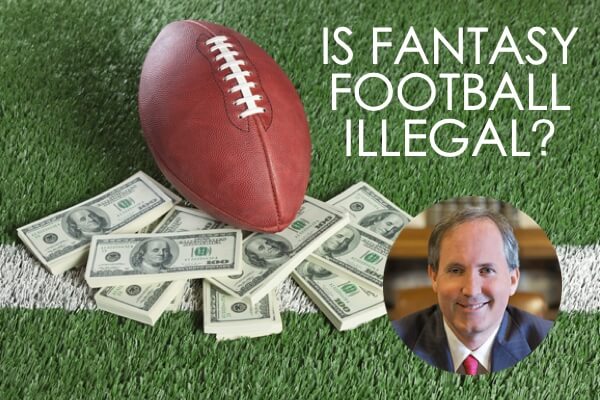
Paxton Fantasy Football IllegalYesterday, Texas Attorney General Ken Paxton issued an opinion stating that participating in daily fantasy football websites is illegal gambling in Texas. The opinion specifically states that participating in daily fantasy sports leagues is illegal gambling under section 47.02 of the Texas Penal Code.

Section 47.02 of the Texas Penal Code states that a person commits an offense if he or she makes a bet on the partial or final result of a game or contest or on the performance of a participant in a game or contest.

The key term that the Attorney General focused on in the opinion is the term “bet.” A “bet” is defined as an agreement to win or lose something of value solely or partially by chance. Texas Penal Code 47.01(1). Attorney General Paxton specifically stated that because the outcome of games in daily fantasy sports leagues depends partially on chance, an individual’s payment of a fee to participate in such activities is a “bet.”

Under 47.02 of the Texas Penal Code, gambling is a Class C misdemeanor offense, wherein offenders could face a fine of up to $500.00. Gambling under Section 47.02 of the Texas Penal Code is a fine-only offense that does not involve jail time as a punishment.

Can I keep playing daily fantasy sports?

It's up to you. If you continue to play daily fantasy sports in Texas, you would be participating in illegal gambling as the law is interpreted by Attorney General Ken Paxton. Again, according to the attorney general, participating in daily fantasy football league sites constitutes a Class c misdemeanor.

Opponents of the AG's opinion argue that daily fantasy sports involves skill to really win.  Mark Cuban, owner of the Dallas Mavericks, is one of the outspoken people who disagrees with the Paxton opinion.  He believes that just about everything in life and business involves chance and could be considered gambling as Paxton defines it.

What is important to remember though is that the attorney general cannot and will not be responsible for the actual investigation or prosecution of these cases. Local law enforcement and local district attorneys would be the responsible agencies for enforcing this law. Investigation of these cases would have to be tedious and would require a significant amount of resources in order to prosecute the lowest level of offense under Texas law. Whether the State would go to the extent needed to prove these types of gambling charges beyond a reasonable doubt is yet to be seen.

The law does allow a defense to prosecution for gambling if the person engages in gambling in a private place, no person receives any economic benefit other than personal winnings; and except for the advantage of skill or luck, the risks of losing and the chances of winning are the same for all participants.

What does this Fantasy Sports AG opinion mean for the average Texan?

The opinion means that, according to the State’s highest-ranking attorney, participating in daily fantasy sports leagues is illegal gambling. Now, it’s up to each local jurisdiction’s law enforcement agencies, prosecutors and courts to decide if prosecuting these cases is a priority or not. Law enforcement uses discretion on a daily basis as to what crimes and actions they should focus the bulk of their enforcement actions on. It’s unknown at this time if or whether law enforcement will spend the resources necessary to prosecute these cases.

Hopefully, if you choose to continue to play daily fantasy football, you are good at it and can cover your potential fines. We'll have to wait and see which, if any, jurisdictions choose to enforce this opinion. Based on the resources it would take, I seriously doubt that we'll see any citations written for this. Good luck out there!

Read the Texas AG Paxton Fantasy Football Opinion

Read full article
Theft By Deception Texas

Justice of the Peace Convicted of Theft By Deception for Use of Airline Voucher

By Brandon Barnett · Theft

Theft By Deception?  County Official Uses Airline Flight Voucher (Purchased with Government Charge Card) to Buy a Plane Ticket for his Son.

Theft By Deception TexasIn Fernandez v. State, the Texas Court of Criminal Appeals considered the case of a Val Verde County Justice of the Peace who used an airline voucher for a flight that was unrelated to a government purpose.  The CCA discusses the offense of Theft by Deception in Texas, explaining what it means and what it doesn't mean.  It is an interesting case because it seems so petty - the amount was only 300 dollars and some change.  Why didn't the JP simply purchase a new ticket for his son?  Read more.

Travel Plans Arranged

James Fernandez was charged with “theft by deception” in 2012. Fernandez, serving as a Justice of the Peace in Val Verde County, wanted to travel to Orlando, Florida for a work-related conference in June of that year. After obtaining permission to travel to the conference and to use his government-issued credit card for airfare, Fernandez asked his office clerk to book the flight. The clerk made flight arrangements with Southwest Airlines.

Travel Plans Cancelled

Just before the conference, Fernandez became ill and cancelled his flight itinerary. Per Southwest Airlines’ refund policy, the airline issued a “refund-voucher” to Fernandez, in his name, valid for travel until February 2013. The refund-voucher was valued at $381.60, a dollar-for-dollar match to the amount originally paid for the ticket to Orlando.

In August, Fernandez asked his office clerk for the flight information from the cancelled Orlando trip. Once the clerk located the information, Fernandez told the clerk to give the flight reservation number to his son, Fernandez Jr.. The clerk complied.

Routine Audit Leads to an Investigation

During a routine review of the County’s flight budget, the County Auditor contacted Southwest, attempting to get a full refund of the flight. At that time the Auditor learned that the refund-voucher from the Orlando ticket had been used by Fernandez for a flight to Phoenix, Arizona in August. The auditor also learned that Phoenix flight incurred additional fees, fees that were not paid for by the county. Relying on Val Verde County’s policy that prohibits the use of county property for personal use, the auditor reported the transaction, triggering an investigation by the Attorney General.

Too Late to Repay, Fernandez Goes to Court

Soon after, Fernandez tried to pay for the airline voucher, but the auditor refused to accept his payment. Fernandez was charged with “theft by a public servant by way of deception.” At trial, Fernandez Jr. testified that his father had intended to repay the county, nevertheless, Fernandez was convicted—a conviction upheld by the Fourth Court of Appeals. Fernandez appealed to the Court of Criminal Appeals (“CCA”) for relief, arguing that State failed to prove he induced consent by way of deception at the time he misappropriated the government’s refund-voucher. The CCA must determine whether Fernandez committed “theft by deception” when he purchased online airfare for government-related travel with a government credit card, but canceled, using the refund-voucher for personal travel without “correcting the impression” that the refund-voucher would be used for future government-related travel.

What is Theft by Deception Under Texas Law?

Texas law defines theft as, “the unlawful appropriation of property with the intent to deprive the owner of the property.” Tex. Penal Code § 31.03(a). “Appropriation is unlawful if it is without the owner [of the property’s] effective consent.” Id. § 31.03(b)(1). Consent is defined as, “assent in fact, whether express or apparent,” and is “not effective if it is induced by deception or coercion.” Id. § 1.07(a)(11); §31.01(3)(A). Deception means, “failing to correct a false impression…fact that is likely to affect the judgment of another in the transaction, that the actor previously created…by words or conduct, and that the actor does not now believe to be true.” Id. § 31.01(1)(B). The burden of proof is on the State to prove “that the owner of the misappropriated property was induced to consent to its transfer because of a deceptive act of the defendant.” Geick v. State, 349 S.W.3d 542, 548 (Tex. Crim. App. 2011); Daugherty v. State, 387 S.W.3d 654, 659 (Tex. Crim. App. 2013).

The CCA Decides

Here, the CCA explains that “consent” is a key issue—that the initial consent Fernandez received from his office to use the government credit card to make the flight reservation was not the consent that is the basis of the conviction. Rather, it was the consent Fernandez obtained when he asked his clerk to send the information to his son, “because without the voucher number, Fernandez would have been unable to access the [information]” to book the flight to Phoenix. Further, the county, by way of its agent [the clerk], assented to the refund-voucher’s use because the agent gave the cancelled flight information to Fernandez and his son in August.

Moreover, the CCA says that the consent was obtained through deception. Fernandez established with his office that he would be attending a work-related conference in June, thus creating the impression that county funds were being used for a work-related purpose. Once the flight was cancelled, the refund-voucher that was issued is to be considered the county’s property, “just as the ticket to Orlando had been [considered county property].” Fernandez failed to correct the impression that he was using the ticket/refund-voucher for work-related travel, instead using the refund-voucher for personal travel without telling anyone in the Val Verde County’s business office. “By remaining silent, [Fernandez] left intact the impression he created…that the [refund-voucher] would be used for county-approved travel.” The CCA affirmed the decisions rendered by the trial and appeals courts.

Judge Johnson filed a concurring opinion that simplified the majority’s opinion. “When [Fernandez] failed to…tell the county….that he had not used the original ticket…and [did not] surrender the voucher, [Fernandez] failed to correct the impression of appropriate travel on county business that he had previously created.” This alone was the deception that is required to support the conviction.

_______

Barnett Howard & Williams PLLC is a criminal defense law firm in Fort Worth, Texas.  Our criminal defense attorneys handle all felony and misdemeanor offenses in Tarrant County and surrounding areas.  For more information about our attorneys, visit our Firm Profile page.

Read full article

Speak with a Fort Worth attorney

Call (817) 993-9249 or send us a message to discuss your case.