Skip to content
Category

Drug Crimes

Page 1 of 6 · 29 articles

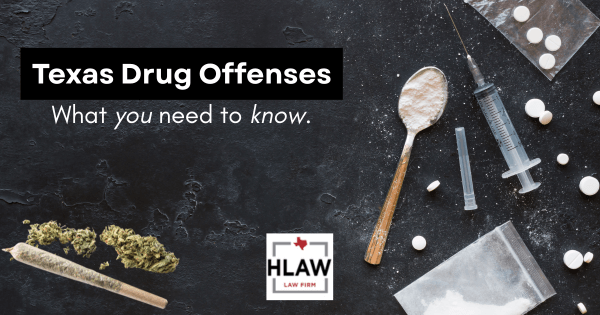
Texas drug offenses guide showing marijuana, pills, and drug paraphernalia with HLAW Law Firm logo.

Texas Drug Offenses: A guide on what you need to know. 

By Luke A. Williams · Drug Crimes

Texas drug offenses guide showing marijuana, pills, and drug paraphernalia with HLAW Law Firm logo.
An overview of common Texas drug offenses, from possession of controlled substances to drug paraphernalia. Learn what you need to know about Texas drug laws.

Facing drug charges in Texas can be a daunting experience, with potential consequences ranging from hefty fines and incarceration to long-term impacts on your personal and professional life. Texas has some of the strictest drug laws in the nation, and understanding the nuances of these statutes is crucial for anyone navigating the legal system. This detailed guide, complete with relevant legal citations, aims to shed light on the various types of drug offenses in Texas and the severe penalties associated with them.

1. Possession of a Controlled Substance

Possession of a controlled substance without a valid prescription is a serious offense in Texas, governed primarily by Texas Health and Safety Code §§ 481.115 - 481.118. The severity of the charge and its associated penalties are highly dependent on several critical factors:

  • Type of Substance (Penalty Group): Texas law categorizes controlled substances into distinct "Penalty Groups," each carrying a different level of legal consequence. These groups, ranging from 1 to 4, with an additional 1-A and 2-A, are a fundamental aspect of Texas drug legislation. For instance, substances in Penalty Group 1 (PG1) typically incur the most severe penalties, reflecting their high potential for abuse and lack of accepted medical use.
  • Quantity of the Substance: The amount of the controlled substance in possession directly correlates with the classification of the offense. Even a small amount of a PG1 substance can be charged as a state jail felony, while possessing larger quantities can escalate to first-degree felonies, carrying potential sentences of life in prison. The weight or aggregate weight of the substance is a key determinant.
  • Aggravating Factors: Certain circumstances can significantly enhance the penalties for possession. These include, but are not limited to, possession within a drug-free zone (e.g., near schools or playgrounds), possession with the intent to deliver, or possession while in possession of a firearm. These factors demonstrate a greater threat to public safety and thus warrant more stringent punishment.

Understanding "Possession": It's important to note that "possession" in Texas law doesn't necessarily mean holding the substance in your hand. It can refer to "actual possession" (direct physical control) or "constructive possession" (exercising care, custody, or control over the substance, even if it's not on your person). Prosecutors must prove that the accused knowingly or intentionally possessed the substance in one of these ways.

2. Possession of Marijuana

Despite a growing national trend towards marijuana legalization, Texas maintains strict laws regarding marijuana possession. Texas Health and Safety Code § 481.121 specifically addresses marijuana offenses, with penalties directly tied to the quantity possessed.

Amount Possessed Classification Penalty
Less than 2 ounces Class B Misdemeanor Up to 180 days in county jail, up to $2,000 fine
2–4 ounces Class A Misdemeanor Up to 1 year in county jail, up to $4,000 fine
More than 4 ounces to 5 pounds State Jail Felony 180 days to 2 years in state jail, up to $10,000 fine
More than 5 pounds to 50 pounds 3rd Degree Felony 2–10 years in state prison, up to $10,000 fine
More than 50 pounds to 2,000 pounds 2nd Degree Felony 2–20 years in state prison, up to $10,000 fine
More than 2,000 pounds 1st Degree Felony 10–99 years or life in state prison, up to $100,000 fine

Note on "Usable Quantity": For a marijuana possession charge to stick, the prosecution must prove the individual possessed a "usable quantity." This generally means enough to be used as a drug, though there's no precise definition, and it can be a point of contention in legal proceedings.

3. Possession of Drug Paraphernalia

The possession of drug paraphernalia, while often a lesser offense than drug possession itself, can still lead to significant legal trouble. Texas Health and Safety Code § 481.125 broadly defines paraphernalia to include any equipment, products, or materials used or intended for use in cultivating, manufacturing, processing, packaging, storing, or consuming controlled substances. Common examples include:

  • Pipes, water pipes (bongs), and other smoking devices
  • Rolling papers and blunt wrappers
  • Digital scales used for weighing drugs
  • Syringes and hypodermic needles (unless for legitimate medical purposes)
  • Containers used for storing or concealing drugs

Simple possession of drug paraphernalia is typically classified as a Class C Misdemeanor, punishable by a fine of up to $500. However, if the prosecution can prove that the individual sold or possessed paraphernalia with the intent to sell it, the charge can escalate to a Class A Misdemeanor or even a felony, depending on the circumstances, such as selling to a minor.

4. Manufacturing or Delivery of a Controlled Substance

These offenses represent some of the most serious drug charges in Texas, outlined in Texas Health and Safety Code §§ 481.112 - 481.114.

  • Manufacturing: This term encompasses the production, preparation, propagation, compounding, conversion, or processing of a controlled substance. It can range from operating a large-scale drug lab to even simple acts like growing marijuana plants if the intent is to produce a usable drug.
  • Delivery: This is defined as the actual or constructive transfer of a controlled substance, regardless of whether there was payment or consideration. This includes selling, giving away, or even simply handing over a drug to another person.

The penalties for manufacturing or delivery are extremely severe and are determined by the Penalty Group of the substance and the quantity involved. For example, manufacturing or delivering a small amount of a PG1 substance can be a state jail felony, while large-scale operations involving significant quantities can result in first-degree felony charges, with potential sentences of life in prison and massive fines. Furthermore, enhanced penalties apply if these offenses occur in designated drug-free zones or if minors are involved in the illicit activities.

5. Possession with Intent to Deliver (PWID)

Even if an individual isn't caught in the act of manufacturing or delivering, they can still be charged with Possession with Intent to Deliver (PWID) under Texas Health and Safety Code §§ 481.112 - 481.114. This charge relies on circumstantial evidence that indicates the intent to distribute the controlled substance. Prosecutors often infer intent from:

  • Large Quantities of Drugs: Possessing an amount of a substance that exceeds what would typically be for personal use.
  • Packaging Materials: Having baggies, vials, or other materials commonly used for drug distribution.
  • Weighing Scales: Possession of digital scales, especially in conjunction with drugs.
  • Presence of Large Sums of Cash: Unexplained large amounts of money.
  • Communications (Text Messages, Emails): Digital communications implying drug sales or distribution.
  • Multiple Cell Phones: Possession of multiple phones, often associated with drug dealing.
  • Weapons: The presence of firearms can also be used to infer an intent to protect drug operations.

The penalties for PWID mirror those for actual manufacturing or delivery, making it a very serious charge.

6. Drug-Free Zones & Enhanced Penalties

Texas takes a particularly harsh stance on drug offenses committed near protected locations. Texas Health and Safety Code § 481.134 designates "drug-free zones" and mandates enhanced penalties for offenses that occur within 1,000 feet of:

  • Public or private schools (including childcare facilities and institutions of higher education)
  • Playgrounds
  • Public or private youth centers
  • Public swimming pools
  • Video arcade facilities
  • School buses
  • Correctional facilities
  • Mental health facilities

These enhancements can include increased minimum sentences, often doubling the potential fine and adding additional years to a prison sentence. The rationale behind these laws is to protect vulnerable populations and deter drug activity in areas frequented by children and those in rehabilitative environments.

7. Penalty Groups in Texas: A Detailed Look

The Texas Health and Safety Code categorizes controlled substances into distinct Penalty Groups, which are fundamental to determining the severity of drug charges.

There are several federal acts that regulate drug charges, but the primary act is the Controlled Substances Act (CSA) (21 U.S. Code § 801 et seq.). This federal law establishes five schedules for controlled substances, similar to Texas' Penalty Groups, and sets out various criminal offenses related to manufacturing, distributing, and possessing these substances.

Federal drug charges are usually applicable when:

  • Interstate or International Trafficking: The drug activity crosses state lines or international borders, bringing it under federal jurisdiction.
  • Large-Scale Operations: The quantity of drugs involved, the complexity of the criminal enterprise, or the financial proceeds are substantial enough to warrant federal intervention.
  • Federal Agency Involvement: The arrest is made by federal law enforcement agencies such as the Drug Enforcement Administration (DEA), Federal Bureau of Investigation (FBI), or Immigration and Customs Enforcement (ICE).

Federal convictions under Title 21 U.S. Code often carry mandatory minimum sentences, meaning judges have less discretion in sentencing. For example, trafficking certain quantities of controlled substances can trigger mandatory minimums of 5 or 10 years, and these sentences can be significantly increased for repeat offenders or those involved in large-scale conspiracies. Federal prisons also tend to have different conditions and parole opportunities compared to state prisons.

8. Defending Against Drug Charges

A strong defense strategy is paramount when facing drug charges in Texas. A skilled criminal defense attorney will meticulously examine every aspect of your case to identify potential weaknesses in the prosecution's arguments and avenues for defense. Common defense strategies include:

  • Challenging Illegal Searches and Seizures (Fourth Amendment): This is a cornerstone of many drug defenses. If law enforcement obtained evidence through a search conducted without a warrant, probable cause, or consent, or if the warrant itself was invalid, the evidence may be suppressed under the "exclusionary rule." This can effectively dismantle the prosecution's case.
  • Disputing Knowledge or Control: Under Texas Penal Code § 6.03(b), a person commits an offense only if they act with the required culpable mental state. For drug possession, this means proving the accused knowingly or intentionally possessed the controlled substance. A defense may argue that the accused was unaware of the substance's presence or did not have actual control over it. For example, if drugs were found in a shared vehicle, a defense might argue that another occupant was responsible.
  • Identifying Lab or Chain-of-Custody Issues: The prosecution must prove that the substance seized is, in fact, a controlled substance. This relies on forensic lab analysis. Issues with lab procedures, contamination of samples, or breaks in the chain of custody (how the evidence was handled from seizure to analysis) can render lab results inadmissible or unreliable.
  • Presenting a Valid Medical or Prescription Defense: If the controlled substance was possessed with a valid prescription from a licensed medical practitioner, this can be an absolute defense to a possession charge. This typically applies to prescription medications in Penalty Groups 3 and 4, or sometimes 2.
  • Challenging Quantity or Weight: Discrepancies in the reported weight of the controlled substance can lead to a lower classification of the offense and, consequently, reduced penalties.
  • Entrapment: In rare cases, a defense of entrapment may be argued if law enforcement induced the defendant to commit a crime they would not have otherwise committed.
  • Diversion Programs: For first-time offenders, particularly in less severe cases, an attorney may be able to negotiate for participation in a drug diversion program. Successful completion of such programs can lead to dismissal of charges, avoiding a criminal record.

Conclusion

The landscape of drug charges in Texas is complex and unforgiving. From the nuances of penalty groups and drug-free zones to the harsh realities of mandatory minimum sentences, the impact of a conviction can be profoundly life-altering, extending beyond immediate fines and incarceration to long-term criminal records that affect employment, housing, and civil liberties.

If you or a loved one is facing drug charges in Texas, the urgency of securing knowledgeable legal representation cannot be overstated. A qualified criminal defense attorney possesses the expertise to challenge illegally obtained evidence, skillfully advocate for reduced charges, or strategically negotiate for alternative outcomes such as drug diversion programs. Their in-depth understanding of Texas drug laws, courtroom procedures, and prosecutorial tactics is invaluable in protecting your rights and fighting for the best possible outcome in your case. Do not delay in seeking professional legal guidance.

A drug charge can be an overwhelming experience, but you don't have to face it alone. At Howard Lotspeich Alexander & Williams, PLLC (HLAW), we understand the complexities of Texas drug laws and are dedicated to providing compassionate yet aggressive representation. Let us help you navigate this challenging time. Reach out for a free, confidential case evaluation by calling 817-993-9249 or contacting us here.
Read full article
A judge’s gavel in front of cannabis containers, representing legal possession laws in Texas.

Understanding Possession in Texas Criminal Law

By Luke A. Williams · Criminal Defense, Drug Crimes

A judge’s gavel in front of cannabis containers, representing legal possession laws in Texas.
Understanding what counts as “possession” in Texas can make all the difference in a criminal case.

In Texas, the concept of "possession" can sometimes be a little tricky when we think about it in terms of the law as opposed to what we all commonly define as "possession". Whether it’s related to controlled substances, firearms, or stolen property, possession is a key element in many criminal offenses. But what does possession actually mean in the eyes of Texas law? This post will break down the definition, legal standards, and consequences of possession in the Lone Star State.

Definition of Possession in Texas Law

Under Texas Penal Code §1.07(a)(39), possession is defined as having "actual care, custody, control, or management." This broad definition means that possession isn’t limited to physical ownership. Instead, it can include situations where a person has any access to or control over an object, even if they don’t physically hold it at the moment.

Possession can be categorized into two types:

  1. Actual Possession: This occurs when the individual has physical custody of the item. For instance, if someone is holding a bag containing illegal drugs, they are in actual possession.
  2. Constructive Possession: This arises when an individual does not have physical custody but still has control or the right or ability to excersise control the item. For example, if illegal drugs are found in the glove compartment of a car that a person owns and operates, they may be deemed to have constructive possession. Even if they don't own or are operating the vehicle, police officer's may deem a passenger in the vehicle as having the ability to exercise care, custody, control or management of the illegal item.

Establishing Possession in a Criminal Case

To prove possession in a criminal case, the prosecution must demonstrate two key elements:

  1. Knowledge: The accused must have known about the presence of the item, and;
  2. Control: The accused must have exercised, or had the ability to exercise, control over the item.

Merely being near an illegal item is not enough to establish possession. For example, if drugs are found in a house shared by multiple roommates, the prosecution must show evidence linking the accused to the drugs specifically—such as fingerprints, ownership of the container, or incriminating statements.

Joint Possession

Texas law also recognizes the concept of joint possession. This means that more than one person can be found to have possession of the same item. For example, if two people are in a vehicle and illegal contraband is found in a location accessible to both, they could both potentially be charged with possession.

Consequences of Possession Charges

Possession charges can carry serious consequences in Texas, varying based on the type and quantity of the item in question. For instance:

  • Drug Possession: Penalties depend on the type of drug and the amount, with punishments ranging from misdemeanors to first-degree felonies.
  • Firearm Possession: Certain individuals, such as convicted felons, are prohibited from possessing firearms, and violating this prohibition can result in severe penalties.
  • Stolen Property: Possession of stolen property can lead to theft charges, with penalties depending on the value of the property.

Defenses to Possession Charges

There are several potential defenses to possession charges in Texas, including:

  • Lack of Knowledge: Demonstrating that the accused was unaware of the item's presence.
  • Lack of Control: Arguing that the accused did not have the ability to exercise control over the item.
  • Mistaken Identity: Showing that the item belonged to someone else and the accused had no connection to it.
  • Violation of Constitutional Rights: If law enforcement obtained evidence through an illegal search or seizure, that evidence may be suppressed.

Conclusion

"Possession" is a nuanced legal concept in Texas, encompassing both actual and constructive control over items. Understanding the intricacies of possession is crucial for anyone facing criminal charges. What you think may or may not be possession may be different than what the law defines it as. If you or someone you know is dealing with a possession-related charge, consulting an experienced criminal defense attorney is essential to ensure your rights are protected and to navigate the complexities of the legal system effectively.

Read full article
Marijuana Smell Warrantless Search Texas

Is the Smell of Marijuana Enough to Permit a Warrantless Vehicle Search?

By Brandon Barnett · Drug Crimes

Does the Smell of Marijuana Allow Officers to Search My Vehicle Without a Warrant?

Marijuana Smell Warrantless Search TexasIn Texas, the answer is yes. The possession of marijuana is a crime in Texas, so if an officer smells marijuana emanating from your car, he has probable cause to believe a crime is being committed. With probable cause, the law permits the officer to stop and search your car— regardless of whether you consent.
The officer has the ability to do this through what is called the “automobile exception” to the 4th Amendment’s warrant requirement.1 Generally, the 4th Amendment to the United States Constitution requires police officers to first obtain a warrant before they can search a person’s property. However, because automobiles can quickly move locations and evade law enforcement, the Supreme Court reasoned that it would be impractical to require officers to first secure a warrant before they are permitted to search a vehicle.2 So by claiming to smell marijuana, law enforcement officers can also claim to have probable cause to believe a crime is being committed—allowing them to take advantage of the automobile exception and search a vehicle without anything more.

Will the Search Laws Change if Marijuana Becomes Legal?

Maybe. There have been small changes in the law with the current trends in marijuana legalization. A couple of state courts adopted the rule that, after legalization or decriminalization, the smell of marijuana is no longer enough on its own to justify a warrantless search of a vehicle. For example, in Vermont, after the decriminalization of adult possession of less than one ounce of marijuana, the Vermont Supreme Court held that the odor of marijuana alone is insufficient to establish probable cause to search a vehicle.3 The Massachusetts Supreme Court ruled that the state’s decriminalization policy means that the possession of marijuana is now a civil infraction, making the smell of it an insufficient basis for officers to believe a crime is being committed.

However, most states where marijuana is legalized or decriminalized still follow the rule that the smell of it establishes probable cause in support of a vehicle search.4 This is because these states still criminalize the possession of larger amounts of marijuana—meaning that the smell of it still indicates that a crime could be underway. This is the logic that the Washington, Maryland, Colorado, and Arizona courts follow.5

But what about Texas?

As stated above, the possession of marijuana in Texas is a crime, and officers are still justified in searching vehicles if they smell marijuana coming from them. However, Texas legalized the cultivation of industrial hemp in 2019, which smells like just like marijuana. The issue of whether probable cause can still be supported by the odor of marijuana in light of hemp’s legalization was raised in state court in 2020, but the court left it undecided as the vehicle search in question occurred before the legalization of hemp.6 It remains to be seen if or when Texas will legalize marijuana, and what attitude Texas courts will take towards the question of marijuana odor and vehicle searches.


[1] Carroll v. United States, 267 U.S. 132 (1925).
[2] Id., at 153.
[3] Zullo v. State, 2019 Vt. LEXIS 1, * (Vt. January 4, 2019).
[4] Cece white, The Sativas and Indicas of Proof: Why the Smell of Marijuana Should Not Establish Probable Cause for a Warrantless Vehicle Search in Illinois, 53 UIC J. Marshall L. Rev. 187, 211 (2020).
[5] Id., at 211.
[6] Geberkidan v. State, 2020 WL 5406243, NO. 12-19-00296-CR (2020).

Read full article
Texas CBD Legal 2019

CBD Update: Texas Legislature Clarifies the CBD Issue

By Luke A. Williams · Drug Crimes

Gov. Greg Abbott has now signed House Bill 1325 into law, clarifying the legality of hemp-derived, low THC CBD products in Texas.

Texas CBD Legal 2019
On June 10, 2019, Gov. Abbot signed HB 1325 which modified sections of the Texas Agriculture Code and sections of the Texas Health and Safety Code.

The first major modifications come by way of the Texas Agriculture Code. The code now defines and legalizes “hemp” and establishes a legal production plan for the regulation of hemp and hemp-based products.

The Definition of Hemp

“Hemp” is now defined in in Section 121.001 0f the Texas Agriculture code as

“the plant Cannabis sativa L. and any part of that plant, including the seeds of the plant and all derivatives, extracts, cannabinoids, isomers, acids, salts, and salts of isomers, whether growing or not, with a delta-9 tetrahydrocannabinol [THC] concentration of not more than 0.3 percent on a dry weight basis.”

This definition is essentially the previous definition of marijuana under the Health and Safety Code but now isolates plants that contain less than .3% THC as being legal “hemp”.

By providing a clear definition of “Hemp” including plants or products that contain .3% THC or less, the legislature has resolved the issue that previously existed making the possession of any amount of THC regardless of it’s origin a felony level offense in Texas.

The Texas Agriculture Code has also been amended to establish a legal production plan for the regulation and sale of hemp and hemp-based products. The Code now establishes a licensing process for businesses looking to grow or sale hemp products.

New Rules for Peace Officers

The amendments to the Code also now give powers and duties to Peace Officers who come into contact with hemp regard to determining whether a plant or substance is marijuana or hemp. Under Sec. 122.358 of the Texas Agriculture Code, a peace officer may now inspect and collect a reasonable sized sample of any material from the plant Cannabis sativa L. found in a vehicle to determine the THC concentration of that material. Unless the officer has probable cause to believe the plant material is marijuana, the peace officer may not seize the plant material or arrest the person transporting the plant material. This would include hemp-derived CBD oil containing .3% THC.

In regards to the Health and Safety Code, HB 1325 has amended the code to exclude hemp (and more importantly the THC in hemp) as defined by Section 121.001 from the definition of a Controlled Substance. The bill also now specifically excludes hemp as defined by Section 121.001 (and the THC in hemp) from the definition of “Marijuana” in Section 481.002 (26) of the Health and Safety Code.

House bill 1325 has significantly clarified the previously confusing state of the law concerning CBD products in Texas. We advise those that are selling, buying or possessing CBD products to read the text of the bill for more details.

https://legiscan.com/TX/text/HB1325/id/2026154/Texas-2019-HB1325-Enrolled.html

Read full article
CBD Oil Legal Texas

Is CBD Oil Legal in Texas? Perhaps, But it Must Fit These Qualifications

By Luke A. Williams · Drug Crimes

What is CBD Oil?

CBD Oil Legal TexasCBD Oil, which is short for cannabidiol oil, is a cannabinoid extract that is alleged to have the health benefits of cannabis (e.g. pain relief, easing of inflammation, anxiety management and the treatment of epilepsy) without the psychoactive effects of marijuana. CBD Oil is sold as a supplement in marijuana dispensaries, nutrition stores, and even as an additive in smoothies. While the popularity of CBD Oil is growing substantially, the product remains unregulated by the U.S. Food and Drug Administration, leading to wide discrepancies in the product's ingredients and quality. The variety of ingredients and compounding methods may have significant ramifications for consumers depending on Federal and state law and the interpretation of those laws by state law and health code enforcement agencies.

Is CBD Oil Legal Under Federal Law?

Yes, if it is produced within federal guidelines.

As of December 20, 2018, the Fed Gov has legalized hemp that has a tetrahydrocannabinol (THC) concentration of no more than 0.3% by removing it from Schedule I of the controlled substances act. States and Indian Tribes may regulate the production of Hemp by submitting a plan to the USDA. This bill also makes hemp producers eligible for the federal crop insurance program and certain USDA research grants.

With the passing of the new 2018 Farm Bill, hemp and hemp-derived products have been officially removed from the purview of the Controlled Substances Act, such that they are no longer subject to Schedule I status. Meaning that so long as CBD is extracted from hemp and completely pure (with less than 0.3% THC on a dry weight basis of THC, something the DEA doubts is possible) and grown by licensed farmers in accordance with state and federal regulations, it is legal as a hemp product.

However, in 2016 the Drug Enforcement Agency released an administrative ruling considering CBD Oil to be a Schedule One drug, comparable to heroin, peyote and LSD, operating on the theory that it is extracted from the same parts of the Cannabis sativa plant that contain THC, the active ingredient of marijuana. CBD consumers and manufacturers assert that CBD can also be extracted from the non-intoxicating parts of the Cannabis sativa plant that produce hemp, however, a recent 9th Circuit decision affirmed the DEA's authority to classify CBD Oil as within their administrative purview.2

For CBD Oil to be considered legal in the Federal system under the DEA's guidelines it must “consist[] solely of parts of the cannabis plant excluded from the CSA definition of marijuana.” In the definition of marijuana given by the Controlled Substances Act, the “mature stalks of such plant, fiber produced from such stalks, oil or . . . any other . . derivative, mixture, or preparation of such mature stalks” are excluded from the definition. Presently the DEA considers an extraction process using only the parts of the cannabis plant that are excluded from the CSA definition of marijuana to be “not practical.” This is because the extraction process used would “diminish any trace amounts of cannabinoids that end up in the finished product.”

Is CBD Oil Illegal Under the Laws of the Various Individual States?

Yes, CBD is legal, but not in all states.

At the state level, CBD Oil is considered legal in the states where marijuana is legal for recreational use (Alaska, California, Colorado, DC, Maine, Massachusetts, Nevada, Oregon, Vermont). Twenty-nine states have made marijuana legal for medical use in various quantities and CBD is also considered legal under those state laws, irrespective of the THC content of the source of the oil. In states that have not decriminalized marijuana, CBD Oil is also likely illegal.

Is CBD Oil Legal In Texas?

NO, unless you fall within the qualifications set by the Compassionate Use Act.

If you are prescribed the use of medical CBD oil and use ‘low-THC” CBD, then the use is legal. Texas has legalized marijuana for medical use only, but only in a very narrow set of circumstances. The Compassionate Use Act of 2015 authorizes the prescription of “low-THC cannabis,” defined as having no more than 0.5% THC for patients diagnosed with intractable epilepsy and entered into the state-maintained “compassionate-use registry.”3 The Act requires prescription by two physicians however, it is currently illegal under federal law for a physician to “prescribe” marijuana. Under a 2000 court ruling, it is legal for physicians to “recommend” marijuana to their patients but the language of the Compassionate Use Act calls for a prescription, setting up a conflict with Federal law.4 Additionally, to qualify for the medical use of CBD, the patient must have tried two FDA-approved drugs and found them to be ineffective. There are currently three dispensaries licensed by Texas to sell qualifying products to authorized consumers.

If you do not fall within the qualifications set by the Compassionate Use Act, then possession of CDB oil containing any amount of THC is against Texas law. The State definition of marijuana closely tracks the Federal definition. The Texas Health and Safety Code defines marijuana as “the plant Cannabis sativa . . . and every compound, manufacture, salt, derivative, mixture, or preparation of that plant or its seeds.” The Code excludes “the mature stalks of the plant or fiber produced from the stalks [and] a compound, manufacture, salt, derivative, mixture, or preparation of the mature stalks, fiber, oil.” Texas does not currently have legislation allowing for the cultivation of hemp, though industrial hemp derived from the mature stalks of the Cannabis sativa plant may be sold and consumed.

What is the Penalty for Possession of CBD Oil in Texas?

In Texas, if you possess CBD oil with any trace of THC, you could be charged with a Felony for Possession of a Controlled Substance in Penalty Group 2, which (depending on the weight in grams) can carry a range of punishment from 180 days in a state jail facility up to 20+ years in prison and a fine not to exceed $10,000. Several of our clients have been arrested for possessing CBD oil after officers performed a field test and discovered that yielded a positive result for THC.

If the CBD oil does not contain any THC, is it currently a Schedule V substance not in any penalty group. Possession of CBD with no THC can be charged as a Class B Misdemeanor with a punishment range of 0 - 180 days in jail and a fine up to $2,000.

What To Look For In CBD Oil In Texas

CBD Oil made from the mature stalks of the Cannabis sativa plant are likely in conformity with both Federal and Texas State law. Consumers seeking to purchase CBD Oil in Texas should look for a product advertised as being the product of “industrial hemp” or “mature hemp.” Products advertised as containing “THC” or “CBD Oil” should be avoided because of potential conflict with State and Federal laws.

  • Texas consumers with intractable epilepsy may seek to join the Compassionate Use Registry and get a prescription for CBD Oil containing less than 0.5% THC from an authorized dispensary.
  • Physicians should be mindful that “prescribing” CBD Oil to Texas residents under the Compassionate Use Act may fall into conflict with existing Federal law.
  • Retailers that are not one of the three state-authorized dispensaries authorized by the Compassionate Use Act should take care to carry only products that do not advertise themselves as containing CBD Oil but instead focus on being the product of industrial hemp.

Where Can I Purchase CBD Oil with 0% THC?

While there are many CBD oil stores popping up all over Texas, we have found one near our office that sells CBD Oil with 0% THC in it. They test it to confirm the THC content so that you can be sure of what you are getting. Visit Your CBD Store at https://yourcbdstorekeller.com to learn more or purchase their CBD products online. But remember that even though many agencies are not choosing to arrest or prosecute for  zero THC CBD oil, the Tarrant County DA's office is still filing these cases if a person is arrested.

Sources:

  1. H.R.2642 - 113th Congress (2013-2014): Agricultural Act of 2014.
  2. Hemp Industries Association v. USDEA, No. 17-70162
  3. SB339  Texas Compassionate Use Program
  4. Conant v. McCaffrey  WL 1281174

Read full article

Speak with a Fort Worth attorney

Call (817) 993-9249 or send us a message to discuss your case.