Skip to content

August 2016

5 articles

Husband Wife Privilege Texas Rule 504

Can One Spouse be Forced to Testify Against the Other?

By Luke A. Williams · Criminal Defense, Jury Trial

Can My Spouse be Forced to Testify Against Me in a Criminal Trial in Texas?

Husband Wife Privilege Texas Rule 504Everyone knows (or should know) of the attorney-client privilege which prohibits the calling of an attorney to testify as a witness against his client and protects the attorney-client relationship. But what about the husband-wife relationship? Are spouses afforded any protection from having their spouse testify against them in a criminal trial?

Yes. In Texas there are two "Husband-Wife" privileges that apply to the marital relationship: spousal immunity and the marital communication privilege. Many people are aware that certain privileges arise but often do not know exactly what protections these privileges provide. The following article discusses both of the matrimonial privileges in Texas.

See the full text of Texas Rule of Evidence 504 - Spousal Privileges

What is Spousal Immunity? How does Spousal Immunity work in Texas?

Spousal immunity is the privilege that exists in a criminal trial for the defendant’s spouse not to be called as a witness in certain situations.  Tex. R. Evid. 504(b). This privilege applies to spouses that are married to the defendant during trial and are asked to testify as to matters that occurred during the spouse's marriage to the defendant. The non-defendant spouse holds this privilege; meaning he or she is the one who may invoke the privilege not to testify and it is ultimately his or her decision. Tex. R. Evid. 504(b)(3). Thus, if the spouse wants to voluntarily testify for the State, she may do so regardless of whether the defendant objects to the spouse's testimony.

Spousal immunity does not stop the defendant from calling their current spouse as a witness. If a defendant chooses to do so the spouse cannot assert this privilege and will be required to testify. With that, if the defendant does not call the spouse and surrounding evidence suggests the spouse could testify to relevant matters the State is allowed to comment about that. 504(b)(2).

Exceptions to Spousal Immunity in Texas

There are two exceptions to spousal immunity in Texas.

  • First, the privilege does not apply in a criminal proceeding in which the defendant has committed against the spouse (e.g. Domestic Violence) or prosecution for bigamy.
  • Second, the privilege does not apply when the spouse is called to testify about matters that occurred before they were married to the defendant.

What is the Texas Marital Communication Privilege?

Under Texas Rule of Evidence 504(a), spouses have the privilege to prevent testimony of certain communications made during the marriage from one spouse to the other spouse.  Unlike the spousal immunity privilege, the marital communication privilege may be invoked by either the defendant or the spouse being called as a witness. Additionally, this privilege survives divorce; meaning it applies whether or not the defendant and the spouse are still married as long as the communications were made while they were married. Tex. R. Evid. 504(a)(2).

This privilege only applies to communications that were intended to be confidential, that is, they were made privately with no intent to disclose to anyone other than the spouse. A communication will still be confidential if someone overheard the conversation if the defendant spouse made the statement without knowledge or intent that the other person would hear the conversation. Basically, the requirement is that the communication made was intended for the spouse’s ears only.

Exceptions to the Marital Communications Privilege in Texas

There are two exceptions to the confidential communications privilege.

  • First, if the communication was made in whole or in part to aid in the commission of a crime the privilege does not apply.
  • Second, the marital communication privilege does not apply in prosecutions for crimes against the defendant’s spouse, any minor child, or a member of the defendant or defendant spouse’s household.

In conclusion, there are certain situations where matters occurring between spouses are kept within the sanctity of the marriage and will not come out in court. However, as you can see these privileges are very specific and it is important to be aware of what exactly is privileged and when such privileges apply.

See the full text of Texas Rule of Evidence 504 - Spousal Privileges
Read full article
United States Age of Consent Map

What is the Age of Consent in the United States?

By Brandon Barnett · Sex Crimes

Is There a Uniform Age of Consent for all 50 States in the United States?

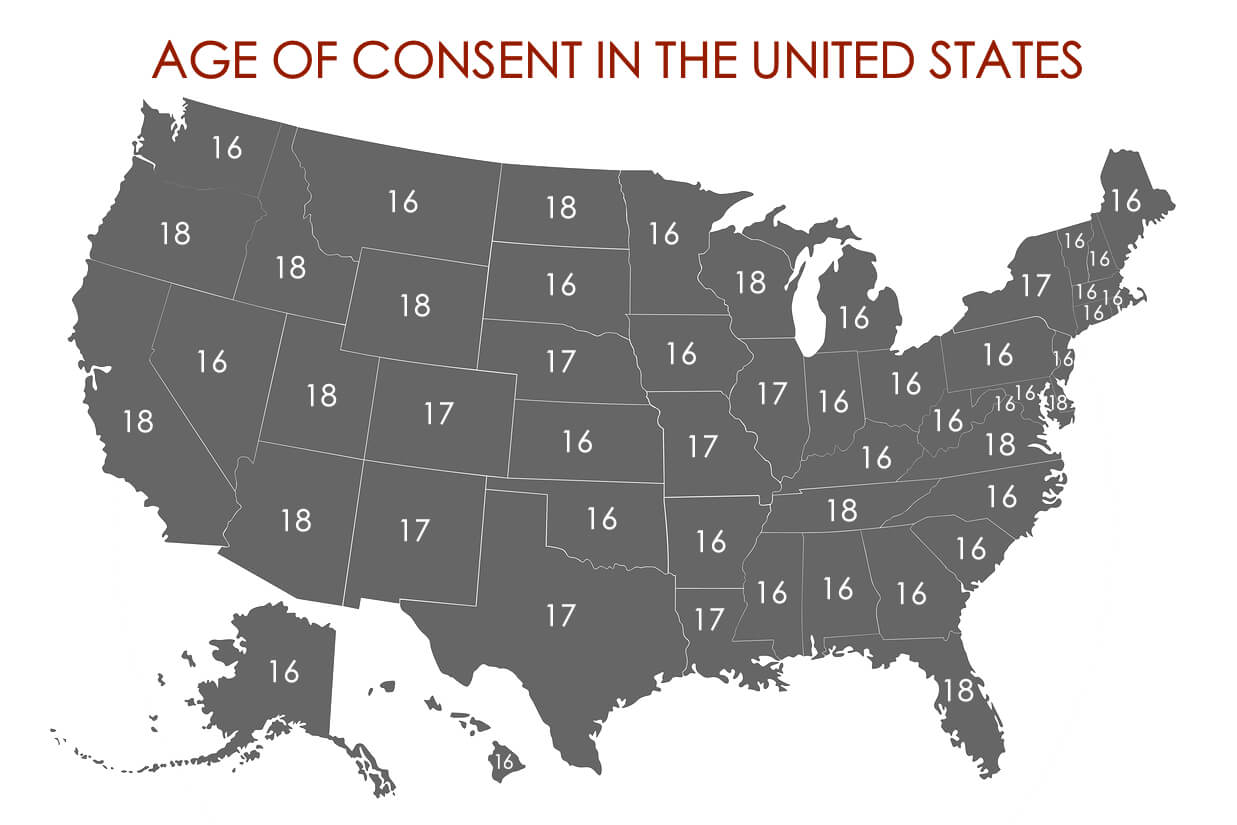
No, there is not a uniform age of consent. The "Age of Consent" is the minimum age at which a person may consent to participation in sexual intercourse. A person younger than the legal age of consent cannot legally consent to sexual activity. The age of consent in the United States ranges from 16 to 18 years old depending on the state, meaning that a person 15 years of age or younger cannot legally consent to sexual contact. Each state enacts its owns laws which set the age of consent.  If someone engages in sexual activity with a person younger than the age of consent in that state, the person could be charged with Statutory Rape or other offenses depending on the nature of the contact.

What follows is a map depicting the age of consent for all 50 states and a chart outlining the same.

*Note: This chart was current as of 2016, but could be subject to change over the years. Please do not rely on this chart to make any decisions that could impact your life. Check your own state's age of consent laws to make sure you are fully informed, because ignorance of the law will not be a defense for you if charged with a child sexual offense.

United States Age of Consent Map

United States Age of Consent Map

United States Age of Consent Chart

STATE LEGAL AGE OF CONSENT
Alabama 16
Alaska 16
Arizona 18
Arkansas 16
California 18
Colorado 17
Connecticut 16
D.C. 16
Delaware 18
Florida 18
Georgia 16
Hawaii 16
Idaho 18
Illinois 17
Indiana 16
Iowa 16
Kansas 16
Kentucky 16
Louisiana 17
Maine 16
Maryland 16
Massachusetts 16
Michigan 16
Minnesota 16
Mississippi 16
Missouri 17
Montana 16
Nebraska 17
Nevada 16
New Hampshire 16
New Jersey 16
New Mexico 17
New York 17
North Carolina 16
North Dakota 18
Ohio 16
Oklahoma 16
Oregon 18
Pennsylvania 16
Rhode Island 16
South Carolina 16
South Dakota 16
Tennessee 18
Texas 17
Utah 18
Vermont 16
Virginia 18
Washington 16
West Virginia 16
Wisconsin 18
Wyoming 18


"Romeo and Juliet Law" in Texas | An Exception to the Age of Consent in Texas

As mentioned in the chart above, the age of consent in Texas is 17. Texas, as well as many other states, has created a so-called "Romeo and Juliet" law, an exception to the statutory rape and age of consent law. Romeo and Juliet laws are targeted toward teenagers and young adults who engage in sexual relations with someone under the age of consent (17 in Texas), but who are still close in age to the sexual partner. The Romeo and Juliet provision creates a close in age exemption and keeps these would-be offenders from being classified as sex offenders.

Under Texas law, if a person over the age of 17 has consensual sexual intercourse with someone under the age of 17, but there is also no more than a three-year age difference between the two partners, the Texas Romeo and Juliet law will not allow the older person to be charged with statutory rape or be classified as a sex offender.

Read full article
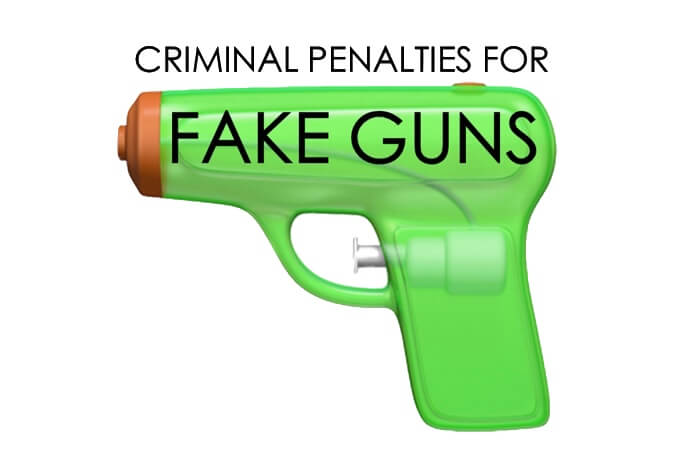
Apple Fake gun Toy Gun Emoji

Is It a Crime to Use a Fake Gun or Toy Gun in Texas?

By Luke A. Williams · Weapons Charges

How Do Toy Guns or Fake Guns Fit Into the Criminal Justice System?

Apple Fake gun Toy Gun EmojiIn the wake of the recent rise in gun violence, Apple made a big announcement last week that the pistol emoji is being replaced with a water gun emoji. It is no secret that 2016 has been a year filled with gun violence from the shootings in Orlando to the police shootings in Dallas. As a result, gun control has become a hot topic.  While Apple has declined to comment on the change, many believe this is a conscious step for gun control advocacy and others believe this change was fueled because of the individuals facing criminal charges for the use of the gun emoji on social media or in text messages. This change poses the questions of whether, in Texas, it is a crime to point a fake gun at someone and whether you can be charged for a deadly weapon offense when you only used a fake gun or toy gun.

Can You Be Charged With A Deadly Weapon Offense For Pointing a Fake Gun or Toy Gun at Someone in Texas?

If you were to point an Airsoft gun out a car window towards a person in another car, would Texas law find that you committed assault or an aggravated assault? It depends. If there is uncontroverted evidence shown at trial that the “gun” used was actually a fake gun or toy gun then you could only be convicted of assault. However, if all that is presented at trial is your testimony that it was an Airsoft gun and the victim’s testimony that he was in fear because he believed it was a real gun, the issue can get more complicated.

Does a Toy Gun Fit Into the Definition of Deadly Weapon?

Under the Texas Penal Code, a defendant may be found guilty of aggravated assault if he “uses or exhibits a deadly weapon” for the purposes of threatening another with imminent bodily injury. TPC §22.01(a)(2) and §22.02(a)(2). The Texas Penal Code’s definition of deadly weapons includes “anything that in the manner of its use or intended use is capable of causing death or serious bodily injury.” To determine whether a fake gun or toy gun could possibly be found as a deadly weapon courts look to the broad definition of a “gun” which may include non-lethal devices. Arthur v. State, 11 S.W.3d 386, 389 (Tex. App.—Houston [14th Dist.] 2000, pet. refused). Such non-lethal devices are BB guns, blow guns, Airsoft guns, and water guns, among others. Id. A lot of these toy guns appear realistic or are easily modified to appear realistic which leads to confusion in a criminal case. So much so that in attempt to be proactive, New York’s gun laws require toy guns to be of bright color in order to avoid such confusion.

"A toy gun is not manifestly designed to inflict death or serious bodily injury."

If uncontroverted evidence is presented that the “gun” used was simply a toy gun there cannot be a deadly weapon finding because “a toy gun is not manifestly designed to inflict death or serious bodily injury” no matter how realistic it appears to the victim and witnesses. Cortez v. State, 732 S.W.2d 713, 715 (Tex. App. 1987) . When it comes to BB guns and pellet guns it becomes more complicated. In Alonzo v. State, a trial for aggravated robbery, where a store manager was placed in fear when defendant brandished a BB gun, the Court found that there could be no deadly weapon finding because no evidence was produced to show that a BB fired from the gun was capable of causing death or serious bodily injury. Alonzo v. State, No. 07-12-00244-CR, 2014 Tex. App. LEXIS 3703, at *10 n.5 (App. Apr. 7, 2014). However, in Murray v. State, another trial for aggravated robbery, where an expert testified that the BB gun used by defendant was not a firearm but could potentially cause serious bodily injury, as warned in its manual, the court found that this evidence is sufficient to support an aggravated robbery conviction. Murray v. State, Nos. 05-13-00070-CR, 05-13-00084-CR, 05-13-00090-CR, 2014 Tex. App. LEXIS 6201, at *59 (App. June 9, 2014).

Ultimately, when it comes to carrying around toy guns, the best practice is to get one that looks as little like a real gun as possible to avoid any confusion. Because, as case law has shown us, if it looks like a deadly weapon, a court might find it to be a deadly weapon.

Read full article
2016 Scholarship Winners BHW

2016 Scholarship Winners | Veteran Law Student & Military Dependent

By Jason H. Howard · Scholarship

Barnett Howard & Williams PLLC Announces the Recipients of the 2016 Scholarship Awards

2016 Scholarship Winners BHW

This was the first year for our law firm to offer scholarships. In honor of the sacrifices of our military veterans, we decided to that the scholarships should be connected to military service. The first scholarship is a $500 award for a Military Veteran Law Student and the second scholarship is a $500 award for a Military Dependent undergraduate student. Throughout the year, we received several applications from very deserving students. We appreciate all of the students that took the time to apply for the scholarships and wish them all the best in their studies. For those students that were not selected, we invite you to apply again next year as we plan to continue the scholarship offers as an annual award.


2016 Winner - Military Veteran Law Student Scholarship

The winner of the 2016 Military Veteran Law Student Scholarship is:

JAMES CROWDER

James Crowder is a Marine Corps veteran that served in Operation Enduring Freedom. Mr. Crowder currently attends University of Houston Law Center. Congratulations James Crowder. Best wishes as you continue toward your law degree.


2016 Winner - Military Dependent Scholarship

The winner of the 2016 Military Dependent Undergraduate Scholarship is:

AMANDA OBLANDER

Amanda Oblander is a US Navy dependent whose husband is currently serving in Coronado, CA. Mrs. Oblander currently attends the University of Phoenix and is pursuing a degree in marketing. Congratulations Amanda Oblander. Best wishes as you continue in your studies.


More Information About Our Scholarship Opportunities:

For more information about how to apply for these scholarships in future years, please visit the scholarship pages:

Military Veteran Law Student Scholarship

Military Dependent Scholarship

Read full article
Deportation Crime Enhancement

Enhancement for Crimes Committed Deportation Illegal Reentry into the US

By Brandon Barnett · Sentencing

Deportation Crime EnhancementWhat happens when someone who illegally enters the country commits a crime? Further, does it matter is that person was previously deported from the United States? Does federal law provide for sentencing enhancements to extend the prison terms for wrongdoers in this position? The answer is yes—and no. Read on to see how the Fifth Circuit Court of Appeals analyzes federal statutes and sentencing guidelines that could support such an enhancement for the defendant, but decides against doing so.

US v. Rodriguez (5th Circuit, 2016)

A 2002 Theft and Deportation Set the Stage

In 2002, Benito Sanchez-Rodriguez, an "undocumented immigrant," was convicted in Florida for “Dealing in Stolen Property,” a violation of a state law. Pleading guilty at trial, Rodriguez was sentenced to three years’ imprisonment, which was suspended for three years’ probation. Six months later, he was deported to Mexico because he had no legal status to remain in the US. Over a decade later, in 2014, Rodriguez was arrested for DWI in Texas. While under arrest, the federal government charged him will illegal entry into the US. Ultimately, Rodriguez was indicted on one count of illegal reentry into the US, a violation of federal statute 8 U.S.C. § 1326(a) and (b)(1).

Rodriguez Faces Criminal Charges, Again

In August of 2015, Rodriguez plead guilty to the illegal entry indictment and the district court accepted his plea. Before the sentencing phase, a US Probation Officer prepared a “pre-sentence investigation report” (“PSR”), relying upon the United States Sentencing Guidelines (“USSG”). The PSR assigned Rodriguez base offense level of 8, which was raised by 8 additional levels because of the 2002 “Dealing in Stolen Property” conviction (an aggravated felony qualifier), for a total base offense level of 16. U.S.C. § 2LI.2(b)(1)(C). The PSR added that because Rodriguez took responsibility by entering a guilty plea, the total base offense level was reduced by 3, for a final total of 13. The PSR recommended that with a base offense level of 13, Rodriguez should face between 24 to 30 months in federal prison. Rodriguez objected both on the record and in writing, arguing that the 2002 conviction was not an aggravated felony qualifier, however, the district court adopted the PSR’s recommendations. Accordingly, he was sentenced to 27 months’ imprisonment.

Rodriguez Appeals to the Fifth Circuit, Argues Florida Statute Overbroad

Rodriguez now appeals to the Fifth Circuit for relief, arguing, that the 2002 conviction is not an aggravated felony qualifier for sentencing purposes because the Florida law “Dealing in Stolen Property” is overly broad. The Fifth Circuit must determine whether Rodriguez’s prior 2002 conviction qualifies as an “aggravating felony offense” under the USSG, because if so, he faces a longer prison term and could potentially set a precedent for the federal “aggravated felony qualifier” status of this Florida law.

Federal Law: Sentencing Enhancements

A defendant’s base offense level will be increased by 8 levels if the defendant previously was deported, or unlawfully remained in the US after conviction for an aggravated felony, without regard to the date of the conviction for the aggravated felony. U.S.S.G. § 2LI.2(b)(1)(C); U.S.S.G. § 2LI.2 cmt. N.3(A); United States v. McKinney, 520 F.3d 425, 429 (5th Cir. 2008). An aggravated felony is defined as a “theft offense, including receipt of stolen property, or burglary offense, for which the prison term is at least one year.” 8 U.S.C. § 1101(a)(43)(G).

Federal Cases: Determining Aggravated Felony Qualifiers

A “categorical approach” is used to determine whether a prior conviction is an offense under the USSG. Taylor v. United States, 495 U.S. 575, 602 (1990); United States v. Rodriguez-Negrete, 772 F.3d 221, 224-25 (5th Cir. 2014). Courts compare the elements of a statute forming the basis of the defendant’s conviction with the elements of the generic crime (the offense as it is commonly understood). United States v. Schofield, 802 F.3d 722, 727-28 (5th Cir. 2015). If the offense of conviction has the same elements as the generic crime, then the prior conviction may serve as the predicate, because anyone convicted under that law is guilty of all of the elements. Descamps v. United States, 133 S. Ct. 2276, 2281, 2283 (2013).

Similarly, a “modified categorical approach” is used by courts to analyze the elements of a divisible statute (a criminal statute that is comprised of several varied offenses). In a two-step “modified categorical approach,” the court first reviews indictments and jury instructions, among other documents, to determine which part of a statute formed the basis of a defendant’s prior conviction. Next, the court compares the elements of the crime of conviction with the element of the general crime.

The Fifth Circuit Weighs In

Here, the Fifth Circuit adopted the modified categorical approach to analyze the case. Here, the “generic crime” is a theft offense—the “Dealing in Stolen Property” conviction from 2002. Because the provision does not clearly define “theft offense,” the Fifth Circuit applied the generic definition of theft, “a taking of property or an exercise of control over property without consent with the criminal intent to deprive the owner of rights and benefits of ownership.” United States v. Medina-Torres, 703 F.3d 770, 774 (5th Cir. 2012)(per curiam). Burke v. MuKasey, 509 F.3d 695, 697 (5th Cir. 2007).

The court examined the Florida statute reads, “Traffic means to (a) sell, transfer, distribute, dispense or otherwise dispose of property; (b) to buy, receive, possess, obtain control of, or use property with the intent to sell, transfer, distribute, dispense, or otherwise dispose of property.” Fla. Stat. § 812.012(8). Next, the Court reviewed Rodriguez’s charging document, which read, “Rodriguez knew or should have known that the property was stolen.” The Court examined Florida case law that showed that Florida applies the statute to conduct outside of the generic definition of theft—which created a problem when applying this conviction to the sentencing enhancement provision as outlined in the PSR. Without the enhancement provision, Rodriguez’s sentence would likely not have been as long with a lower base offense level. Accordingly the Fifth Circuit vacates the 27-month prison term and remands the case for resentencing only.

Read full article

Speak with a Fort Worth attorney

Call (817) 993-9249 or send us a message to discuss your case.