Skip to content

News and Insights

Page 19 of 102 · 510 articles

stealing presents Christmas theft package

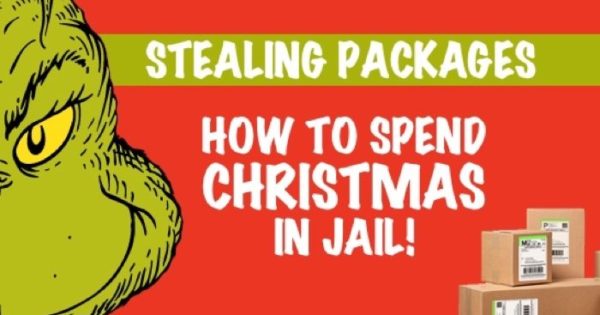
Don't Be a Grinch: Punishments for Christmas Package Theft in Texas

By Luke A. Williams · Theft
stealing presents Christmas theft packageThroughout the year, package thefts occur on a fairly regular basis. But, as Christmas draws near and package delivery increases, so too do the thefts. While packages left on doorsteps and out in the open may seem to be easy targets for thieves, the consequences of getting caught are rarely considered. Would-be porch pirates should certainly think through their intended capers as many houses are equipped with doorbell cameras these days that capture clear video of any movement at or near the doorway.

What Can Happen to Individuals Who Steal Packages?

Grinchy thieves can face stiff penalties for stealing packages. In Texas, theft is classified by the amount of property that is stolen. Depending on the amount of the items stolen, a person caught stealing packages can face anywhere from a Class C misdemeanor punishable by a fine of up to $500 up to a First Degree Felony facing 99 years or life in the penitentiary. The latter would require someone stealing an item worth more than $300,000. While this may be unlikely, a thief wouldn’t know what he or she is stealing until he opens up that box. In addition, if committed within the same criminal episode, the aggregate amount of the items stolen could increase the punishment ranges for the offense as well.

Theft Of Mail In Texas

In 2019, the Texas legislature passed another law aimed at package theft. HB 37 makes it a crime to steal mail (including packages) from mailboxes or homes. The punishment range of this new law is linked to the amount of homes from which mail is taken. If a person takes packages from fewer than 10 homes, the crime is a Class A misdemeanor; 11-30 homes is a State Jail Felony; and 31+ homes is a 3rd Degree Felony. Of course, if the value of the package would make the offense a higher felony, then the state could also choose to file a case for the greater offense.

What Happens When Multiple Individuals Act as a Team to Steal Packages?

The consequences of people acting in a team to steal packages can increase the acts to the offense of Engaging in Organized Criminal Activity. In Texas, a person commits the offense of Engaging in Organized Criminal Activity if with the intent to establish, maintain, or participate in a combination or in the profits of a combination or as a member of a criminal street gang, the person commits or conspires to commit theft. Tex. Penal Code 71.02. This increases the punishment one category higher than the offense originally committed. Most often, these types of cases are filed as 3rd degree felonies which carry a range of punishment of between 2-10 years in prison and up to a $10,000 fine.

Punishments for package theft can be harsh. While a person may be stealing property worth only a few dollars, they may also be stealing property worth thousands. The potential punishment a person faces for package theft may not deter thieves but there are certain other things that citizens can do to prevent these acts from occurring.

How to Prevent Package Thefts

The primary means by which package thefts are being prevented are with the increasing use of video surveillance. Individuals looking to steal packages off of front porches are becoming more and more aware of doorbell cameras and other small home surveillance cameras. The increased media coverage of these incidents and the increased capture of thieves by way of theses surveillance methods is enhancing deterrent efforts. YouTuber Mark Rober also continues to perfect his package theft glitter bomb, which could aid in the deterrence effort.

[embed]https://www.youtube.com/watch?v=3c584TGG7jQ[/embed]


Despite the fact that security cameras are gaining in popularity (and the media reports on a regular basis of people being caught because of them), package thefts in Texas have not been eliminated. There are still those individuals that choose to ignore the possibility of getting caught and the potential consequences. And, for those folks, maybe it would help to reflect on the words of The Grinch, “Maybe Christmas doesn’t come from a store. Maybe Christmas…perhaps…means a little bit more!”

But for those individuals who persist and ignore the warnings and advice – and reflections from the Grinch – the BHW phone line is always open – just don’t say we never told you so!
Read full article
Assault as Lesser Included

Assault By Contact NOT an LIO of Assault Bodily Injury

By Brandon Barnett · Assault

Is the Class C charge of Assault (Offensive Contact) a lesser-included offense of the Class A charge of Assault (Bodily Injury)?

In short, the answer is most likely No.

Assault as Lesser IncludedAn offensive-contact assault not a lesser-included offense of a bodily-injury assault because the offenses have different elements.


The Court of Criminal Appeals, whose opinions are controlling in Texas, held that an offensive-contact assault is not a lesser-included offense (“LIO”) of a bodily-injury assault because what the state was required to prove for one offense differed from what the state had to prove for the other (McKithan v. State, 324 S.W.3d 582, 583, 591 (Tex. Crim. App. 2010)). For a Class A misdemeanor bodily-injury assault, the state must prove that bodily injury (or pain) occurred; the statute does not require the state to prove that the contact was offensive or provocative (Tex. Penal Code § 22.01(a)(1), (a)(3)). An offense is not an LIO if the state must prove different elements for each offense (McKithan, 324 S.W.3d at 583, 591). It is not enough that “proof of the charged [] offense may also” show the other offense; the State must be “required to prove these offenses in establishing the charged offenses” (Id. at 593).

Granted, seven years before McKithan, the Court of Criminal Appeals stated that an offensive-contact assault is an LIO “of (a)(1), because [it is] proved by less than all the facts required to prove (a)(1), specifically, physical injury” (Reed v. State, 117 S.W.3d 260, 267 (Tex. Crim. App. 2003)). However, the Court of Criminal Appeals seemed to move away from this categorical view in McKithan.

Additionally, the appeals court presiding over cases in Tarrant County, the Second Court of Appeals, held that an offensive-contact assault “is not, under the circumstances of this case, a lesser-included offense of assault causing bodily injury” (Welsh v. State, 2009 Tex. App. LEXIS 3592, *4-5 (Tex. App—Fort Worth May 21, 2009)). Other courts echo this sentiment. For example, in Norman v. State, the appeals court held that the trial court did not make a mistake when it refused to instruct the jury on offensive-contact assaults as a LIO of bodily-injury assaults because offensive-contact assaults have a unique element (2019 Tex. App. LEXIS 6690, *16-17 (Tex. App—Amarillo August 1, 2019). And one Houston court stated that “[b]ecause offensive-contact assault is not within the proof necessary to establish bodily-injury assault, it is not a lesser-included offense” (Washington v. State, 2019 Tex. App. LEXIS 5409, *12 (Tex. App—Houston June 27, 2019)).

Thus, offensive-contact assaults are not considered LIOs of assaults causing bodily. An assault under § 22.01(a)(3) has elements unique to it, so one cannot prove an assault under § 22.01(a)(1) by establishing the elements of assault under § 22.01(a)(3).

Read full article
2023 Scholarship Winners BHW

2023 Scholarship Winners

By Brandon Barnett · Scholarship

Barnett Howard & Williams PLLC Announces the Recipients of the 2023 Scholarship Awards

2023 Scholarship Winners BHWBHW is thrilled to continue our two scholarships for 2023. In honor of the sacrifices of our military veterans, our scholarships are connected to military service. The first scholarship is a $500 award for a Military Veteran Law Student and the second scholarship is a $500 award for a Military Dependent undergraduate student. Throughout the year, we received several applications from very deserving students. We appreciate all of the students that took the time to apply for the scholarships and wish them all the best in their studies. For those students that were not selected, we invite you to apply again next year as we plan to continue the scholarship offers as an annual award.


2023 Winner - Military Veteran Law Student Scholarship

The winner of the 2023 Military Veteran Law Student Scholarship is:

ANDREW BACON

Andrew Bacon is a Marine Corps veteran who currently attends the University of Denver Sturm College of Law. Congratulations Andrew Bacon. Best wishes as you continue toward your law degree.


2023 Winner - Military Dependent Scholarship

The winner of the 2023 Military Dependent Undergraduate Scholarship is:

FRANCESCA QUINATA

Francesca Quinata is a US Army dependent whose father enlisted from Guam and served for over 20 years. Francesca currently attends the University of Texas and will be the first member of her family to attend college. Congratulations Francesca! Best wishes as you continue in your studies.


More Information About Our Scholarship Opportunities:

For more information about how to apply for these scholarships in future years, please visit the scholarship pages:

Military Veteran Law Student Scholarship

Military Dependent Scholarship

Read full article
Fireworks Laws in Texas2

Fireworks Laws in Texas | Could a Sparkler Really Cost You $2,000?

By Luke A. Williams · Criminal Defense

Do Not Lose Your Liberty on Independence Day

Fireworks Laws in TexasIndependence Day is right around the corner. You will probably start seeing the notices spread across social media from local police departments, warning that setting off fireworks (including sparklers) is illegal inside of city limits. We know that you're probably going to do it anyway (so are we), but we wanted to let you know what Texas law provides regarding fireworks on the 4th of July.


Texas Fireworks Law | Are Sparklers Illegal Inside of City Limits?

While state law in Texas permits possessing and using fireworks, it’s important to note that where and when a person can possess them is still highly regulated. There are State laws that limit the use and display of fireworks but use is predominantly regulated by way of city ordinances.

Specifically, under state law, a person may not:

  1. Explode or ignite fireworks within 600 feet of any church, a hospital other than a veterinary hospital, an asylum, a licensed child care center, or a public or private primary or secondary school or institution of higher education unless the person receives authorization in writing from that organization;
  2. Sell at retail, explode, or ignite fireworks within 100 feet of a place where flammable liquids or flammable compressed gasses are stored and dispensed;
  3. Explode or ignite fireworks within 100 feet of a place where fireworks are stored or sold;
  4. Ignite or discharge fireworks in or from a motor vehicle;
  5. Place ignited fireworks in, or throw ignited fireworks at, a motor vehicle;
  6. Conduct a public fireworks display that includes Fireworks 1.3G unless the person is a licensed pyrotechnic operator;
  7. Conduct a proximate display of fireworks that includes Fireworks 1.3G or Fireworks 1.4G as defined in NFPA 1126 Standards for the Use of Pyrotechnics Before a Proximate Audience unless the person is a licensed pyrotechnic special effects operator and has the approval of the local fire prevention officer; or
  8. Sell, store, manufacture, distribute, or display fireworks except as provided by this chapter or rules adopted by the commissioner under this chapter.

Texas Occupations Code, Subchapter F, Sec. 2154.251

These violations are Class C Misdemeanors, which can be punishable by a fine up to $500.

Fireworks licensing violations are Class B Misdemeanors which can result in a jail term up to 180 days and a fine not to exceed $2,000.

Fireworks City Ordinances | Local Fireworks Rules in Fort Worth, Keller, and Southlake

In addition to State law, most cities in Texas regulate the use and display of fireworks by way of specific city ordinances. For example, Fort Worth, Texas has enacted an ordinance making the sale, discharge or possession of fireworks within the incorporated city limits a Class C misdemeanor punishable by up to a $2,000.00 fine. Similar ordinances exist in Keller and Southlake, and most other Texas cities.

Before your celebrations, it’s always best to review the above regulations under the Texas Occupations Code and check your local city ordinances online to ensure that you're legally possessing, using and displaying fireworks.

Read full article
UM UIM PIP Insurance Texas

What You Need to Know When Buying or Renewing Your Car Insurance

By Jason H. Howard · Car Wreck

Protect Your Family By Knowing These 3 Car Insurance Acronyms

UM UIM PIP Insurance Texas
Car insurance premiums, like everything else these days, have reached historic highs. You get your renewal notice in the mail and gasp at the increase. So, you make the call to your insurance agent to see what can be done to save you money.

We’ve all seen the commercials – switch to us, bundle this with that, install this in your car, etc. and promises are made to save you money! A lot of times you will receive discounts by doing these things, BUT one of the main ways that insurance companies try to “save you money” is by asking you to reject KEY options in your policy that you’re unfamiliar with.

Here are the acronyms we want to educate you about:

UM – Uninsured Motorist Policy UIM – Underinsured Motorist Policy PIP – Personal Injury Protection

Under Texas law, these three options are required to be offered to you by your insurance company. However, you can choose to reject them as part of your car insurance policy if you so choose (Texas Insurance Code Art. 5.06(1) & Sec. 1952.152(b).)

It’s important to note these insurance options are part of YOUR insurance policy that add extra layers of coverage if you or your family are involved in a car wreck. Let’s talk about what these options are and why they are crucial to providing the adequate protection you need.

What is Uninsured Motorist Insurance (UM)?

This one’s pretty straightforward. This Uninsured Motorist insurance provides coverage if you are involved in an accident with another at-fault driver who does NOT have car insurance. Research estimates that around 1,500,000 drivers in Texas are not insured. That’s a lot of folks and the importance of having this insurance cannot be overstated!

What is Underinsured Motorist Insurance (UIM)?

This insurance provides coverage when you are involved in an accident and the at-fault party’s insurance limits aren’t enough to pay for your or your family’s medical bills, lost wages, loss of earning capacity, pain and suffering, etc. Believe it or not Texas’ minimum policy limits for auto insurance is STILL $30,000 per person/$60,000 per accident (Texas Transportation Code 601.072.) Those are the same minimum coverage amounts that existed in 2011! We could go into further discussion regarding why those amounts haven’t increased in 12 years, but we think it’s pretty obvious that the insurance companies have done a good job of making sure our state legislature doesn’t address this issue. When you consider how expensive medical bills have become and how much inflation has occurred over the last 12 years, it becomes apparent that this insurance is extremely necessary, too.

What is Personal Injury Protection (PIP)?

If you are involved in a car wreck, regardless of who is at fault, Personal Injury Protection insurance provides coverage to a certain limit for necessary expenses for:

1) Necessary medical, surgical, x-ray, or dental services, including prosthetic devices, and necessary ambulance, hospital, professional nursing or funeral services
2) Replacement of income lost as the result of the accident (lost wages) and,
3) if not an income or wage producer, reimbursement of necessary and reasonable expenses for essential services ordinarily provided by that person for care and maintenance of the family or household (Texas Insurance Code 1952.151.)

This coverage extends not only to the driver, but also to all occupants in the vehicle driven by you or your family member. It also provides coverage to you or your family member if you or they are a passenger in another vehicle driven by another person with their own insurance.

These three options were created by law to provide solid insurance coverage to protect Texas citizens and their families. For insurance companies, however, it’s not good for their bottom line and profits.

And, unfortunately, Texas law allows a way for insurance companies to avoid offering these options as part of your insurance policy. How do they do it? By getting YOU to agree to reject these options at the time you purchase your car insurance.

Now that you’ve read this and know what these insurance options provide, you would never agree to reject them, right? The reality, however, is that when you’re going through the insurance shopping experience (especially nowadays with current inflation rates) your focus becomes:

“HOW MUCH IS THIS GOING TO COST ME AND ARE THERE WAYS TO SAVE ME MONEY?”

Therein lies the vulnerability that insurance companies love to pounce on.

Your insurance agent or company will offer to save you a nominal amount of money if you agree to reject these options. We use the word nominal because the savings you might see are significantly outweighed by the out-of-pocket costs you will experience if involved in a car wreck and don’t have these coverages.

It’s worth noting that some insurance companies operate in such a way that they’d prefer to not even discuss UM/UIM/PIP and will instead deceptively present rejecting them as an easy option to save money without informing you fully about the consequences of doing so. That is exactly why we are providing you with the information in this article. Most shoppers are savvy these days and want to be informed about their purchases. We hope this article helps educate you about why these insurance options matter and how rejecting them ultimately offers you no real benefit. Don’t let the small amount of increase in your total policy premium deter you from REFUSING to reject UM/UIM/PIP coverage. Simply put – the additional amount you will pay IS WORTH IT.

Things we recommend when shopping for your insurance or when renewing it:

1) CONFIRM with your insurance agent or company that you are NOT rejecting UM/UIM/PIP,
2) READ WHAT YOU SIGN - we know this can be overwhelming and the insurance companies prefer it that way but do your best,
3) LOOK SPECIFICALLY for documentation that indicates you are rejecting UM/UIM/PIP,
4) LOOK SPECIFICALLY at your declarations page and look to see where UM/UIM/PIP coverages are included,
5) PAY ATTENTION to the minimum amounts for each so you know what you’re getting, and
6) IF YOU WANT MORE THAN THE MINIMUM COVERAGE, ask your insurance agent what higher limits they offer.

One more thing to note – if, after reading this article, you look at your policy and discover that you have rejected UM/UIM/PIP as part of your insurance coverage, call your insurance agent or company and inform them you want it added as soon as possible. We often handle cases where the client has rejected UM/UIM/PIP and unfortunately discover the “full coverage” they thought they had is far from it.

We’ll conclude with this – our hope is you have solid insurance coverage and NEVER need to use it. That really is the best case. If, however, you or your family are involved in a car accident, we highly recommend you consult with an attorney. Barnett, Howard & Williams, PLLC offers a free consultation and are here if you need us.

Read full article

Speak with a Fort Worth attorney

Call (817) 993-9249 or send us a message to discuss your case.