Skip to content
Tag

Traffic Offenses

Page 3 of 4 · 20 articles

Texas front license plate law

License Plate Law in Texas | Front License Plate | Two Plate Rule

By Brandon Barnett · Traffic Offenses

One License Plate or Two: Does Your Car Need a Front License Plate In Texas?
Texas front license plate lawHow many license plates does your vehicle need in order to comply with Texas law? Do you need one or is there a two plate rule? Should you drill holes into the front bumper of your car to install a front license plate, or will you be alright with a rear plate only? If you are reading this article, perhaps you have exhaustively Google-searched license plate laws out of frustration. Find out what the Texas Transportation code says about license plates and what the implications are for you, the Texas motorist.

Do I need a Front License Plate in Texas? Yes. Texas law requires that every vehicle maintain a license plate in the front and rear of the vehicle.  The current fine for failing to display a front license plate in Texas is $200.00.

Do I need a Front License Plate in Texas? | An Error In the Texas Transportation Code Created a License Plate Loophole

Since 1934, Texas law has required that Texas motorists display a front and a rear license plate. In 2011, House Bill 2357 modified the statutory language making driving a vehicle without displaying a front and a rear license place both illegal and punishable by a fine. In January of 2012, Texas lawmakers revised the transportation code, once again, to include several new provisions. However, in the process of making revisions, the provision mandating a penalty for vehicles not in compliance with the “two plate rule” was accidentally stricken from the Texas Transportation Code. From January 2012 to September of 2013, law enforcement could not lawfully issue citations for failure to display a front license plate. Unfortunately, this brief period of time also created a lot of confusion around the “two plate rule” that reverberates to the present day.

Texas Lawmakers Amend the Code to Close the Loophole | Front License Plate Now Required in Texas

The two plate rule was originally created for the purpose of making identification of vehicles and their owners more efficient for automatic plate readers and law enforcement agencies. In 2012, the Texas A&M Transportation Institute (“TTI”) issued a report, citing overall effectiveness of the two plate rule, unlike states that only required one rear license plate on a vehicle. TTI found that front license plates were (1) easier to read in the daylight; (2) helpful in toll billing; (3) aided law enforcement in tracking down violators of the transportation code by way of automatic plate readers; and (4) allowed Homeland Security and U.S. Customs and Border Protection to process and screen vehicles more effectively and quickly. Thus, the front license plate requirement in Texas.

Aware of the inadvertent loophole created by omission of the penalty provision, lawmakers amended the transportation code in September of 2013 to mandate punishment for Texas motorists who do not display both the front and the rear license plates. Motorists who do not have a front license plate risk incurring a Class C misdemeanor charge, punishable by fine not to exceed $500.

Implications For the Texas Motorist | Texas Front License Plate Law | Penalty for Front License Plate Violation

Currently, the penalty for operating a vehicle without a front license plate is $200.00 - subject to change with subsequent legislation. However, there may be more to this than meets the eye. Generally speaking, when a vehicle is out of compliance with mandatory safety and administrative regulations (such as only having a rear license plate), by statute, Texas law enforcement has “probable cause” to conduct a traffic stop. At minimum, such a traffic stop could include pulling the vehicle over, running a check of the license plate, researching the driver’s license and registration of the motorist, and issuing a citation for violating the two plate rule.

In sum, a Texas motorist who drives without both plates risks being pulled over for a lawful traffic stop and fined at least $200.00 for a misdemeanor traffic offense.

References:
Read full article
Passing in Left Lane in Texas

Warrantless Traffic Stop Upheld for Driving in "Passing Only" Lane

By Brandon Barnett · Drug Crimes, Reasonable Suspicion

Driving in the “Passing Only” Left Lane for Forty-Five Seconds Creates Reasonable Suspicion for Warrantless Traffic Stop in Texas

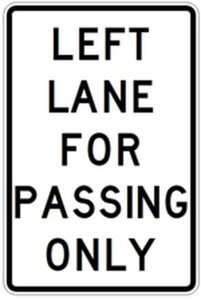
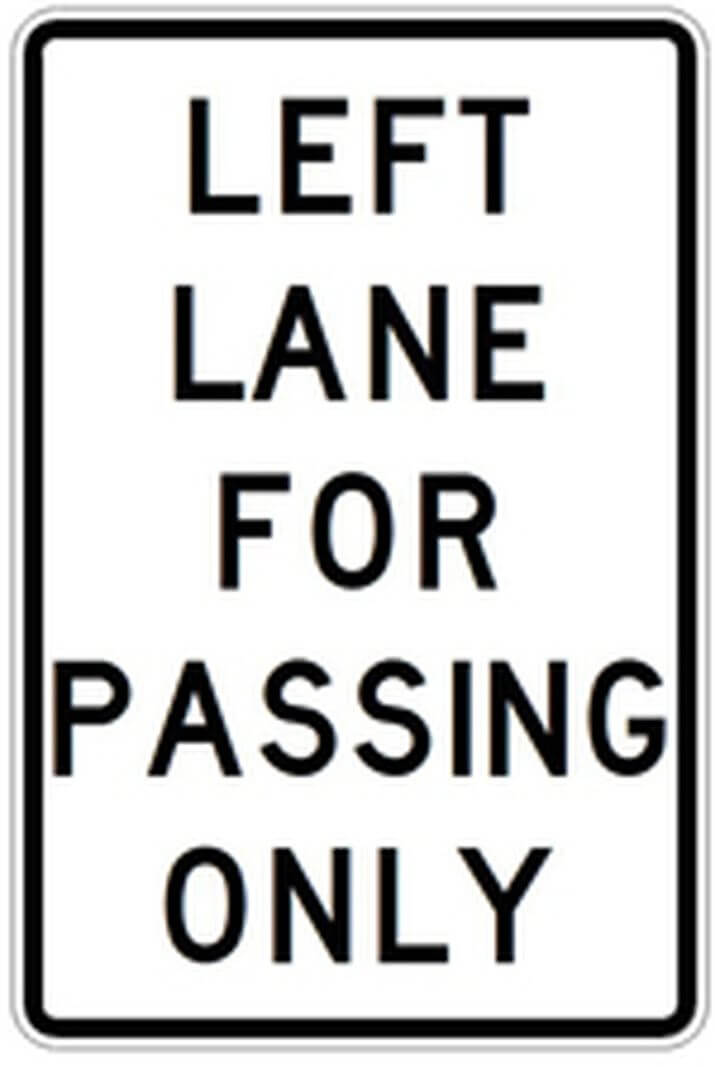
Passing in Left Lane in TexasJaganathan v. State: Francheska Jaganathan was driving in the left lane of a three-lane Texas highway, just ahead of a police cruiser. Mounted with a dashboard camera, the cruiser accelerated and changed lanes, but stayed behind Jaganathan’s car. A few seconds later, Jaganathan’s car passed a “Left Lane for Passing Only Sign,” yet her vehicle continued in the left lane despite the middle lane being clear of traffic. About forty-five seconds later, the trooper turned on his overhead lights, and conducted a traffic stop of Jaganathan’s car. During the traffic stop, the trooper smelled marijuana, prompting a search of the vehicle. The trooper found marijuana in the trunk, and as a result, Jaganathan was charged with possession of marijuana.

At trial, Jaganathan filed a motion to suppress the evidence, but the court denied the motion. Jaganathan chose a plea agreement where she pled guilty and was placed on deferred adjudication. On appeal, Jaganathan argued that the trooper lacked reasonable suspicion to conduct the traffic stop in the first place. The court of appeals agreed with her, stating that Jaganathan likely stayed in the left lane for safety reasons, that seeing the cruiser may have influenced her decision to stay out of the trooper’s way, and that a few seconds were an insufficient amount of time “to conclude that [Jaganathan] committed a [traffic] violation.”

The Court of Criminal Appeals of Texas disagrees with the court of appeals, citing the reasonable suspicion standard in Texas, and the Texas Transportation Code. The Court of Criminal Appeals also clarifies the issue at hand.

The issue is not whether Jaganathan committed a traffic offense, but whether the trooper had reasonable suspicion to stop the vehicle.

First, “A trooper may make a warrantless traffic stop if the reasonable suspicion standard is satisfied.” Guerra v. State, 432 S.W.3d 905, 911 (Tex. Crim. App. 2014). “Reasonable suspicion exists if the trooper has specific and articulable facts that, when combined with rational inferences from those facts, would lead him to reasonably suspect that a particular person has engaged …in criminal activity.” Abney v. State, 394 S.W.3d 542, 548 (Tex. Crim. App. 2013).

Second, “an operator of a motor vehicle [must] comply with an applicable official traffic-control device, including a sign.” TEX. TRANSP. CODE § 544.004(a); § 541.304(1). “Before a trooper can have reasonable suspicion to believe that a defendant committed the traffic offense of failing to obey a “Left Lane for Passing Only” sign, the trooper must be aware of facts that support a reasonable inference that the defendant drove past the sign before being pulled over.” Abney, 394 S.W.3d at 549.

Here, Jaganathan was driving in the left lane without passing other cars, after driving past a sign that prohibited that conduct. The dashboard camera captured the sign and all of the movements of the car. According to the Court of Criminal Appeals, even if Jaganathan had a defense of necessity—she HAD to be in the left lane for a medical or traffic emergency—the trooper still had reasonable suspicion to conduct a traffic stop. The Court of Criminal Appeals states, “these were only possibilities, and so it was reasonable for [the trooper] to suspect the appellant had violated the law.” Further, the reasonable suspicion standard “accepts the risk that officers may stop innocent people.” Illinois v. Wardlow, 528 U.S. 119, 125 (2000). As a result of the forty-five second traffic violation, the trooper had reasonable suspicion to pull Jaganathan’s car over; and, as a result of smelling marijuana, the trooper was able to search the car without a warrant, resulting in charges against Jaganathan. The Court of Criminal Appeals reversed the judgment of the court of appeals and affirmed the judgment of the trial court.

It is important to note, however, that the ruling has a dissenting opinion. Justice Meyers is adamant that the sign and the Transportation Code supporting it are problematic for the following reasons:

• The Code is unclear on how to comply or not comply with the sign.
• The Code does not state a specific amount of time a driver has to pass and merge back into the non-passing lane.
• The Code does not address passing a string of cars, in the middle lane.
• The Code does not address the need to accelerate to be able to pass, whether intended or unintended (for example if the car being passed speeds up, making passing difficult).
• Proving a driver’s intent to pass another car is difficult.

If you or a loved one are facing traffic violations or drug charges, please contact our office for a free consultation at (817) 993-9249.

Read full article

Who Has The Burden of Proof?

By Brandon Barnett · Traffic Offenses

Does the State or the Defense have the Burden of Proof?

 - 14th Court of Appeals (Houston) 2011

Carlos Arias was observed speeding by a police officer and pulled over. Arias was unable to provide proof of financial responsibility (proof of insurance), when asked by the police officer. Arias went to trial in the municipal court of record and after the close of State’s case-in-chief, Arias claimed that there were statutory exceptions to the requirement to establish financial responsibility and that the State had not negated them.  He appealed his conviction to the County Criminal Court at Law.

Generally, when a penal statute includes an exception as part of the statute itself, the State must negate the existence of the exception in the indictment of the offense and prove beyond a reasonable doubt that the defendant or defendant’s conduct does not fall within the exception. Failing to negate an exception is the same as failing to allege an essential element of the offense and renders the indictment void. However, when an exception is in a separate section from the provision that states the offense, it is not essential for the State to negate the exception. This is different from an exception and called a defense, which must be raised by the defendant.

An "Exception" or a "Defense"

The key distinction is who has the burden of proof—an exception means the prosecution must prove beyond a reasonable doubt or the defendant should be acquitted; a defense means a defendant bears the initial burden to produce some evidence that supports the defensive theory. Once the defendant produces such evidence, the State then bears the ultimate burden of persuasion to disprove the defense beyond a reasonable doubt.  So, to be clear, the defense does not bear the "burden of proof," but only a burden to produce some evidence of the defensive theory.  The burden then shifts to the state to disprove the defense.

The Court of Appeals found that no Texas court has determined whether the State must negate the exceptions to the financial responsibility requirement as an element of the offense or whether the exceptions are defenses that must be raised by the defendant. The Court of Appeals looked to the statute in the Transportation Code and decided if exceptions or defenses are listed. To do this they decided whether they are a necessary part of the definition or a description of the offense.

The Court first looks to the main code of “Requirement of Financial Responsibility.” They then found in a separate subsection, “Exceptions to Financial Responsibility,” which Arias relies on. The code only states that a person commits an offense if the person operates a motor vehicle in violation of the “Requirement of Financial Responsibility” section, but the exceptions are not mentioned.

The court finds that because they are not mentioned in the offense, the exceptions are therefore not a necessary part of the definition or description of the offense. This means that these are not exceptions that the State must negate, but merely defenses that the defendant has the option to bring evidence in to prove. Additionally, the State is not generally required to negate as an element of the offense matters “peculiarly within the knowledge of the defendant.” Here, these exceptions are things such as the character of the car, such as older than 25 years old. The court holds that under most circumstances, the defendant would be more likely than the State to know whether one of the exceptions applies.

This can be absolutely crucial for building your defense. An exception can get you acquitted if the State doesn’t prove beyond a reasonable doubt, whereas a defense is merely a chance to persuade the judge or jury. It appears that the key deciding factor is whether the “exceptions” are listed with the main code or are in a separate subsection.

Read full article

When Should You Fight Traffic Offenses

By Brandon Barnett · Traffic Offenses

If you're reading this, odds are that you've been ticketed for one or more traffic offenses at some point in your life.  Among the ticket-receiving public, misconceptions and misunderstandings abound regarding whether you should "fight" a ticket. Below is some advice from a former municipal prosecutor in the Dallas Fort Worth metroplex...

1) It is unlikely that you can just "talk to a prosecutor" and get your ticket dismissed.
Two to three times a week, most courts hold conferences between the prosecutor and citizens who have violated traffic offenses. During these conferences, most people go to the prosecutor immediately to ask for a dismissal on their citation. I would venture to say that in a metropolitan area, a municipal prosecutor gets asked for a dismissal between 25-50 times per week. Starting your conversation off with a prosecutor by asking for a dismissal is the least effective approach for negotiating a favorable result. The concept of a dismissal is WIDELY misunderstood and the bottom line is that dismissals are rare.

2) Instead of demanding your dismissal, start by pointing out legitimate issues with your ticket.
There are legitimate issues with citations. Those issues can result in dismissals. But for every one legitimate issue, there are one-hundred ridiculous excuses. A municipal prosecutor has heard them all and there is a really good chance that the prosecutor has heard your specific excuse many, many times. Most of the time, people come go to court with an assumption about the law and they hang on to it with everything they are worth. Do some research before coming to court to determine whether you have a "legitimate issue" or just "another excuse". Whether that means consulting with an attorney or jumping onto Google, come to court with a little research and you may actually put the prosecutor in a better mood.

3) Document your defense.
If you have documentation (especially on vehicle equipment issues, inspections, registrations, licenses, and insurance), bring it to court and have it ORGANIZED and ready for the prosecutor to look at. If there is some legitimate discrepancy between the status of your vehicle or license (on the date of the citation) and the citation you received you might actually get that all-elusive dismissal, but you had better have documentation to support your defense.

4) "Fine, I'll take it to trial."
It's got a nice ring to it, but the reality of a trial is that most cases will come down to the officer's testimony versus the defendant's testimony. More than likely, the officer will testify that he's been an officer for multiple years, been through training and education specifically for observing and enforcing traffic violations. He'll also testify that he spends 90% of his 8-10 hour shift in and amongst traffic observing traffic and that he was focused solely on looking for your vehicle violating a traffic law. Meanwhile, you'll testify (if you choose to testify) that you're number one priority was not following the traffic laws (I dare you to say that it was), but that you were on the way to work, dropping kids off at school, going to the grocery store or had some other objective in mind. The bottom line with trial: The officer will testify that he observed you commit a traffic violation and you'll testify you didn't and the judge or jury will decide who they believe.

5) If you really want a chance...
..hire an attorney. He or she will analyze your citation based on current law and the rules of evidence and procedure and not just based on what you heard from your neighbor's friend's ex boyfriend. Ultimately, you may decide that hiring an attorney would cost more than it is worth, but it you really want a fighting chance, you should hire an attorney.

Read full article

DWI: Is Passing on the Shoulder Evidence of a Traffic Offense?

By Brandon Barnett · DWI

DWI Conviction Overturned | Passing on the Shoulder Permitted in Certain Circumstances

In many ways, Texas Court of Criminal Appeals also acts the State's highest traffic court. What follows is a synopsis of Lothrop v. State, wherein the CCA opines on the legality of using the right shoulder of a road to pass a slower vehicle.

In Lothrop, the police stopped Appellant after observing him use the right shoulder of the road to pass a vehicle that was slowing down.  Appellant was later arrested for Driving While Intoxicated (DWI). At trial, he filed a motion to suppress the evidence gained from the stop, arguing that the police officer did not have reasonable suspicion to make the stop. Appellant pointed to Section 545.058(a) of the Texas Transportation Code, which provides:

(a) An operator may drive on an improved shoulder to the right of the main traveled portion of a roadway of that operation is necessary and may be done safely, but only:

(1) to stop, stand, or park;

(2) to accelerate before entering the main traveled lane of traffic;

(3) to decelerate before making a right turn;

(4) to pass another vehicle that is slowing or stopped on the main traveled portion of the highway, disabled, or preparing to make a left turn;

(5) to allow another vehicle traveling faster to pass;

(6) as permitted or required by an official traffic-control device; or

(7) to avoid a collision.

The trial court denied the motion and Appellant pled guilty to DWI. The 2nd Court of Appeals (Fort Worth) affirmed the conviction, holding that "driving on an improved shoulder, regardless of circumstance, is prima facie evidence of an offense, and that Section 545.058(a) merely establishes defenses that a defendant may raise at trial."

Think again, said the Traffic Court (a.k.a. CCA):

[T]he offense of illegally driving on an improved shoulder can be proved in one of two ways: either driving on the improved shoulder was not a necessary part of achieving one of the seven approved purposes, or driving on an improved shoulder could not have been done safely. Merely driving on an improved shoulder is not prima facie evidence of an offense. Thus if an officer sees a driver driving on an improved shoulder, and it appears that driving on the improved shoulder was necessary to achieving one of the seven approved purposes, and it is done safely, that officer does not have reasonable suspicion that an offense occurred.

With that, the CCA reversed the Court of Appeals and remanded the case back to the trial court.   So there you have it - your traffic lesson for today from the CCA. You are free to drive on the improved shoulder of the road (without worrying that you will be pulled over) IF you are doing it safely and for one of the seven listed purposes.

Read full article

Speak with a Fort Worth attorney

Call (817) 993-9249 or send us a message to discuss your case.