Skip to content
Category

Criminal Defense

Page 5 of 10 · 49 articles

Disaster Declaration Texas Criminal Law

Criminal Law Enhancements During a State of Disaster

By Luke A. Williams · Criminal Defense

Disaster Declaration Texas Criminal Law
On March 13, 2020, Governor Greg Abbott declared a state of disaster in Texas in response to the COVID-19 pandemic. For the purposes of criminal law in Texas, that disaster declaration triggered the provisions of Texas Penal Code (TPC) 12.50.

What are the Criminal Law Implications During a State of Disaster?

In general, TPC 12.50 states that for the offenses listed below, if committed during the declaration of a state of disaster, the punishment level for these offenses is increased to the next higher category for that offense. For example, if a Theft charge would normally be punished as a Class B misdemeanor (0 - 180 days in jail and up to $2,000 fine) then it would be increased to a Class A misdemeanor (0 - 365 days in jail and up to $4,000 fine) if it is committed during the time of the declared disaster.

Specifically, 12.50 applies to the following offenses:

  • Assault and Domestic Violence (TPC 22.01);
  • Arson (TPC 28.02);
  • Robbery (TPC 29.02);
  • Burglary (TPC 30.02);
  • Burglary of Coin-operated or Coin Collection Machines (TPC 30.03)
  • Burglary of Vehicles (TPC 30.04);
  • Criminal Trespass (TPC 30.05); and
  • Theft (TPC 31.03)

TPC 12.50 is limited by the following provisions:

For the offenses of Assault, Burglary of Coin-operated/Coin Collection Machines, Burglary of Vehicles, Criminal Trespass or Theft, if the offense committed would normally punished as a Class A misdemeanor, then during the emergency declaration the minimum term of confinement is increased from 0 to 180 days in a county jail.

For the offenses of Arson, Burglary, and Criminal Trespass, if the offense committed would normally be punished as a First Degree Felony, then there is no enhancement.

Read full article
Reckless Texas Penal Code

What does Recklessness Mean in Texas Criminal Law?

By Brandon Barnett · Criminal Defense

Defining “Recklessness” Under the Texas Penal Code

Reckless Texas Penal CodeThere are some criminal offenses that require the state the prove that the defendant acted “recklessly” or with “criminal recklessness.” In a colloquial sense, we (including prosecutors) often think of recklessness as another word for carelessness, but it actually has a specific definition in the Texas Penal Code.

Defining “Recklessness,” Tex. Penal Code Section 6.03(c) states that “a person acts recklessly, or is reckless, with respect to circumstances surrounding his conduct or the result of his conduct when he is aware of but consciously disregards a substantial and unjustifiable risk that the circumstances exist, or the result will occur. The risk must be of such a nature and degree that its disregard constitutes a gross deviation from the standard of care that an ordinary person would exercise under all the circumstances as viewed from the actor’s standpoint."

What Does the Texas Court of Criminal Appeals Say About Recklessness?

Unpacking the legal standard of recklessness, The Texas Court of Criminal Appeals reasons that...

“Criminal recklessness must not be confused with (or blended into) criminal negligence, a lesser culpable mental state.” Williams v. State, 235 S.W.3d 742, 751 (Tex. Crim. App. 2007). “Criminal negligence depends upon a morally blameworthy failure to appreciate a substantial and unjustifiable risk while recklessness depends upon a more serious moral blameworthiness – the actual disregard of a known substantial and unjustifiable risk.” Id.

Criminal negligence and recklessness differ from one another only in terms of mental state:

  • Criminally negligent defendant “ought to be aware” of a substantial and unjustifiable risk;
  • Reckless defendant is subjectively aware of an identical risk but disregards it

The two prongs of gross negligence or recklessness are:

  • Subjectively, the defendant must have actual awareness of the extreme risk created by his or her conduct.
  • Objectively, the defendant’s conduct must involve an extreme degree of risk (the “extreme risk” prong is not satisfied by a remote possibility of injury or high probability of minor harm, but the likelihood of serious injury to the plaintiff).

Reckless conduct...

  • Is the conscious disregard of the risk created by the actor’s conduct;
  • Mere lack of foresight, stupidity, irresponsibility, thoughtlessness, ordinary carelessness, however, serious the consequences may be, do not suffice to constitute criminal recklessness;
  • Criminal recklessness is of a gross and flagrant character, evincing reckless disregard of human life, or of the safety of persons exposed to its dangerous effects; or that entire want of care which would raise the presumption of a conscious indifference to consequences; or which shows such wantonness or recklessness or a grossly careless disregard of the safety and welfare of the public, or that reckless indifference to the rights of others, which is equivalent to an intentional violation of them.

Recklessness: Texas Case Law Examples

Williams v. State, 235 S.W.3d 742 (Tex. Crim. App. 2007): The defendant was convicted after her children died in an accidental house fire while her boyfriend was babysitting. The defendant took the children to a house without working utilities and left them under her boyfriend’s care with a candle lit in their bedroom. The court held that there was legally insufficient evidence that defendant consciously disregarded a substantial and unjustifiable risk that the children would suffer serious bodily injury in a house fire. The court also said that the defendant’s stupidity did not constitute reckless disregard. The defendant was not criminally responsible for the result

Mills v. State, 742 S.W.2d 831, 1987 Tex. App. LEXIS 9214 (Tex. App. Dallas Dec. 18. 1987, no writ): The defendant’s conviction was upheld where circumstantial evidence supported the conclusion that defendant placed a child in a tub of hot water. The Court found that the jury could reasonably have found defendant acted recklessly with regard to that child’s care in violation of Tex. Penal Code § 6.03(c).

Ehrhardt v. State, No. 06-02-00208-CR, 2003 Tex. App. LEXIS 7248 (Tex. App. Texarkana Aug. 26, 2003): Where the evidence in an assault trial showed defendant struck the victim in the face, the court found that the defendant was reckless as to whether her conduct would result in bodily injury.

Read full article
Criminal Negligence Texas

Defining Criminal Negligence Under Texas Law

By Brandon Barnett · Criminal Defense, Criminal Negligence

What is Criminal Negligence in Texas?

Criminal Negligence TexasIn Texas, there are some criminal offenses for which a person can be liable if they acted with “criminal negligence.” When most people think of “negligence,” they think of a civil standard used in lawsuits for money damages. But criminal negligence, the courts have reasoned, is different from ordinary civil negligence.

Section 6.03(d) of the Texas Penal Code states that “a person acts with criminal negligence, or is criminally negligent, with respect to circumstances surrounding his conduct or the result of his conduct when he ought to be aware of a substantial and unjustifiable risk that the circumstances exist or the result will occur. The risk must be of such a nature and degree that the failure to perceive it constitutes a gross deviation from the standard of care that an ordinary person would exercise under all the circumstances as viewed from the actor’s standpoint.”

How does Criminal Negligence Differ from Civil Negligence in Texas?

Civil or simple negligence means the failure to use ordinary care, that is, failing to do that which a person of ordinary prudence would not have done under the same or similar circumstances. Montgomery v. State, 369 S.W.3d 188, 193 (Tex. Crim. App. 2012). Conversely, conduct that constitutes criminal negligence involves a greater risk of harm to others, without any compensating social utility, than does simple negligence. Id. The carelessness required for criminal negligence is significantly higher than that for civil negligence; the seriousness of the negligence would be known by any reasonable person sharing the community’s sense of right and wrong. Id. The risk must be substantial and unjustifiable, and the failure to perceive it must be a gross deviation from reasonable care as judged by general societal standards by ordinary people. Id.

For example: The Texas Court of Criminal Appeals has held that criminally negligent homicide requires not only a failure to perceive a risk of death, but also some serious blameworthiness in the conduct that caused it (i.e., risk must be “substantial and unjustifiable,” and the failure to perceive that risk must be a “gross deviation” from reasonable care).

In finding a defendant criminal negligent, a jury is determining that the defendant’s failure to perceive the associated risk is so great as to be worthy of a criminal punishment. The degree of deviation from reasonable care is measured solely by the degree of negligence, not any element of actual awareness. Whether a defendant’s conduct involves an extreme degree of risk must be determined by the conduct itself and not by the resultant harm. Nor can criminal liability be predicated on every careless act merely because its carelessness results in death or injury to another.

Case Law Examples of Criminal Negligence Standard in Texas

McKay v. State, 474 S.W.3d 266 (Tex. Crim. App. 2015): The Court of Criminal Appeals holding insufficient evidence of criminal negligence to support Defendant’s conviction for injury to a child after he spilled hot water on the two-year-old child while he was in the kitchen, because there was no evidence that Defendant failed to perceive a substantial and unjustifiable risk to the child. There was no showing that the child was often underfoot or that defendant knew the child could likely be under his feet while moving around in the kitchen.

Queeman v. State, 520 S.W.3d 616 (Tex. Crim. App. 2017): The Court of Criminal Appeals holding insufficient evidence to support defendant’s conviction of criminally negligent homicide because the evidence presented does not show that Defendant’s failure to maintain a safe driving speed and keep a proper distance from other vehicles was a gross deviation from the standard of care that an ordinary diver would exercise under all the circumstances as viewed from Defendant’s standpoint at the time of his conduct.

Tello v. State, 180 S.W.3d 150 (Tex. Crim. App. 2005): The Court of Criminal Appeals upheld Appellant’s criminal negligent homicide conviction reasoning that Appellant should have perceived a substantial and unjustifiable risk of death from using a faulty trailer hitch without safety chains on a public road. The homemade trailer unhitched from Appellant’s truck and killed a pedestrian.

Read full article
TSA Airport Gun Charges Texas

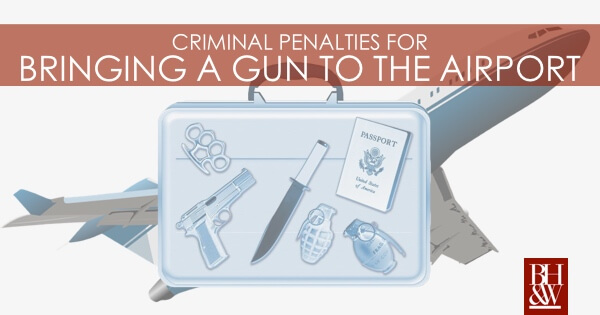
What to do if Arrested for Bringing a Gun to the Airport (Accidentally)

By Brandon Barnett · Criminal Defense, Weapons Charges

Unlawful Carrying of a Weapon at an Airport in Texas

TSA Airport Gun Charges TexasWe love our guns in Texas. After all, those licensed to carry a handgun can now choose to conceal the handgun or wear it on their hip like in the old west. But carrying a handgun comes with its risks. Many places are designated as “off limits” for handguns. Chief among them is the airport. And everyday, well-meaning folks forget about their trusty handgun when they pack their bags and head to DFW International Airport or Love Field, only to be reminded by a less-than-friendly TSA agent as they attempt to pass through security. In fact, Texas is the #1 state for airport gun seizures in the country (and DFW International Airport leads the way in Texas).


CALL US TODAY - (817) 993-9249


What Can Happen if I Accidentally Bring a Gun Through Security at DFW Airport or Love Field Airport?

Generally, if you carry a firearm through the security checkpoint at an airport, you can be detained and arrested. Carrying a firearm, either on your person or in your carry-on luggage, is a violation of Texas Penal Code Section 46.03. The detention and arrest could take several hours and will likely cause you to miss your flight as you move through the process. The DFW Airport or Love Field Police will also confiscate your handgun. If you are arrested for bringing a handgun to the airport, your case will be filed with the Tarrant County District Attorney (for DFW Airport case) or Dallas County District Attorney (for Love Field cases).

How Serious is an Arrest for Bringing a Firearm to the Airport in Texas?

Depending on how the authorities choose to proceed, you will likely be charged with 3rd Degree Felony. A 3rd Degree Felony carries a range of punishment from 2-10 years in prison and a fine up to $10,000. The Tarrant County DA typically files the case as a 3rd Degree Felony, while cases that originate in Dallas Love Field Airport usually wait for Grand Jury review before they are filed.

What Should I Do After I am Arrested for an Airport Gun Charge?

After you post bond and are released from custody, you need to hire a lawyer to help defend you on the charges. You should also consider signing up for a local gun safety course so that you can demonstrate that you understand the severity of your mistake and are taking steps to ensure that it does not happen again. Other than that, follow the advice of your attorney. Do not attempt to get your gun back. Your lawyer can help you do that with a court order, if appropriate, once the case is closed.


CALL US TODAY - (817) 993-9249


I Have an LTC (CHL). Are There Any Exceptions for Me?

Yes. In 2015, the Texas legislature added some language to Section 46.03 to provide for LTC holders who accidentally forgot about their weapon. Section 46.03 now provides:

(e-1) It is a defense to prosecution under Subsection (a)(5) that the actor: (1) possessed, at the screening checkpoint for the secured area, a concealed handgun that the actor was licensed to carry under Subchapter H, Chapter 411, Government Code;  and (2) exited the screening checkpoint for the secured area immediately upon completion of the required screening processes and notification that the actor possessed the handgun. (e-2) A peace officer investigating conduct that may constitute an offense under Subsection (a)(5) and that consists only of an actor's possession of a concealed handgun that the actor is licensed to carry under Subchapter H, Chapter 411, Government Code, may not arrest the actor for the offense unless: (1) the officer advises the actor of the defense available under Subsection (e-1) and gives the actor an opportunity to exit the screening checkpoint for the secured area;  and (2) the actor does not immediately exit the checkpoint upon completion of the required screening processes.

So, basically, they are going to give you a chance to leave the secured area as soon as your mistake is realized. They cannot arrest a valid LTC holder unless the person refuses to leave the secured area immediately. There is no such exception for non-LTC holders. Licensed concealed firearm holder from other states should also be given the same opportunity to leave the secured area immediately in order to avoid arrest.

How Can I Lawfully Carry a Firearm on a Flight?

To carry a firearm on a flight, you must place the firearm in your checked baggage and declare it at the time you check your bags. Also, you should check the TSA guidelines before packing to ensure that you follow all of the rules and regulations.

TSA Sent Me a Demand for Money After I was Arrested. What Should I Do?

The law allows for TSA to send a civil demand letter for money damages. TSA officials consider the “severity” of your violation and then send a demand for money within the range that they consider appropriate. They will typically allow for your to pay less than the demanded amount if you pay quickly.

*See this sample TSA Civil Demand Letter.

You may pay the full demand, file a written response, or contact TSA to see if you can work out an arrangement. We have been able to help our clients pay less than what is demanded, but every case is different.

Will I Receive a Criminal Conviction on My Record For Accidentally Bringing My Gun to the Airport?

It depends. Many of our clients that were charged with Unlawfully Carrying a Weapon in the airport have had their cases dismissed. In fact, most have had their cases dismissed. But again, every case is different. The key is to contact an attorney right away so that your rights may be preserved throughout the criminal justice process.  Our team regularly handles airport gun cases arising out of DFW International Airport or Love Field Airport. We have offices in Keller and Fort Worth and offer free consultations.

 

CALL US TODAY - (817) 993-9249

Read full article
Driving Around Barricade Crime Texas

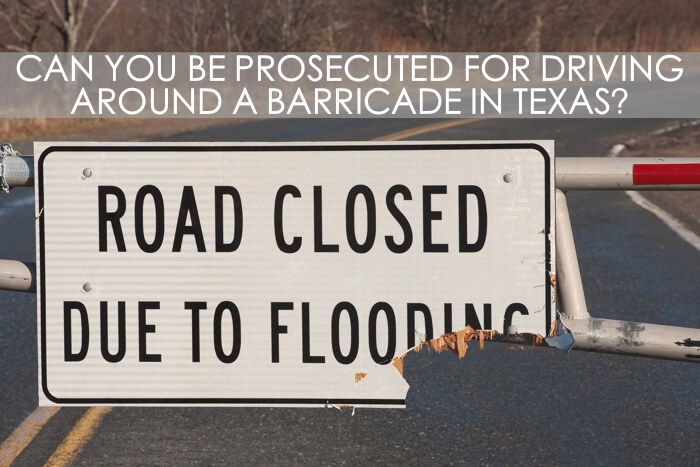
Is Driving Around a Water Barricade a Criminal Offense?

By Brandon Barnett · Criminal Defense

Rules of the Road During Flood Season in Texas

Driving Around Barricade Crime TexasFor four years in a row, Texas has experienced significant flooding due to unusual amounts of rainfall. Many people have lost their lives in cars that were swept away in rushing water and many houses have been ruined by flooding across the state.  First responders are on high alert and have been involved in numerous high water rescues.

One story made the news in 2016 when a man was rescued after his car entered a flooded roadway and was filled with water.  Johnson County had to use a drone to fly overhead and locate the man and then emergency personnel executed a rescue.  But what made this story different was what happened to the man after he was rescued.  Johnson County Sheriff's slapped handcuffs on the man and arrested him for driving around a barricade.

Driving Around a Water Barricade is a Class B Misdemeanor in Texas

Section 472.022 of the Texas Transportation Code governs "OBEYING WARNING SIGNS AND BARRICADES" and provides (in relevant part):

(a) A person commits an offense if the person: (1) disobeys the instructions, signals, warnings, or markings of a warning sign; or (2) drives around a barricade. (d)(2) if a person commits an offense under Subsection (a) where a warning sign or barricade has been placed because water is over any portion of a road, street, or highway, the offense is a Class B misdemeanor.

In Texas, the punishment range for a Class B Misdemeanor is 0-180 days in jail and a fine not to exceed $2,000.

While arrests after a water rescue are not the norm, this certainly provides another reason not to drive around a high water barricade. You would think that the potential danger to life and property would be enough, but sometimes folks need a little more motivation. Johnson County has given us that.

Read full article

Speak with a Fort Worth attorney

Call (817) 993-9249 or send us a message to discuss your case.