
Skip to content
Tag

Search & Seizure Archives: Fourth Amendment Cases & Crypto Law

Page 5 of 7 · 35 articles

A Terry Stop With Guns Drawn, Unlawful Wiretapping, and Other 5th Circuit Fun

By Brandon Barnett · Search & Seizure

Below are some case summaries from recent 5th Circuit (Federal) opinions.  Enjoy.

United States v. Abdo, 2013 U.S. App. LEXIS 17251 (5th Cir. Tex. Aug. 19, 2013)

After receiving information from employees at a gun store and an army/navy surplus store, police officers believed Appellant planned to detonate a bomb and shoot service members stationed at Fort Hood, Texas.  When the officers encountered Appellant they drew their firearms, separated Appellant from the backpack he was carrying, handcuffed him and then placed him in the back of a police car.  Appellant admitted to the officers that he planned to attack soldiers at Fort Hood.  Appellant was then formally arrested and transported to the jail.

Appellant argued the district court should have suppressed evidence found at the time of his arrest and statements he made to the police.  Appellant claimed his detention at gunpoint and placement in a police car in handcuffs was a full arrest rather than a Terry stop, which was not supported by probable cause. The court disagreed.

Pointing a firearm and handcuffing a suspect does not automatically convert a Terry stop into an arrest.  Here, when the officers encountered Abdo, they knew he had purchased shotgun shells, an extended magazine for a handgun and a large amount of gunpowder in a manner that was not consistent with its normal use.  The officers also knew Appellant purchased an army uniform and asked for the kind of patches used at Fort Hood.

In addition, Appellant was carrying a large, overstuffed backpack on a very hot day and one of the officers had experience with terrorists using similar tactics of concealing explosives in backpacks and obtaining fake uniforms to facilitate an attack.  Under these circumstances, the officers acted reasonably in drawing their firearms and handcuffing Appellant while they effected a valid Terry stop, which was supported by reasonable suspicion. 

United States v. Garza, 2013 U.S. App. LEXIS 17515 (5th Cir. Tex. Aug. 21, 2013)

While on roving patrol, a Border Patrol agent received a radio broadcast to be on the lookout (BOLO) for a suspicious looking older model pickup truck carrying plywood in the bed, parked at a gas station at the corner of FM 650 and Highway 83 near Fronton, Texas.  When the agent arrived at the gas station, he saw a pickup truck matching the BOLO description and got out of his vehicle to talk to the driver, later identified as Appellant.  As the agent approached, Appellant acted nervously, moving fast to replace the gas cap, tensing up and shaking while doing so and then quickly entered the pickup truck. Appellant attempted to drive away, but stopped when the agent activated the lights of his patrol car.

Appellant gave the agent consent to search the pickup truck and the agent found several people concealed underneath the plywood in the back of the truck who admitted they were in the United States unlawfully.  The agent arrested Appellant.

Based on the totality of the circumstances, the court held the agent had reasonable suspicion to stop of Appellant's truck. First, FM 650 is a well-known smuggling road for narcotics and aliens because it is the only route in an out of Fronton, as this court has noted in the past.  Second, the agent had patrolled the border area regularly for over two and a half years and had investigated tips and made arrests in that same area for narcotics violations and alien smuggling.  Third, the agent encountered Appellant's truck five miles from the border between the United States and Mexico, which supported the reasonable belief the vehicle had recently crossed the border. Fourth, upon arriving at the gas station, the agent knew Appellant's vehicle did not belong to a Fronton resident and Appellant's nervous, erratic behavior and unprovoked flight supported a finding of reasonable suspicion. Finally, based on his experience, the agent knew smugglers often used plywood to conceal contraband in their trucks.

United States v. North, 2013 U.S. App. LEXIS 17808 (5th Cir. Miss. Aug. 26, 2013)

As part of a drug trafficking investigation, federal agents obtained a wiretap order on Appellant's cell phone from a federal judge in the Southern District of Mississippi.  Information obtained from the interception of Appellant's cell phone on May 9 and 16, 2009, led to Appellant's arrest for possession of cocaine. Title III of the Omnibus Crime Control and Safe Streets Act of 1986 authorizes the use of wiretap surveillance in criminal investigations.  Under Title III, a federal judge may enter an order authorizing the interception of cell phone communications within the territorial jurisdiction of the court in which the judge is sitting.  The Fifth Circuit Court of Appeals has held the "interception" includes both the location of a tapped telephone and the original listening post, and that a judge in either jurisdiction has authority under Title III to issue wiretap orders.

Appellant argued the district court in Mississippi lacked territorial jurisdiction to authorize the interception of the cell phone call on May 9, 2009, because when the agents intercepted the call his phone was located in Texas and the government's listening post was located in Louisiana.  The court agreed.

The district court located in the Southern District of Mississippi lacked the authority to permit interception of cell phone calls made from Texas at a listening post in Louisiana. In addition, the court held suppression of the information obtained from the May 9, 2009, wiretap was warranted. Appellant further argued the agents failed to follow the minimization protocols during interception of the May 16, 2009, phone call between Appellant and a female friend who was not under investigation.  Appellant claimed the agents conducted uninterrupted monitoring of a one-hour telephone conversation that had no connection to the drug smuggling investigation.

The court agreed and suppressed the evidence obtained from the interception of the phone conversation.  The agents were authorized to spot-monitor Appellant's cell phone conversations for no more than two minutes at a time.  However, the agents were authorized to continue monitoring if the conversation related to the drug smuggling investigation.  The court found the agents did not stop listening when it was made clear the conversation was not criminal in nature and they did not conduct subsequent spot checks by checking on the conversation to determine if it had turned to criminal matters.  Rather, the agents listened to the conversation for several minutes before dropping out for less than one minute at a time before resuming their near continuous listening.  Under these circumstances, the court held it was not objectively reasonable for the agents to listen for nearly one hour to a conversation that did not turn to criminal matters until the last few minutes.
Read full article

5th Circuit Search and Seizure Update

By Brandon Barnett · Search & Seizure

Here are a couple of recent cases out of the Fifth Circuit regarding the 4th Amendment:

United States v. Rico-Soto, 2012 U.S. App. LEXIS 16002 (August 2, 2012)

A Border Patrol Agent conducted a traffic stop on appellant's van and eventually arrested him for harboring illegal aliens.  The court held the agent did not violate the Fourth Amendment's prohibition against unreasonable search and seizure because the stop was supported by reasonable suspicion.

First, the van was traveling on Interstate 10, a major corridor for alien smuggling, and the agent had pulled over vans transporting illegal aliens on this route multiple times.  Second, various characteristics of the van and its passengers added to the agent's suspicions.  The van was a fifteen-passenger model of the kind often used in transporting illegal aliens.  There was a company name stenciled on the side of the van, but it was registered to a woman and not the transportation company.  The agent knew that vans used to transport illegal aliens were often registered to individual women rather than to a transportation company.  Third, the agent noticed that the passengers were seated in separate rows rather than clustered together as people normally would sit.  Finally, the agent had specific information from his agency that this particular transportation company had become active in transporting illegal aliens.  The agent's 19 1⁄2 years of experience allowed him to recognize suspicious circumstances that might not be recognized by others and by themselves might not arouse suspicion, but when examined together, established reasonable suspicion to support the traffic stop.

United States v. Mubdi, 2012 U.S. App. LEXIS 16708, August 10, 2012 

Two police officers stopped appellant after they both visually estimated that he was speeding and that he was following one of the officer's patrol cars too closely.  One of the officers issued appellant a warning ticket and then had him step out of his car while the other officer walked his drug-detection dog around it.  After the dog alerted to the presence of drugs, the officers searched appellant's car and found cocaine and two loaded firearms.

The court agreed with the district court, which held that the officers had probable cause to stop appellant for speeding because they were trained in estimating vehicle speed and that their testimony regarding appellant's rate of speed was credible.  The court further held that even if the officers were mistaken in believing that appellant was violating the law by following the officer's patrol vehicle too closely, it was a reasonable mistake, which did not affect the officers' probable cause to stop appellant for speeding.

The court held that after the officers issued appellant the warning ticket, they had reasonable suspicion to detain him for further investigation.  First, appellant took an excessive amount of time to pull over and he was extremely nervous when talking to the officers.  Second, during the stop, he kept his foot on the car's brake pedal instead of shifting the transmission into park.  Third, he could not provide details as to his destination or the family member he was going to visit.  Fourth, he lied to the officer about who had rented the car; he was not an authorized driver of the car and the rental car was being driven out-of-state, which was prohibited by the rental contract.  All of these circumstances supported the officers' decision to extend the duration of the initial 3 traffic stop to conduct the open-air canine sniff, which eventually alerted the officers to the presence of contraband in appellant's car.

Read full article
Searching for Evidence or Community Caretaking?

Searching for Evidence or Community Caretaking?

By Brandon Barnett · Community Caretaking

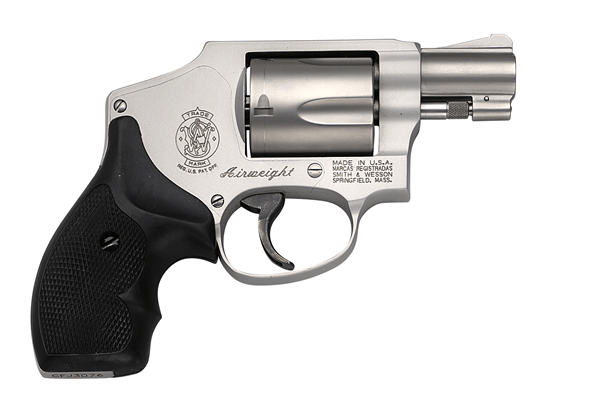
Handgun SearchUnited States v. McKinnon, 2012 U.S. App. LEXIS 7806, May 8, 2012

An officer stopped the car Appellant was driving because it had an expired registration sticker.  The officer arrested Appellant after he could not produce a valid driver's license.  Based on the Houston Police Department's (HPD) towing policy, the officer ordered the car to be towed.  During the "inventory search," the officer found a handgun under the driver's seat.  At trial, Appellant moved to suppress the handgun as being the fruit on an unlawful search in violation of the Fourth Amendment, arguing that:

[the officer's] inventory search violated his Fourth Amendment rights because (1) the inventory search was merely a pretext for searching for evidence related to the burglaries that had recently taken place in the neighborhood where McKinnon was stopped; and (2) the inventory search was conducted pursuant to a policy that provided HPD officers with impermissible discretion in deciding when to tow a vehicle.

The trial court denied the motion.

The Supreme Court has recognized that the police may seize vehicles without a warrant in furtherance of their "community caretaking" function.  This usually occurs when officers impound damaged or disabled vehicles or vehicles that violate parking ordinances or impede the flow of traffic.  As long as an officer's decision to impound a vehicle for community caretaking purposes is reasonable, it will not violate the Fourth Amendment.

Here, the court held that the officer's decision to have the car towed was reasonable under the Fourth Amendment.  It was undisputed that the neighborhood in which the stop occurred had experienced a series of burglaries.  Although these were house burglaries, there was nothing to suggest that the vehicle would not have been stolen or vandalized if left parked and locked at the scene.  By impounding the car, the officer ensured that it was not left on a public street where it could have become a nuisance or where it could have been stolen or damaged.

In addition, while one of the passengers possessed a valid driver's license, the car's registration sticker was expired, so it could not have been lawfully driven away from the scene.  Finally, the HPD tow policy provides for the towing of vehicles when the owner is not able to designate a tow operator to remove the vehicle and no other authorized person is present.  The registered owner of the vehicle was not present to designate a tow operator and there was nothing to suggest that she had authorized either of the two passengers, who were present, to operate her car.

The Court further held that HPD's inventory search policy was constitutional.  By its clear terms, the policy is consistent with preserving the property of the vehicle's owner while ensuring that the police protect themselves against claims or disputes over lost or stolen property and protecting the police from danger.

Community caretaking...Hmmm.  Seems like alot of things could fit under that title.  I suppose that is the point.

Read full article

5th Circuit Opens the Barn Door on 4th Amendment Searches

By Brandon Barnett · Theft

Below is a case update from the 5th Circuit (Federal)

U.S. v. Cooke, 5th Circuit, March 13, 2012

While appellant was in jail, federal agents approached him and asked for consent to search his house.  He refused.  A week later, while he was still in jail, federal agents went to his house to conduct a knock-and-talk interview.  Appellant’s house was a windowless structure that had two large sliding exterior barn doors.  Behind the barn doors was a large area with a dirt floor and a paved sidewalk path that led to a stoop and another set of doors.  Behind these interior doors were the living quarters where appellant, his wife and his mother lived.  When the agents approached the house, they noticed that one of the exterior barn doors was damaged, allowing them access to walk directly up to the interior doors.  Believing that knocking on the barn door would be futile, the agents walked through the open barn door and knocked on the interior set of doors.  Appellant’s mother answered the door and granted the agents consent to enter the house.  Once inside the house, the agents saw a shotgun shell and gun safe in plain view.  Based on these observations, the agents obtained a search warrant and found illegal firearms, ammunition and a bulletproof vest in appellant’s house.

Appellant argued that the agents unlawfully entered the curtilage of his house when they crossed the threshold of the barn door without a warrant or consent.  The court held that the area inside the barn doors, but outside the interior doors was not part of the curtilage, so the agents did not violate appellant’s Fourth Amendment rights by entering the area without consent or a warrant in order to knock on the interior doors.  First, the area had a dirt floor and a paved sidewalk that led to the interior doors.  Second, the contents of the area included non-operating washing machines and dryers, ladders, a grill and other items indicating that the space was used for storage.  Finally, the barn door was open wide enough such that the items stored there were exposed to the elements, the public could see into the area from the street, and anyone would reasonably think that they would have to enter and knock on the interior doors when visiting.

Appellant also argued that under Georgia v. Randolph the warrantless search was invalid because his mother’s consent to the agents’ entry into the house was trumped by his previous refusal to consent.  The court disagreed, stating that Randolph only applied to co-tenants who were physically present and immediately objected to the other co-tenant’s consent.  Here, appellant was not a present and objecting co tenant, but rather was miles away from his home and in jail when he objected to the search.

The Seventh and Eighth Circuits agree and allow searches under similar circumstances; however, the Ninth Circuit does not.

Read full article

Fifth Circuit Federal Court Update

By Brandon Barnett · Confession

Below are some case summaries from recent Fifth Circuit Cases regarding search and seizure and confessions.

4th Amendment Search and Seizure

United States v. Gray, February 1, 2012

Officers had probable cause to believe that appellant was concealing crack cocaine in his rectum.  After conducting two strip searches, in which appellant was not fully cooperative, an officer told appellant that he could either undergo a third strip search, be placed in a cell with a waterless toilet or he could consent to a rectal x-ray examination.  After appellant refused to consent to any of these options, officers obtained a search warrant in which appellant was forced to submit to a proctoscopic examination under sedation.  A doctor eventually recovered over nine grams of crack cocaine from within appellant.

The court held that the search was unreasonable because it was demeaning and intrusive to appellant’s personal privacy and bodily integrity and that there were less invasive ways to recover the evidence, such as a cathartic or an enema.  However, court held the evidence should not be suppressed because the police acted on good-faith reliance on a valid search warrant. In doing so, the court encouraged magistrates, where feasible, to hold a hearing to allow for more careful consideration of the competing interests at stake in medical procedure search cases.

United States v. Hernandez, February 8, 2012

Federal agents received an anonymous tip that appellant was harboring illegal aliens in her trailer.  The agents conducted a knock-and–talk in which they banged on the doors and windows, with their weapons drawn, while demanding entry and then attempted a forced entry by breaking the glass on the door.  When appellant answered the door, she admitted that an illegal alien was inside her trailer.  Agents entered the trailer and arrested appellant and two illegal aliens.  The court held that the agents’ conduct during their knock-and-talk violated the Fourth Amendment.  Since a Fourth Amendment violation had occurred by the time appellant came to the door, the agents could not rely on her admission as probable cause to either enter the trailer or arrest her.

Next, the court held that the incriminating statements appellant made to the agents, after her arrest at their office, were also inadmissible.  They occurred only a few hours after an egregious Fourth Amendment violation and no intervening events occurred to break the connection between her arrest and her statements.
Finally, the court held that the statements obtained from the two illegal aliens were inadmissible against appellant.  The government offered nothing more than pure speculation that their statements would have been inevitably obtained but even if they had, their statements were not sufficiently separated from the Fourth Amendment violation to make them admissible.

Voluntariness of Confession

United States v. Cantu-Ramirez, February 6, 2012

In this multiple defendant case, appellant Lauro Grimaldo argued that the district court should have suppressed his confession because federal agents delayed in presenting him to a magistrate judge for more than two hours for the purpose of interviewing him and obtaining a confession.

The court disagreed after applying the Supreme Court’s guidance from Corley v. United States.  First, because appellant’s presentment was delayed for less than six hours, his confession was admissible as long as it was obtained voluntarily.

Second, based on the totality of the circumstances, the court found that nothing about the interview indicated that his confession was involuntary.  The interview lasted only ninety minutes, the agents wore casual clothing, appellant was not handcuffed and the agents offered him food and drink and allowed him to make several phone calls.  The agents advised appellant of his Miranda rights and took care to ensure that he understood and voluntarily waived them.  The agents obtained appellant’s confession voluntarily and it was properly admitted against him.

Read full article

Speak with a Fort Worth attorney

Call (817) 993-9249 or send us a message to discuss your case.