
Skip to content
Tag

Marijuana

Page 2 of 2 · 9 articles

Passing in Left Lane in Texas

Warrantless Traffic Stop Upheld for Driving in "Passing Only" Lane

By Brandon Barnett · Drug Crimes, Reasonable Suspicion

Driving in the “Passing Only” Left Lane for Forty-Five Seconds Creates Reasonable Suspicion for Warrantless Traffic Stop in Texas
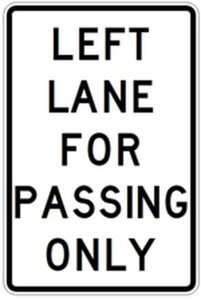
Passing in Left Lane in TexasJaganathan v. State: Francheska Jaganathan was driving in the left lane of a three-lane Texas highway, just ahead of a police cruiser. Mounted with a dashboard camera, the cruiser accelerated and changed lanes, but stayed behind Jaganathan’s car. A few seconds later, Jaganathan’s car passed a “Left Lane for Passing Only Sign,” yet her vehicle continued in the left lane despite the middle lane being clear of traffic. About forty-five seconds later, the trooper turned on his overhead lights, and conducted a traffic stop of Jaganathan’s car. During the traffic stop, the trooper smelled marijuana, prompting a search of the vehicle. The trooper found marijuana in the trunk, and as a result, Jaganathan was charged with possession of marijuana.

At trial, Jaganathan filed a motion to suppress the evidence, but the court denied the motion. Jaganathan chose a plea agreement where she pled guilty and was placed on deferred adjudication. On appeal, Jaganathan argued that the trooper lacked reasonable suspicion to conduct the traffic stop in the first place. The court of appeals agreed with her, stating that Jaganathan likely stayed in the left lane for safety reasons, that seeing the cruiser may have influenced her decision to stay out of the trooper’s way, and that a few seconds were an insufficient amount of time “to conclude that [Jaganathan] committed a [traffic] violation.”

The Court of Criminal Appeals of Texas disagrees with the court of appeals, citing the reasonable suspicion standard in Texas, and the Texas Transportation Code. The Court of Criminal Appeals also clarifies the issue at hand.

The issue is not whether Jaganathan committed a traffic offense, but whether the trooper had reasonable suspicion to stop the vehicle.

First, “A trooper may make a warrantless traffic stop if the reasonable suspicion standard is satisfied.” Guerra v. State, 432 S.W.3d 905, 911 (Tex. Crim. App. 2014). “Reasonable suspicion exists if the trooper has specific and articulable facts that, when combined with rational inferences from those facts, would lead him to reasonably suspect that a particular person has engaged …in criminal activity.” Abney v. State, 394 S.W.3d 542, 548 (Tex. Crim. App. 2013).

Second, “an operator of a motor vehicle [must] comply with an applicable official traffic-control device, including a sign.” TEX. TRANSP. CODE § 544.004(a); § 541.304(1). “Before a trooper can have reasonable suspicion to believe that a defendant committed the traffic offense of failing to obey a “Left Lane for Passing Only” sign, the trooper must be aware of facts that support a reasonable inference that the defendant drove past the sign before being pulled over.” Abney, 394 S.W.3d at 549.

Here, Jaganathan was driving in the left lane without passing other cars, after driving past a sign that prohibited that conduct. The dashboard camera captured the sign and all of the movements of the car. According to the Court of Criminal Appeals, even if Jaganathan had a defense of necessity—she HAD to be in the left lane for a medical or traffic emergency—the trooper still had reasonable suspicion to conduct a traffic stop. The Court of Criminal Appeals states, “these were only possibilities, and so it was reasonable for [the trooper] to suspect the appellant had violated the law.” Further, the reasonable suspicion standard “accepts the risk that officers may stop innocent people.” Illinois v. Wardlow, 528 U.S. 119, 125 (2000). As a result of the forty-five second traffic violation, the trooper had reasonable suspicion to pull Jaganathan’s car over; and, as a result of smelling marijuana, the trooper was able to search the car without a warrant, resulting in charges against Jaganathan. The Court of Criminal Appeals reversed the judgment of the court of appeals and affirmed the judgment of the trial court.

It is important to note, however, that the ruling has a dissenting opinion. Justice Meyers is adamant that the sign and the Transportation Code supporting it are problematic for the following reasons:

• The Code is unclear on how to comply or not comply with the sign.
• The Code does not state a specific amount of time a driver has to pass and merge back into the non-passing lane.
• The Code does not address passing a string of cars, in the middle lane.
• The Code does not address the need to accelerate to be able to pass, whether intended or unintended (for example if the car being passed speeds up, making passing difficult).
• Proving a driver’s intent to pass another car is difficult.

If you or a loved one are facing traffic violations or drug charges, please contact our office for a free consultation at (817) 993-9249.

Read full article

Attenuating of the Taint of Unlawful Police Conduct in Drug Crimes

By Brandon Barnett · Drug Crimes

In Brown v. Illinois, 422 U.S. 590 (1975), the U.S. Supreme Court identified three factors that courts should consider when determining whether the taint of an unlawful arrest was attenuated prior to obtaining a confession:

1. The temporal proximity of the arrest and the confession;
2. The presence of intervening circumstances; and
3. The purpose and flagrancy of the official misconduct (in making the arrest).

In May of 2012, in State v Mazuca, the Texas Court of Criminal Appeals considered the proper application of the "attenuation of taint doctrine," not to a confession, as in Brown, but to contraband that is seized immediately following an unconstitutional detention or arrest.  The question presented was this:

Will the discovery of an outstanding arrest warrant in the relatively few moments that ensue between the illegal stop and the seizure of the contraband invariably serve as an intervening event sufficient to purge the taint of the primary illegality?

In Mazuca, an El Paso police officer stopped the car in which appellee was a passenger because the officer believed he saw white light (rather than red) emitting from the tail lights.  Photos at trial would later prove that the tail lights were indeed red and that the car was not in violation of the Texas Transportation Code.  During the stop, the officer requested to see appellee's driver's license, and quickly learned that appellee had outstanding warrants.  During the course of the stop (after learning about the warrants) the officer seized both ecstasy and marijuana from appellee.  Appellee moved to suppress the contraband as the fruits of an illegal search.  The trial court granted the motion, making, inter alia, the following findings of fact and conclusions of law:

1. The driver of the Mustang did not violate Section 547.322 of the Transportation Code on December 11, 2008. 2. The Police Officers did not have probable cause or reasonable suspicion to perform a traffic stop on that date. 3. The arrest warrants of the Defendant did not purge the taint of the illegal stop due to the flagrancy of the police action, the close temporal proximity and the fact that no Miranda warnings were read.

The 8th Court of Appeals (El Paso) affirmed.  The CCA considered the Supreme Court precedent, as well as the Texas Court of Appeals opinions in coming up with the rule below:

When police find and seize physical evidence shortly after an illegal stop, in the absence of the discovery of an outstanding arrest warrant in between, that physical evidence should ordinarily be suppressed, even if the police misconduct is not highly purposeful or flagrantly abusive of Fourth Amendment rights. Under this scenario, temporal proximity is the paramount factor. But when an outstanding arrest warrant is discovered between the illegal stop and the seizure of physical evidence, the importance of the temporal proximity factor decreases. Under this scenario, the intervening circumstance is a necessary but never, by itself, wholly determinative factor in the attenuation calculation, and the purposefulness and/or flagrancy of the police misconduct, vel non, becomes of vital importance.

While the rule sounds simple enough, the CCA's application of the rule to the facts of the case is a bit troubling.  The CCA reversed the Court of Appeals, and held that...

[T]he behavior of the arresting officers, although clearly unlawful at the outset, was not so particularly purposeful and flagrant that the discovery of the appellee's outstanding arrest warrants may not serve to break the causal connection between the illegal stop and the discovery of the ecstasy in the appellee's pants pocket, thus purging the primary taint.  We hold that the trial court erred to conclude otherwise.

The opinion in this case seems a logically disconnected from the ultimate outcome. Apparently, some of the judges agree.  Here's what Judge Meyers had to say in his dissenting opinion:

The result fashioned by the majority opens the door for police to ignore the probable cause requirement and make traffic stops without adequate grounds for doing so.  The majority's analysis of the weight of the Brown factors may be correct, but the result discounts the trial court's findings as to the credibility of the officers.

Judge Johnson dissented as well, writing:

I would hold that the court of appeals correctly recognized that, without the highly improper traffic stop, the officers could not have learned appellee's name, found active warrants, or searched him and recovered contraband, all fruits of the poisonous tree.  We, like the court of appeals, should "afford almost total deference to a trial court's determination of historical facts that are supported by the record, particularly when such findings are based on an evaluation of witnesses' credibility and demeanor" and affirm its suppression of the evidence that was obtained because of the improper traffic stop.  I respectfully dissent.

If you were the subject on an unlawful arrest on a drug crimes case, contact the Fort Worth, Texas drug crimes defense lawyers at Barnett Howard & Williams PLLC today.  (817) 993-9249.

Read full article

Where's Your Sign? No Traffic Offense if Road Sign Not Visible

By Brandon Barnett · Drug Crimes

In Abney v. State, the Texas Court of Criminal Appeals considered whether an officer had reasonable suspicion to initiate a traffic stop when a vehicle was driving in the left lane of a road without passing.  There was a road sign that prohibited driving in the left lane without passing, but it was located over 20 miles away from where the Appellant was pulled over.

As tends to happen, the police officer found marijuana during the traffic stop. At trial, and on appeal, the Appellant claimed that he did not commit a traffic violation because the road sign was not anywhere near where the stop occurred.  The trial court and 5th Court of Appeals (Dallas) overruled this argument.  The CCA, on the other hand found it meritorious.

The Transportation Code certainly indicates that if there is a sign present that says the left lane is for passing only, then it is a traffic offense to travel in the left lane when not passing another vehicle. Section 544.004(a) states that an operator of a vehicle shall comply with an applicable official traffic control device such as a "left lane for passing only" sign. Without such a sign present within a reasonable distance of the traffic stop, there is no offense.

The CCA reversed the Court of Appeals and held that the officer lack reasonable suspicion to justify the traffic stop.  The evidence should have been suppressed at trial.

Read full article

Conspiring With a Government Informant

By Brandon Barnett · Conspiracy

It Takes Two to Tango | Can a Person be convicted for Conspiring With a Government Informant?

Conspiring With a Government InformantUnited States v. Delgado, U.S. Courts of Appeals for the 5th Circuit (Federal)

In this U.S. v. Delgado, the Defendant-Appellant, Maria Aide Delgado, was convicted of

  1. possession of marijuana with the intent to distribute and
  2. conspiracy to commit the same offense.

She was sentenced to a concurrent term of 100 months imprisonment for each conviction. Delgado appealed, complaining that she shouldn't be convicted for Conspiracy if she was Conspiring With a Government Informant.

The Federal 5th Circuit Court of Appeals dismissed a conspiracy charge in the indictment because the government failed to introduce sufficient evidence to establish that the Appellant entered into a conspiracy with anyone other than a government informant. While it takes at least two people to form a conspiracy, an agreement must exist among co-conspirators who actually intend to carry out the agreed upon criminal plan. A defendant cannot be criminally liable for conspiring solely with an undercover government agent or a government informant, therefore, evidence of any agreement Delgado had with the government informant cannot support a conspiracy conviction.

Read full article

Speak with a Fort Worth attorney

Call (817) 993-9249 or send us a message to discuss your case.