
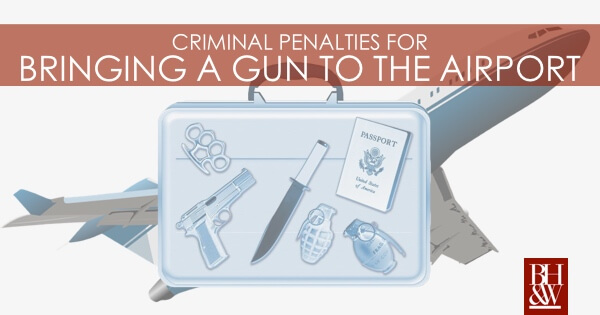
What to do if Arrested for Bringing a Gun to the Airport (Accidentally)
By Brandon Barnett · Criminal Defense, Weapons Charges
Unlawful Carrying of a Weapon at an Airport in Texas
 We love our guns in Texas. After all, those licensed to carry a handgun can now choose to conceal the handgun or wear it on their hip like in the old west. But carrying a handgun comes with its risks. Many places are designated as “off limits” for handguns. Chief among them is the airport. And everyday, well-meaning folks forget about their trusty handgun when they pack their bags and head to DFW International Airport or Love Field, only to be reminded by a less-than-friendly TSA agent as they attempt to pass through security. In fact, Texas is the #1 state for airport gun seizures in the country (and DFW International Airport leads the way in Texas).
CALL US TODAY - (817) 993-9249
What Can Happen if I Accidentally Bring a Gun Through Security at DFW Airport or Love Field Airport?
Generally, if you carry a firearm through the security checkpoint at an airport, you can be detained and arrested. Carrying a firearm, either on your person or in your carry-on luggage, is a violation of Texas Penal Code Section 46.03. The detention and arrest could take several hours and will likely cause you to miss your flight as you move through the process. The DFW Airport or Love Field Police will also confiscate your handgun. If you are arrested for bringing a handgun to the airport, your case will be filed with the Tarrant County District Attorney (for DFW Airport case) or Dallas County District Attorney (for Love Field cases).
How Serious is an Arrest for Bringing a Firearm to the Airport in Texas?
Depending on how the authorities choose to proceed, you will likely be charged with 3rd Degree Felony. A 3rd Degree Felony carries a range of punishment from 2-10 years in prison and a fine up to $10,000. The Tarrant County DA typically files the case as a 3rd Degree Felony, while cases that originate in Dallas Love Field Airport usually wait for Grand Jury review before they are filed.
What Should I Do After I am Arrested for an Airport Gun Charge?
After you post bond and are released from custody, you need to hire a lawyer to help defend you on the charges. You should also consider signing up for a local gun safety course so that you can demonstrate that you understand the severity of your mistake and are taking steps to ensure that it does not happen again. Other than that, follow the advice of your attorney. Do not attempt to get your gun back. Your lawyer can help you do that with a court order, if appropriate, once the case is closed.
CALL US TODAY - (817) 993-9249
I Have an LTC (CHL). Are There Any Exceptions for Me?
Yes. In 2015, the Texas legislature added some language to Section 46.03 to provide for LTC holders who accidentally forgot about their weapon. Section 46.03 now provides:
(e-1) It is a defense to prosecution under Subsection (a)(5) that the actor: (1) possessed, at the screening checkpoint for the secured area, a concealed handgun that the actor was licensed to carry under Subchapter H, Chapter 411, Government Code; and (2) exited the screening checkpoint for the secured area immediately upon completion of the required screening processes and notification that the actor possessed the handgun. (e-2) A peace officer investigating conduct that may constitute an offense under Subsection (a)(5) and that consists only of an actor's possession of a concealed handgun that the actor is licensed to carry under Subchapter H, Chapter 411, Government Code, may not arrest the actor for the offense unless: (1) the officer advises the actor of the defense available under Subsection (e-1) and gives the actor an opportunity to exit the screening checkpoint for the secured area; and (2) the actor does not immediately exit the checkpoint upon completion of the required screening processes.
So, basically, they are going to give you a chance to leave the secured area as soon as your mistake is realized. They cannot arrest a valid LTC holder unless the person refuses to leave the secured area immediately. There is no such exception for non-LTC holders. Licensed concealed firearm holder from other states should also be given the same opportunity to leave the secured area immediately in order to avoid arrest.
How Can I Lawfully Carry a Firearm on a Flight?
To carry a firearm on a flight, you must place the firearm in your checked baggage and declare it at the time you check your bags. Also, you should check the TSA guidelines before packing to ensure that you follow all of the rules and regulations.
TSA Sent Me a Demand for Money After I was Arrested. What Should I Do?
The law allows for TSA to send a civil demand letter for money damages. TSA officials consider the “severity” of your violation and then send a demand for money within the range that they consider appropriate. They will typically allow for your to pay less than the demanded amount if you pay quickly.
*See this sample TSA Civil Demand Letter.
You may pay the full demand, file a written response, or contact TSA to see if you can work out an arrangement. We have been able to help our clients pay less than what is demanded, but every case is different.
Will I Receive a Criminal Conviction on My Record For Accidentally Bringing My Gun to the Airport?
It depends. Many of our clients that were charged with Unlawfully Carrying a Weapon in the airport have had their cases dismissed. In fact, most have had their cases dismissed. But again, every case is different. The key is to contact an attorney right away so that your rights may be preserved throughout the criminal justice process. Our team regularly handles airport gun cases arising out of DFW International Airport or Love Field Airport. We have offices in Keller and Fort Worth and offer free consultations.

 Did you ever get the feeling like someone is recording your conversation?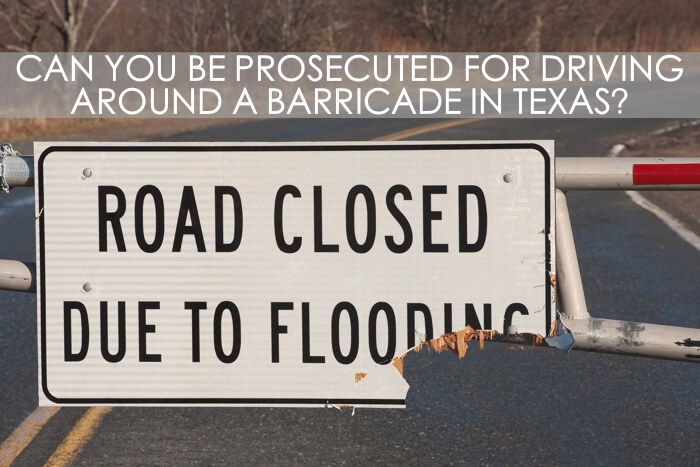
 For four years in a row, Texas has experienced significant flooding due to unusual amounts of rainfall. Many people have
 It's no secret that folks don't always get along. Sometimes, especially down in Texas, arguments can lead to fights. When two adults decide to go to fisticuffs, they can reasonably assume that one (or both) of them are going to get hit. But, are the bruises and black eyes the end of it? Can either of these heroes be charged with a criminal offense for their part in the fight? Maybe. It depends.
 Lets face it, most of us have received a speeding ticket at some point in our lifetime. As a result, radar detectors have become commonplace for drivers that want to take preventative measures to avoid receiving a ticket. Such preventative measures bring up an important question: are radar detectors illegal? Can I get a ticket for using a radar detector?