Skip to content
Tag

Keller & Southlake DWI Defense Guide | HLAW

Page 3 of 11 · 55 articles

Christmastime Arrests Texas

Top 5 Reasons for Arrests During the Christmas Holiday Season

By Brandon Barnett · Criminal Defense

Christmastime Arrests TexasWhen you think about the Christmas season, you probably think about family time, presents, good food, and celebration. We think about those things too, but as criminal defense attorneys, we also think about the reasons that some of our clients get arrested during the holiday season. For this article, we took a look at the last 8 years of holiday season arrests (for clients that we represented) and compiled an (anecdotal) list of the top 5 reasons that folks get arrested during the Christmas/New Year's season. Our goal is that this list will serve as a warning, so that your holiday season can be filled with the good stuff, rather than jail, bail, and calls to our office. Here goes:

5. Shoplifting

Many retailers slash their prices and offer steep discounts in the weeks leading up to Christmas and even bigger discounts after Christmas, but we have yet to see any retailer offer the "five finger discount" for their merchandise. Regardless, we see plenty of shoplifting cases during the Christmas season, making it our #5 reasons that people get arrested during Christmas. Depending on the regular price value of the item (not the discounted price), shoplifting theft charges can range from misdemeanors to felonies. Learn more about Theft law in Texas here.

4. Package Theft

In a similar vein to shoplifting, our #4 reason for holiday arrests is package theft. Many shoppers choose the convenience of online shopping and have their Christmas purchases delivered right to their front door. Some people see this as an easy target, following behind UPS or FedEx trucks to steal those would-be Christmas gifts from the front porch. However, with the increase in doorbell cameras, it is getting easier to catch the porch pirates in the act. Further, some law enforcement agencies have begun using dummy packages to bait thieves into getting caught. Package theft can range from a misdemeanor to a felony depending on what unknown treasure lay inside the brown box.

3. Air Travleing Trouble (Guns, Drugs, and Intoxication)

Going to visit grandma can require air travel for many families. This means that thousands more people than usual flood through DFW Airport between Thanksgiving and New Year's. It matters not from where these travelers hail. From Maryland to Oregon to France, if a person is arrested at DFW Airport, their case will be filed in Tarrant County, Texas and they will have to travel back to DFW to attend court. During the holidays, we see a surge in airport arrests when people bring items into the airport that are not allowed or when folks over indulge during a layover. Specifically, we see the following airport arrests:

Even if the state from which a traveler is coming has legalized marijuana and the state to which they are traveling has legalized marijuana, if they are caught possessing marijuana in the airport, they will be arrested and charged. The combination of airport gun arrests, airport drug arrests, and airport public intox arrests make these types of cases our #3 reason for holiday arrests.

2. Assault Family Violence

In the movie Christmas Vacation, Clark Griswold showed an enormous amount of restraint when his extended family pushed him to the limit (especially Cousin Eddie), but not everyone is blessed with such a cool head. Christmas time brings added stressors into the family environment that can sometimes lead to verbal or physical altercations between family members, so much so, that these arrests rank at #2 in our book. Depending on the nature of the assault, a domestic violence arrest can be charged as a misdemeanor or a felony. Learn more about Family Violence under Texas law.

1. Driving While Intoxicated

With all of the Christmas and New Year's parties and the increase in No Refusal Weekends, it is not hard to guess that DWI arrests are #1 on our list. Driving While Intoxicated in Texas can range from a misdemeanor (if it is a first or second offense) to a felony (if there is a child in the car or if the person arrested has been convicted of DWI twice in the past). Our advice is to plan ahead and do not even take your car to a Christmas party when you plan to drink. Catch a ride from a friend or take an Uber or Lyft. That would be a lot cheaper than hiring an attorney and a lot less hassle too. Learn more about Texas DWI law here.

We Hope You Never Need Us, But We're Here if Your Do.

We wish you a very merry Christmas and a happy New Year. As always, we hope you never need us to represent you or one of your loved ones for a criminal offense. This is even more true during the Christmas season. Hopefully this list will help you avoid trouble that looms during the holiday season. If you do happen to need us, we are only a phone call away at (817) 993-9249.

Read full article
Operation Motor Vehicle Texas DWI

Operating a Motor Vehicle in the DWI Context

By Jason H. Howard · DWI

What does it mean to "Operate" a vehicle under Texas' DWI laws?

Operation Motor Vehicle Texas DWI
The simple answer is that it means whatever the jury (not the judge) says it means.

Under Section 49.04(a) of the Texas Penal Code, a person commits the offense of DWI when the person “is intoxicated while operating a motor vehicle in a public place.” Emphasis added.  The Penal Code, however, does not define the term “operating.” When words are left undefined by statute, the Texas Government Code Section 311.011 tells us that those words are to be “construed according to the rules of grammar and common usage,” unless the word or phrase has some “technical or particular meaning,” in which case, the word or phrase “shall be construed accordingly.” What about the word “operating?” Is it common or technical?

In the trial of Kirsch v. State out in the Longview area, the defendant was charged with DWI after the police found him drunk while standing over his motorcycle trying to kick-start it on a public road.  As you might guess, there was a dispute over whether he was “operating” his vehicle while intoxicated.  Over defense objection, the trial court included the prosecutor’s requested definition of “operate” in the jury instructions:

to exert personal effort to cause the vehicle to function.

To the prosecutor’s credit, the definition was taken from an appellate case (although not one dealing with jury instructions).  Now, under this definition it is pretty clear that by trying to kick-start the motorcycle, the defendant was indeed operating a motor vehicle.  But if the term “operate” had been left undefined for the jury, then the defense could have certainly argued under the rules of grammar and common usage that the defendant was not “operating” his vehicle, because it was not running (or whatever other arguments an able defense counsel might make).  Armed with a black and white definition of “operate,” the jury convicted the defendant of DWI.

The 6th District Court of Appeals (Texarkana) affirmed the conviction.

The Texas Court of Criminal Appeals reversed. For a unanimous court, Judge Alcala wrote:

Our cases have consistently held that “operate” is a common term that has not acquired a technical meaning and may be interpreted according to its common usage… Although an appellate court may articulate a definition of a statutorily undefined, common term in assessing the sufficiency of the evidence on appellate review, a trial court’s inclusion of that definition in a jury charge may constitute an improper comment on the weight of the evidence.

The opinion goes on to note that by instructing the jurors on the definition of the term “operate,” the trial court “impermissibly guided their understanding of the term.” “The jury should have been free," the CCA held, "to assign that term ‘any meaning which is acceptable in common parlance.’” The CCA reversed the case and remanded it back to the COA for a harm analysis.

There you have it. The meaning of the term “operating” in the Texas DWI statute means…whatever the jury thinks it means.

Fort Worth DWI Defense Attorneys | Keller DWI | Grapevine DWI

Contact the top-rated Tarrant County DWI attorneys of Barnett Howard & Williams PLLC for a FREE consultation of your DWI case. We will help you determine whether the State could prove that you were operating a motor vehicle under Texas DWI law.  Call (817) 993-9249 or send us a contact email from our website. Our team of DWI attorneys will get to work defending your rights and protecting your future.

Read full article
Final Four DWI Texas

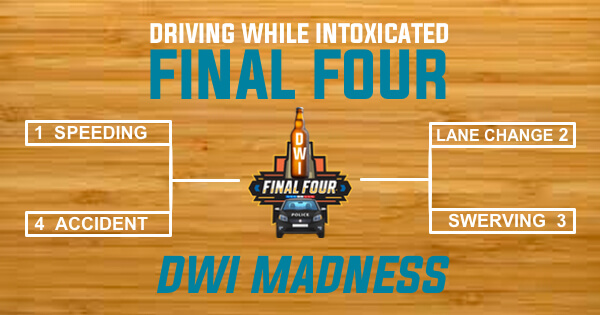
DWI Madness | “The Final Four” Reasons Texans are Stopped for DWI

By Jason H. Howard · DWI

Final Four DWI TexasMarch Madness is here again. With the Final Four approaching, we built a bracket of our own. In this article, DWI attorney Jason Howard discusses the top four reasons people are stopped or detained for a DWI investigation in Texas. We’ve compiled and power-seeded our list based on the numerous Tarrant County DWI cases we handle every year. Before we get to the "Final Four," here are some honorable mentions that didn't quite make the tournament list:

  • Sleeping in a running vehicle
  • Driving the wrong way on a one-way street
  • Rolling through a stop sign
  • Expired registration as seen by police scanner
  • No license plate light

Of course, there are many more reasons that folks are stopped and investigated for DWI, but below are the top four reasons that we see the most.

The Top Four Reasons Drivers Are Stopped for a DWI Investigation in Texas

#4 - Auto Accident

By auto accident, we mean everything from a head-on collision to a run-in with a mailbox. More serious accidents will usually generate the presence of officers on scene within a matter of minutes. Officers are usually looking to rule out the possibility of someone being intoxicated as soon as they arrive on scene. Minor accidents where there are no injuries might elicit a call to 911 (when there would otherwise just be a swap of insurance) if the other party involved suspects a DWI. Easy to see that if you’ve consumed alcohol and are involved in an accident, there is a high probability of a DWI investigation.

#3 – Swerving or Weaving

Please note – there is a difference between the two. Swerving is the more blatant failure to maintain a single lane by driving the vehicle all across the road. Weaving, on the other hand, is usually more subtle and sometimes observed within the lane. Regardless, if it’s late at night and a police officer is behind you and observes either of these driving behaviors, the red and blues are probably going to come on and the driver asked to step out of the vehicle for field sobriety testing.

#2 - Lane Change Problems

The #3 and #4 seeds were probably the top guesses, right? Surprisingly, we see more of numbers 1 and 2 than any other. And they probably weren’t the ones you guessed. I’ve grouped lane change issues because they can vary from the failure to signal a lane change or turn to the failure to make a proper turn at intersection (aka the “wide right” or “wide left” turn.) If you monitor your daily driving (when you’ve consumed no alcohol,) you’ll probably see that you commit many of these types of traffic infractions constantly. You’ll certainly see other people commit them. So, how does that translate to a police officer’s suspicion of drinking and driving? If it’s late at night on a Friday or Saturday, most patrol officers are quick to pull people over for any traffic violation just to check them out and make sure they’re not DWI.

That brings us to our number one reason people are stopped prior to a DWI arrest…

#1 - Speeding

We’re not talking 100mph in a 30mph zone, although we have seen some crazy speeds. No, we’re talking general, everyday speeding; 5 or 10 miles an hour over the speed limit. Nighttime patrol officers love to use their speed detection devices to initiate stops to find DWIs. That’s right! Patrol officers aren’t just looking for obvious impaired driving clues. It’s clear from our experience in handling DWI cases in Tarrant County that most officers are suspicious of anyone out late at night (especially on the weekends.) They know they only need a legal reason to stop someone at any given time. And once they establish their legal reason (even if it’s just speeding,) they then get to proceed with the “where are you coming from, where are you going, have you had anything to drink?” line of questioning. Once they get an admission of “yeah, I had a couple” or smell even the faintest odor of alcohol from the vehicle, they then get the driver out of the vehicle and begin the field sobriety tests. And once they start with the field sobriety tests, the possibility of being arrested goes up astronomically – even if you’re not intoxicated!

If we were to play out the DWI Final Four tournament, Speeding would be your Texas State Champion.

What Should You Do If You Are Suspected of Driving While Intoxicated?

We’ve written on this topic several times, including:
- DWI Information Page
- May I Legally Refuse a Field Sobriety Test?

If you have been arrested for DWI in Tarrant County after being stopped for one of these four reasons (or any other reason), contact our Tarrant County DWI attorneys for a free case evaluation.

Read full article
DWI Deferred Adjudication Texas

Deferred Adjudication for DWI Offenses in Texas | New Law Effective Sept 1, 2019

By Jason H. Howard · DWI

Finally, Common Sense Prevails Regarding First-time DWI Offenses

DWI Deferred Adjudication TexasFor years, I’ve had the difficult task of trying to explain to clients facing a first-time DWI charge why their case is treated more harshly under the law than other misdemeanor criminal offenses like assault, prostitution, theft, drug possession, etc. In Texas, you can be charged with one of the latter crimes and have the option of deferred adjudication probation. Deferred adjudication probation has not been an option for DWI offenses in Texas. Until now.
Effective September 1st, 2019, a first-time DWI offense may qualify for deferred adjudication probation in Texas. The Texas legislature passed legislation that was signed into law by Governor Abbott that will amend Texas Code of Criminal Procedure Art. 42A.102(b) and make deferred adjudication probation available for some first-time DWI offenses.

What is Deferred Adjudication Probation?

Deferred adjudication probation typically requires the same terms and conditions as regular probation. So, why is it a better option? In Texas, if you receive regular or “straight” probation, the judge is required to enter a finding of guilt in your case which results in a criminal conviction.

Deferred adjudication probation is different because the judge “defers” that finding of guilt and, if you successfully complete the probation, the case results in a dismissal of the charge. Thus, you avoid the penalties and consequences that result from having a criminal conviction on your record.

The New Provisions are Effective September 1st, 2019 and Are Not Retroactive.

Deferred adjudication probation on first-time DWI offenses will apply ONLY to offenses committed on or after September 1st, 2019. That means all offenses committed prior to that date will be governed by previous law that does not allow deferred adjudication probation for DWI offenses.

Are All DWI Offenses Eligible for Deferred Adjudication Under the New Law?

The new law also limits which types of first-time DWI offenses will qualify. Deferred adjudication will NOT be available for first-time DWI offenses if:

  • If it is adjudicated that your blood or breath alcohol concentration was .15 or higher at the time the analysis was performed (see Texas Penal Code 49.04(d).) Or
  • You held a commercial license or commercial learner’s permit at the time of the DWI arrest

Also, if you are charged with a subsequent DWI after receiving a previous conviction or convictions for DWI, you are disqualified.

The Interlock Trade-Off

For years, defense attorneys and prosecutors (yes – even prosecutors!) have lobbied for making deferred adjudication probation an option for first-time DWI offenders. However, MADD staunchly opposed the idea. So, what’s changed MADD’s position? MADD agreed to the new law because it makes first-time DWI offenders (who previously were NOT required to have an ignition interlock device as a condition of probation) now have it as a requirement. The new law requires the judge to order the ignition interlock device as a condition of probation if you receive deferred adjudication probation for a DWI offense (see the amendment to Texas Code Crim. Procedure Art. 42A.408(e-1).)

There is, however, an exception to this requirement under TCCP Art. 42A.408(e-2) of the new law. If you submit to a substance abuse evaluation and the judge determines (based on that evaluation) that the ignition interlock requirement is “not necessary for the safety of the community,” then the judge may waive the requirement. This is certainly something you would want to discuss with your attorney.

What Will My Record Look Like if I Receive Deferred Adjudication Probation for a DWI Offense?

Although successful completion of deferred adjudication probation results in a dismissal of the underlying criminal charge, there is still a criminal record that must be addressed following the dismissal. The new law limits your remedy options to a nondisclosure (sealing of the record) and even that is not guaranteed.
You will not qualify for a nondisclosure if:

  • You have previously been convicted of or placed on deferred adjudication probation for another offense (other than a traffic offense that is punishable by fine only.) Or
  • There is sufficient evidence to show that offense resulted in a motor vehicle accident involving another person (including a passenger in the motor vehicle operated by you.)

It’s also worth noting there is a two-year waiting period after discharge from probation to petition the court for a nondisclosure.

Can a Future DWI Arrest Be Enhanced Even if I Wasn't Convicted on the First One Under the New Law?

If, after your successful completion of deferred adjudication probation and dismissal by the court, you are arrested again for DWI, the new law allows the state to use the prior for enhancement purposes. If your case is dismissed, how can the state use it as a prior conviction? This can make for a candid debate, but, at the end of the day, this was another MADD trade-off conceded by the legislature that you should be aware of when considering long-term consequences of the new law.

DEFERRED SOUNDS GOOD - WHERE DO I SIGN? NOT SO FAST!!!

If, after September 1st, 2019, you or a loved one are faced with a first-time DWI charge and qualify for deferred adjudication probation, it might appear to be an easy option. However, we can’t stress enough how important it is that you retain a qualified DWI attorney who can analyze your case to determine If the state has enough evidence to prove their case or if there are legal or evidentiary issues present that may prove problematic for the state. The experienced DWI Attorneys at Barnett, Howard & Williams, PLLC are here to help determine what your best options truly are. So, please feel free to give us a call.

Read full article
Deadly Weapon DWI Couthren v State

Is a Vehicle Always a “Deadly Weapon” in a DWI Collision Case?

By Jason H. Howard · DWI

Direct Evidence at Trial Must Reflect “Manner of Use” to Support Deadly Weapon Finding | Couthren v. State

Deadly Weapon DWI Couthren v StateOne of the common factors in any DWI case is that there must be a motor vehicle involved. Every time. When someone who is under the influence of drugs and/or alcohol chooses to drive a motor vehicle, should the car itself be considered by Texas courts to be a “deadly weapon?” When do ordinary, daily objects, such as cars, become “deadly weapons” for the purpose of charging enhancements and raising the stakes in a criminal case?

Slip Opinion: Couthren v. State (Tex. Crim. App. 2019)

Driver Hits Pedestrian after Drinking

Donald Couthren was driving on a frontage road in Bryan, Texas early one morning in 2012. He had been drinking Four Loko earlier in the evening and was impaired. Frank Elbrich was walking along the same road and stepped out in front of Couthren’s vehicle. Elbrich’s head hit the windshield and he landed on the ground. Couthren stopped his vehicle, scooped up Elbrich, and put Elbrich into his car, with the idea of taking him to the hospital. In a strange turn of events, Couthren, instead, drove to a house to exchange cars, and ended up in altercation with the people in the house. The police were called as a result. When police arrived, they noticed that Elbrich was bleeding and non-responsive. They saw that the windshield was broken, as well. The police noted that Couthren smelled of alcohol and swayed from side to side when he walked. Couthren admitted to hitting Elbrich when “[he] stepped in front of his vehicle.” Couthren did not consent to a blood draw and refused to comply with field sobriety tests. Police arrested Couthren for driving while intoxicated (DWI).

Felony DWI Trial with Deadly Weapon Enhancement

Couthren was indicted and tried for felony DWI. The State alleged a “deadly weapon” finding, claiming that the Couthren’s vehicle was a deadly weapon. A deadly weapon finding enhances the charge, increasing the term of imprisonment. Accordingly, the jury convicted Couthren and agreed with the deadly weapon finding and assessed a punishment of six years imprisonment. On appeal, Couthren argued that there was not enough evidence to support the deadly weapon finding. The lower appeals court upheld the trial court’s finding, utilizing a “two-step” approach to determine whether the evidence was sufficient. The two-step approach consisted of (1) an evaluation of the manner in which Couthren used his car during the felony and (2) an analysis of whether vehicles are capable of causing death or serious bodily injury. Couthren v. State, No. 13-16-00543-CR, 2018 WL 2057244, at 5 (Tex. App.—Corpus Christi, May 3, 2018) (mem. op., not designated for publication).

Appeal to the Texas Court of Criminal Appeals | Is a Vehicle Always a “Deadly Weapon?”

Couthren appealed the lower appeals court’s ruling, to the Court of Criminal Appeals to determine whether the first step (“manner of use”) was a proper evaluation. Specifically, Couthren argued that the lower appeals court relied on the fact that there was a collision and that he had been drinking, to uphold the deadly weapon finding. Further Couthren argued, there must be evidence of a dangerous or reckless operation to support a finding that a car was used as a deadly weapon.

The CCA examined several laws, that when applied together, could create a deadly weapon finding in a DWI collision scenario. Texas Penal Code Section 49.04(a) which prohibits a person from operating a motor vehicle in public while intoxicated. TEX. PENAL CODE §49.04(a). Further, other statutes in Texas provide for a third-degree felony enhancement if it can be proven that a defendant had to prior DWI convictions. TEX PENAL CODE §49.09(b)(2). The Texas Code of Criminal Procedure, Section 42.12 states that, “When it is proven that a defendant used or exhibited a deadly weapon, a trial court shall consider a deadly weapon finding in the judgment.” Moore v. State, 520 S.W.3d 906, 908 (Texas Crim. App. 2017).

The CCA looked to precedent cases to guide their analysis. The CCA determined that there must be evidence that the manner of driving was capable of causing death or serious bodily injury apart from the fact of a collision and a defendant’s intoxication. Brister v. State, 449 S.W.3d 490, at 495 (Tex. Crim. App 2014). Further, the CCA noted that it has “expressly rejected the argument that all felony DWI cases warrant an automatic deadly weapon finding.” Id.

Deadly Weapon Finding Reversed for Lack of “Manner of Use” Evidence to Support it

Here, the CCA noted that there was very little evidence showing the manner in which Couthren used his car during the DWI offense. For example, “we do not know if he applied his brakes…or…if there were other cars on the road.” The CCA stated that the arguments put forth by the State regarding “manner of use” on appeal were conclusions inferred from underlying facts. The CCA stated, “reasonable inferences must be supported by the evidence presented at trial.” Tate v. State, 500 S.W.3d 410 (Tex. Crim. App. 2016). In this case, “the only direct evidence of Couthren’s manner of driving before and at the time of impact was Couthren’s testimony at trial that he was driving 30 miles per hour and that he swerved to avoid hitting Elbrich.” Accordingly, the CCA determined that the facts as presented at trial did not amount to a deadly weapon finding, “in this case we lack specific testimony in the record about manner of use.” The CCA reversed the deadly weapon finding.

While the case before the CCA was decided in Couthren’s favor, it is important to note that it was not without controversy. Four justices joined in a strong dissent. Distinguishing the case at bar from the case law relied upon for the decision, Cates v. State and Brister v. State, the dissenting justices pointed out that because “the offense [in Cates] was failure to stop and render aid and the collision occurred before the offense occurred,” the collision itself could not “be the basis for a finding that a deadly weapon was used during the later offense.” The dissenting opinion states, “the collision did occur during Couthren’s DWI offense and the collision caused serious bodily injury to Mr. Elbrich.”

Read full article

Speak with a Fort Worth attorney

Call (817) 993-9249 or send us a message to discuss your case.