
Skip to content
Tag

Texas Joint Possession Laws: Shared Drug Possession Explained

Page 5 of 9 · 41 articles

Possession of Methamphetamine in Fort Worth

Federal Courts No Longer Distinguish Between Pure Meth and Botched Meth When Calculating Weight

By Brandon Barnett · Drug Crimes
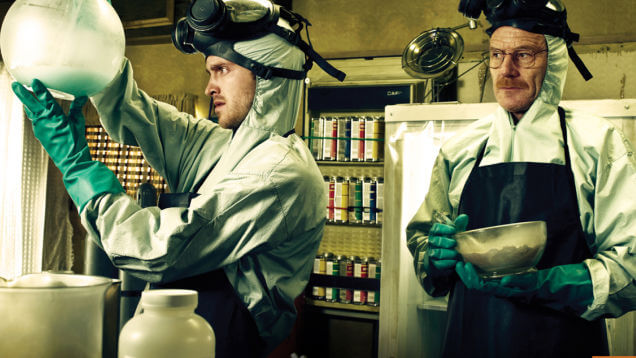
Possession of Methamphetamine in Fort WorthHere's a Breaking Bad question for you: If Walt lets Jesse cook a batch of Meth and Jesse screws it up, such that it is unsellable, can they be punished for the amount of bad methamphetamine that they cooked in addition to the amount of good methamphetamine (if there were such a thing)? This 5th Circuit tells us in United States v. Ramirez-Olvera.

Antonio Ramirez-Olvera was convicted of possessing methamphetamine (meth) with the intent to distribute, violating 21 U.S.C. § 841(a)(1) and (b)(1)(B); he received a sentence of 240 months imprisonment, which is ten years below the bottom of the federal sentencing guidelines range for this offense.  Arguing that the district court excessively punished him, as the court did not distinguish between d-methamphetamine (“d-meth”) and l-methamphetamine (“l-meth”) for the sentencing guidelines’ equivalency table, Ramirez-Olvera appealed to the United States Court of Appeals for the Fifth District.

See the opinion in United States v. Ramirez-Olvera (5th Circuit, 2015)

How Should the Court Determine the Weight of Meth in a Possession Case?

The issue before the Court is whether federal courts must distinguish between the types of meth when deciding punishment, or, whether courts can punish based on a “lump sum” of the meth. As you can imagine, higher amounts generally mean a longer prison sentence.

Had the district court used only the d-meth in its calculations, Ramirez-Olvera’s prison sentence might have, in theory, been shorter. Relying on DEA lab reports,Ramirez-Olvera’s probation officer generated a presentence report that recommended, he “should be held responsible for 7.7 [total] grams,” combining both the l-meth and d-meth seized fromRamirez-Olvera’s home and car.

The Court discusses types of methamphetamine, highlighting the differences scientifically and practically. “D-meth and l-meth are stereoisomers of meth…consist[ing] of identical molecules [that are] differently arranged.” United States v. Acklen, 47 F.3d 739, 742 (5th Cir. 1995). D-meth causes psychological and physical changes in humans. L-meth, on the other hand, “produces little or no physiological effect when ingested.” Id. Further, L-meth is a “weak form of [meth], is rarely seen and is not made intentionally, but rather results from a botched attempt to produce d-meth.” U.S. Sentencing Guidelines Manual § 2D1.1(c)(1)(2014). In other words, l-meth is an accidental byproduct when creating d-meth goes awry; L-meth has little to no cash value.

The Court reviews this case anew, focusing on the plain meaning of the Federal Sentencing Guidelines for drug crimes; the Guidelines are the authoritative, controlling source of law. United States v. Moore, 733 F.3d 161-63 (5th Cir. 2013). Amendment 518, “a 1995 amendment to § 2D1.1, indicates that courts need not distinguish between d-meth and l-meth when determining the quantity of…meth attributable to a defendant.” U.S. Sentencing Guidelines, [Sentencing Commission Dicta], §2D1.1(c)(1)(2004). Under this amendment, “l-meth [is to] be treated the same as d-meth…thereby simplifying guideline application [from this point forward].” Id. Further, the Court “ha[s] relied on Amendment 518 to hold [in an unpublished case] that any distinction between d-meth and l-meth is now immaterial when calculating drug quantity under the guidelines. United States v. Beltran, 91 F. App’x 349 (5th Cir. 2004).

The Court affirms the district court’s opinion, holding that under Amendment 518 to the sentencing guidelines, meth no longer is to be categorized for sentencing purposes; l-meth and d-meth are to be added together to render the quantity courts will use in assessing punishment. All meth created, pure and botched, will be added together to determine a defendant’s prison sentence.
Read full article
Knowing Possession of Drugs in Texas

Trace Amounts of Drugs Inside Pipe Not Enough For Knowing Possession of Drugs

By Brandon Barnett · Drug Crimes

What Does it Mean to Be in Knowing Possession of Drugs in Texas?

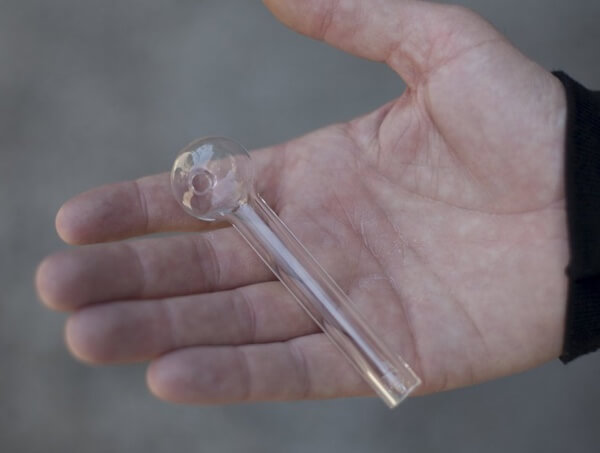
Knowing Possession of Drugs in TexasPolice found George Williams sitting behind an air conditioner unit of a business building. Even though it was a cool morning, Williams had his shirt off and was sweating profusely. After doing a pat-down of Williams, police found a crack pipe in his pocket that was later determined to have cocaine residue in it by police and a chemist.
The Trial Court convicted Williams of knowingly possessing a controlled substance. The elements are:

  1. that appellant exercised actual care, control and management over the contraband; and
  2. that appellant had knowledge that the substance in his possession was contraband.

The 14th Court of Appeals (Houston) wanted to look further to see whether the evidence would support a reasonable inference that the defendant knowingly possessed the contraband. When the quantity of a substance possessed is so small that it cannot be measured, there must be evidence other than mere possession to prove that the defendant knew the substance in his possession was a controlled substance.

Read the Case:  Williams v. State (14th District Court of Appeals - Houston, 2015)

In other cases, the defendant was convicted because the State proved that there was saliva on the crack pipe, suggesting that it had recently been smoked and that the defendant was intoxicated at the time the police found him. Another example is a defendant being found in a well-known drug house holding a syringe with cocaine in it in a manner that he was about to insert, or had just inserted it, into his body.

In this case, the Court of Appeals found that the only evidence was that Williams had his shirt off and was sweating. The Court of Appeals held that this was not enough to prove Williams had recently used the pipe or knew of its purpose as a crack pipe. The Court of Appeals reversed this case in the favor of Williams.

This signals that it takes more than just merely being found with a pipe containing trace amounts of a drug to be convicted of knowingly possessing the drug. There must be more evidence such as intoxication, recent usage, or being found in a known drug house.

Fort Worth Drug Crimes Attorneys | Free Case Consultation

If you have been charged with possession of a controlled substance or any other drug crimes, contact our attorney today for a Free consultation of your case. We will take the time to speak with you about the incident and answer your questions about the criminal justice process in Tarrant County. Contact our office at (817) 993-9249.

Read full article
Passing in Left Lane in Texas

Warrantless Traffic Stop Upheld for Driving in "Passing Only" Lane

By Brandon Barnett · Drug Crimes, Reasonable Suspicion

Driving in the “Passing Only” Left Lane for Forty-Five Seconds Creates Reasonable Suspicion for Warrantless Traffic Stop in Texas

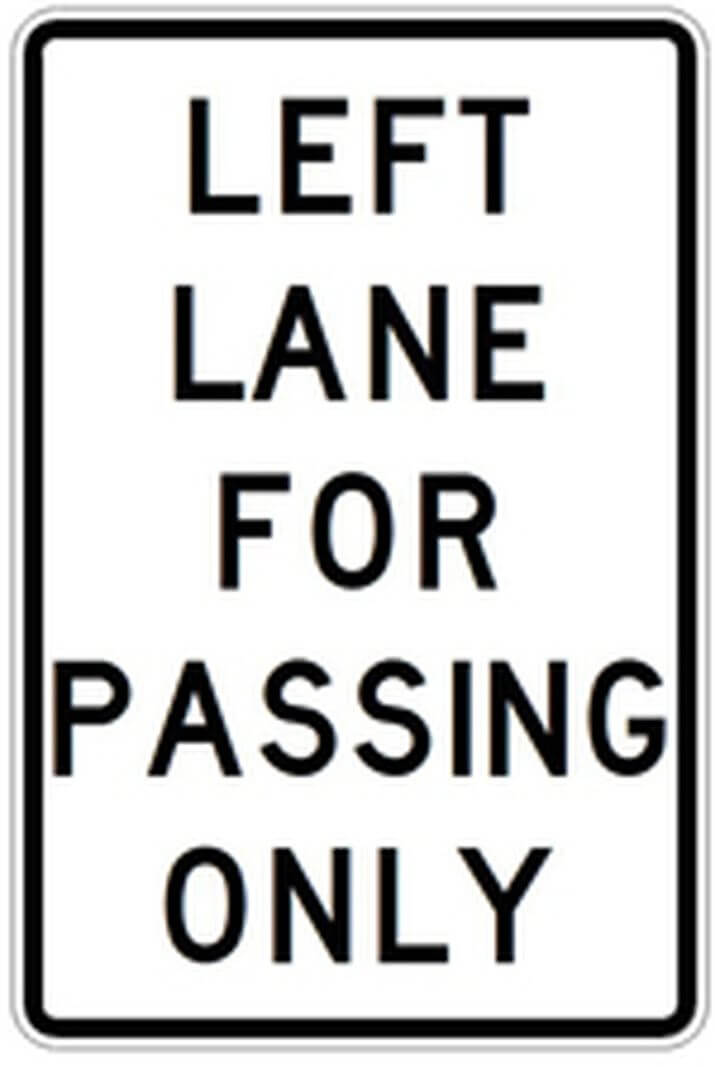
Passing in Left Lane in TexasJaganathan v. State: Francheska Jaganathan was driving in the left lane of a three-lane Texas highway, just ahead of a police cruiser. Mounted with a dashboard camera, the cruiser accelerated and changed lanes, but stayed behind Jaganathan’s car. A few seconds later, Jaganathan’s car passed a “Left Lane for Passing Only Sign,” yet her vehicle continued in the left lane despite the middle lane being clear of traffic. About forty-five seconds later, the trooper turned on his overhead lights, and conducted a traffic stop of Jaganathan’s car. During the traffic stop, the trooper smelled marijuana, prompting a search of the vehicle. The trooper found marijuana in the trunk, and as a result, Jaganathan was charged with possession of marijuana.

At trial, Jaganathan filed a motion to suppress the evidence, but the court denied the motion. Jaganathan chose a plea agreement where she pled guilty and was placed on deferred adjudication. On appeal, Jaganathan argued that the trooper lacked reasonable suspicion to conduct the traffic stop in the first place. The court of appeals agreed with her, stating that Jaganathan likely stayed in the left lane for safety reasons, that seeing the cruiser may have influenced her decision to stay out of the trooper’s way, and that a few seconds were an insufficient amount of time “to conclude that [Jaganathan] committed a [traffic] violation.”

The Court of Criminal Appeals of Texas disagrees with the court of appeals, citing the reasonable suspicion standard in Texas, and the Texas Transportation Code. The Court of Criminal Appeals also clarifies the issue at hand.

The issue is not whether Jaganathan committed a traffic offense, but whether the trooper had reasonable suspicion to stop the vehicle.

First, “A trooper may make a warrantless traffic stop if the reasonable suspicion standard is satisfied.” Guerra v. State, 432 S.W.3d 905, 911 (Tex. Crim. App. 2014). “Reasonable suspicion exists if the trooper has specific and articulable facts that, when combined with rational inferences from those facts, would lead him to reasonably suspect that a particular person has engaged …in criminal activity.” Abney v. State, 394 S.W.3d 542, 548 (Tex. Crim. App. 2013).

Second, “an operator of a motor vehicle [must] comply with an applicable official traffic-control device, including a sign.” TEX. TRANSP. CODE § 544.004(a); § 541.304(1). “Before a trooper can have reasonable suspicion to believe that a defendant committed the traffic offense of failing to obey a “Left Lane for Passing Only” sign, the trooper must be aware of facts that support a reasonable inference that the defendant drove past the sign before being pulled over.” Abney, 394 S.W.3d at 549.

Here, Jaganathan was driving in the left lane without passing other cars, after driving past a sign that prohibited that conduct. The dashboard camera captured the sign and all of the movements of the car. According to the Court of Criminal Appeals, even if Jaganathan had a defense of necessity—she HAD to be in the left lane for a medical or traffic emergency—the trooper still had reasonable suspicion to conduct a traffic stop. The Court of Criminal Appeals states, “these were only possibilities, and so it was reasonable for [the trooper] to suspect the appellant had violated the law.” Further, the reasonable suspicion standard “accepts the risk that officers may stop innocent people.” Illinois v. Wardlow, 528 U.S. 119, 125 (2000). As a result of the forty-five second traffic violation, the trooper had reasonable suspicion to pull Jaganathan’s car over; and, as a result of smelling marijuana, the trooper was able to search the car without a warrant, resulting in charges against Jaganathan. The Court of Criminal Appeals reversed the judgment of the court of appeals and affirmed the judgment of the trial court.

It is important to note, however, that the ruling has a dissenting opinion. Justice Meyers is adamant that the sign and the Transportation Code supporting it are problematic for the following reasons:

• The Code is unclear on how to comply or not comply with the sign.
• The Code does not state a specific amount of time a driver has to pass and merge back into the non-passing lane.
• The Code does not address passing a string of cars, in the middle lane.
• The Code does not address the need to accelerate to be able to pass, whether intended or unintended (for example if the car being passed speeds up, making passing difficult).
• Proving a driver’s intent to pass another car is difficult.

If you or a loved one are facing traffic violations or drug charges, please contact our office for a free consultation at (817) 993-9249.

Read full article

Court Rules Indigent Defendant Must Pay for Independent Drug Test

By ardent · Drug Crimes

Drug Crimes Can Come With Added Costs | Fort Worth Drug Crimes Defense Attorneys

In a pre-trial motion, Ehrke requested the trial court to provide for independent testing of the substance. Ehrke's attorney argued that, because 1.6 grams was so close to the 0.99 gram for a lighter sentence, independent testing was justified.

The trial court agreed it was required to allow Ehrke's counsel to inspect and examine the substance. However, because Ehrke did not demonstrate the need for the test or any reason why a second test would have different results, the judge denied the motion for independent testing. Ehrke's counsel's offer to secure payment for the testing did not change the judge's decision.

The Court of Appeals agreed with the trial court. The court based its decision on Ehrke's failure to show a particular need for independent testing or how an independent chemist would arrive at a different result.

On appeal to the Court of Criminal Appeals, the CCA identified two issues: (1) whether Ehrke had a right to inspection of the substance by an independent expert and (2) whether the state was required to pay for such an inspection.

The Court noted the Code of Criminal Procedure provided for a defendant to inspect evidence material to the state's case, but only if the defendant showed good cause for a request to inspect evidence. However, courts had found inspection mandatory if the evidence is material to the defendant's case.

The CCA said that in a controlled substance case, if the defendant asks to inspect the substance, the court must allow inspection because the substance will necessarily be material to the defense--no showing of good cause is required.

The CCA addressed the question of what an "inspection" entails. Obviously, simply looking at the substance, which is apparently all the trial court offered Ehrke's counsel, would not determine either its substance or its weight. The Court stated that in a controlled substance case, the right to pay for an independent chemist to analyze the substance is absolute.

On the second issue, the CCA acknowledged an indigent defendant's right to a court-appointed (read "court-paid") expert but said the defendant has the burden to provide specific justification for appointment of the expert. In Ehrke's case, the CCA said, no specific justification had been provided. Even though Ehrke's counsel explained the rationale for his request, he did not provide any evidence to question the original analysis by the DPS chemist, did not explain how independent testing was required for his defense and did not provide information regarding the complexity of the testing. According to the CCA, an absolute right to state-funded independent testing would be too great a financial burden to the County; therefore, appointment of an expert is required only if there is some preliminary evidence of a significant issue of fact to justify the appointment.

The Court remanded the case to the trial court for proceedings on the first issue.

The bifurcated decision in this case is perplexing. The Court said chemical analysis of an alleged controlled substance will always be material to a defendant's case and discarded the Code's requirement of a showing of good cause, making the right to independent testing absolute.

However, in the second issue, the Court seems to have abandoned its notion of materiality for a standard of affordability. On the part of the defendant, the Court cited case law that the state is not required to provide an indigent defendant with everything a wealthier defendant might be able to afford. More importantly, the Court concluded the financial burden to the County of paying for independent chemical testing in all controlled substance cases would be too great.

Examples abound of wealthy defendants procuring a better defense than an indigent defendant.  However, if an issue is always material to an indigent defendant's case to the point of making the right to independent testing absolute, it seems odd that the indigent defendant's right can be defeated by fiscal concerns of the County, which is in a much better position to pay for testing.

Contact our Drug Crimes Defense Attorneys Today for a FREE Consultation of Your Case at (817) 993-9249

Our Fort Worth criminal defense attorneys are experienced in defending drug crimes cases, including possession, possession with intent to distribute, manufacture, and more. If you are under investigation or have a pending charge, don't wait. Contact us today.

Read full article

The Genius of Specialty Courts

By Brandon Barnett · Specialty Courts

As I'm sure you've noticed by now, specialty courts (drug courts, DWI courts, Mental health courts, reentry courts, etc.) are rapidly becoming the norm in most criminal jurisdictions.  Why the increase in popularity?  Simple.  They work.

The National Association of Drug Court Professionals' website cites the five primary goals these programs are working to achieve.

1) They reduce crime 2) They save money 3) They ensure compliance 4) They combat addiction 5) They restore families

Incarcerating addicts only delays their inevitable addiction cycle.  Specialty courts offer a real, life-changing alternative that not only aid individuals in their battle against addiction, but also improve the crime rates in every community in which they exist.  These specialty courts work to provide intense supervision through the cooperative efforts of local probation offices, prosecutors, defense attorneys, and, most importantly, judges. Read more about drug courts.

If you haven't researched specialty courts in your jurisdiction, I'd highly encourage you to do so immediately.  These programs could offer an incredible opportunity that may not have been available before.  Let's hope specialty courts continue to gain traction, and that more specialty court keep popping up throughout Texas.  It is important to remember that the criminal justice system is not always about punishment, it's also about rehabilitation.

Read full article

Speak with a Fort Worth attorney

Call (817) 993-9249 or send us a message to discuss your case.