Skip to content
Tag

Defective Liability

Page 6 of 8 · 39 articles

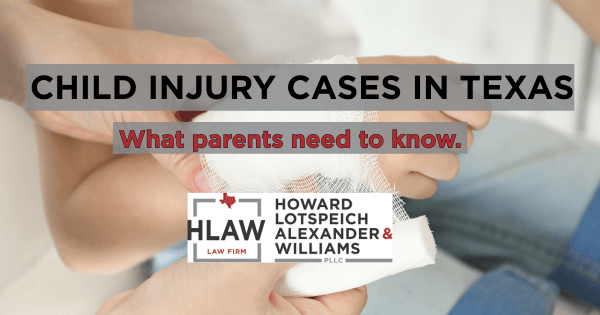
Concerned parent holding child’s hand after injury, symbolizing support during a Texas personal injury claim for minors

Personal Injury Claims for Children in Texas: What Parents Need to Know

By Jesse Lotspeich · Personal Injury

Concerned parent holding child’s hand after injury, symbolizing support during a Texas personal injury claim for minors
When your child is injured, understanding your legal options is crucial. Learn how HLAW helps families navigate child injury claims in Texas.

When a child is injured due to another’s negligence, parents are thrust into a world of emotional stress, medical decisions, and legal confusion. In Texas, personal injury claims involving children differ significantly from those involving adults—and understanding these nuances is critical to protecting your child’s rights and future.

At the HLAW law firm, we’ve represented children and families across Texas in personal injury cases. Our team understands the delicate balance between legal complexity and the care families need after a traumatic event. Below, we explain everything Texas parents should know about pursuing a child injury claim, including deadlines, guardianship requirements, settlement procedures, and court oversight.

Children Have a Right to Compensation—But Cannot File Their Own Lawsuit

In Texas, minors (individuals under age 18) lack legal capacity to file lawsuits or enter into binding legal contracts. However, Texas law does not prohibit a minor from recovering compensation for injuries caused by another person’s negligence.

Who Can File on the Child’s Behalf?

Under Texas Rule of Civil Procedure 44, a next friend (usually a parent or legal guardian) may file suit on behalf of the child. The court will also typically appoint a guardian ad litem or formal legal guardian under certain circumstances to ensure the child’s interests are fully protected.

Statute of Limitations: Special Rules for Minors

For most adult personal injury claims, the statute of limitations in Texas is two years from the date of the incident, per Texas Civil Practice & Remedies Code § 16.003(a). However, when the injured party is a minor, the timeline is different.

Tolling for Minors

Under § 16.001(a)(1) and (b), a person is under a legal disability if they are under 18. The limitations period is tolled (paused) until the minor reaches their 18th birthday.

This means the child generally has until their 20th birthday to file their claim.

BUT: Parental Claims Are Still Limited

Parents, however, are entitled to bring separate claims for:

These parental claims are not tolled and must be brought within two years of the incident.

Settlement of a Minor’s Personal Injury Claim Requires Court Approval

Texas law is particularly protective of minors’ rights, especially when it comes to settlements. Even if all parties agree to settle, a Texas court must approve the settlement before it becomes enforceable.

Tex. Estates Code § 1351.001 allows for court approval of a minor’s settlement and details when court-created accounts or guardianships of the estate are required.

The Court Approval Process:

  1. File a Petition for Approval of Minor’s Settlement
  2. Appointment of a Guardian Ad Litem (if required)
  3. Conduct a Prove-Up Hearing
  4. Court evaluates:

  • Whether the settlement is fair and reasonable
  • Whether proceeds are being protected for the child’s benefit
  • Judge enters an order approving the settlement and disbursing funds appropriately

Courts routinely use Tex. R. Civ. P. 173 to appoint a Guardian Ad Litem when necessary.

The Role of a Guardian Ad Litem

When court approval is needed, the judge may appoint a Guardian Ad Litem—an independent attorney tasked with evaluating whether the proposed settlement is in the child’s best interest.

Tex. R. Civ. P. 173.4(c): “The guardian ad litem may participate in mediation or negotiation, and may testify or submit a report and recommendations to the court concerning the settlement.”

Their report may influence the judge’s decision significantly. This neutral third party ensures that no conflict of interest exists between the child and the parent or attorney, especially in cases involving large settlements or parental claims for reimbursement.

Important: The Guardian Ad Litem’s fees are usually paid from the settlement, and the court must also approve this fee.

Where Does the Money Go? Distributing a Minor’s Settlement

Texas law mandates protections for how a minor’s injury settlement is handled. The funds cannot simply be handed over to the parents.

Acceptable Methods of Disbursement:

  • Court Registry (Estates Code § 1351.003): The funds are deposited with the court and released when the child turns 18.
  • Structured Settlement Annuities: Payments begin at age 18 (or another age specified by the court) and continue periodically.
  • Trust Accounts: In some cases, a special needs trust or guardianship of the estate may be necessary to preserve eligibility for benefits.

If the net recovery is over $100,000, courts often require appointment of a guardian of the child’s estate under Tex. Estates Code § 1104.001.

Medical Expenses and Insurance Subrogation

In Texas, medical bills for a minor are generally considered the legal responsibility of the parents until the child turns 18. These bills form the basis of the parents’ own personal injury claim, which is subject to the standard 2-year statute of limitations.

Also, beware of health insurance subrogation claims. Under Tex. Civ. Prac. & Rem. Code § 140.005, insurers may seek reimbursement from settlement funds for amounts they paid toward the child’s treatment, but parents may have negotiation rights to reduce this lien. An experienced Texas personal injury attorney can be crucial in the success of this process as well.

Why You Need an Experienced Attorney for a Child Injury Claim

Navigating a child injury case is not simply about negotiating with insurance companies. It requires:

  • Managing dual claims for both parent and child
  • Understanding court approval procedures
  • Navigating guardian ad litem investigations
  • Handling structured settlements and trusts
  • Coordinating with insurance subrogation departments

At the HLAW law firm, our attorneys bring over years of experience handling minors’ personal injury settlements across Texas. We understand how to protect your child’s legal and financial future, and how to advocate for your family at every step.

Final Thoughts: Don’t Wait to Act

While the statute of limitations may be tolled for a child’s injury, critical evidence—such as witness statements, photographs, and medical records—can fade over time. Early legal action helps ensure the strongest possible claim and maximizes your child’s recovery.

Contact HLAW Today

If your child has suffered a serious injury, contact HLAW to speak with an experienced Texas child injury attorney and a free case evaluation. We’ll walk you through every step of the process—from investigating the claim to finalizing a court-approved settlement that protects your child’s future.


Read full article
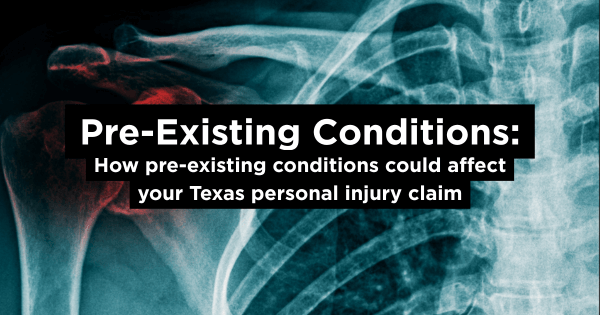
X-ray of shoulder and ribcage highlighting pre-existing conditions in Texas personal injury claims

How Pre-Existing Conditions Affect Your Texas Personal Injury Claim

By Jesse Lotspeich · Personal Injury

X-ray of shoulder and ribcage highlighting pre-existing conditions in Texas personal injury claims
Understanding how pre-existing injuries impact personal injury cases under Texas law, including the eggshell plaintiff rule.

When you suffer an injury in Texas due to someone else’s negligence, you have the right to seek compensation, even if you had a pre-existing condition. However, insurance companies often use your prior medical history to limit or deny your claim. This is where Texas law and the "eggshell plaintiff" rule come into play.

Understanding Pre-Existing Conditions in Personal Injury Claims

A pre-existing condition refers to any medical issue or injury you had before the accident. Common examples include:

  • Back or neck problems
  • Arthritis
  • Previous surgeries
  • Degenerative disc disease
  • Old fractures or soft tissue injuries

When a new accident aggravates or exacerbates these conditions, questions often arise about how much of your current injury is due to the new incident versus your prior health issues.

The Eggshell Plaintiff Rule in Texas

Under Texas law, the "eggshell plaintiff" rule protects injured victims who have pre-existing conditions. This rule is derived from common law principles and is routinely recognized by Texas courts.

The Texas Pattern Jury Charge (PJC 28.6) includes specific language on pre-existing conditions:  "If a pre-existing injury or condition was aggravated by the occurrence in question, you are to determine the amount of damages that resulted from the aggravation."

Simply put, under the eggshell plaintiff rule, a defendant takes the plaintiff as they find them. If the defendant’s negligence causes additional harm to someone who is more susceptible to injury due to a pre-existing condition, they are still fully responsible for the entire extent of the harm caused.

Insurance Companies' Tactics

Despite the eggshell plaintiff rule, insurance companies routinely argue that your injuries were not caused by the accident but were instead due to your pre-existing conditions. Their tactics often include:

  • Requesting extensive medical records
  • Hiring defense medical experts
  • Arguing that only a minor aggravation occurred
  • Blaming natural degeneration or aging

These arguments can significantly reduce your settlement offer if you don’t have strong legal advocacy.

Texas Law: Proximate Cause and Apportionment of Damages

In Texas, the legal concept of "proximate cause" is crucial (Texas Pattern Jury Charge PJC 2.4). The defendant is liable for injuries that are the foreseeable result of their negligence, even if the plaintiff's pre-existing condition made the injuries worse.

However, if part of your injury was truly unrelated to the accident, the jury may apportion damages. Texas Civil Practice and Remedies Code §33.003 allows for proportionate responsibility, though this typically applies to multiple defendants rather than distinguishing between pre-existing and new injuries.

In Leitch v. Hornsby, 935 S.W.2d 114 (Tex. 1996), the Texas Supreme Court reaffirmed that defendants are liable for the full extent of harm caused by their negligence, even when pre-existing conditions make the injury worse.

Key Takeaways for Injured Texans

  •  You are entitled to compensation for the full extent of your injuries, even if you had a pre-existing condition.
  • The defendant cannot escape liability by arguing you were already vulnerable.
  • Insurance companies will likely try to minimize your claim by focusing on your medical history.
  • Having thorough medical documentation and an experienced personal injury attorney can make a significant difference.

Protecting Your Rights

If you have suffered a pre-existing injury accident in Texas, don’t let insurance companies take advantage of you. An experienced personal injury attorney can:

  • Gather and present your medical evidence effectively.
  • Retain medical experts to support your case.
  • Ensure the jury understands how the accident aggravated your pre-existing condition.
  •  Maximize your compensation under Texas law.

At the HLAW Firm, we have extensive experience dealing with complex cases involving pre-existing injuries. Contact us for a free consultation if you or a loved one has been injured.

Read full article
Texas parking lot and sidewalk injury — premises liability law explained

When Property Owners Are Liable for Injuries on Sidewalks or Parking Lots in Texas

By Jesse Lotspeich · Personal Injury

Texas parking lot and sidewalk injury — premises liability law explained
HLAW Firm helps victims of parking lot and sidewalk injuries pursue justice under Texas premises liability law.

Sidewalks, parking lots, and other exterior areas of businesses and properties are often taken for granted. But for many personal injury victims, these seemingly ordinary places are where accidents happen. In Texas, property owners can be held legally responsible for injuries that occur on these exterior spaces under premises liability law.

Understanding Premises Liability for Exterior Areas

Texas premises liability law is governed primarily by common law principles and influenced by the Texas Supreme Court’s decisions, such as Corbin v. Safeway Stores, Inc., 648 S.W.2d 292 (Tex. 1983), and Keetch v. Kroger Co., 845 S.W.2d 262 (Tex. 1992). These cases establish that property owners and occupiers have a duty to maintain their premises in a reasonably safe condition and warn of known dangers.

While many associate premises liability with incidents inside buildings, Texas law applies the same principles to exterior areas, including:

  • Sidewalks
  • Parking lots
  • Driveways
  • Entryways
  • Outdoor common spaces

Who Is Responsible for Sidewalks and Parking Lots?

Liability depends on ownership and control:

  • Private Property Owners: Businesses, shopping centers, apartment complexes, and private property owners are generally responsible for maintaining their sidewalks, parking lots, and driveways. See CMH Homes, Inc. v. Daenen, 15 S.W.3d 97 (Tex. 2000).
  • Public Entities: If a sidewalk or parking lot is owned or maintained by a governmental entity, sovereign immunity laws apply under the Texas Tort Claims Act (TTCA), Texas Civil Practice & Remedies Code Chapter 101. This law provides limited waivers of immunity but imposes strict notice requirements and damage caps.
  • Shared Responsibility: Property managers, tenants, or contractors may share liability depending on contractual obligations and control over the premises.

Common Exterior Hazards Leading to Injury

Some of the most frequent causes of sidewalk and parking lot injuries in Texas include:

  • Uneven or cracked pavement
  • Potholes
  • Loose gravel or debris
  • Poor lighting leading to inadequate visibility
  • Inadequate drainage causing slick surfaces
  • Missing or poorly marked curbs or steps
  • Failure to address ice, snow, or standing water (though Texas rarely deals with ice, occasional winter storms can create hazards)

Legal Standard: The Duty Owed to Visitors

Under Texas law, the duty owed depends on the status of the injured person:

  • Invitees (business customers, tenants, guests): Property owners owe the highest duty of care. They must inspect the property and either remedy dangerous conditions or warn of their existence. See Wal-Mart Stores, Inc. v. Gonzalez, 968 S.W.2d 934 (Tex. 1998).
  • Licensees (social guests): Property owners owe a duty to warn of known dangerous conditions that are not obvious.
  • Trespassers: Generally, the duty is minimal, though landowners cannot willfully or wantonly cause harm.

Proving Liability in Texas Parking Lot and Sidewalk Injury Cases

To succeed in a premises liability claim for a parking lot injury or sidewalk trip fall liability in Texas, the injured party typically must prove:

  1. The property owner had actual or constructive knowledge of the dangerous condition.
  2. The condition posed an unreasonable risk of harm.
  3. The property owner failed to take reasonable steps to reduce or eliminate the risk.
  4. The failure directly caused the injury.

Constructive knowledge can be established by showing the condition existed long enough that the owner should have discovered it through reasonable inspection. This standard was clarified in Brookshire Grocery Co. v. Taylor, 222 S.W.3d 406 (Tex. 2006).

Challenges in Sidewalk and Parking Lot Cases

These cases often hinge on:

  • Photographs or video of the hazard
  • Maintenance logs and inspection reports
  • Witness statements
  • Expert testimony (engineering reports, lighting studies, or building code violations)

In urban areas, municipal codes may establish maintenance standards that can strengthen a negligence claim if violated.

Governmental Claims: Special Considerations

Claims against a governmental entity in Texas face unique hurdles under the TTCA:

  • Plaintiffs must provide written notice of the claim within six months of the injury (or less if required by local charter).
  • Damages are capped ($250,000 per person/$500,000 per occurrence for state entities).
  • The plaintiff must prove actual knowledge of the dangerous condition by the governmental unit.

Statute of Limitations in Texas

Under Texas Civil Practice & Remedies Code Section 16.003, the general statute of limitations for personal injury claims is two years from the date of injury. Prompt action is crucial, especially in cases involving public entities due to additional notice requirements.

Damages Available

In a successful premises liability case, injured victims may recover damages for:

  • Medical expenses
  • Lost wages
  • Pain and suffering
  • Permanent impairment or disability
  • Future medical care needs

Why Exterior Premises Liability Claims Matter

Sidewalk and parking lot injuries can result in serious harm: fractures, head trauma, spinal injuries, or even lifelong disabilities. Property owners must take reasonable steps to protect visitors not only inside but also outside their buildings.

At Howard Lotspeich Alexander & Williams, PLLC (HLAW), we understand the complexities of Texas premises liability law. If you or a loved one has been injured in a sidewalk or parking lot accident, don’t wait. Contact our experienced personal injury attorneys today for a free consultation and let us fight for the justice you deserve.

Read full article
Doctor holding stethoscope with text asking if you need to see a doctor after a minor car accident – HLAW Law Firm

Do I Need to See a Doctor After a Minor Car Accident?

By Jesse Lotspeich · Personal Injury

Doctor holding stethoscope with text asking if you need to see a doctor after a minor car accident – HLAW Law Firm
Even minor car accidents can cause hidden injuries. Learn why seeing a doctor right away is critical to your health and your personal injury claim.

Why Delaying Medical Care Could Harm Both Your Health and Your Injury Claim

When you’ve been in a minor car accident—maybe a rear-end at a stoplight or a fender bender in a parking lot—it’s easy to think, “I feel fine, so I don’t need to see a doctor.” But in Texas personal injury cases, this one decision can have a major impact on your health, recovery, and financial compensation.

At the HLAW Law Firm, we’ve helped countless Fort Worth accident victims who initially thought they were uninjured, only to discover serious symptoms days later. Below, we explain exactly why seeing a doctor after any car crash—no matter how small—is not just recommended, but essential.

🚗 Why “Minor” Accidents Can Still Cause Major Injuries

There’s no such thing as a “minor” accident when it comes to your body. Even a low-speed crash involves a sudden change in momentum, which forces your muscles, ligaments, joints, and spine to absorb the shock.

You might feel okay at the scene, but the effects often don’t show up until hours or even days later—especially when adrenaline and shock are still in play.

⚠️ Common Injuries from Low-Impact Collisions Include:

  • Whiplash – neck strain from rapid back-and-forth motion
  • Soft tissue damage – to muscles, tendons, and ligaments
  • Herniated discs – causing pain, tingling, or numbness
  • Concussions – even without hitting your head
  • Shoulder, knee, or wrist injuries – from bracing on impact
  • Internal bleeding or bruising – especially from seat belt trauma

These injuries can worsen without early treatment and sometimes become chronic or permanent if ignored.

🏥 Why You Should See a Doctor Even If You Feel “Fine”

✅ 1. Symptoms May Be Delayed

Many accident-related injuries don’t present immediate symptoms. It might take:

  • 12 to 72 hours for neck or back pain to show up
  • Several days for nerve pain, headaches, or dizziness
  • A week or more before soft tissue stiffness becomes obvious

Early diagnosis means quicker healing, reduced long-term damage, and clearer proof of your injury’s cause.

✅ 2. Medical Records Protect Your Legal Rights

If you later decide to pursue a personal injury claim, insurance adjusters will scrutinize your actions after the accident. One of the first questions they ask is:

“Did you go to the doctor right away?”

Waiting too long may lead them to argue:

  • You weren’t really hurt
  • Your injury came from something else
  • Your damages aren’t worth as much

Having prompt medical documentation strengthens your claim and links your injuries directly to the crash.

✅ 3. Insurance Companies Use Delays Against You

Even in cases where the other driver was clearly at fault, insurers will look for any excuse to reduce or deny your compensation.

Texas follows a modified comparative fault rule (Tex. Civ. Prac. & Rem. Code § 33.001), meaning if they can pin 51% of the blame on you—or claim your injuries are unrelated—you could walk away with nothing.

🕒 How Soon Should You Get Medical Attention?

The best practice is to see a doctor within 72 hours of the accident, even if you don’t feel hurt. This is considered a reasonable time frame by both insurers and courts.

📌 You should go immediately if you experience:

  • Loss of consciousness
  • Vomiting or nausea
  • Severe pain
  • Confusion or memory issues
  • Visible swelling or bruising

💬 What Kind of Doctor Should You See After a Car Accident?

It depends on your symptoms and situation, but common options include:

  • Emergency Room – for urgent or severe symptoms
  • Urgent Care – for same-day evaluation of mild-to-moderate pain
  • Primary Care Doctor – for continuity of care and referrals
  • Chiropractor or Physical Therapist – for neck, spine, and mobility issues
  • Orthopedic Specialist – for joint and musculoskeletal injuries

If you don’t know where to start, we can connect you with local providers who treat car accident victims and understand how to document your case properly.

💸 What If I Can’t Afford to See a Doctor?

In Texas, many doctors who treat car wreck injuries will work on a letter of protection basis. That means they agree to delay payment until your case settles—no upfront cost.

At HLAW, we regularly help clients arrange care with:

  • Chiropractors
  • Imaging clinics (MRI, CT)
  • Orthopedic specialists
  • Physical therapy providers

We can help coordinate your treatment so you can focus on healing.

❌ What Happens If You Don’t Seek Medical Treatment?

If you choose not to see a doctor after a crash, you risk:

  • Worsening a hidden injury
  • Being stuck with out-of-pocket medical bills later
  • Losing your chance to file a personal injury claim
  • Getting lowballed or denied by the insurance company

Even if you feel fine, documentation matters. It’s your proof that the accident caused your injuries, not something else.

🧠 What If You Waited Too Long to See a Doctor?

If it’s been a few days or even weeks and you’re only now starting to feel pain, you should still seek care immediately and speak to an attorney. It’s harder to prove your case with delays, but not impossible—especially if your symptoms are clearly injury-related and documented properly.

👨‍⚖️ Hurt in a Car Wreck in Fort Worth? Let’s Talk.

At the HLAW Firm, we’re not just here to file claims—we’re here to listen, guide, and advocate for you. Whether your wreck felt “minor” or involved serious injuries, we treat each case with the same level of care and commitment.

✅ Free consultations

✅ No fees unless we win

✅ Trusted relationships with local doctors

✅ Compassionate, faith-based advocacy

Don’t guess about your health. 

📞 Contact us today to speak directly with a personal injury attorney.

Read full article
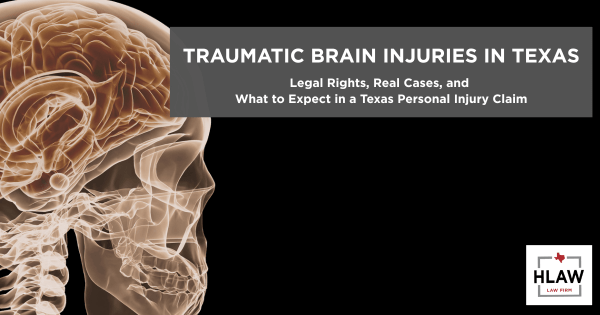
Medical illustration of a human skull and brain with the text ‘Traumatic Brain Injuries in Texas – Legal Rights, Real Cases, and What to Expect in a Texas Personal Injury Claim’ from HLAW Law Firm.

Traumatic Brain Injuries in Texas: Legal Rights, Real Cases, and What to Expect in a Personal Injury Claim

By Jesse Lotspeich · Personal Injury

Medical illustration of a human skull and brain with the text ‘Traumatic Brain Injuries in Texas – Legal Rights, Real Cases, and What to Expect in a Texas Personal Injury Claim’ from HLAW Law Firm.
Learn what Texas law says about traumatic brain injury claims—your legal rights, real case examples, and how HLAW Law Firm can help you seek justice.

Introduction

Traumatic Brain Injuries (TBIs) are among the most devastating injuries a person can suffer—often resulting in permanent cognitive, emotional, and physical impairments. In Texas personal injury law, TBIs require a nuanced approach: proving causation, long-term consequences, and damages in a way that withstands the scrutiny of insurance adjusters, defense counsel, and juries.

Whether the injury resulted from a car wreck, workplace fall, sports incident, or violent assault, victims deserve both medical care and legal justice. This article provides an in-depth guide to TBI cases in Texas, exploring relevant statutes, legal strategies, case examples, and the kinds of damages typically awarded.

1. Understanding Traumatic Brain Injuries

A TBI occurs when the brain is damaged by external force—commonly through blunt trauma, penetration, or acceleration/deceleration forces. Types of TBIs include:

  • Concussions – Often caused by whiplash or impact, with symptoms like confusion, headache, and memory loss.
  • Contusions – Bruising of the brain tissue, usually from direct impact.
  • Diffuse Axonal Injury – Caused by rapid acceleration/deceleration, damaging brain cells across multiple areas.
  • Penetrating Injuries – From objects entering the skull (e.g., gunshots, industrial accidents).
  • Second Impact Syndrome – Occurs when a second concussion is sustained before the first has healed.

Common Symptoms:

  • Short- and long-term memory loss
  • Difficulty concentrating or reasoning
  • Personality changes or depression
  • Slurred speech or motor impairments
  • Fatigue, headaches, vision issues
  • Post-traumatic seizures

2. Texas Law Governing TBI Personal Injury Claims

Texas personal injury claims involving TBIs typically rely on a negligence theory, meaning the plaintiff must show that the defendant failed to act with reasonable care and caused the injury.

A. Key Legal Elements:

  1. Duty – The defendant had a legal duty (e.g., to operate a vehicle safely, maintain safe premises).
  2. Breach – That duty was breached (e.g., through reckless driving or ignoring hazards).
  3. Causation – The breach caused the TBI.
  4. Damages – The victim suffered actual, compensable harm.

B. Comparative Fault – CPRC § 33.001–33.017

Texas applies modified comparative fault. If the injured party is more than 50% at fault, they cannot recover damages. If less, damages are reduced proportionally. This can become critical in:

  • Car accidents involving allegations of speeding or texting
  • Slip-and-fall cases where warning signs were partially visible
  • Workplace injuries involving failure to follow safety protocols

C. Statute of Limitations – CPRC § 16.003

You have two years from the date of injury to file a lawsuit. In some brain injury cases—especially when symptoms are subtle—delayed discovery arguments may apply, but this can be contentious and requires strong medical documentation.

3. Types of TBI-Related Accidents in Texas Personal Injury Law

A. Car and Truck Accidents

TBIs are common in rear-end collisions, rollovers, and motorcycle crashes. Even when airbags deploy and seat belts are used, sudden deceleration can cause the brain to shift violently within the skull.

B. Falls on Dangerous Premises

Under Texas premises liability law, property owners owe a duty to warn of or correct unreasonably dangerous conditions. TBIs from slips, trips, and stairway falls often occur in:

  • Retail stores (wet floors, poor lighting)
  • Apartment complexes (broken handrails, loose tiles)
  • Public buildings (uneven pavement, lack of signage)

Key Issue:

Plaintiffs must prove the owner had actual or constructive knowledge of the hazard and failed to remedy it. Surveillance footage, cleaning logs, and witness statements are crucial.

C. Workplace and Construction Accidents

Texas is unique in that it allows employers to opt out of the state workers’ compensation system. These non-subscriber employers can be directly sued for negligence.

Scenario:

A roofer working for a non-subscriber in Fort Worth falls through an unsecured skylight and suffers a severe TBI. If OSHA violations or improper training are proven, the employer may be held liable.

For subscriber employers, a third-party lawsuit might still be viable—for example, against a subcontractor or equipment manufacturer.

D. Medical Negligence or Birth Injury

Brain damage due to lack of oxygen (hypoxia) during childbirth, surgical error, or anesthesia negligence may form the basis of a medical malpractice claim. These are governed by CPRC Chapter 74, which requires:

  • Pre-suit notice
  • Expert reports
  • Caps on non-economic damages ($250,000 per provider)

E. Assault and Negligent Security

TBI victims of violent assaults (e.g., bar fights, domestic violence, parking lot attacks) may bring civil claims against:

  • Perpetrators (if identifiable and collectible)
  • Property owners (if they failed to implement reasonable security measures)

Under Texas law, businesses are not liable for third-party criminal acts unless those acts were foreseeable and preventable. Prior similar crimes, lack of lighting or surveillance, and poor response plans can support a claim.

4. Evidence and Experts in TBI Litigation

TBIs are notoriously difficult to “see,” especially in the absence of skull fractures or hemorrhages. That makes medical evidence and expert testimony essential.

Types of Medical Evidence:

  • Neuroimaging (MRI, CT, DTI scans)
  • EEGs (for seizure activity)
  • Neuropsychological Testing (measures memory, attention, processing speed)
  • Expert Testimony from neurologists, neurosurgeons, rehab specialists

Other Critical Evidence:

  • Testimony from family, coworkers, teachers (to demonstrate changes in behavior)
  • Employment records (pre- vs. post-incident productivity)
  • Life care planners and economists (to estimate future care costs and earning capacity)
  • Pain journals and video diaries

5. Damages in Texas TBI Lawsuits

Damages in a TBI case can be extensive and are usually categorized into:

A. Economic Damages

  • Medical bills (hospitalization, surgery, rehab, medications)
  • Lost income and future earning capacity
  • In-home care or residential treatment
  • Occupational therapy, counseling, assistive devices

B. Non-Economic Damages

  • Pain and suffering
  • Mental anguish
  • Loss of enjoyment of life
  • Emotional distress
  • Loss of consortium (for spouses or family members)

C. Punitive Damages (Exemplary Damages)

Available under CPRC § 41.003 if the defendant acted with gross negligence, malice, or fraud (e.g., drunk driving, intentional assault).

6. Settlement vs. Trial: What to Expect

Most TBI claims settle before trial, but insurance companies often resist paying fair value due to the subjective nature of many symptoms.

Advantages of Settlement:

  • Certainty and faster compensation
  • Avoids the emotional toll of litigation

When Trial May Be Necessary:

  • Disputes over causation or extent of impairment
  • Allegations of preexisting conditions
  • Need for structured lifetime compensation

Tip: Your legal team should prepare every TBI case as if it will go to trial. That alone can strengthen your bargaining power.

Conclusion: Get Legal Help from a Texas TBI Attorney

If you or someone you love has sustained a traumatic brain injury due to someone else’s negligence, the path forward can feel overwhelming. Between medical bills, insurance claims, and long-term uncertainty, you need an advocate who understands both the law and the science behind TBIs.

At Howard Lotspeich Alexander & Williams, PLLC (HLAW), we don’t treat TBI cases like routine personal injury claims. We invest in the best experts, create compelling case strategies, and walk with you and your family every step of the way.

Schedule a Free Consultation Today

We’re proud to serve TBI victims across Fort Worth, Dallas, and all of Texas. Call 817-993-9249 or complete our online intake form for a confidential, no-obligation case review.

Read full article

Speak with a Fort Worth attorney

Call (817) 993-9249 or send us a message to discuss your case.