Skip to content

News and Insights

Page 99 of 102 · 510 articles

Do You Consent? Do You Consent? Do You Consent?

By Brandon Barnett · Warrantless Search

Today, the Texas Court of Criminal Appeals released Meekins v. State, a case out of Lubbock County wherein the issue for appellate review was whether that State proved by clear and convincing evidence that Appellant had consented to a search of his vehicle.

At a pre-trial hearing to determine whether the drugs found during the search should be suppressed, the trial court ruled that Appellant’s consent to search was given knowingly and voluntarily. The court, therefore, refused to suppress the evidence. Here’s the evidence on which the trial court based its ruling:

After officers pulled Appellant over for failing to signal a turn, the following exchange occurred between Appellant and the officer while the officer talked to Appellant through the driver's side window:

Officer: You don’t have anything illegal in the vehicle, no weapons or anything like that?

Appellant: No

Officer: You don’t mind if we take a look?

Appellant: (Inaudible) Look in the car or what?

Officer: Yeah.

Appellant: I don’t have anything.

Officer: Okay. You don’t mind if I look? It’s yes or no, bud.

Appellant: What do you think?

Officer: What do I think?

Appellant: Yeah.

Officer: I’m asking you to look in the car.

Appellant: (Inaudible)

Officer: Don’t reach around, bud, just in case you got a gun.

Appellant: I ain’t got no gun or nothing.

Officer: You don’t mind if we look?

Appellant: I just…(inaudible) That it (inaudible).

Officer: Okay.

Appellant: (Inaudible)

Officer: I’m asking if I can look in the vehicle. It’s yes or no.

Appellant: (Inaudible)

Officer: Is there anything else you might have? You seem a little nervous, you know what I’m saying? You’re making me nervous.

Appellant: I ain’t nervous.

Officer: Okay. Do you have anything illegal in your vehicle?

Appellant: No.

Officer: Okay. Do you mind if I look?

Appellant: I guess.

After that, the officer, believing he has been given consent, ordered Appellant to exit the vehicle. Ultimately the officer found the contraband (marijuana) in Appellant’s pocket.

The 7th District Court of Appeals (Amarillo) reversed the trial court’s ruling, holding that “the State failed to clearly and convincingly prove that Appellant granted the officer positive, unequivocal, and voluntary consent to search his car.”

In an opinion written by Judge Cochran, the CCA now reverses. Upholding the trial court’s original ruling, the CCA relied on the "totality of the circumstances" and the deference given the trial court to make factual. The CCA noted, however, that this was a close case and that if the trial judge had found that the consent was not voluntary, they would have upheld that factual finding as well.

Dissenting, Judge Meyers joined by Judge Price, states:

I certainly do not know what is clear and convincing about appellant’s alleged consent. Although the majority gives lip service to the applicable rule, the majority misapplies it because these facts are anything but clear and convincing.

The dissent goes on the state that because Appellant’s words and actions demonstrate evasiveness and reluctance rather than positive, unequivocal consent, the evidence should have been suppressed.

This case shows how important it is to fight (and win) suppression motions at the trial level. An appellate lawyer can only do so much against the mountain of deference the appellate courts give the original fact finder’s decision. As the CCA noted in this case – if the trial court had gone the other way, they would have held that way too.
Read full article

Blood Draw by a Police Officer: Bridging a Supreme Court Gap

By Brandon Barnett · DWI

In Schmerber v. California, 348 U.S. 757 (1966), the U.S. Supreme Court held that a warrantless blood draw constitutes a search and seizure under the Fourth Amendment. The Court also laid out the two-part test for determining the legality of the search:

1) Whether the police were justified in requiring [the suspect] to submit to a blood test; and 2) Whether the means and procedures employed in taking [the suspect’s] blood respected relevant Fourth Amendment standards of reasonableness.

Schmerber, however, involved a blood draw performed by medical personnel at a hospital according to acceptable medical practice. In holding that the search was reasonable in that case, the Court conspicuously noted:

We are this not presented with the serious questions which would arise if a search involving use of a medical technique, even the most rudimentary sort, were made by other than medical personnel or in other than a medical environment – for example, if it were administered by police in the privacy of the stationhouse. To tolerate searches under these conditions might be to invite an unjustified element of personal risk of infection or pain.

Id. at 771-772 [emphasis added].

Well…what if a police officer draws the blood? At the stationhouse?

This happened in State v. Johnston.

A woman was arrested for suspicion of DWI and two Dalworthington Gardens officers drew her blood at the Dalworthington Gardens stationhouse. That the officers had a warrant did not convince the suspect to comply with the request to draw her blood. Ultimately, the officers had to strap her to a table using gauze to keep her still enough to draw her blood.

Although the officer that drew the blood was a prior EMT and had been certified by a local physician to draw blood, the trial court suppressed the blood evidence, finding that the search was unreasonable under Schmerber. Troubled by the fact that the officers did not ask the suspect for a general medical history before conducting the blood draw, the fact that the blood draw was not recorded, the fact that the suspect was restrained, and the fact that the department did not have any clear guidelines for using force during DWI blood draws, the 2nd District Court of Appeals (Fort Worth) agreed that the trial court appropriately suppressed the evidence.

The State appealed, arguing that the Court of Appeals’ interpretation was too narrow. The defendant also appealed, arguing that the Supreme Court intended a per se ban on police officers drawing blood from DWI suspects.

The Texas Court of Criminal Appeals began its analysis by recognizing that the “for the general population, the Supreme Court has determined that a blood test is a reasonable means in which to analyze an individual’s blood alcohol content.” And in this case, because there was no evidence that the suspect suffered from a medical condition that would have made another means of testing preferable, it was not unreasonable (under Schmerber) to draw the suspect’s blood.

The CCA also held that Chapter 724 of the Texas Transportation Code – the chapter that deals with the implied consent law and details who may draw a person’s blood – is inapplicable to a reasonableness determination in this case, because the officers had a warrant. The defendant argued that because a police officer is not listed as a person authorized to draw blood under Chapter 724, the blood draw was unreasonable.  Chapter 724, the CCA concluded, applies only in cases where there is no warrant.

Regarding the test for reasonableness, the CCA concluded that “the reasonableness of the manner in which a DWI suspect’s blood is drawn should be assayed on an objective, case-by-case basis in light of the totality of the circumstances. In this case, the totality of the circumstances indicate that the search was reasonable.

  •  The officer that drew the blood was a licensed EMT. (He had also been certified by a local physician, but the CCA didn’t care about that).
  • The Supreme Court (Schmerber) does not require that the draw be done in a hospital or clinic and several other jurisdictions agree.
  • The trial court concluded that the officers followed medically accepted procedures for drawing the blood.
  • The use of reasonable physical force to obtain a blood sample is permissible.

The CCA held that the blood draw performed at the stationhouse by the police officers was reasonable under the Fourth Amendment and Schmerber.   I would agree (in this case).  I wonder how many police officers (especially ones that deal regularly with DWI) are getting in line to get EMT certified now.

Read full article
Excessive Force Defense Attorneys

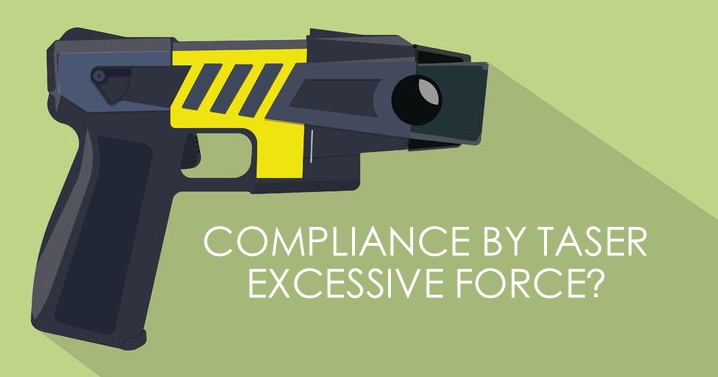
Compliance by Taser | Excessive Force?

By Brandon Barnett · Drug Crimes

Police Taser Excessive Force Texas

The Texas Court of Criminal Appeals recently heard a case involving excessive force by police.

In, Hereford v. State the ultimate issue presented to the CCA was whether forced used by officers to recover drugs from a defendant was excessive and unreasonable. The court held that it was.

The appellant in Hereford pulled into a parking lot and got out of his car. An officer observed him and recognized him as someone he had dealt with in the past. The officer knew Hereford had outstanding warrants. The officer conducted a pat down search and arrested him for the warrants. After appellant was arrested, the officer searched his vehicle. When the officer did not find any narcotics, he called a K9 unit whose dog alerted on the car.  Despite the alert, officers again failed to find any narcotics. When the officer returned to his patrol unit, appellant had his head down and was chewing on something. The officer commanded appellant to spit it out but he refused. The officer and two others then removed appellant from the patrol unit and tased him on the leg. The officer who made initial contact with appellant then grabbed him around the throat and tried to force him to spit out the substance. The officers then ceased trying to force the appellant to spit out the substance. After discussing their options for fifteen to twenty minutes, the officers decided to take the appellant to the hospital.

At the hospital, the officers appellant over to another officer working off-duty at the hospital. Appellant still had the substance in his mouth.  The hospital tried to get him to release it by using ammonia capsules. This did not work. The off-duty officer then took appellant into an examining room and began to tase him repeatedly – three times in the upper inner thigh (the groin) and once in the right forearm. When he was being tased, appellant's mouth would open involuntarily.  While appellant's mouth was open (during the tasing of his groin) the officer was able to get the substance out of his mouth.  It turned out to be a plastic baggie of crack cocaine.

The issue presented for the CCA was whether, under the Fourth Amendment, the manner in which the evidence that was seized was reasonable. The court used the factors found in Winston v. Lee, 470 U.S. 753 (1985) to balance the intrusion to the appellant’s personal interests, the societal need for effective law enforcement, and the state’s need for evidence. Those factors include whether the police conduct:

  1. threatened the suspect’s health or safety;
  2. conformed to accepted medical practices;
  3. was performed by a trained professional;
  4. arose from the existence of probable cause to believe the suspect had evidence of a crime;
  5. unduly intruded upon the suspect’s dignity interests in personal privacy; and
  6. was a commonplace procedure to which individuals are often subjected.

Balancing those interests, the court found that the off-duty officer’s actions were unreasonable and violated appellant's Fourth Amendment prohibition against unreasonable searches and seizures.

The CA, however, made it a point to highlight that this ruling was not to be construed to imply that the use of a Taser in these types of instances is per se unreasonable. The Court highlighted Ellis v. Columbus City Police Dep’t, No. 1:07CV123-A-A, 2009 U.S. Dist. LEXIS 95821 (N.D.Miss. September 15, 2009), where almost the same set of circumstances happened.  In that case though, the suspect had lunged at officers and was openly chewing a plastic bag of cocaine. The Court differentiated that case from this one by explaining that in Ellis, the officers stopped after tasing appellant several times and the tasing occurred during the arrest (not long after and by another officer).

Presiding Judge Keller dissented without opinion.

Read full article

Courts Should Not Apply Strict Rules of Grammar and Syntax When Reviewing Search Warrant Affidavits

By Brandon Barnett · Search & Seizure

“On Sunday, he advised me that he had been in Russia” is not the same as “He advised me that he had been in Russia on Sunday.”

The Court of Criminal Appeals considered a similar ambiguity in an Affidavit for a search warrant in State v. McClain. The Affiant stated in the affidavit, “In the past 72 hours, a confidential informant advised” the defendant had been seen in possession of Meth. Without more, this purports to state that the informant provided the information in the past 72 hours and DOES NOT state when the informant actually observed the behavior – a critical piece of information, indeed.

The trial court found the affidavit deficient and suppressed the evidence that was seized during the search. The 7th District Court of Appeals (Amarillo) affirmed. The CCA now reversed the Court of Appeals, holding that the search warrant based on this affidavit was proper.

The CCA cautions trial courts not to view such affidavits in a “hypertechnical” manner.

Since the Fourth Amendment strongly prefers searches to be conducted pursuant to search warrant, the United States Supreme Court has provided incentives for law-enforcement officials to obtain warrants instead of conducting warrantless searches. One incentive is a less-strict standard for reviewing the propriety of a search conducted pursuant to a warrant. In this situation, courts must give great deference to the magistrate’s probable-cause determination.

The CCA, with the exception of Judge Johnson who dissented, held that the lower courts violated the prohibition on hypertechnical review of warrant affidavits when it strictly applied rules of grammar and syntax in its analysis. The CCA further held:

Reviewing courts should only be concerned with whether the magistrate’s determination in interpreting and drawing reasonable inferences from the affidavit was done in a commonsensical and realistic manner. And reviewing courts should defer to all reasonable inferences that the magistrate could have made.
Read full article
Reckless Discharge of a Firearm in Texas

Pleading a Tautology | Reckless Discharge of a Firearm

By Brandon Barnett · Weapons Charges

Can the State prove Reckless Discharge of a Firearm by simply proving discharge of a firearm in the city limits?

Reckless Discharge of a Firearm in Texas
Yesterday, the Court of Criminal Appeals handed down State v. Rodriguez, a case in which the State appealed the lower court decision setting aside the information (charging document) for failure to plead an offense.

The State charged Roman Rodriguez under section 42.12 of the Texas Penal Code for reckless discharge of a firearm inside city limits. The information alleged that the defendant

recklessly discharged a firearm by pulling the trigger on a firearm which contained ammunition and was operable.

Upholding the 4th District Court of Appeals (San Antonio), the CCA held that the charge was deficient because it failed to allege that the act was done recklessly. The CCA noted that,

The State’s information alleged that Mr. Rodriguez recklessly discharged a firearm inside [the city limits] “by pulling the trigger on an firearm which contained ammunition and was operable.” Well, of course he did. Everyone who discharges a firearm pulls the trigger, and every firearm that is discharged contains ammunition and is operable if it discharges.

The Court explained that, in essence, the State pled a tautology – “The defendant recklessly discharged a firearm because he discharged a firearm.” The Court further noted that there are many occasions where a person might discharge a firearm inside the city limits by pulling the trigger on an operable firearm containing ammunition, such as: “if a person shoots a robber or a rapist climbing into his bedroom window,” or “if he shoots a rattlesnake lying in the bushes.”

Accordingly, because the State only alleged “how” the defendant discharged the firearm and failed to alleged how he “recklessly” discharged the same, the information was deficient and should be set aside.

Judge Price concurred in the result and writes separately to express his opinion that the statute (section 42.12) is “hopelessly ambiguous” regarding the recklessness requirement.  Presiding Judge Keller joined in Judge Price’s concurrence. Judge Womack also concurs without opinion.

Read full article

Speak with a Fort Worth attorney

Call (817) 993-9249 or send us a message to discuss your case.