Skip to content

News and Insights

Page 60 of 102 · 510 articles

Making a Murderer | Fort Worth Criminal Defense Attorney

Making a Murderer: The Power of the Jury

By Ashley Gilmore · Jury Trial

Can a Single Juror Make a Difference? Ask Steven Avery.

Making a Murderer | Fort Worth Criminal Defense AttorneyWe, like many of you, have been sucked into the sad, frustrating, and very real tale of the murder trial of Steven Avery in Manitowoc County, Wisconsin brought forth in the Netflix documentary “Making a Murderer." While much has been made of Steven Avery’s guilt or innocence, the coerced confession from his nephew Brandon Dassey (see full confession transcript HERE), and the possible foul play of the law enforcement in Manitowoc County, one major key to the case has been largely overlooked - the power of the jury. Without a guilty verdict from the jury, there is no frenzy over a viral documentary and certainly Steven Avery is a free man.

Recently, the filmmakers have reported to the press that a member of the jury now admits that he or she believed Avery was not guilty. This juror, wishing to remain anonymous, claims to have changed their vote to “guilty” after succumbing to fear and pressure. In reality, the juror believed, and still believes, that Avery was framed for murder. Speaking to the filmmakers, the juror said “I’m the reason the justice system failed.” Is the juror right?

Criminal Verdicts in Texas Must Be Unanimous. Every Juror Vote Counts.

Jury deliberations are secret, so only the jurors themselves could ever say for sure exactly why they arrive at a certain verdict for a case. In a criminal case, a jury verdict must be unanimous, which ensures that each juror’s vote is important and not diluted in a simple majority. If this one juror had summoned the courage to stay true to their “not guilty” vote, it would have caused a mistrial. A mistrial forces authorities to make the difficult decision of whether or not to retry the accused. Who knows what would have happened in a hypothetical second trial of Steven Avery.

For years, this juror has shouldered guilt from this trial, proving that the decisions juries are asked to make are indeed difficult ones. The next time you are on a jury, take a lesson from this case. Stand up for what you believe in and refuse to cave to pressure or fear. Do not be overpowered by the person with the loudest voice in the jury room. Remember, your vote holds the power of incarceration or freedom.

I hope we didn't spoil the documentary for you, but if you haven't watched it, this post does not even scratch the surface of the things you will see in this series.  We suggest you watch it and consider the case for yourself.  If nothing else, you'll see that there are two sides to every story and you'll understand to importance of having a fair and conscientious jury in a criminal trial.

Read full article
Federal Prosecutor Tips

5 Things I Wish Defense Attorneys Knew in Federal Criminal Cases

By Brandon Barnett · Criminal Defense

Guest Blog Post: Former Federal Prosecutor Offers Tips for Defense Attorneys in Federal Criminal Cases

Former Assistant United States Attorney and long-time U.S. Marine prosecutor Glen Hines provides some tips regarding Federal criminal cases from his time as an AUSA in Arkansas.  The views contained in this post are his own and not those of the Department of Justice, the United States Marine Corps or any other government organization.

Below are the top five unsolicited practice points for defense attorneys practicing in the Federal justice system:

Read up on the U.S. Attorneys' Manual.

Although this is non-binding guidance to AUSAs, they rarely deviate from it. Be aware of the Principles of Federal Prosecution, at Section 9-27.000, because you can use these to get your client a better outcome in some cases. This will give you a good idea of DOJ policy on issues like charging decisions, non-criminal alternatives to prosecution, plea agreements and their provisions, and cooperation issues. These policies form the AUSA's mindset to any federal case. If the AUSA on your case deviates from the USAM to the detriment of your client, ask him or her why they are doing it.

Get out ahead of the government's case.

This is easier said than done in practice; unfortunately, by the time most of your clients get around to retaining you, they have likely already been indicted. But in the rare event one hires you beforehand, it's an opportunity for you to shape the case before it even gets started. Don't be afraid to proffer your client. If you think he has something to offer the government that might help them get a bigger fish, most offices have a standard use immunity agreement to cover whatever your client tells them during the proffer. Moreover, as stated above, if you can get in touch with the AUSA on your case, you might be able to obtain a non-criminal alternative to prosecution; for instance in financial cases you could offer the government that your client agree to a civil, financial forfeiture and "pretrial diversion" (Section 9-22.000) in lieu of indictment.

Know the Federal Sentencing Guidelines.

They drive everything. For some reason, a lot of defense attorneys avoid federal cases because they are afraid of having to deal with the guidelines, but it really isn't rocket science. This is very important because almost every case I did as an AUSA, I pulled up the guidelines first to see what the case was going to be worth, the idea being, why should the government spend the resources to indict a case if the punishment was going to be very minimal? Know generally how to calculate the range, know about enhancements and deductions, and especially know that your client gets 3 points off the applicable range for timely pleading and "acceptance of responsibility." See section 3E1.1.  Your client is going to want to know how much time he is going to have to do if he pleads as opposed to going to trial and getting convicted, so you need to be able to calculate that number. A helpful calculator (not affiliated with any governmental entity) is on the internet HERE. Always check your numbers against what the AUSA comes up with.

"The squeaky wheel gets the grease"/Return my phone calls.

This goes along with #2 above. The defense attorney who calls or emails me about his case will get their call or email returned. If I know you are paying attention to your client's case and hearing from you, it's more likely I will view you as a straight-shooter and try to work with you on a potential deal. If I never hear from you and you never return my calls or emails, I will assume you want to go to trial and I'll start preparing to do so.

The AUSA is not going to deal your case out at the last minute.

Do not turn down a plea offer because you think the AUSA is going to knuckle under at the last minute and give you a sweetheart deal as the jury is walking in for voir dire. I know this happens on the state level, but as said before, the AUSA does not have the discretion to fashion some kind of sentence deal; the guidelines drive sentencing. If you wait that long, expect to go to trial. AUSAs typically don't have the huge caseload state deputy district attorneys do, so they try fewer cases and are only more than willing to roll the case out to the jury when the time comes.


Glen Hines Former Federal ProsecutorGlen. R. Hines (LinkedIn) is a former Assistant U.S. Attorney and a reserve Marine Corps Lieutenant Colonel and judge advocate. The majority of his 18-year, active-duty and reserve military career has been served as a prosecutor and Military Judge. He is a graduate of George Washington University (LLM-Highest Honors) and the University of Arkansas, Fayetteville (JD). He has written on national security, federal and military criminal law, and gun control issues.  See his past article at Task & Purpose.

Read full article
Luke Williams Speaks About Ethan Couch

Possible Punishment Scenarios for Ethan Couch Once He is Apprehended

By Brandon Barnett · Juvenile

What will happen to Ethan Couch?

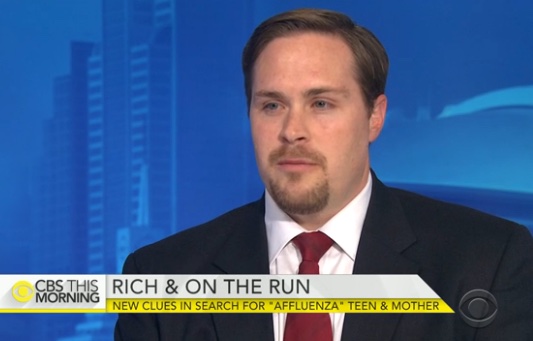
Luke Williams Speaks About Ethan CouchWe’ve recently been asked about fugitive Ethan Couch, the Texas teenager that was adjudicated of intoxication manslaughter, and the potential consequences for the “affluenza” teen once he’s caught. Juvenile determinate sentencing in Texas is an area of law with which most people are unfamiliar.  In this post, attorney Luke Williams explains some of the possible punishment scenarios for Ethan Couch under the juvenile justice and adult criminal justice systems.

Has Ethan Couch violated his probation?

Once Ethan Couch is apprehended, the State will have to prove, by a preponderance of evidence, that the teen violated a term or condition of his probation. Because juvenile records are confidential under Texas law, the public or press has not been made known of the details of Couch’s probation up to this point. But typically – at the very least – a juvenile probation in Tarrant County requires a juvenile to abstain from the use of drugs and alcohol, avoid persons or places who are using drugs and alcohol, and report regularly to the juvenile probation department.

In light of the recent Twitter video showing what purports to be Ethan Couch at a party involving alcohol and drinking games, there could potentially be evidence that he violated his probation by being amongst persons and at a place where persons are using alcohol. This could be difficult to prove. But, the more pressing problem for the teen now is his disappearance. He would undoubtedly have been required to check in with the juvenile probation department on a regular basis or when requested. At this point, as evidenced by the arrest warrant that has been activated for him, we know that he not checked in with probation as required. So, the State will likely have a much easier case to prove that he’s violated his probation by absconding.

Juvenile Probation is Discharged When the Probationer Turns 19 Unless the State Acts to Transfer

Ethan Couch’s probation term is scheduled to extend beyond his 19th birthday. However, the juvenile court will have to discharge Couch on his 19th birthday unless the court has acted earlier to transfer the probation to the appropriate criminal adult County Community Supervision and Corrections Department. This can (and likely will) be done by motion of the state prosecutor in Couch's case. If transferred, Couch would be under the jurisdiction of the county’s adult probation department and would face adult prison time should the probation be revoked. This would be the normal course of events had Couch not absconded.

What happens once the Ethan Couch is found?

If Couch is caught before he turns 19, and if the court finds that he has violated his probation, the court can either:

  • Keep him on juvenile probation with changing anything (highly unlikely);
  • Modify his probation to add new terms and conditions and keep him on probation; or
  • Revoke his probation to commit him to the custody of Texas Juvenile Justice Department (TJJD) for a determinate sentence that “does not exceed the original sentence assessed by the court” (10 years). The court could commit the juvenile for a shorter sentence than originally assessed, but not for a longer one. See our earlier post to read more about determinate sentences.

If Couch is caught after he turns 19, we can presume that the State will have filed a motion to transfer the probation to adult supervision. If the probation is transferred to adult court, and Couch is found to have violated the probation, then the court could sentence him to serve his original sentence (up to 10 years) in the Texas Department of Corrections – Institutional Division (otherwise known as the adult penitentiary).

Again, because juvenile records are confidential under Texas law, details of Couch’s probation up to this point are unclear. So, there could be other details and/or Orders issued by the judge in Couch’s case that could change or negate the possible scenarios mentioned above.

Regardless, the fact that Couch remains missing is not a good thing for his future.

Read full article
No Refusal Weekends for DWI in Fort Worth, Texas

No Refusal Weekends in Texas | DWI Blood Search Warrant

By Brandon Barnett · DWI

What you need to know about No Refusal Weekends in Texas | Fort Worth DWI Attorneys

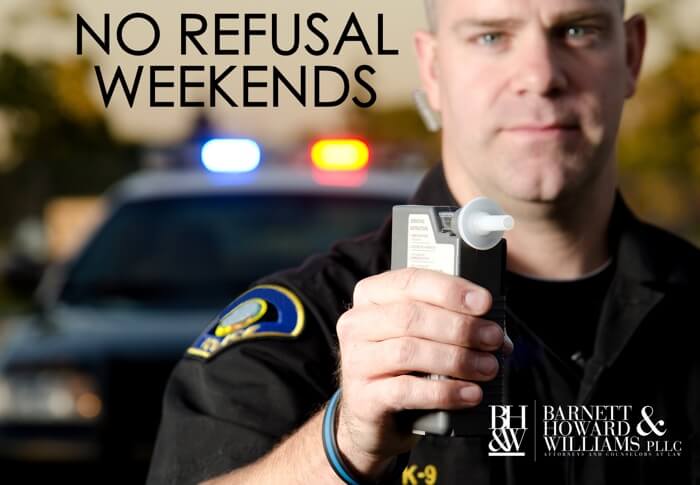
No Refusal Weekends for DWI in Fort Worth, TexasThroughout the year, as various holidays approach (Christmas, New Year's, Super Bowl weekend, 4th of July, etc.), we receive questions about "No Refusal Weekends," in which police agencies crack down on driving while intoxicated or DWI. It is important that Texas motorists understand the rules of the road, so that every holiday season remains merry and bright. Many have seen the “No Refusal” notices on electronic road signs, heard the “No Refusal” advertisements on the radio, or watched stories on the news related to “No Refusal" for suspected drunk driving. What is “No Refusal” and how does the law impact your holiday travel? Understanding a few basic things about the law could help you in the event of a traffic stop or a detention by a law enforcement officer.

What is No Refusal Weekend?

No Refusal Weekend refers to a short period of time, typically a holiday weekend or the weekend of a special event, such as the Super Bowl, where law enforcement advertises the ability to conduct routine traffic stops, detaining motorists for suspected DWI. During the stop, law enforcement requests a blood or breath sample, and, if the motorist refuses to comply, law enforcement immediately contacts a judge or magistrate who is designated “on call” during the No Refusal time frame. If the law enforcement officer conveys to the judge that (1) there was reasonable suspicion to detain the motorist for a traffic or criminal offense, and, (2) there is probable cause to believe the motorist is driving under the influence of drugs or alcohol, then the judge quickly issues a search warrant for the sample. Tex. Transp. Code §§ 724.011(a), 724.012(b), 724. At that point, law enforcement may call for a phlebotomist to take the sample on site, or may transport a motorist to a facility to obtain the sample. If all goes according to plan, “no refusal” speeds up the process by which law enforcement obtain samples used for DWI/DUI arrests. Further, the sample becomes evidence for trial.

What is the purpose of No Refusal Weekend?

The entire No Refusal process from detention to arrest is faster in theory, the goal being to catch motorists who are driving under the influence quickly, and to capture the highest blood alcohol content (“BAC”) possible. In Texas, a BAC level of .08 is considered legally intoxicated. No Refusal Weekend differs from a DWI stop on regular days by it’s speed — the quick phone call to an “on call” judge who is waiting by the phone to issue warrants — and it’s deference to law enforcement in the moment. So what does this mean for you, the Texas motorist?

You have the right to refuse blood and breath tests initially.

The term No Refusal sometimes confuses motorists. Many believe they cannot refuse a law enforcement officer’s request for a sample during a No Refusal period. Not true. On No Refusal Weekend motorists still have the right to refuse to provide blood and breath during a traffic stop. However, if law enforcement obtains a search warrant for blood, the motorist must comply; failure to comply may result in additional charges. Once the officer has a warrant in hand, the rules change. But before the officer obtains a warrant, you can refuse to provide breath or blood and you may refuse to submit to field sobriety tests. For notifications about when No Refusal Weekends begin in the Dallas Fort Worth area, and to know your rights if you are stopped by an officer, download our free App from the App Store or Google Play — know your rights before you go out!

*Note: Refusal of a breath or blood test may result in temporary loss of driving privileges, even if the officer later obtains a warrant to conduct the search.  The courts will typically grant an occupational driver's license to work and household tasks.

Warrantless searches for blood alcohol content in DWI cases violate the Fourth Amendment.

The No Refusal law comes from an “implied consent” provision in the Texas Transportation Code. The 2007 law states, “if a person is arrested for...operating a motor vehicle in a public place…while intoxicated…the person is deemed to have consented…to submit to the taking of one or more specimens of the person's breath or blood for analysis to determine the alcohol concentration or the presence in the person's body of a controlled substance, drug, dangerous drug, or other substance.” Tex. Transp. Code §§ 724.011(a), 724.012(b), 724. However, in 2014, the Texas Court of Criminal Appeals held that “warrantless, nonconsensual testing of a DWI suspect's blood does not…fall within any recognized exception to the Fourth Amendment's warrant requirement, nor can it be justified under a…Fourth Amendment balancing test.” State v. Villareal, PD-0306-14 (Tex. Crim. App. 2014).  See also, the US Supreme Court's opinion in Missouri v. McNeely. In summary, a motorist may refuse a blood or breath test upon an initial request by law enforcement, but after a warrant is obtained from a judge, a motorist may not refuse at that point because it is mandatory—hence the name No Refusal.

Please take the time to know your responsibilities and rights before heading out on No Refusal Weekends in Texas. Download our App on the App Store or on Google Play for the latest information on No Refusal Weekends. Have a safe and happy holiday season! This article is for educational purposes only and does not take the place of legal advice. If you are in need of a DWI attorney, please contact our office for a free consultation at (817) 993-9249.


Read full article
Texas front license plate law

License Plate Law in Texas | Front License Plate | Two Plate Rule

By Brandon Barnett · Traffic Offenses

One License Plate or Two: Does Your Car Need a Front License Plate In Texas?

Texas front license plate lawHow many license plates does your vehicle need in order to comply with Texas law? Do you need one or is there a two plate rule? Should you drill holes into the front bumper of your car to install a front license plate, or will you be alright with a rear plate only? If you are reading this article, perhaps you have exhaustively Google-searched license plate laws out of frustration. Find out what the Texas Transportation code says about license plates and what the implications are for you, the Texas motorist.

Do I need a Front License Plate in Texas? Yes. Texas law requires that every vehicle maintain a license plate in the front and rear of the vehicle.  The current fine for failing to display a front license plate in Texas is $200.00.

Do I need a Front License Plate in Texas? | An Error In the Texas Transportation Code Created a License Plate Loophole

Since 1934, Texas law has required that Texas motorists display a front and a rear license plate. In 2011, House Bill 2357 modified the statutory language making driving a vehicle without displaying a front and a rear license place both illegal and punishable by a fine. In January of 2012, Texas lawmakers revised the transportation code, once again, to include several new provisions. However, in the process of making revisions, the provision mandating a penalty for vehicles not in compliance with the “two plate rule” was accidentally stricken from the Texas Transportation Code. From January 2012 to September of 2013, law enforcement could not lawfully issue citations for failure to display a front license plate. Unfortunately, this brief period of time also created a lot of confusion around the “two plate rule” that reverberates to the present day.

Texas Lawmakers Amend the Code to Close the Loophole | Front License Plate Now Required in Texas

The two plate rule was originally created for the purpose of making identification of vehicles and their owners more efficient for automatic plate readers and law enforcement agencies. In 2012, the Texas A&M Transportation Institute (“TTI”) issued a report, citing overall effectiveness of the two plate rule, unlike states that only required one rear license plate on a vehicle. TTI found that front license plates were (1) easier to read in the daylight; (2) helpful in toll billing; (3) aided law enforcement in tracking down violators of the transportation code by way of automatic plate readers; and (4) allowed Homeland Security and U.S. Customs and Border Protection to process and screen vehicles more effectively and quickly. Thus, the front license plate requirement in Texas.

Aware of the inadvertent loophole created by omission of the penalty provision, lawmakers amended the transportation code in September of 2013 to mandate punishment for Texas motorists who do not display both the front and the rear license plates. Motorists who do not have a front license plate risk incurring a Class C misdemeanor charge, punishable by fine not to exceed $500.

Implications For the Texas Motorist | Texas Front License Plate Law | Penalty for Front License Plate Violation

Currently, the penalty for operating a vehicle without a front license plate is $200.00 - subject to change with subsequent legislation. However, there may be more to this than meets the eye. Generally speaking, when a vehicle is out of compliance with mandatory safety and administrative regulations (such as only having a rear license plate), by statute, Texas law enforcement has “probable cause” to conduct a traffic stop. At minimum, such a traffic stop could include pulling the vehicle over, running a check of the license plate, researching the driver’s license and registration of the motorist, and issuing a citation for violating the two plate rule.

In sum, a Texas motorist who drives without both plates risks being pulled over for a lawful traffic stop and fined at least $200.00 for a misdemeanor traffic offense.

References:

Read full article

Speak with a Fort Worth attorney

Call (817) 993-9249 or send us a message to discuss your case.