Skip to content

News and Insights

Page 44 of 102 · 510 articles

juvenile determinate sentencing texas

Texas Juvenile Law: What is Determinate Sentencing?

By Brandon Barnett · Juvenile

Determinate Sentencing Can Extend the Life of a Texas Juvenile Case
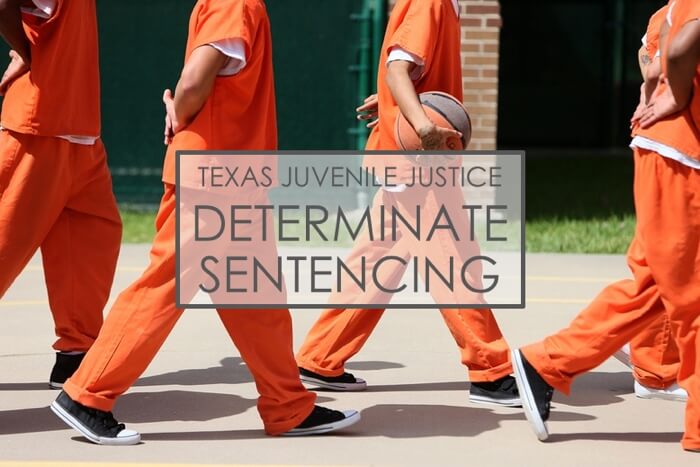
juvenile determinate sentencing texasIn the Texas juvenile justice system, a juvenile court has jurisdiction over a youthful offender if he or she is under the age of 17 at the time an offense is committed. The punishment for an offense typically can only last until a juvenile’s 19th birthday. We are often asked, “What happens if the juvenile is convicted of a serious offense? Is it possible for the court to impose a sentence that extends beyond the juvenile’s 19th birthday?” That is where Determinate Sentencing comes in. This post explains what Determinate Sentencing means and how it can impact a juvenile case.

What is Determinate Sentencing in Texas Juvenile Law?

Determinate sentencing creates a hybrid system whereby juveniles who have been adjudicated for severe criminal offenses are given a sentence that begins in the Texas Juvenile Justice Department (“TJJD”) and can potentially be transferred to the Texas Department of Criminal Justice (“TDCJ”) for a term of up to forty years.

Who requests a Determinate Sentence?

The prosecution has sole discretion as to whether to seek a determinate sentence. If the prosecutor decides to pursue a determinate sentence, he or she must file a petition indicating a child engaged in delinquent conduct with the court. Then, the prosecutor must present that petition to the grand jury for approval. If the petition is approved, then it becomes a determinate sentence case. However, if the petition is denied by the grand jury, the State’s only recourse would be to pursue the case as normal.

If a juvenile is adjudicated of a determinate sentence, then the judge or jury can assess an appropriate disposition, or punishment, in accordance with the determinate sentence range of punishment. This range is up to 40 years for a capital felony, first degree felony or an aggravated controlled substance felony, up to 20 years for a second degree felony, and up to 10 years for a third degree felony. Misdemeanors and state jail felonies are not eligible for determinate sentence under the Determinate Sentence Act.

Once the prosecutor’s request for a determinate sentence has been granted by the grand jury, he or she retains the power to later waive determinate sentencing so long as this occurs before the juvenile has been adjudicated. This often occurs in the course of plea negotiations, when the prosecutor offers an indeterminate sentence in exchange for the juvenile’s acceptance of the plea.

For indeterminate disposition, only the judge may assess punishment. However, for determinate sentence cases, the juvenile may choose either the judge or jury to assess disposition. If the juvenile would like the jury to decide punishment, he or she must file a written request with the judge prior to voir dire.

To what offenses can Determinate Sentencing apply?

Section 53.045 of the Texas Family Code provides a list of offenses that are eligible for determinate sentencing. Those offenses include:

  • habitual felony conduct;
  • murder;
  • capital murder;
  • manslaughter;
  • aggravated kidnaping;
  • sexual assault;
  • aggravated sexual assault;
  • aggravated assault;
  • aggravated robbery;
  • injury to a child, elderly individual or disabled individual;
  • felony deadly conduct involving discharging a firearm;
  • certain offenses involving controlled substances;
  • criminal solicitation;
  • indecency with a child;
  • criminal solicitation of a minor;
  • attempted murder or attempted capital murder;
  • arson, if bodily injury or death is suffered by any person by reason of the commission of the arson;
  • intoxication manslaughter, and criminal conspiracy.

What is the impact of a Determinate Sentence?

A juvenile who has been adjudicated of a determinate sentence will either be sentenced to placement in the TJJD or placed on probation.  In each case, the juvenile court retains jurisdiction over the juvenile up until the juvenile turns eighteen or nineteen.  For crimes committed before September 1, 2011, the juvenile remains in the juvenile system until his or her eighteenth birthday.

Juveniles who receive probation can be on probation for up to 10 years, which may extend past the time the juvenile reaches adulthood. When a juvenile on determinate sentence probation ages out of the juvenile system, the probation automatically expires unless the prosecutor requests a transfer hearing prior to the juvenile’s nineteenth birthday. If a transfer hearing is requested and held, the juvenile judge will decide whether to transfer the juvenile into the custody of an adult criminal court. If the request for transfer is granted, the county’s adult probation department would supervise the juvenile for the remainder of his or her probation.

The alternative to probation is for a juvenile to be sentenced to TJJD with the possibility of transfer to TDCJ. In this situation, the judge or jury imposes a sentence of a set number of years that may extend past the age of adulthood. A juvenile is required to complete a minimum length of stay at TJJD. Once he or she has completed that minimum length of stay, TJJD can parole the juvenile, if they choose. For those juveniles who are unable to complete their minimum length of stay prior to aging out of the juvenile system or who are not participating in TJJD programs or progressing satisfactorily towards rehabilitation, TJJD can request a transfer hearing. The transfer hearing, if requested, must be heard by the original juvenile judge who heard the case and it must take place prior to the juvenile’s 19th birthday. After hearing evidence at the hearing, the judge will then decide whether the youth should be transferred to adult prison to complete his or her sentence or whether the youth can be safely released on parole without putting the public safety at risk.

Texas Juvenile Crimes Defense Attorneys | Free consultation

Contact the Texas juvenile defense attorneys at Barnett Howard & Williams PLLC for a FREE consultation of your juvenile case. It is best to contact an attorney at the outset of a juvenile case. Do not wait until after you have attended a meeting with the district attorney. Call today!

Read full article
Sexsomnia Sleep Sex

"Sexsomnia" or "Sleep Sex" May Be a Defense to Sex Crime Allegations

By Brandon Barnett · Sex Crimes

Is Sleep Sex a Real Thing and How Can it Apply to Sexual Allegations?

Sexsomnia Sleep SexYou may have heard of sleepwalking, or sleeptalking, but what about sleep sex? The idea of sleep sex or "sexsomnia" is typically worth a few laughs when you first hear about it, but it is a very real disorder within the parasomnia umbrella of disorders (classified by the DSM-V).  Google it (with caution, of course).  You'll find many articles discussing real people that suffer from sexsomnia.
What is "Sexsomnia?"

Also called "sleep sex," sexsomnia is a type of parasomnia, where the brain is caught in transition between sleeping and waking states. As with other parasomnias -- including sleepwalking, sleep talking, and, sleep driving -- someone who is sleep sexing can seem fully awake and aware, even as he or she is masturbating, or fondling, initiating intercourse with, or even sexually assaulting a bed partner. But he or she truly is asleep.

See Web MD.  There have been several sleep studies and scholarly articles on sleep sex as experts learn more about sexsomnia.

How Does Sleep Sex Apply to a Sex Crime Allegation?

As you can imagine, some criminal defense attorneys have used sexsomnia as a defense to sexual assault allegations. Prosecutors are even being trained on how to overcome the sleep sex defense. But sexsomnia does not apply to every case. The factual allegations often do not support sexsomnia as a viable defense to sexual crimes cases.  But sometimes they do.  An article published in the Journal of Clinical Sleep Medicine in 2014 explored 9 criminal cases in which sexsomnia was used as a defense to sexual allegations.  The jury found the defendant not guilty in 7 of the 9 cases.

To establish a viable sexsomnia defense, the defense should be prepared to present witnesses that can establish a pattern of unusual sleep behaviors for the accused.  Further, the defense should look for other things that are known "triggers" for sleep sex, like alcohol use, sleep deprivation, emotional stress, and certain medications. This is a starting point to consider pursuing such a defense and should be coupled with all other typical defense investigatory avenues.

While a sexsomnia defense may cause the jury to chuckle as they think about a person having sex while the person is asleep, it can carry the day if the facts support the defense.  It should not be used as a gimmick.  With the right experts and the right witnesses, a sleep sex defense might just be the truth that sets a person free.

Read full article
Juvenile DPP Tarrant County

Deferring Prosecution for Juvenile Cases in Tarrant County

By Christy Dunn · Juvenile

Juvenile DPP Tarrant CountyAre there any options for my child short of going to court? Many parents ask this question after finding out that their child has been referred to the juvenile system. For a lot of kids who are in trouble for the first time, there is a great option available: Deferred Prosecution Program (DPP). In Tarrant County, DPP is used quite often. This article will answer all of your questions about DPP.
What is Tarrant County's Juvenile DPP?

DPP is a form of informal probation. The juvenile is supervised by a probation officer and has conditions of supervision to abide by during the period of DPP. But unlike formal probation, DPP does not require court action.

How long does the Juvenile Deferred Prosecution Program last?

DPP can, initially, be up to 6 months in length. Most of the time in Tarrant County, a juvenile will receive a 6-month term. Under the provisions of the Texas Family Code, DPP can be extended for an additional 6 months if necessary. However, DPP cannot last longer than 12 months total.

What types of cases are eligible for DPP in Tarrant County?

DPP can be offered in any case, regardless of the offense. Whether DPP is appropriate for a given juvenile depends more on the kid’s prior history with the legal system and the facts of the case than it does with what the offense is. However, a child has a better chance of receiving DPP in a misdemeanor or a minor felony case than for a serious felony.

At what point in the process can DPP be offered to a juvenile?

In Tarrant County, there are four points in the process where DPP can be offered to a juvenile. The first of these is by the intake probation officer during the intake process. Many times, if the case is appropriate for DPP, the probation officer will offer it during the intake appointment. This is one of many reasons why it is important for the family to attend the intake appointment with the probation officer. If DPP is accepted, then the juvenile will begin supervision and the case will not be referred to the prosecutor.

The second point where DPP can be offered is after the case is referred to the District Attorney. Once the prosecutor has reviewed the case, she can decide to offer DPP. If it is accepted at this point, the case is sent back to the juvenile probation department and supervision will begin. The prosecutor can also offer DPP after the case is filed and before it goes to court. If this happens, then the charges are dismissed and DPP supervision begins.

The last opportunity for a DPP offer is in court. In Tarrant County, this is rare, and only happens if the probation officer and prosecutor both refuse to offer DPP. At court, prior to any evidence being heard, the juvenile and his attorney can ask the judge to give DPP. The judge has discretion to grant the DPP or not.

Are charges still filed in a juvenile DPP case?

Typically, charges are not filed in a DPP case. If the DPP is agreed upon after charges have been filed, the charges are, at that point, dismissed.

What are the typical conditions of supervision?

The conditions of supervision on DPP are generally the same as for probation. These include go to school, don’t commit crimes, and obey the curfew set by the parents. In some cases, the conditions may also include appropriate counseling or restitution.

What happens if the juvenile is not successful in completing DPP?

If a juvenile who is on DPP violates the terms of his supervision, the case could be reopened and reviewed. If the original DPP was given by the probation officer, then the case will be sent to the prosecutor upon violation. At that point, the charges can be filed or the prosecutor can offer a second term of DPP. If the original DPP was given by the prosecutor, then upon violation the charges can be filed and the case can go to court. The judge can give a second term of DPP at this point if he chooses.

What happens if DPP is successful?

If the juvenile is successful on DPP, then the case is closed out with no adjudication on the juvenile’s record. The juvenile may be able to his record sealed after a period of time.

DPP is a wonderful option that is available to juveniles who have never been in trouble before or who are referred for minor offenses. It is up to 6 months of informal probation. If the child is successful on DPP, then the case will be closed and no charges will ever be filed. DPP is an alternative to going to court and being on formal probation. For many kids, this will be a great opportunity to handle their case in a very favorable manner. If DPP is offered, it is worth considering and discussing it with your attorney.

About the Author

Christy Dunn is a writer and attorney licensed to practice in Texas. She was a prosecutor for 15 years. The last five years of her prosecutorial career was spent in the Juvenile Division of the Tarrant County District Attorney’s Office. She has tried over 20 juvenile cases in Texas and multiple certification hearings.

Read full article
Birchfield v. North Dakota Supreme Court Breath Test

Criminal Penalties for Refusing a Breath Test—Are They Coming to Texas?

By Brandon Barnett · DWI

Can Texas Charge a Person with a Crime for Refusing a Breath or Blood Test During a DWI Stop?

In Texas, when a person refuses to provide a breath or blood specimen when being arrested for alleged drunk driving offense, their driver’s license is typically suspended. But, can a state have a law that additionally makes it a crime to refuse a breath or blood test? In Birchfield v. North Dakota, the United States Supreme Court held that a state can attach a criminal penalty to those that refuse to submit to a warrantless breath test but they cannot for those that refuse to submit to a warrantless blood test.

In a previous blog post we discussed the oral arguments that took place in this case and briefed the three cases facing the court, Birchfield , Bernard and Beylund.  Birchfield had been criminally prosecuted for refusing a warrantless blood draw; Bernard had been criminally prosecuted for refusing a warrantless breath test; and Beylund, while not criminally prosecuted for refusing a test, submitted to a blood test after the officer told him the law required it. Birchfield v. North Dakota 579 U.S. ____ (2016).

U.S. Supreme Court Issues Opinion in Birchfield Upholding Criminal Penalty for Breath Test Refusal (But Not Blood)

SUPREME COURT DECISION - Birchfield v. North Dakota

First, the Court determined whether warrantless breath and blood tests were proper searches incident to arrest for drunk driving. The Court held that since “breath tests are significantly less intrusive than blood tests” and in most cases adequately serve law enforcement interests, the Fourth Amendment permits a warrantless breath test but not blood test as a search incident to arrest for drunk driving.

Next, the Court addressed the argument that when making the decision to drive on a public road, drivers are deemed to have given consent to submit to a blood test. Applying the Fourth Amendment reasonableness standard, the Court held that “motorists cannot be deemed to have consented to submit to a blood test on pain of committing a criminal offense.” Birchfield, 579 U.S. ____ (2016).

Finally, the Court applies these legal conclusions to the three cases.  In Birchfield, the Court held that the judgment affirming his conviction must be reversed because the warrantless blood draw was not a justified search incident to arrest and he was thus, threatened with an unlawful search. In Bernard, the Court held that Bernard had no right to refuse the breath test because it was a proper search incident to arrest. In Beylund, the Court vacated the judgment and remanded the case to the state court to reconsider Beylund’s consent given the partial inaccuracy of the officer’s statement that “the law required it.”

In conclusion, the Supreme Court held that States may enact laws that attach criminal penalties to the refusal to submit to a breath test but they may not enact such laws that will apply to refusal to submit a blood test. So what does this mean for Texas? Well, while we do not currently have laws in place that attaches a criminal penalty to refusal of a breathalyzer, the State could enact a law that makes it a crime to refuse to provide a warrantless breath test incident to arrest of drunk driving.

Read full article
Hernandez Racial Slur Error 2016

Murder Conviction Reversed for Prosecutor's Use of Racial Slur

By Brandon Barnett · Jury Trial, Trial Advocacy

Texas Prosecutor Uses the "N" Word During Closing Argument. Court of Appeals Reverses the Conviction.

Hernandez Racial Slur Error 2016In December of 2014, Appellant Luis Miguel Hernandez was convicted of the murder of Devin Toler, an African-American man. During the trial, Appellant claimed self-defense, arguing that Toler attacked him and that by killing him, he was defending himself from the attack. The prosecution, however, presented evidence that Appellant provoked Toler by his words, some of them racial slurs. The actual words of the alleged racial slurs were never presented to the jury in the testimony of any witness or otherwise. However, during closing argument, the prosecutor said the following:

"What were the words of provocation? I’ll tell you what the words of provocation were. [Appellant] called Devin and his family 'niggas.' That’s what it was."

The defense attorney promptly objected to the prosecutor's use of the racial slur as it was inflammatory and outside the evidence in the case. Ultimately, (after a heated bench conference) the judge sustained the objection and instructed the jury to disregard the counsel's comment, but did not specify which counsel or what comment the jury was to disregard. The defense did not move for a mistrial. The jury returned a verdict of guilty and sentenced Appellant to 14 years in prison.

See the majority opinion in Hernandez v. State (2nd Court of Appeals - Fort Worth, 2016)

What is a Proper Jury Argument?

On appeal to the Second Court of Appeals (Fort Worth), the Appellant challenged the judge's failure to declare a mistrial after the prosecutor's use of the "N" word. The court explained:

Proper jury argument falls into one of four areas: (1) summation of the evidence; (2) reasonable deduction from the evidence; (3) an answer to the argument of opposing counsel; and (4) a plea for law enforcement. Generally, error resulting from improper jury argument is subject to a harm analysis.

The appellate court held that not only were the prosecutor's comments in using the "N" word error, but that the prosecutor's comments constituted an "incurably prejudicial argument;" one that required a mistrial.

Is the "Incurably Prejudicial Argument" Waived if the Defendant Does Not Move for a Mistrial?

Texas courts have consistently held that to preserve error for an improper argument, the defendant must do 3 things:

  1. Make a timely and specific objection;
  2. Request and instruction to disregard if the objection is sustained; and
  3. Move for a mistrial if the instruction to disregard is granted.

Cockrell v. State, 933 S.W.2d 73, 89 (Tex. Crim. App. 1996), cert. denied, 520 U.S. 1173 (1997)

In this case, the defense satisfied 1 and 2, but did not move for a mistrial. The appellate court was then presented with the issue of whether the improper jury argument objection is waived if the defense does not move for a mistrial.  Texas precedent says the issue can be waived for failure to move for a mistrial. But the court does not find this to be wise.

"Logically, this position makes no sense. An incurably prejudicial argument requires a mistrial. If the trial court does not grant the mistrial, the court has committed error that requires setting aside the conviction and re-trying the case. Respectfully, if the argument is so prejudicial that it has deprived the defendant of a fair trial, the injury is fundamental."

The court provides further reasoning to depart from precedent, citing the tenuous political atmosphere surrounding race relations in America at the time of the trial.

The impact of the improper statement by the prosecuting attorney must be viewed in the context of the political atmosphere at the time of trial. The trial took place in early December 2014. On February 26, 2012, George Zimmerman, whose mother was from Peru, killed Trayvon Martin. Emotional discussions of Zimmerman’s ethnicity filled news commentary. Other killings made headlines. Among them was the death of Eric Garner while he was selling loose cigarettes in New York on July 17, 2014. The officer who killed him was Daniel Pantaleo. On August 9, 2014, Michael Brown was killed in Ferguson, Missouri. On August 11, 2014, Ezell Ford was killed in Los Angeles by two police officers, one of whom was Hispanic. And on November 23, 2014, twelve-year-old Tamir Rice was killed in Cincinnati, Ohio. Additionally, the Black Lives Matter organization was formed in 2013 in response to the acquittal of George Zimmerman in his trial for the murder of Trayvon Martin and was actively involved in protests nationwide.

With that, the Second Court held that the improper jury argument was not cured (and could not have been cured) by the judge's "perfunctory" instruction to disregard and that the error was preserved for appeal. The court then reversed the case and remanded back to the trial court.

Dissent Agrees that the Error Was Prejudicial, But Would Not Depart From Precedent

Justice Sudderth dissented. She is not willing to depart from Court of Criminal Appeals' precedent regarding the formal requirement to move for a mistrial. She writes:

Of all of the words in modern American English usage, including the slang and the vulgar, the “n-word” is of such infamy that it is generally referenced and understood only by its first letter. And with very few exceptions, such racially charged inflammatory language has no place in jury argument.

This is certainly the case when a prosecutor, using that language to secure a conviction, goes outside of the record to introduce it. Therefore, I agree with the majority that the prosecutor’s behavior was improper. It was inexcusable. It cannot be condoned. And the trial judge committed error in permitting it. Nevertheless, because we are constrained by precedent of the court of criminal appeals requiring preservation of this type of error, I am compelled to dissent.

It will be interesting to see whether the Court of Criminal Appeals will stick to their previous precedent or take this opportunity to change the law when it comes to an "incurably prejudicial argument" involving racial slurs.

Read full article

Speak with a Fort Worth attorney

Call (817) 993-9249 or send us a message to discuss your case.