Skip to content

News and Insights

Page 12 of 102 · 510 articles

What You Should Know About Truck Liability

By Jesse Lotspeich · Personal Injury

What You Should Know About Truck Liability

Truck liability governs the legal obligations of truck drivers, carriers, and other parties after collisions. A clear understanding of these laws is essential for industry participants and for individuals affected by truck accidents. This article examines key liability statutes, fault allocation, insurance requirements, the claims process, and filing deadlines. It also explains how the HLAW Law Firm can assist those navigating these matters.

What Are the Key Truck Accident Liability Laws Governing Commercial Truck Claims?

Truck accident liability statutes determine which parties are responsible for damages following a collision. Liability may be shared among the driver, the trucking company, and third parties such as cargo loaders. Federal regulations, such as those set by the Federal Motor Carrier Safety Administration (FMCSA), establish duties and standards that affect liability. Understanding these rules is necessary for victims seeking compensation.

How Do Federal and State Regulations Define Truck Liability?

Federal and state regulations allocate responsibilities among parties engaged in truck operations. Drivers must comply with prescribed safety standards. Trucking companies must maintain vehicles and train drivers appropriately. Cargo loaders may bear liability if improper loading contributes to an accident. These provisions assist in assigning responsibility after a collision.

What Legal Standards Determine Liability in Commercial Truck Accidents?

To establish liability in commercial truck cases, claimants must meet established legal standards. The concept of negligence requires proof that a party failed to exercise reasonable care and that this failure caused the accident. Records such as driver logs, maintenance documents, and official accident reports are often critical to proving negligence. A precise understanding of these standards is essential to pursue compensation.

How Is Fault Determined in Truck Accidents Involving Driver Negligence?

Fault determinations frequently focus on the driver’s conduct. Conduct such as speeding, distracted driving, and violations of hours of service (HOS) regulations can support a finding of negligence. Evidence collected at the scene—including witness statements and photographs—also plays a central role in establishing fault.

What Constitutes Truck Driver Negligence Under the Law?

Truck driver negligence may include speeding, driving under the influence of alcohol or drugs, and failure to comply with HOS requirements. Each of these actions increases the risk of collisions and corresponding injuries. Identifying what constitutes negligence is necessary to hold drivers accountable.

How Is Negligence Proven in Truck Accident Claims?

Proving negligence requires demonstrating duty, breach, causation, and resulting harm. This typically involves assembling witness testimony, expert analysis, and documentation of the driver’s conduct before the accident. Claimants must present coherent, well-supported evidence to establish negligence and obtain recovery.

What Are the Truck Liability Insurance Requirements for Commercial Vehicles?

Truck liability insurance is mandatory for commercial vehicles to ensure victims can recover for injuries and damages. Familiarity with required coverages is important for both operators and those pursuing claims.

What Types of Insurance Coverage Are Mandatory for Truck Operators?

Commercial truck operators must carry liability insurance to cover harm to third parties. Cargo insurance may be required to protect against loss to goods in transit. Maintaining required policies ensures compliance with federal and state regulations.

How Does Insurance Impact Compensation in Truck Accident Claims?

Insurance policy limits define the maximum recovery available to victims. The negotiation process with insurers can be complex and often benefits from legal expertise to secure a settlement that reflects the claimant’s losses.

What Is the Process for Filing a Commercial Truck Accident Claim?

Filing a commercial truck accident claim requires several procedural steps to protect legal rights. Familiarity with the process helps claimants navigate the legal system and pursue appropriate compensation.

What Steps Should Victims Take to Initiate a Truck Liability Claim?

  • Prioritize medical care for any injuries.
  • Report the accident to law enforcement to obtain an official record.
  • Document the scene with photographs and obtain witness contact information.
  • Preserve all medical and repair records.
  • Contact an attorney experienced in truck accident claims for guidance on next steps.

How Does the Claims Process Address Liability and Compensation?

The claims process normally begins with a thorough investigation to collect evidence establishing liability. Claimants then submit a demand to the insurer detailing damages sought. Negotiations may follow; legal representation can materially influence the outcome of those discussions.

What Are the Statute of Limitations and Timeframes for Truck Accident Lawsuits?

Knowledge of the statute of limitations is essential when pursuing a truck accident lawsuit. Each state prescribes specific filing deadlines, and failure to comply with those timeframes can forfeit the right to seek compensation.

How Long Do You Have to File a Truck Accident Lawsuit?

In Texas, the statute of limitations for filing a truck accident lawsuit is generally two years from the date of the accident. Claimants should act promptly to preserve evidence and initiate legal proceedings within this period.

What Are the Consequences of Missing Legal Deadlines?

Missing statutory deadlines can result in dismissal of claims and a permanent bar to recovery. Awareness of and adherence to applicable time limits is critical to protect legal rights.

How Can HLAW Law Firm Assist with Truck Liability Cases and Legal Representation?

HLAW Law Firm provides legal representation for individuals involved in truck liability matters. With detailed knowledge of truck accident law, the firm assists clients in assessing liability, compiling evidence, and pursuing appropriate claims.

What Expertise Does the Howard Lotspeich Alexander & Williams Law Firm Offer in Commercial Truck Accident Claims?

HLAW Law Firm has experience handling commercial truck claims, including familiarity with FMCSA regulations and the procedures for evidence collection. This expertise supports the development of cases designed to withstand adversarial review.

How to Schedule a Free Consultation for Truck Liability Legal Support?

Individuals seeking legal support for truck liability matters may schedule a free consultation with the HLAW Law Firm by calling (817) 993-9249. During the consultation, clients can discuss case details and receive guidance on appropriate next steps.

Frequently Asked Questions

What Should I Do Immediately After a Truck Accident?

After a truck collision, prioritize your safety and health. Obtain medical attention for any injuries, even those that appear minor. Report the incident to police to secure an official record. Photograph the scene and collect witness contact information. Exchange information with the truck driver and other involved parties, and consult a legal professional experienced in truck accidents for advice on preserving your claim.

Can Multiple Parties Be Held Liable in a Truck Accident?

Yes. Liability may extend beyond the driver to the trucking company, vehicle manufacturers, and third parties such as cargo loaders. Each party’s potential responsibility is assessed based on their actions and legal duties. Recognizing the possibility of shared liability is important to pursue full recovery.

What Role Does Evidence Play in Truck Accident Claims?

Evidence is central to establishing liability and proving negligence. Key items include police reports, witness statements, photographs of the scene, and driver logs. Maintenance records and cargo loading documentation can also be relevant. Collecting and organizing strong evidence is essential to support a claim.

How Can I Ensure Fair Compensation from Insurance Companies?

To pursue fair compensation, document medical expenses, lost wages, and property damage carefully. Retain all supporting records. Legal representation enhances negotiating leverage, as attorneys understand insurer practices and can present a comprehensive case that reflects the full extent of damages.

What Are Common Mistakes to Avoid When Filing a Truck Accident Claim?

Common errors include delaying medical treatment, failing to document the scene, and not preserving critical evidence. Providing recorded statements to insurers without legal advice can also jeopardize a claim. Be mindful of statutory filing deadlines. Consulting experienced counsel helps avoid these pitfalls.

How Does Comparative Negligence Affect My Truck Accident Claim?

Comparative negligence determines how fault is allocated among parties and can reduce recovery when a claimant is partially at fault. If a claimant is found 20% responsible, for example, the recovery will be reduced by 20%. Understanding this principle is important when evaluating potential outcomes.

Conclusion

A clear grasp of truck liability clarifies the responsibilities of drivers, carriers, and other parties after an accident. By understanding liability rules, insurance obligations, and the claims process, victims can better pursue compensation. If you or a loved one has been affected by a truck accident, consider consulting the HLAW Law Firm for expert legal guidance to protect your rights and seek appropriate recovery.

Read full article
Blurred college library with text overlay reading “Title IX: How Does It Affect College Students?” representing legal rights under Title IX.

What Is Title IX and How Does It Affect College Students?

By Luke A. Williams · Title IX

Blurred college library with text overlay reading “Title IX: How Does It Affect College Students?” representing legal rights under Title IX.
Title IX affects more than just academics—know how it shapes student rights, due process, and investigations on campus.

If you’re a college student (or soon to be college student), understanding what “Title IX” is could be critical to your academic and personal future. Whether you’re involved in athletics, a campus relationship, or facing allegations, Title IX could impact you and your academic future.

What Is Title IX?

Title IX is a federal civil rights law passed in 1972 that prohibits sex-based discrimination in federally funded educational institutions. It ensures equal access to education and protects students from sexual harassment, assault, and other forms of sex-based misconduct. Recent Federal Regulations put in place a process for schools and Universities to deal with complaints related to sexual harassment, assault and other forms of sex-based misconduct.

How Does Title IX Apply to Students?

Title IX protects students of all genders and affects multiple areas of campus life, including:

  1. Sexual Misconduct Allegations

      Colleges must investigate reports of:

Schools must ensure a fair, unbiased process for both complainants and respondents.

  1. Rights of the Accused (Respondents)

Students accused of violating Title IX have the right to:

  • Be informed of the allegations
  • Review the evidence
  • Be accompanied by an advisor
  • Participate in a live hearing and cross-examination (by their advisor)

  1. Support from the University or School

Complainants and Respondents can receive academic accommodations, no-contact orders, counseling referrals, and other supportive measures — regardless of whether they pursue a formal complaint.

What to Expect in a Title IX Investigation

A Title IX case typically includes:

  • Formal notice of allegations
  • Interviews with involved parties (by a School or University Investigator)
  • Collection of physical or digital evidence (by a School or University Investigator)
  • A live hearing with a decision-maker or decision-maker panel

The outcome can include disciplinary action, suspension, or expulsion. Because of this, legal representation is essential.

Why Legal Representation Matters

Title IX investigations can have potential long-term academic and professional consequences. Misunderstanding your rights or failing to prepare (with an experienced Title IX attorney) can result in unfair outcomes. An experienced Title IX attorney can:

  • Help protect your rights
  • Review and prepare you for investigative procedures
  • Prepare you for hearings and cross-examination
  • Ensure due process is followed

Let’s Talk — We Can Help

At HLAW Firm, we’ve represented students across Texas (and in other States) in high-stakes Title IX proceedings. HLAW Partner Luke Williams is certified by NASPA (National Association of Student Personnel Administrators) on how Universities have implemented the federal regulations that govern Title IX proceedings nationwide.

We understand how stressful and complex these cases can be and we strive to provide high-level, compassionate representation of each student we advise. Whether you’re filing a complaint or responding to one, our compassionate, strategic representation can make all the difference.

Contact us today for a free and confidential consultation.

Read full article
Police officer conducting a field sobriety test at night with a driver

How Refusing Field Sobriety Tests Affects Your DWI Case

By ardent · 1

How Refusing Field Sobriety Tests Affects Your DWI Case: Legal Rights, Penalties, and Defense Strategies

Refusing a field sobriety test (FST) during a DWI stop can significantly impact your legal situation. Understanding the implications of this decision is crucial for anyone facing DWI charges. This article will explore your legal rights when refusing an FST, the potential penalties you may face, and effective defense strategies to navigate your case. Many individuals are unaware that refusing an FST can lead to serious consequences, including license suspension and increased penalties. By understanding the laws surrounding FST refusal, you can better prepare for your defense. We will cover essential topics such as implied consent laws, the consequences of refusal, and how legal representation can aid in your case.

Legal Rights

Close-up of a legal document with gavel and scales of justice in a courtroom

When it comes to field sobriety tests, individuals have specific legal rights that protect them during a DWI stop. The right to refuse an FST is a fundamental aspect of these rights. Drivers also have the right to remain silent and the right to legal representation. Understanding these rights is essential, as they can influence the outcome of your case.

Legal representation is particularly important if you choose to refuse an FST. An experienced attorney can help you navigate the complexities of DWI laws and ensure that your rights are upheld throughout the process. If you find yourself in a situation where you are unsure of your rights, consulting with a legal professional can provide clarity and guidance.

Potential Penalties

Refusing a field sobriety test can lead to various penalties, which may vary by state. The potential consequences include:

  1. Arrest Implications: Refusal can lead to immediate arrest, as law enforcement may interpret it as an admission of guilt.
  2. Limited Evidence Against the Driver: While refusing an FST may limit the evidence available to the prosecution, it does not eliminate the possibility of a DWI charge.
  3. Administrative Penalties: In many jurisdictions, there are immediate administrative penalties for refusing an FST, but this can vary widely.

Understanding these penalties is crucial for anyone considering refusing a field sobriety test. The next step is to explore how these refusal penalties can affect the overall outcome of a DWI case.

Consequences and Penalties for Refusing a Field Sobriety Test

The consequences of refusing a field sobriety test can be severe. In many states, refusing an FST can lead to automatic license suspension, fines, and other legal repercussions. The specific penalties depend on the state's implied consent laws, which dictate the consequences of refusing a sobriety test.

Research further elaborates on the prevalence and impact of implied consent laws across the nation.

Implied Consent Laws & DWI Refusal Rates

literature on refusal/implied-consent laws to provide estimates of the prevalence of refusal rates across the nation. Then, we present the current status of implied-consent laws and

Implied-consent laws: a review of the literature and examination of current problems and related statutes, T Kelley-Baker, 2009

License Suspensions and Fines Resulting from FST Refusal

The penalties for refusing a field sobriety test often include:

Penalty Type Description Duration/Amount
License Suspension Automatic suspension of driving privileges Varies by state, often 6 months to 1 year
Fines Monetary penalties imposed for refusal Ranges from $300 to $1,000
Increased DWI Penalties Enhanced penalties if charged with DWI Varies based on prior offenses

These penalties highlight the importance of understanding the implications of refusing a field sobriety test. The next section will discuss how refusal penalties can impact the overall outcome of your DWI case.

Indeed, the immediate consequence of refusing a field sobriety test often involves the suspension of driving privileges, as highlighted by legal precedents.

FST Refusal & Driver's License Suspension

field sobriety tests can refuse to submit to the tests, but the motorist's driver's license will be subject to suspension

Walking the Line: The Oregon Supreme Court, Field Sobriety Tests, and the Right Against Self-Incrimination, 1996

How Do Refusal Penalties Affect Your DWI Case Outcome?

Refusal penalties can complicate your DWI case significantly. While refusing an FST may limit the evidence against you, it can also lead to harsher penalties if you are convicted of DWI. Courts may view refusal as an indication of guilt, which can influence the judge's decision during sentencing.

Understanding the potential ramifications of refusing a field sobriety test is essential for anyone facing DWI charges. The next section will explore effective defense strategies available for individuals who refuse an FST.

Defense Strategies

Attorney reviewing case notes in an office with law books and city view

When facing DWI charges after refusing a field sobriety test, several defense strategies can be employed. Documenting the encounter with law enforcement is crucial, as it can provide valuable evidence in your favor. Additionally, consulting with an attorney who specializes in DWI cases can help you understand your options and build a strong defense.

  1. Documenting the Encounter: Keeping a detailed account of the events leading up to the refusal can help establish your case.
  2. Consulting an Attorney: Legal counsel can provide guidance on the best defense strategies tailored to your situation.
  3. Understanding Common Misconceptions: Many individuals believe that refusing an FST guarantees a better outcome, but this is not always the case.

How Can Legal Counsel Challenge FST Refusal Penalties?

Legal counsel can challenge the penalties associated with refusing a field sobriety test by arguing that the refusal was justified under specific circumstances. For example, if the driver was not adequately informed of their rights or if the test was administered improperly, these factors can be used to contest the penalties.

The scientific and legal scrutiny of standardized field sobriety tests reveals inherent limitations that can be leveraged in defense strategies.

Scientific & Legal Challenges of Field Sobriety Tests

This article details the history and development of the National Highway and Safety Administration’s Standardized Field Sobriety Tests. They are reviewed in terms of relevant scientific, psychometric, and legal issues. It is concluded that the research that supports their use is limited, important confounding variables have not been thoroughly studied, reliability is mediocre, and that their developers and prosecution-oriented publications have oversold the tests. Further, case law since their development has severed the tests from their validation data, so that they are not admissible on the criterion for which they were validated (blood alcohol concentration), and admissible for a criterion for which they were not (mental, physical, or driving impairment). Directions for further research are presented.

The standardized field sobriety tests: a review of scientific and legal issues, 2008

What Case Examples Demonstrate Successful Defense Approaches?

Several case examples illustrate how effective defense strategies can lead to favorable outcomes for individuals who refuse field sobriety tests. In some instances, defendants have successfully argued that their refusal was based on a lack of understanding of the consequences or that the tests were not conducted according to legal standards.

How Can You Schedule a Consultation for DWI Defense After Refusing a Field Sobriety Test?

If you find yourself facing DWI charges after refusing a field sobriety test, it is crucial to seek legal representation. BHW Law Firm specializes in criminal defense with a focus on DWI cases, including legal representation for clients who refuse field sobriety tests. Consulting with an experienced attorney can provide you with the guidance needed to navigate your case effectively.

What Information Should You Prepare for Your Legal Consultation?

When preparing for a legal consultation, gather all relevant information regarding your case, including:

  • Details of the DWI stop
  • Any documentation related to the incident
  • A list of questions you may have for your attorney

This preparation will help your attorney understand your situation better and provide tailored advice.

How Does BHW Law Firm Support Clients Facing FST Refusal Charges?

HLAW Law Firm is dedicated to supporting clients facing DWI charges, including those who have refused field sobriety tests. With a focus on criminal defense, the firm offers comprehensive legal representation to ensure that your rights are protected throughout the legal process. Their expertise in DWI cases can make a significant difference in the outcome of your case.

Read full article
Individual asserting Fourth Amendment rights during a police encounter

Search and Seizure Defense: Protect Your Rights

By Luke A. Williams · 1, Criminal Defense

Search and Seizure Defense: Protect Your Fourth Amendment Rights with Expert Legal Guidance

Understanding your rights during search and seizure incidents is crucial for protecting your civil liberties. The Fourth Amendment of the U.S. Constitution safeguards individuals against unreasonable searches and seizures, ensuring that law enforcement must have probable cause and, in most cases, a warrant to conduct searches. This article will delve into the key legal principles surrounding search and seizure, effective defense strategies, and the vital role of legal representation in these situations. Many individuals may find themselves confused or intimidated when confronted by law enforcement, leading to potential violations of their rights. By equipping yourself with knowledge about your rights and the legal processes involved, you can better navigate these challenging encounters. We will explore the fundamental aspects of search and seizure law, your rights during warrantless searches, and how to effectively defend against illegal traffic stop searches.

Key Legal Principles

The legal framework governing search and seizure is primarily established by the Fourth Amendment, which protects citizens from arbitrary governmental intrusions. This amendment requires that searches be reasonable and typically mandates a warrant based on probable cause. Understanding the exceptions to this rule is essential, as there are circumstances where law enforcement can conduct searches without a warrant. These exceptions include exigent circumstances, consent, and the plain view doctrine. Each of these principles plays a critical role in determining the legality of a search and the admissibility of evidence obtained during such searches.

Strategies for Defense

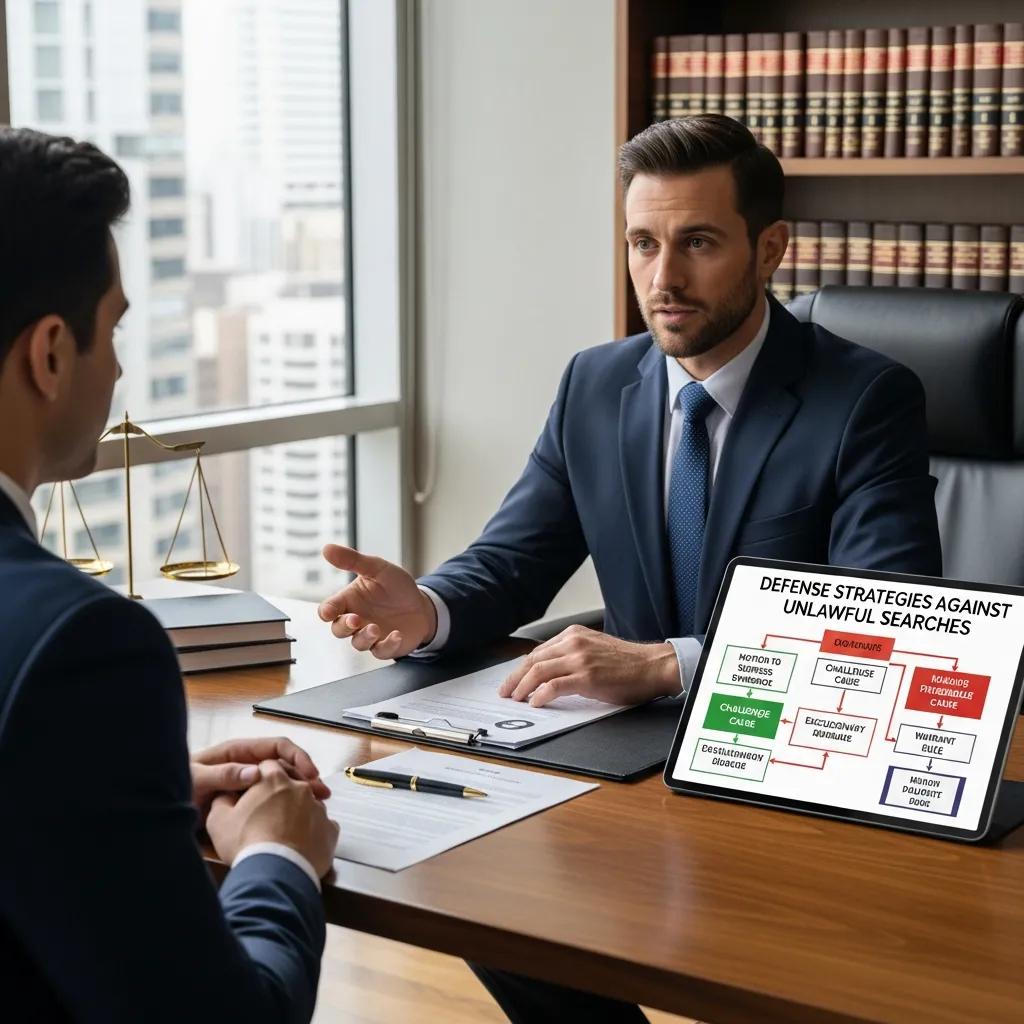
Lawyer explaining defense strategies to a client regarding unlawful searches

When facing unlawful searches, several defense strategies can be employed to protect your rights. These strategies include:

  1. Challenging Unlawful Searches: If a search is conducted without a warrant or probable cause, it may be deemed unlawful, and any evidence obtained can be challenged in court.
  2. Documenting Encounters: Keeping a detailed record of interactions with law enforcement can provide crucial evidence in defending against illegal searches.
  3. Citing Legal Precedents: Utilizing established case law that supports your defense can strengthen your position in court.

These strategies are vital for ensuring that your rights are upheld during legal proceedings.

Role of Legal Representation

Client consulting with a lawyer about search and seizure rights

Having expert legal representation during search and seizure cases is essential for effectively navigating the complexities of the law. A qualified attorney can provide invaluable guidance on how to challenge evidence obtained through unlawful searches. They can also help you understand your rights and the legal options available to you. Engaging with a legal professional ensures that you have the support needed to advocate for your rights effectively. If you find yourself in a situation involving search and seizure, consider reaching out to a law firm specializing in criminal defense, which can assist you in developing a robust defense strategy.

What Are Your Rights During a Warrantless Search?

During a warrantless search, individuals have specific rights that must be respected by law enforcement. You have the right to refuse consent to a search if law enforcement does not have a warrant. Additionally, you should be aware that any evidence obtained through an unlawful search may be inadmissible in court. If approached by law enforcement, it is crucial to remain calm and assert your rights clearly. Knowing what to do in these situations can significantly impact the outcome of any legal proceedings that may follow.

How Does the Fourth Amendment Protect Against Unreasonable Searches?

The Fourth Amendment serves as a fundamental protection against unreasonable searches by requiring law enforcement to demonstrate probable cause before conducting a search. This constitutional safeguard ensures that individuals are not subjected to arbitrary invasions of privacy. Understanding the definition of unreasonable searches and the exceptions to warrant requirements is essential for recognizing when your rights may be violated. Legal precedents have established various interpretations of what constitutes an unreasonable search, further emphasizing the importance of legal representation in these matters.

When Can Police Conduct a Warrantless Search?

Police can conduct warrantless searches under specific circumstances, including:

  • Exigent Circumstances: Situations where immediate action is necessary to prevent harm or destruction of evidence.
  • Consent: If an individual voluntarily consents to a search, law enforcement may proceed without a warrant.
  • Plain View Doctrine: If law enforcement officers observe evidence of a crime in plain view while lawfully present, they may seize it without a warrant.

Understanding these conditions can help individuals recognize their rights during encounters with law enforcement.

How Can You Defend Against Illegal Traffic Stop Searches?

Defending against illegal traffic stop searches involves understanding your rights and the legal framework surrounding traffic stops. Key strategies include:

  1. Knowing Your Rights: Familiarize yourself with your rights during traffic stops, including the right to remain silent and the right to refuse consent to a search.
  2. Documenting the Encounter: Take note of the details of the traffic stop, including the officer's name, badge number, and any statements made.
  3. Consulting an Attorney: If you believe your rights have been violated, seek legal counsel to explore your options for challenging the search.

These steps can significantly enhance your ability to defend against unlawful searches during traffic stops.

What Legal Defenses Apply to Traffic Stop Search Violations?

Several legal defenses can be applied to traffic stop search violations, including:

  • Challenging the Legality of the Stop: If the initial stop was not based on reasonable suspicion, any subsequent search may be deemed unlawful.
  • Consent Issues: If consent was obtained under duress or without proper understanding, it may not be valid.
  • Probable Cause: If law enforcement lacked probable cause to conduct the search, any evidence obtained may be inadmissible.

Understanding these defenses is crucial for effectively challenging illegal searches.

How to Challenge Evidence Obtained from an Illegal Traffic Stop Search?

Challenging evidence obtained from an illegal traffic stop search involves several steps:

  1. Documenting the Encounter: Keep a detailed record of the traffic stop, including the time, location, and circumstances.
  2. Consulting an Attorney: Seek legal advice to understand the best approach for challenging the evidence in court.
  3. Filing a Motion to Suppress Evidence: Your attorney can file a motion to suppress any evidence obtained through an unlawful search, arguing that it violates your rights.

These steps are essential for protecting your rights and ensuring that any evidence presented in court is obtained lawfully.

What Is Probable Cause and How Does It Affect Search Legality?

Probable cause is a legal standard that requires law enforcement to have sufficient reason to believe that a crime has been committed or that evidence of a crime will be found in a specific location. This standard is crucial in determining the legality of searches and seizures. Without probable cause, any search conducted may be deemed unlawful, leading to the exclusion of evidence obtained during the search. Understanding the implications of probable cause is vital for recognizing when your rights may be violated.

How to Schedule a Consultation with a Search and Seizure Lawyer?

Scheduling a consultation with a search and seizure lawyer is a straightforward process. Here are the steps to follow:

  1. Research Potential Lawyers: Look for attorneys who specialize in criminal defense and have experience with search and seizure cases.
  2. Contact the Law Firm: Reach out to the law firm to inquire about scheduling a consultation. A law firm specializing in protecting clients' rights during search and seizure incidents can assist you.
  3. Prepare for the Consultation: Gather any relevant documents or information related to your case to discuss during the consultation.

Taking these steps can help ensure that you receive the legal support necessary to protect your rights.

What to Expect During Your Legal Consultation?

During your legal consultation, you can expect an initial assessment of your case, where the attorney will review the details of your situation. This discussion will typically cover:

  • Discussion of Legal Options: The attorney will outline the potential legal strategies available to you based on the specifics of your case.
  • Next Steps in the Legal Process: You will be informed about the next steps to take, including any necessary documentation or actions required on your part.

This consultation is an essential opportunity to gain clarity on your legal standing and the options available to you.

How Can Expert Legal Representation Protect Your Rights?

Expert legal representation plays a crucial role in protecting your rights during search and seizure incidents. A knowledgeable attorney can navigate the complexities of search and seizure law, ensuring that your rights are upheld throughout the legal process. They can challenge unlawful searches, advocate for the suppression of illegally obtained evidence, and provide guidance on the best strategies for your defense. Engaging with a skilled attorney can significantly impact the outcome of your case, providing you with the support needed to effectively assert your rights.

Read full article
Parent and juvenile discussing legal rights in a supportive environment

Handling Juvenile Statements to Police

By Luke A. Williams · Juvenile

Handling Juvenile Statements to Police: Understanding Rights and Legal Protections

Navigating the complexities of juvenile statements to police can be daunting for both minors and their families. Understanding the legal protections available to juveniles during police questioning is crucial for ensuring their rights are upheld. This article will delve into the various rights and legal safeguards that protect minors, the best practices for law enforcement, and the implications of improper interrogations. By shedding light on these topics, we aim to empower families with the knowledge they need to advocate for their children effectively. Key sections will cover legal protections, police procedures, and the importance of legal representation during questioning.

Legal Protections for Juveniles

Juveniles possess specific legal protections during police questioning that are designed to safeguard their rights and ensure fair treatment. These protections include the right to remain silent, the right to legal counsel, and the right to have a parent present during questioning. Understanding these rights is essential for both minors and their guardians, as it helps prevent coercive practices and ensures that any statements made are voluntary and informed.

Right Description Importance
Right to Remain Silent Juveniles can choose not to answer questions. Protects against self-incrimination.
Right to Legal Counsel Minors can have an attorney present during questioning. Ensures informed decision-making.
Right to Parental Presence A parent or guardian can be present during the interrogation. Provides emotional support and guidance.

These rights are fundamental in the juvenile justice system, ensuring that minors are treated with the dignity and respect they deserve. For families seeking assistance, BHW Law Firm specializes in criminal defense with a focus on juvenile law, particularly handling juvenile statements to police.

Best Practices for Law Enforcement

Police officer interacting respectfully with a juvenile and parent during an interview

Law enforcement agencies are encouraged to adopt best practices when interacting with juveniles to ensure their rights are respected. These practices include:

  1. Training on Juvenile Vulnerabilities: Officers should receive training on the unique psychological and emotional needs of minors.
  2. Encouraging Parental Involvement: Law enforcement should facilitate the presence of a parent or guardian during questioning.
  3. Clear Communication of Rights: Officers must clearly communicate the rights of juveniles in a manner that is understandable to them.

Implementing these practices not only protects the rights of minors but also fosters a more respectful and effective interaction between law enforcement and youth.

What Are Juvenile Miranda Rights and How Do They Protect Minors?

Juvenile Miranda rights are a set of legal protections that inform minors of their rights during police interrogations. These rights include the right to remain silent and the right to legal counsel. The importance of understanding these rights cannot be overstated, as they serve to protect minors from self-incrimination and ensure that any statements made are voluntary.

When a juvenile is taken into custody, law enforcement must inform them of their Miranda rights. Failure to do so can result in any statements made being deemed inadmissible in court. This legal safeguard is crucial in preventing coercive interrogation practices that could lead to false confessions.

What Is the Scope of Miranda Rights for Juveniles?

The scope of Miranda rights for juveniles is similar to that of adults, but there are important distinctions. While both groups have the right to remain silent and the right to an attorney, the understanding of these rights can vary significantly based on age and maturity.

Juveniles may not fully comprehend the implications of waiving their rights, which can lead to unintentional self-incrimination. Therefore, it is essential for law enforcement to ensure that minors understand their rights clearly before any questioning begins.

How Do Juvenile Miranda Rights Differ from Adult Rights?

Juvenile Miranda rights differ from adult rights primarily in the communication and understanding of those rights. For instance, while adults may be expected to understand their rights, juveniles often require additional explanation and support.

Key differences include:

  • Communication Style: Officers should use age-appropriate language when explaining rights to minors.
  • Parental Involvement: Unlike adults, juveniles have the right to have a parent or guardian present during questioning, which can help clarify their rights and provide emotional support.

These differences highlight the need for a tailored approach when dealing with juvenile suspects to ensure their rights are adequately protected.

What Are the Police Interview Procedures for Juveniles?

When interviewing juveniles, police must follow specific procedures to ensure compliance with legal standards. These procedures include:

  • Determining Custodial Status: Officers must establish whether the juvenile is in custody, as this affects the application of Miranda rights.
  • Communicating Miranda Rights: Officers are required to inform the juvenile of their rights clearly and comprehensively.
  • Involving Parents/Guardians: Law enforcement should encourage the presence of a parent or guardian during the interview process.

Following these procedures is vital for maintaining the integrity of the interrogation process and protecting the rights of the juvenile.

What Steps Do Police Follow When Questioning a Minor?

The steps police follow when questioning a minor are designed to ensure that the juvenile's rights are respected. These steps typically include:

  1. Determining Custody: Assessing whether the minor is free to leave or if they are in custody.
  2. Informing of Rights: Clearly communicating the juvenile's Miranda rights.
  3. Ensuring Voluntariness: Confirming that any statements made by the juvenile are voluntary and not coerced.

These steps are crucial in safeguarding the legal rights of minors during police interactions.

When Is Legal Representation Required During Juvenile Police Questioning?

Juvenile consulting with an attorney about legal rights and representation

Legal representation is required during juvenile police questioning in specific circumstances, particularly when the minor is in custody. If a juvenile is subjected to custodial interrogation, they have the right to have an attorney present.

In complex situations, such as those involving serious charges or potential consequences, having legal representation is essential to ensure that the juvenile's rights are protected and that they receive fair treatment throughout the process.

What Legal Protections Exist for Minors During Police Questioning?

Minors are afforded several legal protections during police questioning, including:

  • Right to Remain Silent: Minors can choose not to answer questions without legal repercussions.
  • Right to Legal Counsel: They have the right to consult with an attorney before speaking to law enforcement.
  • Right to Parental Presence: A parent or guardian can be present during questioning to provide support.

These protections are designed to ensure that minors are treated fairly and that their rights are upheld throughout the interrogation process.

How Does the Law Safeguard Juveniles from Coercion and False Confessions?

The law provides safeguards against coercion and false confessions for juveniles through various legal frameworks. These include:

  • Mandatory Recording of Interrogations: Many jurisdictions require that juvenile interrogations be recorded to ensure transparency and accountability.
  • Legal Representation: The presence of an attorney can help prevent coercive tactics and ensure that the juvenile understands their rights.
  • Parental Involvement: Allowing a parent or guardian to be present can help protect the minor from coercive practices.

These safeguards are essential in maintaining the integrity of the juvenile justice system and protecting vulnerable minors from undue pressure during interrogations.

What Are the Consequences of Improper Juvenile Interrogations?

Improper juvenile interrogations can lead to significant consequences, including:

  • Inadmissible Statements: Any statements made during an improper interrogation may be deemed inadmissible in court.
  • False Confessions: Coercive tactics can lead to false confessions, which undermine the integrity of the justice system.
  • Legal Repercussions for Law Enforcement: Officers may face disciplinary action or legal consequences for failing to adhere to proper interrogation procedures.

These consequences highlight the importance of conducting juvenile interrogations in a manner that respects the rights of minors and adheres to legal standards.

How Can Families Schedule a Juvenile Defense Consultation?

Families seeking legal assistance for juvenile matters can schedule a consultation with a qualified juvenile defense attorney. It is essential to choose an attorney who specializes in juvenile law to ensure that the minor's rights are adequately protected.

When preparing for a consultation, families should consider the following:

  • Gather Relevant Information: Collect any documents or information related to the case.
  • Prepare Questions: Write down any questions or concerns to discuss during the consultation.
  • Understand the Process: Familiarize yourself with the legal process to better understand what to expect.

BHW Law Firm is dedicated to supporting juvenile clients and their families, providing personalized attention and guidance through the legal process.

What Should Parents Know Before Booking a Legal Consultation?

Before booking a legal consultation, parents should be aware of several key factors:

  1. Importance of Hiring a Private Attorney: A specialized attorney can provide tailored legal advice and representation.
  2. Preparation for the Consultation: Parents should gather relevant documents and prepare questions to maximize the consultation's effectiveness.
  3. Potential Costs Involved: Understanding the financial aspects of hiring an attorney is crucial for informed decision-making.

Being well-prepared can help parents navigate the legal landscape more effectively and ensure that their child's rights are protected.

How Does BHW Law Firm Support Juvenile Clients and Their Families?

BHW Law Firm is committed to providing comprehensive support to juvenile clients and their families. The firm offers:

  • Personalized Attention: Each case is handled with care and attention to detail, ensuring that the unique needs of the juvenile are met.
  • Guidance Through the Legal Process: Families receive clear explanations of the legal process and what to expect at each stage.
  • Importance of Parental Involvement: The firm emphasizes the role of parents in supporting their children throughout the legal journey.

By focusing on the specific needs of juvenile clients, BHW Law Firm aims to provide effective legal representation and support for families facing challenging situations.

Read full article

Speak with a Fort Worth attorney

Call (817) 993-9249 or send us a message to discuss your case.