
Fort Worth DWI Lawyer Explains Field Sobriety Tests
By Jason H. Howard · DWI
Fort Worth DWI Lawyer Explains Field Sobriety Tests: Your Rights and Defense Strategies
Field sobriety tests are roadside assessments officers use to evaluate impairment and establish probable cause for a DWI arrest. These tests—based on NHTSA Standardized Field Sobriety Test procedures—measure observable clues such as eye behavior, balance, and coordination, and are designed to help officers form a factual basis for arrest. Understanding how each test works, its limitations, and the practical defenses available can protect your rights and reduce the risk of conviction in Fort Worth and Tarrant County courts. This article explains the three standardized tests, common administration errors, how medical and environmental factors affect results, and concrete tactics lawyers use to challenge FST evidence. You will also learn how refusal rights differ between FSTs and chemical tests, what Administrative License Revocation (ALR) hearings and occupational licenses mean for your driving privileges, and the likely financial and legal outcomes following a DWI arrest. Read on for technical breakdowns, sample defense approaches, checklists for preserving evidence, and where local DWI defense expertise, including assistance from Howard Lotspeich Alexander & Williams PLLC (HLAW Law Firm), can be helpful.
What Are Field Sobriety Tests and Why Are They Used in Fort Worth DWI Cases?
Field sobriety tests (FSTs) are standardized roadside assessments trained officers use to observe physical and psychomotor clues that may indicate alcohol or drug impairment. Officers use FST results as observable evidence to form probable cause for arrest, not as definitive proof of intoxication, because FST performance reflects many non-intoxicant factors that can influence balance, instruction-following, and eye movement. For drivers stopped in Fort Worth, FSTs are commonly deployed before chemical testing to justify detention and further investigation, and understanding test mechanics helps evaluate whether an arrest was legally supported. The next subsections identify the standardized tests, explain how officers link FST observations to probable cause, and list common administration errors defenders exploit.
What Are the Three Standardized Field Sobriety Tests in Texas?
The three standardized tests used widely in Texas are the Horizontal Gaze Nystagmus (HGN) test, the Walk and Turn (WAT) test, and the One-Leg Stand (OLS) test. HGN assesses involuntary eye movements to detect gaze-evoked nystagmus that experts associate with certain levels of blood alcohol concentration; officers look for specific clues during controlled eye tracking. The Walk and Turn is a divided-attention test that requires following instructions, walking heel-to-toe, turning, and returning; officers record clues like inability to follow instructions or improper turn. The One-Leg Stand measures balance and attention as the subject raises one leg and counts; typical clues include swaying or using arms for balance. Understanding each test’s intended observable clues clarifies why results are inherently subjective.
- Horizontal Gaze Nystagmus (HGN): Observes involuntary eye jerking to detect possible impairment.
- Walk and Turn (WAT): Tests divided attention, balance, and following complex instructions.
- One-Leg Stand (OLS): Evaluates balance, muscular control, and counting under stress.
These tests form the basis for probable cause decisions but are not conclusive alone; procedural fidelity and corroborating evidence matter.
Intro to comparison table: The table below summarizes each standardized FST with typical administration time, common clues officers look for, and reliability caveats to help non-experts quickly compare the assessments.
This quick reference shows why each test must be evaluated in context and why defense review focuses on administration fidelity and corroborating evidence.
How Do Field Sobriety Tests Establish Probable Cause for DWI Arrests?
Probable cause in a DWI context requires facts and circumstances that would lead a reasonable officer to believe impairment occurred; FST performance provides observable facts that officers narrate in arrest reports to meet that standard. Officers typically cite a combination of clues—failed HGN indicators, missed steps on WAT, and inability to hold OLS—to create a cumulative inference of impairment sufficient for arrest. However, probable cause is a lower constitutional bar than proof beyond a reasonable doubt, and courts recognize that FSTs are inherently subjective and influenced by non-intoxicant variables. Defense strategies therefore target the factual basis and credibility of the officer’s observations to argue that the totality of circumstances did not rise to probable cause.
What Are Common Errors and Limitations of Field Sobriety Tests?
 Common administration errors include improper instructions, rushed timing, performing tests on uneven surfaces, or failing to account for footwear and medical conditions. Limitations also arise from subjective scoring—different officers may count the same behavior differently—and from the original NHTSA studies, which used controlled settings and might not generalize to roadside conditions. Environmental factors like poor lighting, inclement weather, or distractions can produce false positives, and physiological issues such as inner-ear disorders, neurological conditions, or fatigue can mimic intoxication clues. Identifying these errors and limitations is the first step to assembling alternative explanations that reduce the weight of FST evidence in court.
How Does the Horizontal Gaze Nystagmus Test Work and How Can It Be Challenged?

The Horizontal Gaze Nystagmus (HGN) test measures involuntary jerking of the eyes as they track a moving stimulus, which can correlate with certain levels of alcohol impairment; officers rotate an object horizontally and observe for specific clues during a stepwise procedure. HGN is often treated as the most “objective” of the SFSTs, but its validity depends heavily on strict adherence to NHTSA protocol, proper stimulus presentation, adequate lighting, and absence of medical confounders. Defenders scrutinize the officer’s process, timing, and documentation, and compare observed eye behavior to alternative causes before conceding probative value. The following subsections explain the NHTSA procedure, list common medical and environmental confounders, and describe tactical lines of attack rooted in recognized manual flaws and video analysis.
What Is the Procedure for the HGN Test According to NHTSA Guidelines?
NHTSA guidelines instruct officers to position the stimulus about 12–15 inches from the subject’s nose, hold it slightly above eye level, and move it slowly in a smooth horizontal arc while observing for three clues in each eye: distinct nystagmus at maximum deviation, nystagmus onset before 45 degrees, and lack of smooth pursuit. Officers are expected to explain and demonstrate the test, ensure the subject’s head remains still, and document the exact clues and timing. In practice, deviations commonly occur—stimulus too close, movement too fast, insufficient lighting—and those deviations undermine reliance on NHTSA-based scoring. Pinpointing procedural divergence in reports and video forms a key defense line.
- Moving the stimulus too quickly for reliable observation.
- Failing to control head position or stabilize the subject.
- Conducting the test in dim light or with an obstructed view.
Recognizing these deviations helps link administration flaws to unreliable HGN conclusions.
What Medical Conditions and Environmental Factors Affect HGN Test Accuracy?
Several medical and physiological conditions can produce nystagmus or erratic eye movement, including vestibular disorders, head trauma, certain medications, and severe fatigue; environmental contributors like bright or flashing lights and wind may also cause eye behavior similar to nystagmus. Each factor interacts with the HGN mechanism—disrupting smooth pursuit or producing involuntary jerking—so a defensive record of medical history or witness observations can explain observed eye movement without intoxication. Courts often permit expert testimony on these topics, especially when video evidence shows ambiguous eye behavior that could stem from non-alcoholic causes. Documenting preexisting conditions and contemporaneous environmental factors strengthens alternative-explanation arguments.
How Do Fort Worth DWI Lawyers Use NHTSA Manual Flaws to Challenge HGN Results?
Experienced local attorneys analyze the NHTSA manual and identify inconsistencies or limitations—such as testing conditions in the original validation studies that differ from roadside stops—and then apply those flaws during cross-examination and in motions. For example, a former prosecutor on the defense team can point to manual requirements and ask an officer on the record whether each step was followed while simultaneously using video timestamps to highlight deviations. Lawyers may also call medical or vision experts to demonstrate alternative causes for eye jerking and to lower the evidentiary weight of HGN findings. In court, the goal is to show that manual-based scoring was not reliably applied under the stop’s real-world conditions and that HGN evidence therefore should be given little weight.
What Are the Walk and Turn and One-Leg Stand Tests and How Are They Defended?

The Walk and Turn (WAT) and One-Leg Stand (OLS) tests are balance and divided-attention assessments that rely heavily on instruction-following and stable physical footing, and both are vulnerable to environmental, footwear, and health-related influences. WAT typically involves a nine-step instruction set with a heel-to-toe walk, a turn, and return; officers record specific clues such as stepping off line or failure to follow instructions. OLS asks the subject to raise one foot and count aloud while balancing; officers watch for swaying, hopping, or putting the foot down. Defense approaches center on demonstrating that the testing environment, the subject’s footwear or physical limitations, or officer instruction errors explain poor performance without invoking impairment.
How Is the Walk and Turn Test Administered and What Are Its Subjective Clues?
Officers give detailed instructions and demonstrations before a subject performs the Walk and Turn, expecting nine heel-to-toe steps, a turn using specified footwork, and a heel-to-toe return; common recorded clues include starting too soon, stepping off the line, using arms to balance, incorrect number of steps, or an improper turn. Because WAT requires divided attention, cognitive distractions unrelated to alcohol—such as stress, unfamiliarity with the instruction set, or loud roadside activity—can produce many of the same observable clues officers cite. Defense counsel scrutinizes the officer’s exact wording, whether a demonstration was shown, and if the surface was adequate for heel-to-toe steps; these details can often explain apparent failures without intoxication.
What Physical or Environmental Factors Can Affect Walk and Turn Test Results?
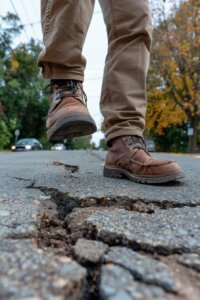
Uneven pavement, gravel, rainy conditions, loose footwear, or injuries to the lower extremities materially affect WAT performance and can cause the same observable clues relied upon to allege impairment. Age-related balance changes and chronic conditions like arthritis or vestibular dysfunction also reduce performance reliability, and witness statements or medical records often corroborate these factors. Attorneys compile evidence—photographs of the surface, witness declarations, and medical documentation—to present plausible, documented alternative explanations that erode the probative value of WAT findings. Demonstrating these physical factors frequently leads judges and juries to discount WAT evidence.
How Is the One-Leg Stand Test Conducted and What Are Common Defense Arguments?
During OLS, the subject is instructed to stand with feet together, raise one leg approximately six inches while counting out loud for 30 seconds, and keep arms at sides; officers record clues such as hopping, swaying, or putting the foot down. Common defenses point to impairments in proprioception, joint pain, or prior injuries that compromise single-leg balance, as well as inappropriate footwear like high heels or sandals. Lawyers may use reenactments, medical expert testimony, or on-scene photographs to show that the test conditions rendered OLS unreliable for assessing intoxication. When the defense demonstrates non-intoxicant explanations for OLS performance, the test’s utility as corroborating evidence is substantially reduced.
What Are Your Rights When Refusing Field Sobriety Tests in Texas?
Understanding your rights regarding FST refusal is crucial during a DWI stop.
Field sobriety tests in Texas are voluntary, meaning a driver can decline without triggering statutory penalties that accompany chemical test refusals; decisions about refusal should weigh immediate practical risks and later administrative consequences. While refusing FSTs carries no direct administrative sanction, officers may interpret refusal as suspicious and rely more heavily on other observations to justify arrest, so polite, consistent refusal coupled with documentation of the encounter can be strategically sensible. The following subsections provide direct answers about the legality of refusal, contrast FST refusals with breath/blood test refusals under implied-consent rules, and outline potential practical consequences and steps to preserve evidence after refusing. Understanding these distinctions helps drivers make informed choices during traffic stops.
Can You Legally Refuse Field Sobriety Tests Without Penalty in Fort Worth?
Yes: in Texas, field sobriety tests are voluntary and a driver may politely decline without incurring statutory penalties specific to test refusal; this differs from chemical test refusals governed by implied-consent laws. Refusing an FST will not automatically trigger administrative license suspension, but it may influence an officer’s decision to arrest if other observations suggest impairment. If you decline, the best practice is to state refusal calmly, avoid confrontation, and document details afterward—such as the officer’s name, badge, time, and any witnesses—to aid later defense work. Contacting HLAW's qualified DWI counsel promptly after the stop preserves legal options and clarifies next steps for ALR rights.
How Does Refusing Field Sobriety Tests Differ from Refusing Breath or Blood Tests?
Refusing FSTs is legally protected in the sense that there are no automatic administrative penalties, while refusing a breath or blood test invokes the implied-consent statute and can trigger an Administrative License Revocation (ALR) suspension and other consequences. An ALR suspension may take effect quickly unless timely steps are taken, and the administrative process differs from criminal proceedings; this makes the decision to refuse chemical testing strategically consequential. Defendants should understand that declining an FST but submitting to a chemical test may preserve administrative rights, whereas refusing chemical testing creates a separate procedural battleground that requires immediate legal attention.
What Are the Potential Consequences of Refusing Field Sobriety Tests in Texas?
Although refusal of FSTs carries no direct statutory penalty, practical consequences include increased officer suspicion, potential arrest based on other observed indicators, and loss of an opportunity to demonstrate sobriety on the spot. Refusal can also affect jury impressions if an officer’s narrative frames refusal as consciousness of guilt, so careful documentation and early lawyer involvement are important to counterbalance that narrative. After refusal, collect witness information, request officer identification, and preserve any available dash-cam or bystander video—these actions improve defense preparation and can show that refusal was reasonable under the circumstances.
How Does a Fort Worth DWI Lawyer Challenge Field Sobriety Test Evidence in Court?

A Fort Worth DWI lawyer challenges FST evidence by conducting meticulous video review, exposing officer deviations from protocol, presenting alternative explanations through experts, and using targeted cross-examination to undermine the probative value of test results. Defense teams trained in both prosecution and police-instruction contexts are particularly adept at turning procedural flaws into reasonable doubt by comparing recorded performance against NHTSA standards and highlighting inconsistencies. The following subsections describe the video-review process, common cross-examination techniques, and how to integrate alternative explanations effectively during trial or suppression hearings. Applying these steps often reduces or eliminates the weight of FST testimony.
How Is Police Video Evidence Reviewed to Identify FST Administration Errors?
Video review begins with securing all available footage—dash-cam, body-worn camera, and squad video—and creating a timestamped transcript that aligns officer commands with subject responses to reveal timing errors and missed instructions. Analysts look for camera angles that obscure key cues, missing demonstrations, or interruptions that bias the subject’s performance, and they flag any mismatch between the officer’s report and the recorded facts. Where feasible, defense counsel uses slowed playback, frame-by-frame analysis, and expert annotations to present clear visual examples of flawed administration. This methodical approach converts vague recollections into demonstrable discrepancies that judges and juries can assess.
- Video markers to check during review:
- Was the officer’s instruction set complete and consistent with NHTSA wording?
- Were demonstrations visible and properly timed before the subject performed the test?
- Did environmental conditions or camera angles obscure critical actions?
Careful video transcription forms the basis of cross-examination and expert rebuttal.
What Are Common Cross-Examination Techniques Against Police Officers on FSTs?
Effective cross-examination focuses on establishing deviations from NHTSA protocol, highlighting training gaps, probing the officer’s memory for specifics, and using video timestamps to contradict recollection. Counsel aims to have the officer admit exact wording used, confirm or deny whether a demonstration occurred, and acknowledge environmental limitations present during testing. Asking narrow, factual questions that force the officer to concede procedural missteps reduces the credibility of FST observations. The strategic objective is to show that observed clues are explainable by lawful alternatives or incomplete administration rather than impairment.
How Can Alternative Explanations Undermine Field Sobriety Test Results?
Alternative explanations—such as medical conditions, fatigue, anxiety, poor footwear, or surface hazards—can account for poor FST performance and create reasonable doubt if supported by medical records, witness statements, or scene documentation. Defense teams collect contemporaneous evidence: photos of the testing surface, witness contact information, and medical documentation that predated the stop. Expert witnesses in vestibular function, orthopedics, or vision can tie observable behavior to non-intoxicant causes for the same clues officers record. Integrating these alternatives into a coherent narrative reframes test failures as expected outcomes under the circumstances rather than proof of alcohol impairment.
What Are the Administrative License Revocation Hearings and Occupational Licenses Related to DWI?
ALR hearings and occupational licenses address driving privileges after a DWI arrest.
Administrative License Revocation (ALR) hearings are separate administrative processes that determine whether the Department of Public Safety will suspend a driver’s license following a chemical test refusal or a qualifying breath/blood result; occupational licenses provide limited driving privileges during suspension for work, school, or medical needs. ALR hearings require timely requests—typically within a narrow statutory window—to prevent automatic suspension, and occupational license eligibility depends on factors such as prior suspensions and the reason for arrest. Effective legal representation files timely paperwork, prepares evidence for informal or formal hearings, and crafts occupational license applications to restore essential mobility. The subsections below explain ALR timelines, define occupational licenses, and describe how Howard Lotspeich Alexander & Williams PLLC (BHW Law Firm) assists clients in these administrative matters.
How Do ALR Hearings Affect Your Driver’s License After a DWI Arrest?
An ALR hearing determines administrative suspension based on either a chemical test result above the legal limit or a refusal to submit to testing; if the hearing is not requested within the statutory period, suspension can take effect automatically. The hearing process includes a statutory notice, a deadline to request a hearing, and administrative procedures distinct from criminal court; missing deadlines often results in automatic loss of driving privileges irrespective of the criminal case outcome. Legal representation focuses on filing timely requests, preparing evidence that challenges sample collection or implied-consent procedures, and presenting arguments to avoid or limit suspension. Prompt action after arrest preserves these administrative rights and creates options for occupational relief.
What Is an Occupational License and How Can It Help During License Suspension?
An occupational license is a judicially or administratively granted, restricted driving privilege that allows a suspended driver to travel to work, school, medical appointments, and other essential destinations; terms and eligibility vary based on the suspension reason and prior license history. Applicants typically submit a proposed schedule, proof of need, and sometimes proof of SR-22 insurance or interlock device installation, and courts assess whether granting the license aligns with public safety. Occupational licenses reduce collateral consequences of suspension by preserving employment and family responsibilities, but an application must be carefully supported to maximize approval chances. Lawyers prepare supporting documentation and draft proposed orders that align with local judges’ expectations.
How Does the HLAW Law Firm Assist Clients with ALR Hearings and Occupational Licenses?
Howard Lotspeich Alexander & Williams PLLC (HLAW) assists clients by filing timely ALR hearing requests, preparing evidence and witness affidavits, and drafting occupational license applications tailored to Tarrant County procedures, with a focus on protecting driving privileges through administrative advocacy. The firm emphasizes video evidence review and leverages the team’s background—former prosecutors and police-instruction experience—to identify weaknesses in the prosecution’s administrative case and to present persuasive mitigation before hearing officers and judges. They offer free consultations and maintain availability to guide clients through urgent filing deadlines and immediate next steps. Early attorney involvement increases the likelihood of favorable administrative outcomes and minimizes interruption to clients’ daily lives.
What Are the Financial and Legal Consequences of DWI Convictions in Fort Worth?

A DWI conviction in Fort Worth can produce a layered set of financial and legal consequences including fines, court costs, probation fees, increased insurance premiums, potential ignition interlock installation, SR-22 requirements, license suspension, and possible jail time for more serious or repeat offenses. Costs vary widely depending on the offense level and local practices in Tarrant County, and effective defense can reduce fines, avoid jail, or negate license suspension in many cases. Understanding the categories of costs and common sentencing outcomes helps defendants and families plan and prioritize defense strategies that minimize long-term financial harm. The subsections below provide a cost breakdown, outline typical penalties, and describe how proactive defense alters likely outcomes.
Intro to cost table: The following table provides a high-level, at-a-glance breakdown of typical expense categories associated with DWI cases, noting ranges and variability factors to help readers anticipate potential financial exposure.
This breakdown emphasizes variability; exact costs depend on plea outcomes, case facts, and local judicial practices, reinforcing the value of early, tailored legal representation.
How Much Can a DWI Cost in Texas Including Fines and Fees?
Total out-of-pocket costs from a DWI can range from several hundred to several thousand dollars, combining fines, court costs, treatment program fees, and increased insurance premiums that often persist for multiple years. Attorney fees add substantial but variable expense that often offsets long-term costs by achieving better outcomes, and occupational license fees or ignition interlock installation may impose additional short-term costs. The key variable is case resolution: a reduction or dismissal substantially lowers aggregate costs compared with a conviction that triggers mandatory fines and administrative requirements. Investing in experienced defense frequently reduces total lifetime financial impact by avoiding harsher penalties and administrative consequences.
What Are the Typical Penalties for First-Time and Repeat DWI Offenders in Tarrant County?
Penalties vary by the offense’s statutory classification and aggravating factors, with first-time misdemeanors typically involving fines, possible probation, and license consequences, while repeat or aggravated offenses increase jail exposure and statutory fines. Local prosecutorial practices and diversion opportunities in Tarrant County affect sentencing outcomes, and factors like BAC level, accident involvement, or prior records shape plea negotiations. Defense strategies that challenge evidence—such as undermining FSTs, breath, or blood reliability—can result in reductions to lesser offenses, deferred adjudications, or alternative sentencing that preserves driving privileges and reduces financial burdens. No single outcome is guaranteed, which is why case-specific defense analysis matters.
How Can Effective Defense Reduce or Dismiss DWI Charges?
Effective defense can narrow the prosecution’s case by excluding unreliable FST evidence, attacking breath or blood test administration and chain-of-custody, or negotiating plea alternatives that minimize collateral consequences. Tactical measures include motions to suppress based on lack of probable cause, expert witnesses to rebut scientific evidence, and aggressive discovery and video analysis to find contradictions in officer accounts. When evidence weaknesses exist, former prosecutors and defense attorneys with police-instruction experience can often persuade prosecutors to reduce charges or dismiss cases, saving clients substantial legal and financial hardship. Prompt action—especially filing for ALR hearings and preserving video—maximizes defense options and the prospect of favorable resolutions.
Howard Lotspeich Alexander & Williams PLLC (HLAW) offers assistance across these defense avenues and prioritizes early intervention to protect rights and driving privileges after a Fort Worth DWI arrest. The team’s emphasis on video review, technical challenges to FSTs, and administrative advocacy for ALR hearings and occupational licenses provides practical support during critical early deadlines. For immediate questions or to arrange a free consultation, contact our firm.
- Preserve evidence immediately: Document witnesses, take photos of the scene, and note officer details.
- Request ALR timelines: File for administrative hearings within statutory windows to avoid automatic suspension.
- Engage counsel early: Early legal involvement increases the chance to challenge FSTs, HGN, and chemical test handling.
Prompt, strategic action mitigates long-term consequences and preserves legal options during criminal and administrative proceedings.
About the Author
Jason H. Howard is a seasoned trial attorney based in Fort Worth, Texas, dedicated to defending clients in criminal and DWI matters. Before entering private practice, he served as a felony chief prosecutor in the Lubbock County Criminal District Attorney’s Office, gaining extensive courtroom experience on both sides of the aisle. Jason focuses his practice entirely on litigation, with a special concentration in DWI / intoxication offenses, criminal defense, and personal injury. Over his career, he has handled more than a thousand cases from start to finish and has earned recognition as one of Fort Worth’s Top Attorneys and a “Super Lawyer” from Thomson Reuters. Raised in small-town West Texas, Jason brings both legal skill and a grounded sense of purpose to his work. Outside the courtroom, he enjoys fly fishing, time outdoors, and serving his community and church.


 Finding those blue and red lights in your rearview mirror is never ideal. If it’s a