Skip to content

September 2025

Page 2 of 2 · 9 articles

Massage table with folded towel – article about sexual assault by massage therapists in Texas and how victims can pursue civil lawsuits.

Sexual Assault by Massage Therapists in Texas: Your Civil Options to Seek Justice

By Jesse Lotspeich · Personal Injury

Massage table with folded towel – article about sexual assault by massage therapists in Texas and how victims can pursue civil lawsuits.
Howard Lotspeich Alexander & Williams explains how Texas victims of sexual assault in massage settings can hold therapists and spas accountable through civil claims.

When you book a massage, you’re placing tremendous trust in a licensed professional. If that trust is violated through any form of sexual contact or exploitation, you’re not only dealing with trauma—you’re suddenly navigating medical, legal, and financial decisions you never asked for. This guide explains what Texas law says, who may be held civilly liable, deadlines that apply, and how a civil case works, so you can make informed choices about healing and accountability.

First Things First: Texas Law Prohibits Sexual Contact in Massage Settings

Texas strictly bans sexual contact in massage establishments. State rules make it unlawful for an establishment to allow any person—including a therapist or client—to engage in sexual contact on the premises, and they bar nudity and other sexualized conditions during services. These rules sit on top of the criminal laws against sexual assault. 

Massage therapists in Texas are licensed under Occupations Code Chapter 455, and the Texas Department of Licensing & Regulation (TDLR) enforces these rules and can sanction or shut down violators. You can also file an administrative complaint with TDLR (this is separate from a civil lawsuit). 

What Counts as Sexual Assault in This Context?

Under the Texas Penal Code §22.011, sexual assault includes penetration or certain sexual contact without consent, and the law recognizes power-imbalance scenarios (e.g., certain health or mental-health provider dynamics) as “without consent.” While a massage therapist is not automatically treated as a “health care services provider,” many cases still qualify as sexual assault because consent is absent, coerced, or otherwise invalid. 

Importantly, Texas massage rules also require specific, written consent before any breast massage of a female client—anything else is outside the rules. Violations of these professional standards can support your civil case. 

Who Can You Sue?

Depending on the facts, you may have civil claims against:

  • The individual massage therapist (intentional torts such as sexual assault/battery; intentional infliction of emotional distress).
  • The spa or massage establishment for:
    • Negligent hiring/retention/supervision (e.g., ignoring red flags, failing to run proper checks, poor oversight or policies).
    • Failure to follow state rules and industry standards (policies about draping, privacy, chaperoning, consent, complaint handling).
    • Vicarious liability (respondeat superior) in rare scenarios where the business can be legally tied to the employee’s conduct. (Often sexual assault is considered outside the scope of employment, so negligent hiring/retention is usually the stronger path.)

Texas administrative rules make clear that establishments must prevent sexual contact, nudity, and other red-flag conditions; documentation and compliance lapses at the spa level often become critical evidence. 

What Are the Deadlines (Statutes of Limitations)?

Texas extends the time to sue for injuries arising from sexual assault:

  • Adults: generally 5 years from the date the claim accrues for personal injury arising from sexual assault or aggravated sexual assault.
  • Child victims: up to 30 years after the 18th birthday in many child-sex-abuse scenarios listed in the statute. There’s also a special “John/Jane Doe” provision allowing you to file while the perpetrator’s identity is unknown, if you proceed diligently. These timeframes come from Texas Civil Practice & Remedies Code §16.0045. 

Bottom line: Do not delay. Evidence disappears and deadlines are unforgiving, even with these extensions.

What Compensation Can a Texas Civil Lawsuit Seek?

Depending on your case, you may seek:

  • Medical and counseling costs (past and future)
  • Lost wages or career impacts
  • Pain, mental anguish, PTSD-related harms
  • Exemplary (punitive) damages for intentional misconduct

Texas caps punitive damages in many cases, but the cap does not apply when the defendant’s conduct constitutes certain intentional felonies—including sexual assault—committed knowingly or intentionally. That exception appears in CPRC §41.008(c). (A criminal conviction isn’t required to pursue the civil exception; the civil jury looks at the conduct and mental state.) 

Will a Civil Case Affect the Therapist’s License?

A civil lawsuit is separate from licensing and criminal processes, but they often run in parallel. TDLR can investigate, fine, suspend, or revoke a license, and it has authority to shut down establishments in certain circumstances. Filing a TDLR complaint can help protect others and may uncover records useful to your civil case. 

How These Cases Typically Proceed

  1. Confidential consultation & safety plan. We prioritize safety and discuss whether to report to police/TDLR. (You decide; we support you.)
  2. Evidence preservation. Save texts, DMs, appointment records, intake forms, waivers, receipts, and any messages from the spa. We’ll send preservation letters to the business to lock down video, logs, and internal reports.
  3. Administrative and criminal reporting (optional but encouraged). You can report to law enforcement and TDLR; both tracks can run with a civil claim. 
  4. Investigation. We obtain policies, staff rosters, prior complaints, staffing/background checks, training records, and compliance audits; we compare them to Texas rules for establishments. 
  5. Filing the civil suit. We typically allege intentional torts against the therapist and negligent hiring/retention/supervision against the business, with damages including mental-health care and, where supported, exemplary damages. 
  6. Privacy protections. We can seek protective orders and other measures to limit unnecessary disclosure of sensitive information during discovery.

Common Defenses—and How We Respond

  • “It was consensual.” We rebut with the power dynamics, rule violations (e.g., draping/consent failures), and contemporaneous evidence (texts, timing, abrupt changes in behavior).
  • “Independent contractor—not our employee.” Establishments still have non-delegable duties and can face negligent hiring/retention or premises/operations liability when they ignore obvious risks. Texas rules impose duties on establishments regardless of payroll labels. 
  • “No notice of prior problems.” We dig for prior complaints, staffing shortcuts, policy gaps, and surveillance or sign-in inconsistencies that show unreasonable risk.

What If I Signed an Intake Form or Arbitration Clause?

Intake forms, “consents,” or arbitration provisions don’t excuse sexual assault. Some clauses are unenforceable as written, and others have carve-outs. We review every document and challenge unfair provisions where appropriate.

Practical Steps if This Happened to You

  • Get medical and trauma-informed care. Your health comes first.
  • Write down everything you remember—times, words used, room layout, where the therapist stood, how you were draped, etc.
  • Save all communications with the spa/therapist.
  • Consider reporting to police and file a TDLR complaint (we can help draft it). 
  • Consult a civil attorney experienced in assault cases to preserve your claim and evidence right away. Do this as soon as possible!

Our Role

We approach these cases with compassion, confidentiality, and urgency. We handle the legal strategy while coordinating with your care providers and, if you choose, with TDLR and law enforcement. If you or someone you love was assaulted in a massage setting anywhere in Texas, reach out for a confidential consult—we’ll walk you through options and next steps.

Key Texas References

  • Statute of limitations for sexual assault civil claims (5 years for adult sexual assault; longer windows for child victims; special Doe pleading): CPRC §16.0045.
  • Punitive damages cap exception for intentional/knowing sexual assault and aggravated sexual assault: CPRC §41.008(c).
  • Massage establishment rules prohibiting sexual contact, nudity, and requiring compliance/records: 16 TAC §117.82 and related TDLR enforcement guidance.
  • Written consent for breast massage (female client): 16 TAC §117.91.
  • Texas Penal Code §22.011 (sexual assault definitions and non-consent circumstances).
Read full article
Dark storm clouds over a Texas landscape highlighting how severe weather impacts Texas personal injury claims.

How Texas Weather Plays a Role in Personal Injury Claims

By Jesse Lotspeich · Personal Injury

Dark storm clouds over a Texas landscape highlighting how severe weather impacts Texas personal injury claims.
From heavy rain to icy sidewalks, Texas weather can create dangerous conditions that lead to personal injury claims.

Texas weather is anything but predictable. From spring thunderstorms to icy winter mornings and even the occasional hurricane, our state’s climate can create dangerous conditions that lead to serious injuries. When someone is hurt because a property owner failed to address these hazards, a personal injury claim may arise under premises liability law.

In this article, we’ll break down how Texas weather contributes to personal injury claims, the duties of property owners, and what victims need to know if they’re injured due to rain, ice, or storm debris or damage.

Understanding Premises Liability in Texas

Premises liability is a legal theory that holds property owners and occupiers responsible for injuries caused by unsafe conditions on their property. The injured party (known as the “invitee,” “licensee,” or sometimes “trespasser”) must show that the owner:

  1. Knew or should have known about the hazardous condition,
  2. Failed to correct or adequately warn about it, and
  3. That failure caused the injury.

Weather-related hazards fall squarely under this framework — but proving liability can be tricky, especially when storms or ice are involved.

Common Weather-Related Hazards in Texas

1. Rain and Standing Water

Rain may seem harmless, but it can quickly create dangerous slip-and-fall conditions. Smooth surfaces like tile, polished concrete, or wood decks become slick when wet.

  • Examples: Wet grocery store aisles after customers track in rainwater, slippery entry mats, or puddles near entrances.
  • Owner’s duty: Businesses must mop floors, place caution signs, and use non-slip mats when they know customers are likely to bring water inside.

Tip: Photographs of the scene immediately after a fall can be powerful evidence of negligence.

2. Ice and Snow

While ice storms are less frequent in Texas than in northern states, freezing precipitation can paralyze entire cities. Sidewalks, parking lots, and stairs become treacherous during sleet or snow events.

  • Examples: Black ice in shopping center parking lots, untreated apartment walkways, or icy office steps.
  • Owner’s duty: If an owner knows ice is present or reasonably should know (for example, after a forecasted storm), they must take reasonable steps like salting, sanding, or blocking off dangerous areas.

Courts recognize that it’s not always possible to clear ice immediately, but an owner’s response must be reasonable given the circumstances.

3. Storm Debris/Damage and Wind Hazards

Texas is no stranger to high winds, hail, and hurricanes. After a storm, broken tree limbs, fallen signs, or scattered debris can injure visitors.

  • Examples: A customer trips over storm branches in a parking lot, or a loose roof tile falls and causes a head injury.
  • Owner’s duty: Once the storm passes, property owners are expected to inspect and remove hazards in a timely manner.

Challenges in Proving Weather-Related Claims

Weather creates a unique defense for property owners: the “act of God” doctrine. If a hazard is caused by sudden, uncontrollable weather — and the owner had no reasonable opportunity to fix it — they may avoid liability.

Key factors courts consider:

  • How long the hazard existed before the accident.
  • Whether weather reports warned of dangerous conditions.
  • Whether the owner made reasonable efforts (clean-up crews, warning signs, barriers).

This is why prompt investigation and documentation are essential for injured parties.

Steps to Take After a Weather-Related Injury

If you’re hurt because of rain, ice, or storm debris, you can protect your claim by:

  1. Seeking medical attention immediately to document your injuries.
  2. Reporting the incident to the property owner or manager.
  3. Taking photos and videos of the hazard and surrounding area.
  4. Collecting witness names and contact info if anyone saw the accident.
  5. Consulting an experienced personal injury attorney as soon as possible.

How an Attorney Can Help

A skilled attorney can:

  • Investigate weather data, maintenance logs, and security footage.
  • Identify all responsible parties (property owner, management company, contractors).
  • Work with experts to show how long the hazard existed and whether the owner acted reasonably.
  • Negotiate with insurers or take the case to trial if necessary.

Final Thoughts

Texas weather may be unpredictable, but property owners still have a duty to protect visitors from foreseeable hazards like rainwater, icy walkways, and storm debris. If you or someone you love has been injured due to unsafe conditions after bad weather, don’t wait to get help.

Contact our firm today for a free consultation. We’ll evaluate your case, gather evidence, and fight for the compensation you deserve.

Read full article
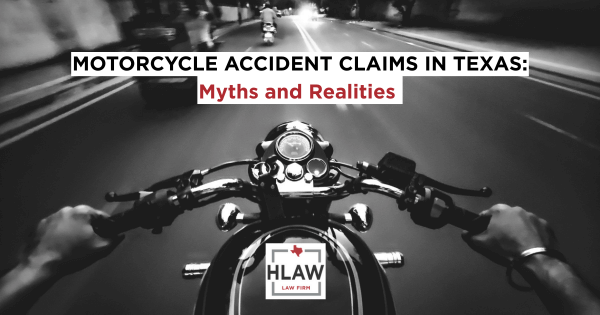
Point-of-view of a rider on a Texas road at night with text overlay “Motorcycle Accident Claims in Texas: Myths and Realities,” promoting HLAW’s motorcycle accident guide.

Motorcycle Accident Claims in Texas: Myths and Realities

By Jesse Lotspeich · Personal Injury

Point-of-view of a rider on a Texas road at night with text overlay “Motorcycle Accident Claims in Texas: Myths and Realities,” promoting HLAW’s motorcycle accident guide.
Learn the truth behind common myths that hurt injured riders in Texas motorcycle accident claims.

Debunking misconceptions in Texas that can hurt injured riders in court or settlement talks

Motorcyclists already fight an uphill battle against bias. Add a handful of persistent myths, and a valid injury claim can be undervalued—or lost entirely. Below, we break down the most common misconceptions we see in Texas cases and set the record straight with practical, courtroom-ready guidance.

Myth #1: “If I wasn’t wearing a helmet, I can’t recover anything.”

Reality: Texas uses modified comparative negligence, not wearing a helmet is not an automatic bar to a lawsuit or claim.

Under the proportionate responsibility statute, your recovery is reduced by your percentage of fault and barred only if you are more than 50% at fault. See Tex. Civ. Prac. & Rem. Code (CPRC) §33.001–.003. Failure to wear a helmet is not negligence per se and does not automatically defeat your claim. It may become a damages issue only if the defense proves a causal link between the lack of a helmet and the injuries you’re claiming.

Texas helmet law, quickly: Riders under 21 must wear a helmet; riders 21+ may ride without one if they’ve completed a safety course or carry the required insurance. See Tex. Transp. Code §661.003. Police generally can’t stop an adult rider solely to check helmet qualifications. In civil cases, defense lawyers sometimes try to analogize the Texas Supreme Court’s seat-belt ruling (allowing non-use evidence when causally relevant) to helmets. The take-home: it’s a fact-specific mitigation argument, not a total bar.

What helps: medical causation testimony tying head/face injuries (or the lack of them) to actual crash dynamics; biomechanical opinions; and focusing the jury on the primary negligence (left-turn, unsafe lane change, failure to yield) rather than equipment debates.

Myth #2: “Lane splitting is legal here, so the car is always at fault.”

Reality: Lane splitting is not legal in Texas.

Texas requires vehicles—including motorcycles—to remain within a single lane and only move to another lane when it is safe. See Tex. Transp. Code §545.060. A rider who threads between lanes risks a comparative fault finding. That said, the driver’s independent negligence (unsafe left turn, failure to keep a proper lookout, texting, etc.) still stands and may carry the larger share of fault.

What helps: scene photos/video, speed analysis, witness statements on the driver’s actions, and clear testimony about rider conspicuity and escape options.

Myth #3: “The at-fault driver’s insurance will pay my medical bills as I go.”

Reality: In Texas, liability carriers typically pay once—in a lump-sum settlement or judgment.

During treatment, you’ll usually rely on PIP/MedPay, health insurance, or letters of protection obtained with the help of an attorney. Personal Injury Protection (PIP) must be included in Texas auto policies unless rejected in writing; minimum limits are commonly $2,500 (many purchase more). See Tex. Ins. Code §1952.151 et seq. UM/UIM coverage must also be offered and can fill the gap when the at-fault driver is uninsured or underinsured (Tex. Ins. Code §1952.101).

What helps: verify and stack available coverages early (PIP, MedPay, UM/UIM, third-party liability), confirm written rejections, and align medical billing to reduce balance-billing surprises.

Myth #4: “The police report decides liability.”

Reality: It’s helpful, but not dispositive.

Crash reports often contain hearsay, opinions, and incomplete facts. They’re useful leads, but liability turns on admissible evidence and a jury’s allocation of fault. We corroborate (or challenge) the report with photos, EDR/ECM data, dashcam, smart-home or business cameras, 911 audio, phone metadata, and expert analysis.

What helps: rapid preservation letters, on-scene measurements, and prompt open-records requests. Don’t let the only story in the file be the first one written.

Myth #5: “I have to give the other insurance company a recorded statement.”

Reality: You don’t owe a recorded statement to the other side.

Cooperate with your insurer as your policy requires, but politely decline recorded interviews from the adverse carrier. Adjusters are trained to lock in admissions and minimize claims. We provide evidence in writing at the right time and with the right context.

What helps: route all communications through your lawyer; provide concise, verified, non-recorded factual updates when tactically advantageous.

Myth #6: “If it was a hit-and-run, there’s nothing I can do.”

Reality: UM can still cover you—often the difference-maker.

Texas Uninsured Motorist coverage is designed for exactly this situation. Promptly report the crash to law enforcement and your insurer, document the attempted identification, and preserve all video (helmet cam, dashcam, nearby businesses). A quick canvass often finds a camera you didn’t know was there.

Myth #7: “Pain and suffering isn’t a thing in Texas.”

Reality: It is—but you have to prove it.

Texas permits recovery of non-economic damages (pain, mental anguish, physical impairment, disfigurement, loss of enjoyment) along with economic losses (medical bills, wage loss, diminished earning capacity). There’s no general PI cap outside medical malpractice; exemplary (punitive) damages are available for fraud, malice, or gross negligence, subject to CPRC §41.008 caps.

What helps: consistent treatment records; specific day-in-the-life examples; employer corroboration; before-and-after witnesses; photos of visible injuries; and functional testing.

Myth #8: “Because I was speeding a little, I don’t have a case.”

Reality: Comparative negligence assigns percentages, not absolutes.

Even if a rider shares some blame (e.g., modest speeding), you can still recover so long as your responsibility does not exceed 50% (CPRC §33.001). Defense experts often overstate speed—accident reconstruction, skid analysis, and video frame-rate work can bring the number back to reality.

Myth #9: “I can file whenever; the insurance negotiations will keep the clock open.”

Reality: The statute of limitations is generally two years from the crash (or death).

See CPRC §16.003. Claims involving governmental entities trigger notice deadlines as short as 6 months (and some cities/charters even shorter) under the Texas Tort Claims Act, §101.101. Negotiations do not toll the statute. File or toll, or risk losing the claim.

Myth #10: “Juries always blame the biker.”

Reality: Juror bias is real, but evidence beats stereotypes.

Clear liability narratives, humanized riders (family, work, safety training), expert-driven crash analysis, and smart voir dire go a long way. We show visibility challenges drivers should anticipate (left-turn across path, blind-spot merges), transform “biker bias” into a driver-duty case, and anchor damages to objective proof.

What Damages Can a Texas Motorcyclist Recover?

  • Medical expenses (past/future) and rehabilitation
  • Lost wages and diminished earning capacity
  • Property damage (bike, gear)
  • Pain, mental anguish, physical impairment, disfigurement, loss of enjoyment
  • Exemplary damages in qualifying cases (CPRC Ch. 41)

Practical Steps That Strengthen Your Claim

  1. Medical care now, not later. Gaps in treatment are Exhibit A for adjusters.
  2. Preserve evidence immediately. Send spoliation letters, pull 911/dashcam/business video, and capture the scene.
  3. Lock down your coverages. Confirm PIP/MedPay and UM/UIM; get written rejections if the carrier claims you waived them.
  4. Control communications. No recorded statements to the at-fault carrier. Route everything through counsel.
  5. Watch your social media. Even harmless posts get twisted; tighten privacy and post nothing about the crash or activities.

FAQs

Is lane filtering ever allowed at a red light?

Not under current Texas law. Treat it like any other lane rule (Transp. Code §545.060).

Will not wearing a helmet kill my case?

No. It may become a limited damages issue if causally tied to head injuries, but it’s not an automatic bar (CPRC Ch. 33; Transp. Code §661.003).

Can I use PIP (Personal Injury Protection) if I was on a motorcycle?

PIP is tied to the auto policy terms. Many Texas policies cover the named insured and household family members as pedestrians or occupants of a motor vehicle—check your declarations and endorsements. If it was your auto policy, PIP often still applies; if it was the other driver’s policy, it won’t.

What if a city truck hit me?

You likely face short notice deadlines and damage caps under the Texas Tort Claims Act (CPRC Ch. 101). Act fast.

How long do I have to file?

Generally two years (CPRC §16.003). There are exceptions (minors, government, wrongful death), so get a legal review immediately.

Why Riders Choose Our Firm

We understand both the bias riders face and the physics of motorcycle crashes. We build cases around driver duty, not stereotypes—backed by reconstruction experts, medical specialists, and a trial-ready file from day one. Whether you ride a cruiser on 377 or commute through West 7th in Fort Worth, Texas, your case deserves a fair look and full value.

Take the Next Step Toward Justice and Recovery

If you or someone you love has been injured in a motorcycle accident anywhere in Texas, don’t wait to get the help you deserve. The sooner an experienced attorney is on your side, the stronger your claim will be. At HLAW, we know how to overcome bias against riders, protect crucial evidence, and fight for every dollar you’re owed.

Our team will:

  •  Evaluate liability from every angle – driver negligence, road hazards, defective parts, or all of the above.
  • Uncover every available source of compensation, including PIP, MedPay, and UM/UIM coverage you may not realize you have.
  • Build a tailored treatment and evidence strategy that supports both your medical recovery and your financial claim.
  • Negotiate assertively or take your case to trial if the insurance company refuses to treat you fairly.

You don’t have to face insurance adjusters, complex laws, or mounting medical bills alone. Contact us today for a free, no-obligation consultation—let us put our experienced team and resources to work for you and your family.

Read full article
Man holding his neck in pain after a Texas car accident, illustrating hidden soft tissue injuries like whiplash and disc damage.

The Hidden Danger of Soft Tissue Injuries After a Car Accident

By Jason H. Howard · Personal Injury

Man holding his neck in pain after a Texas car accident, illustrating hidden soft tissue injuries like whiplash and disc damage.
Even minor accidents can leave lasting pain. Learn how whiplash, sprains, and disc injuries can impact your health and your Texas injury claim.

When people picture a “serious” car accident, they often imagine mangled vehicles, shattered glass, or a trip to the emergency room. But in reality, even a collision that leaves only a small dent in your bumper can cause lasting and painful injuries. Among the most overlooked are soft tissue injuries—damage to muscles, ligaments, and discs that don’t show up on an X-ray but can change the course of your daily life.

In Texas, many accident victims find themselves facing months of pain, physical therapy, and financial strain from these hidden injuries. If you’ve been in a wreck, it’s important to understand why soft tissue injuries after a car accident should never be taken lightly.

What Are Soft Tissue Injuries?

“Soft tissue” refers to the muscles, ligaments, and tendons that support your body and allow you to move. In a car accident, these tissues can stretch, tear, or become inflamed from the sudden forces involved—even when vehicles are traveling at low speeds.

Common examples include:

  • Whiplash – Neck strain caused by the rapid back-and-forth motion of the head
  • Sprains and Strains – Overstretched or torn ligaments and tendons in the back, shoulders, or extremities.
  • Disc Injuries – Herniated or bulging discs in the spine that press on nerves and cause radiating pain.

Why They’re So Dangerous

The hidden risk of soft tissue injuries is that symptoms don’t always appear right away. Adrenaline and shock can mask pain immediately after a crash. In some cases, it takes days or even weeks before stiffness, soreness, or radiating pain becomes obvious.

By the time symptoms set in, an injured person may have already downplayed the accident to insurance companies—or worse, signed away their rights to fair compensation.

In Texas, we often see insurance adjusters argue that if the car wasn’t badly damaged, the driver couldn’t have been badly hurt. But medical science says otherwise: it’s possible to suffer serious whiplash or disc injuries even in low-impact accidents.

Warning Signs of a Soft Tissue Injury

If you’ve been in an accident, watch for:

  • Stiffness or reduced range of motion in your neck, shoulders, or back
  • Persistent headaches, often linked to whiplash
  • Numbness, tingling, or shooting pains in your arms or legs
  • Swelling or bruising around joints
  • Ongoing fatigue or difficulty sleeping due to discomfort

Protecting Your Health and Your Claim

If you experience delayed symptoms after a wreck, here’s what you should do:

  1. Seek medical care immediately. A doctor can diagnose soft tissue injuries with MRIs, CT scans, or physical evaluations.
  2. Document everything. Keep records of your symptoms, medical visits, and time missed from work.
  3. Don’t dismiss the accident as “minor.” Even if your car looks fine, your body may not be.
  4. Consult an attorney. A lawyer familiar with Texas car accident cases can help protect your right to a fair whiplash claim in Texas or compensation for other soft tissue injuries.

How Our Firm Can Help

At Howard, Lotspeich, Alexander & Williams, PLLC (HLAW), we know how insurance companies work—and we know how to fight back. We’ve seen firsthand how clients suffer from soft tissue injuries that others tried to minimize. We take the time to understand your pain, gather the medical evidence, and build a case that reflects the true impact of your injuries.

Conclusion

The hidden danger of soft tissue injuries is real: they may not show up right away, but they can cause long-lasting pain and disruption to your life. Don’t let the insurance company dismiss your claim just because your car wasn’t totaled. If you’ve been in a wreck and are experiencing pain, reach out for help today.

Contact us for a free consultation. We’ll review your case, explain your rights, and fight to make sure you get the compensation you deserve.

Read full article

Speak with a Fort Worth attorney

Call (817) 993-9249 or send us a message to discuss your case.